 Preview
 Send
Send Share
Share
 Details

 Download
 Similars
 X-Ray
X-Ray Diaporama
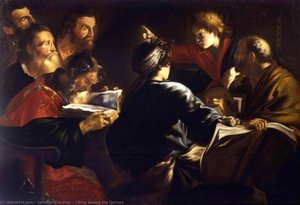
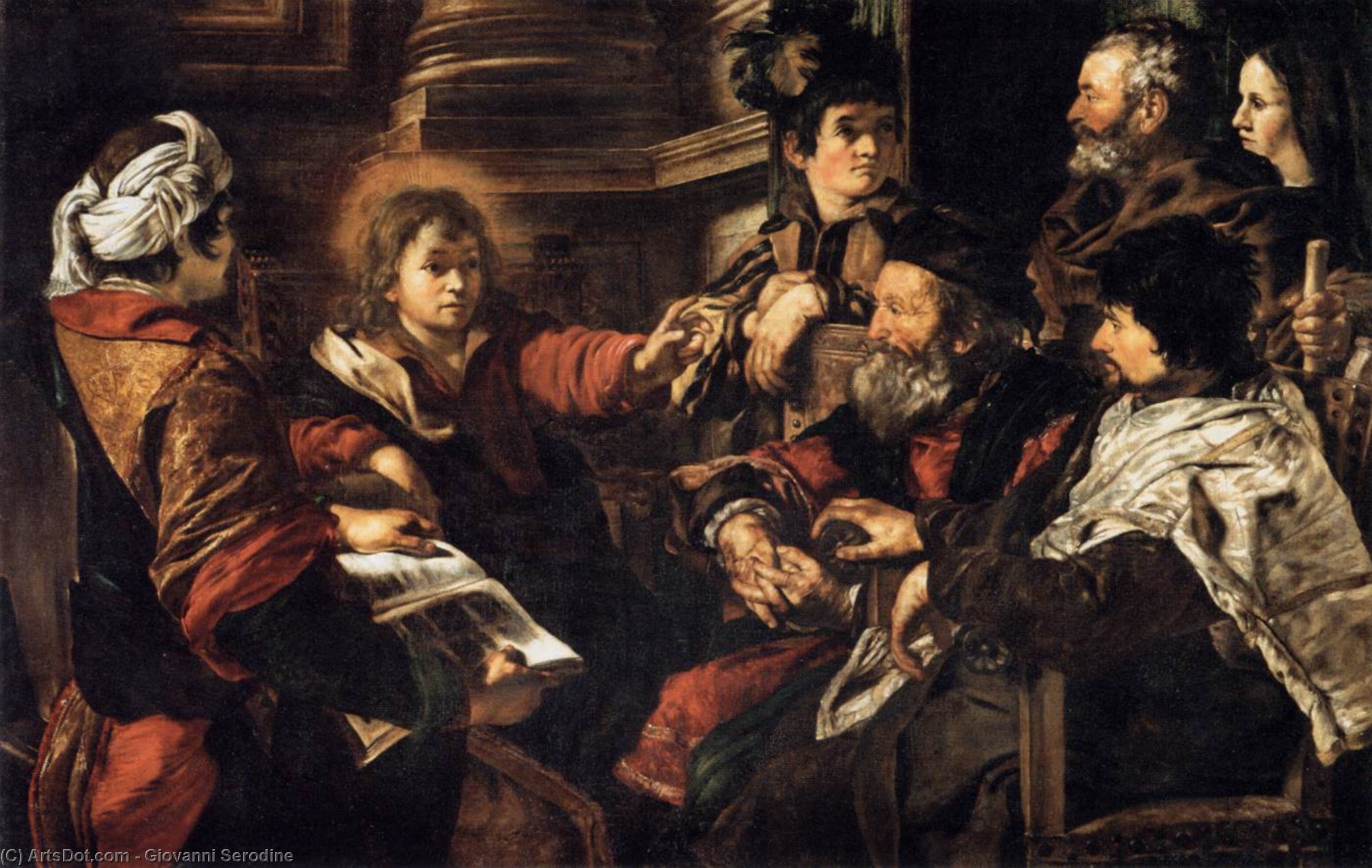
Christ among the Doctors
 Acrylic On Canvas
- WallArt
- Caravaggist Style
 1625
1625 145.0 x 224.0 cm
 The Louvre
 Read More
Hand Made Oil Reproduction
Hand-painted oil on canvas in your size and frame, made to order by our artists. ( Buy Print Buy Image)




P118B $10

P118H $10

P118W $10

P438Z $10

P508JH $12

P508YH $12

P805H $10

P805Z $10

P919BZ $10

P919G $10

P919XJ $10

P959ZH $10

P968JZ $12

W106C $8

W218G $10

W218JH $8

W218Y $10

W307PJ $10

W316G $10

W316PJ $8

W316Y $10

W398PJ $8

W4111J $10

W500HY $15

W500JH $15

W692G $12

W849H $8

W940BG $15

W953PJ $8




Pick from our preset sizes that match the artwork's original proportions.

You may enter your own dimensions to fit a specific frame or space. If your selected size does not match the original image's proportions, we will either crop the artwork or extend the painting with additional hand-painted elements. A digital mockup will be sent for your approval before production begins.
Please note that the on-screen preview does not reflect the actual cropping or extension. Only the mockup will accurately show the final composition.
While custom sizes are available, we recommend selecting a dimension from the predefined list to preserve the original proportions.
After order, ArtsDot.com team will email client for instructions and provide a mockup preview
Worldwide Delivery () in 3/4 weeks instead of standard 5 weeks. (16 August). No compromise on quality.

Free Worldwide Express Shipping

High-Quality Linen Canvas

Full Shipping Insurance

Customs Tax Refund Guarantee

True Color Matching Guarantee

60-Day Return Policy (Defects Only)

100% Money-Back Guarantee

Bulk Discount Offer
 Glass option is only available in size under 110 CM

Christ among the Doctors
Reproduction Medium
Reproduction Size
-


Total Price
$ 263
Artwork Description
The Serene Wisdom: Giovanni Serodine’s “Christ Among the Doctors”
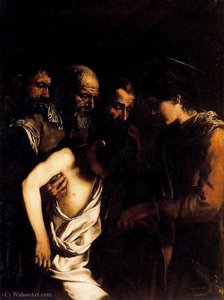
Giovanni Serodine's "Christ Among the Doctors," painted in 1625, is not merely a religious scene; it’s a carefully constructed tableau of intellectual and spiritual engagement. This captivating work, now housed within the Louvre Museum, offers a rare glimpse into the burgeoning Baroque aesthetic in Rome – a style characterized by dramatic contrasts of light and shadow, intense emotion, and a profound reverence for biblical narratives. Serodine, a Swiss-Italian painter who spent much of his career in Italy, masterfully blended the dynamism of Caravaggism with a distinctly Northern European sensibility, creating an image that is both powerfully emotive and meticulously detailed.
The painting depicts a pivotal moment from Luke’s Gospel: Jesus, still a young boy, surrounded by a gathering of learned men – doctors of the law – engaged in spirited debate. Rather than presenting a simple portrait of piety, Serodine captures the very essence of intellectual discourse. The figures are not static; they are actively involved, their gestures and expressions conveying a sense of urgency and profound concentration. Notice how Jesus, youthful yet radiating an aura of authority, is surrounded by these older men, some reaching out to touch his face or hands in awe and respect. The composition isn’t about a single, grand gesture but rather the cumulative effect of numerous small interactions – a subtle nod, a raised hand, a questioning glance – all contributing to the vibrant energy of the scene.
A Masterclass in Caravaggist Technique
Serodine's artistic approach is deeply rooted in the principles of Caravaggism. The artist employs *tenebrismo*, a technique that dramatically contrasts areas of intense light with deep shadows, creating a heightened sense of drama and focusing attention on key elements within the composition. The figures are bathed in a warm, golden light emanating from an unseen source, while the background recedes into a shadowy obscurity. This chiaroscuro effect not only adds visual interest but also serves to emphasize Jesus’s central role as the focal point of the scene.
Furthermore, Serodine's brushwork is remarkably loose and expressive, particularly evident in the rendering of the figures’ clothing and hands. He eschews meticulous detail in favor of capturing a sense of movement and immediacy. The textures of the robes are suggested through rapid, broken strokes, while the hands – constantly gesturing and interacting – are rendered with remarkable sensitivity and realism. This technique, combined with his use of warm earth tones and subtle gradations of color, creates a remarkably lifelike and engaging image.
Symbolism and Historical Context
Beyond its technical brilliance, “Christ Among the Doctors” is rich in symbolic meaning. The scene itself represents the beginning of Jesus’s public ministry – his engagement with Jewish law and tradition. The doctors surrounding him are not simply scholars; they embody the established religious authorities of the time. By depicting Jesus interacting with them, Serodine subtly suggests his future role as a revolutionary figure who will challenge conventional interpretations of scripture and ultimately offer a new path to spiritual understanding.
Painted in 1625 during the Counter-Reformation, this work reflects the Catholic Church’s desire to engage the faithful through emotionally resonant art. The scene is intended to inspire contemplation on themes of faith, knowledge, and divine wisdom. The inclusion of figures dressed formally – some even wearing ties, a detail that hints at the painting's relatively recent creation – suggests a deliberate attempt to portray a contemporary setting, making the biblical narrative more accessible and relatable to viewers.
A Timeless Portrait of Wisdom
“Christ Among the Doctors” is a testament to Giovanni Serodine’s artistic skill and his ability to capture the complexities of human interaction within a sacred context. It's a painting that rewards careful observation, inviting viewers to contemplate not only the biblical story it depicts but also the enduring themes of knowledge, faith, and the pursuit of wisdom. Today, this masterpiece continues to captivate audiences with its dramatic lighting, dynamic composition, and profound emotional impact – a timeless reminder of the power of art to illuminate the human spirit.
Related Artworks
Artist Biography
Giovanni Serodine: Life and Legacy
Early Life and Artistic Development
Giovanni Serodine, a Swiss-Italian painter, was born in 1600 in Ascona, Canton Ticino, Switzerland. His family were known for their skill in stucco work, an art form that inadvertently laid the groundwork for his future artistic endeavors. This early exposure to decorative arts likely fostered Serodine’s keen eye for detail and composition.
Serodine's artistic journey truly began in Rome, where he developed a unique expression of Carravaggist style. He embraced the dramatic use of light and shadow – known as tenebrism – and loose brushstrokes that characterized this influential movement.
Artistic Style and Influences
Serodine’s work was profoundly influenced by the Northern Caravaggisti, particularly artists such as Lys, Strozzi, and Fetti, who were actively working in Venice. These masters inspired his dramatic compositions and intense emotionality.
- Caravaggismo: Serodine adopted the strong contrasts of light and dark, realistic depictions of figures, and focus on everyday life characteristic of Caravaggio’s followers.
- Tenebrism: The use of dramatic illumination to create a sense of drama and highlight key elements within his paintings is central to his style.
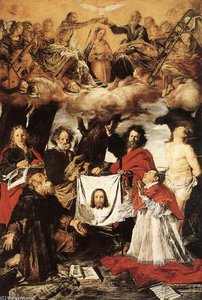
However, despite these influences, Serodine's canvases often exhibited a provincial eccentricity, as seen in his *Coronation of the Virgin* in Ascona. This unique quality sets him apart from more strictly orthodox Caravaggisti.
Notable Works and Achievements
Although his career was tragically short, Serodine produced a number of significant works that demonstrate his talent and artistic vision:
- Jesus Among the Masters (Louvre): A compelling depiction showcasing Serodine’s mastery of composition and dramatic lighting.
- Jesu and the Tribute Money (National Gallery of Scotland): Demonstrates his skill in narrative painting and attention to detail.
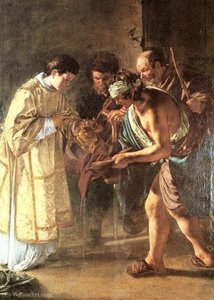
- Saint Lawrence distributing alms (Convent of Valvisciolo in Sermoneta): A powerful portrayal of compassion and religious devotion.
- Decapitation of Saint John the Baptist (San Lorenzo fuori le mura): Exhibits his ability to convey intense emotion through dramatic imagery.
- Saint Michael (originally San Pietro in Montorio): A dynamic and forceful representation of the archangel.
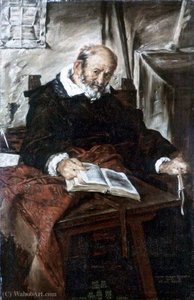
- Portrait of his father (Lugano): Offers a glimpse into Serodine’s personal life and skill in portraiture.
Historical Significance and Legacy
Despite struggling to secure consistent patronage and recognition during his lifetime, Giovanni Serodine left behind a body of work that is increasingly appreciated for its unique blend of Caravaggist principles and regional characteristics. His art provides valuable insight into the artistic landscape of 17th-century Switzerland and Italy.
Serodine’s paintings are marked by great vivacity and emotional depth, making him a significant figure in the broader context of Baroque art. While not as widely celebrated as some of his contemporaries, his contributions continue to be studied and admired by art historians and enthusiasts alike.
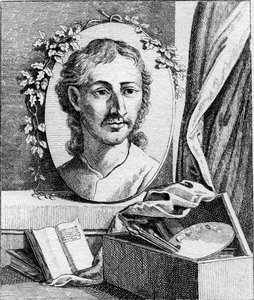
serodine giovanni
1594 - 1630 , Switzerland
Quick Facts
- Birth Date: 1600
- Birth Place: Ascona, Switzerland
- Death Date: 1630
- Influenced By:
- Lys
- Strozzi
- Fetti
- Movement: Caravaggismo, Baroque
- Name: Giovanni Serodine
- Nationality: Swiss-Italian
- Notable Works:
- Jesus Among the Masters
- Jesu and the tribute money
- Saint Lawrence distributing alms
- Decapitation of Saint John the Baptist
- Transfiguration of Christ
- Portrait of his father
Related Articles

The Dramatic Flourish: Exploring the Baroque Movement's Enduring Legacy in Art History
Explore the dramatic world of Baroque art! Discover iconic artists like Caravaggio & Rubens, defining techniques, and its lasting impact on art history. Expert insights for collectors & enthusiasts at ArtsDot.

The Visceral Stage: Exploring Dramatic Narratives & Emotional Intensity in Baroque Art
Explore the dramatic world of Baroque art! Discover iconic masters like Caravaggio & Rembrandt, their techniques, and the movement's lasting impact. Expert insights for collectors & enthusiasts at ArtsDot.

Baroque Masterpieces: 10 Paintings That Defined an Era |
Journey through the drama & grandeur of Baroque art! Explore 10 masterpieces by Caravaggio, Rembrandt, Rubens & more. Discover stunning oil paintings, rich colors & timeless stories. Find museum-quality reproductions at .

Baroque Drama: Bringing Opulence & Emotion into Contemporary Interiors
Explore the opulent world of Baroque interior design! Discover key elements, modern applications & how to bring dramatic elegance into your home with 's authentic reproductions.
The Golden Age Reforged: Dramatic Realism & Religious Zeal in Spanish Baroque Art
Explore the dramatic world of Spanish Baroque art! Discover masters like Zurbarán & the powerful influence of religious zeal on painting techniques – a guide for collectors and enthusiasts.