 Preview
 Send
Send Share
Share
 Details

 Download
 Similars
 X-Ray
X-Ray Diaporama
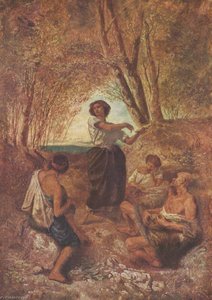
Deutsch Zigeunertanz
 Oil On Canvas
- WallArt
- Romanticism
 1853
1853- 19th Century
 113.0 x 80.0 cm
 Hamburger Kunsthalle
 Read More
Hand Made Oil Reproduction
Hand-painted oil on canvas in your size and frame, made to order by our artists. ( Buy Print Buy Image)




P118B $10

P118H $10

P118W $10

P438Z $10

P508JH $12

P508YH $12

P805H $10

P805Z $10

P919BZ $10

P919G $10

P919XJ $10

P959ZH $10

P968JZ $12

W106C $8

W218G $10

W218JH $8

W218Y $10

W307PJ $10

W316G $10

W316PJ $8

W316Y $10

W398PJ $8

W4111J $10

W500HY $15

W500JH $15

W692G $12

W849H $8

W940BG $15

W953PJ $8




Pick from our preset sizes that match the artwork's original proportions.

You may enter your own dimensions to fit a specific frame or space. If your selected size does not match the original image's proportions, we will either crop the artwork or extend the painting with additional hand-painted elements. A digital mockup will be sent for your approval before production begins.
Please note that the on-screen preview does not reflect the actual cropping or extension. Only the mockup will accurately show the final composition.
While custom sizes are available, we recommend selecting a dimension from the predefined list to preserve the original proportions.
After order, ArtsDot.com team will email client for instructions and provide a mockup preview
Worldwide Delivery () in 3/4 weeks instead of standard 5 weeks. (17 August). No compromise on quality.

Free Worldwide Express Shipping

High-Quality Linen Canvas

Full Shipping Insurance

Customs Tax Refund Guarantee

True Color Matching Guarantee

60-Day Return Policy (Defects Only)

100% Money-Back Guarantee

Bulk Discount Offer
 Glass option is only available in size under 110 CM

Deutsch Zigeunertanz
Reproduction Medium
Reproduction Size
-


Total Price
$ 388
Artwork Description
A Moment Frozen in Time: The Soul of Deutsch Zigeunertanz
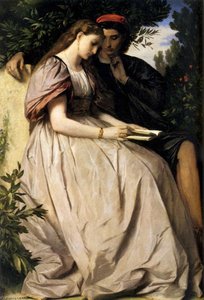
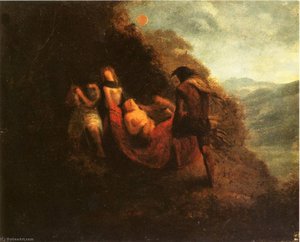
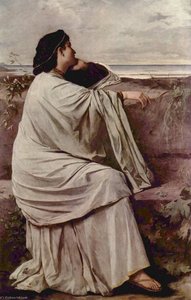
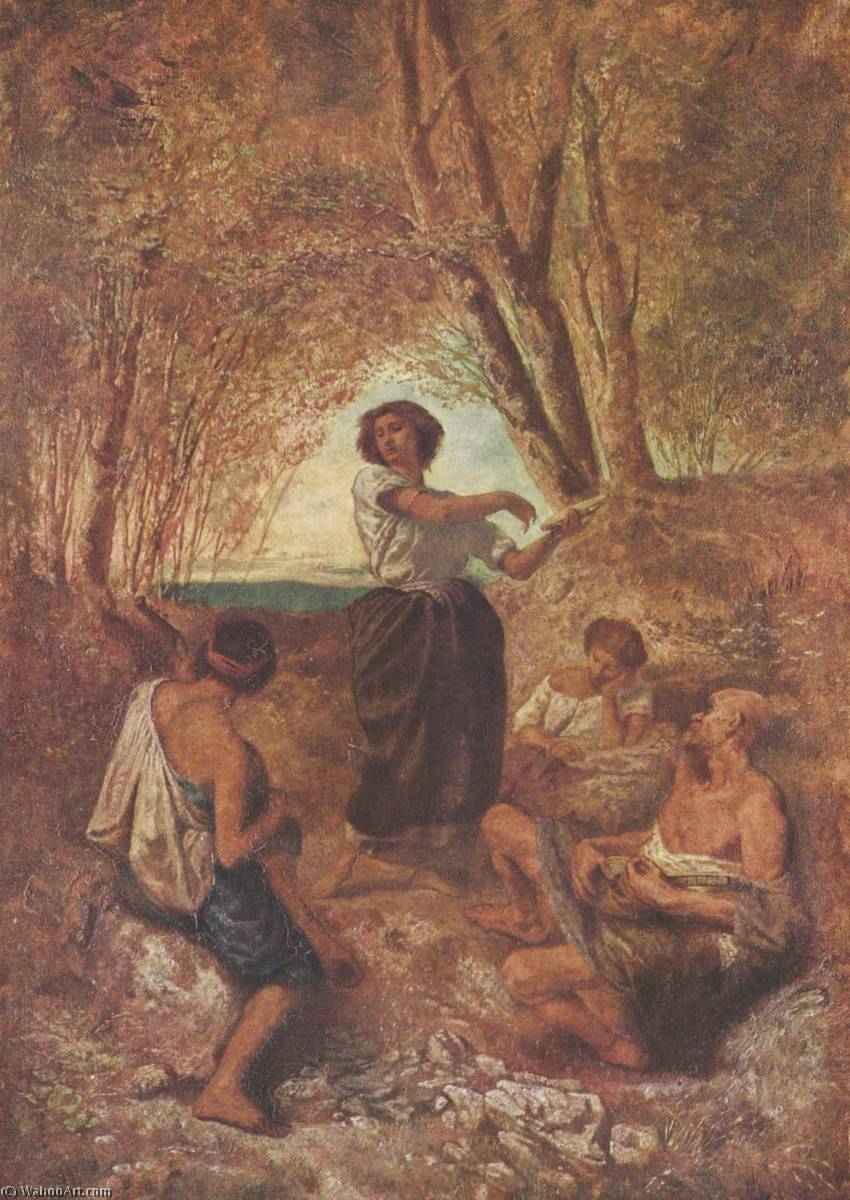
In the quiet depths of a sun-dappled woodland, Anselm Feuerbach’s Deutsch Zigeunertanz invites the viewer into a sanctuary of warmth and communal intimacy. Painted in 1853, this evocative oil on canvas serves as a profound window into the Romantic movement, capturing a pastoral scene that feels both deeply personal and timelessly universal. At its heart, the composition centers around a woman and children gathered around the flickering glow of a small fire, their forms bathed in the soft, diffused light of the forest. The arrangement of the figures creates an immediate sense of enclosure and safety, as if the viewer has stumbled upon a private, sacred ritual of human connection. Through his masterful use of organic lines and naturalistic shapes, Feuerbach transforms a simple woodland gathering into a poetic meditation on the bonds of family and the enduring spirit of community.
The technical execution of the piece reveals a painter deeply attuned to the expressive potential of his medium. Eschewing the rigid precision of pure Neoclassicism for a more fluid, emotive approach, Feuerbach employs loose, visible brushstrokes that imbue the canvas with a sense of spontaneity and life. The texture of the paint contributes to the rustic atmosphere, mirroring the roughness of tree bark and the uneven earth beneath the figures. His color palette is a masterclass in tonal harmony, dominated by earthy ochres, deep browns, and muted greens that ground the scene in a palpable reality. This warmth is punctuated by the luminous quality of the firelight, which casts a gentle glow upon the faces of the children, creating a chiaroscuro effect that adds depth and a touch of drama to the otherwise tranquil setting.
Symbolism and the Romantic Vision
Beyond its surface beauty, Deutsch Zigeunertanz is rich with symbolic resonance. The fire at the center of the composition acts as more than just a light source; it is a primal symbol of warmth, survival, and the hearth—the literal and metaphorical heart of the group. It represents the spark of life that draws individuals together against the encrovers of the wild. Surrounding this central flame, the archway of trees provides a natural cathedral, suggesting themes of shelter, protection, and the eternal cycle of nature. Feuerbach utilizes atmospheric perspective to suggest a world that extends far beyond the immediate circle of light, with distant trees fading into a soft, indistinct haze, thereby evoking a sense of nostalgia and longing for a simpler, more harmonious era.
For the discerning collector or interior designer, this artwork offers an unparalleled emotional depth. It is a piece that does not merely decorate a space but transforms it, bringing an aura of tranquility and historical weight to any room. Whether placed in a study filled with books or a grand living area designed for conversation, the painting’s ability to evoke themes of peace and connection makes it a timeless addition. As a high-quality reproduction, it allows the splendor of Feuerbach’s vision—his unique ability to bridge the gap between classical elegance and Romantic emotion—to become a permanent fixture in the modern home, inspiring all who pause to contemplate its quiet, flickering flame.
Related Artworks


Artist Biography
The Poet of Classical Form: The Life and Vision of Anselm Feuerbach
Anselm Feuerbach (1829-1880) stands as a monumental figure in the tapestry of German Romanticism and Neoclassicism, embodying a rare and harmonious fusion of these two powerful artistic currents. Born in Speyer to an intellectually profound lineage—his father, Joseph Anselm Ritter von Feuer डूबing, was a renowned archaeologist—Feuerbach was destined for a life steeped in the study of antiquity. This ancestral connection to the classical world profoundly shaped his artistic sensibilities from his earliest years. His formal education began at the Düsseldorf Academy between 1845 and 1848, where the rigorous tutelage of masters such as Johann Wilhelm Schirmer and Wilhelm von Schadow instilled in him a foundational understanding of classical aesthetics and the meticulous precision of sculptural craftsmanship.
The trajectory of his development was marked by a restless search for a visual language that could bridge the gap between the emotional depth of Romanticism and the structural purity of Neoclassicism. After honing his skills at the Munich Academy, Feuerbach sought inspiration beyond German borders, establishing himself in Antwerp to master the vibrant Venetian colorism under Gustave Wappers. His journey through Paris in 1851 provided a pivotal moment of artistic breakthrough; it was here that he produced Hafiz at the Fountain (1852). This breathtaking work, which infused Arabic poetry with classical idealism, served as a testament to his unique ability to synthesize disparate cultural influences into a singular, transcendent vision.
A Pilgrimage Through Light and Antiquity
Driven by an insatiable fascination with the Italian Renaissance, Feuerbach embarked on a spiritual and artistic pilgrimage to Italy. His immersion in Venice allowed him to absorb the expressive dynamism and rich palette of the Venetian masters, while his time in Florence and Rome cemented his dedication to humanist ideals. During his long residency in Rome, which lasted until 1873, he became a central figure among the Deutschrömer—a group of German artists living in Italy that included luminaries like Arnold Böcklin and Hans von Marées. This period was characterized by an intense focus on the dignity of the human form and the evocative power of mythological themes.
His technique was a sophisticated blend of several key elements:
- Classical Idealism: A commitment to the purity of line and the balanced composition found in Greek antiquity.
- Venetian Colorism: The use of luminous, emotive color to breathe life into static forms.
- Poetic Narrative: An ability to translate literary themes, from Greek myths to Persian poetry, into visual masterpieces.
Legacy and Historical Significance
The work of Anselm Feuerbach remains a profound meditation on the enduring beauty of the classical past. He did not merely imitate the ancients; rather, he reinterpreted their spirit for a modern era, creating compositions that feel both timeless and deeply personal. His paintings, often characterized by elegant figure compositions and a sense of melancholic stillness, continue to captivate audiences with their quiet intensity. By weaving together the structural rigor of Neoclassicism with the soulful lyricism of Romanticism, Feuerbach secured his place as one of the most significant painters of the 19th century, leaving behind a legacy that celebrates the eternal dialogue between humanity and myth.
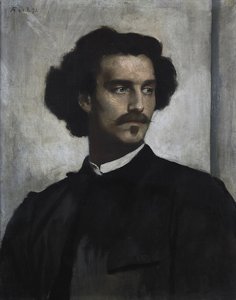
Anselm Feuerbach
1829 - 1880
Quick Facts
- Artistic Movement Or Style: Neoclassical
- Artists Or Movements Influenced By This Artist: ['Arnold Böcklin']
- Artists Who Influenced This Artist:
- Johann Wilhelm Schirmer
- Gustav Wappers
- Thomas Couture
- Date Of Birth: 1829
- Date Of Death: 1880
- Full Name: Anselm Friedrich Feuerbach
- Nationality: German
- Notable Artworks:
- Hafiz at the Fountain
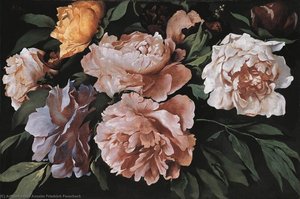
- Peonies
- Untitled (AQR3S4)
- Place Of Birth: Speyer, Germany
Related Articles
Anselm Feuerbach: Romantic Idealism & the Search for Spiritual Harmony in 19th-Century Painting
Explore the life & work of Anselm Feuerbach, a leading German Neoclassical painter. Discover his Romantic idealism, mythological scenes, and stunning portraits. Learn about his influences & lasting legacy with ArtsDot.
Idyllic Visions: Exploring the Pastoral Tradition in Western Art – Themes, Techniques & Enduring Appeal
Explore the rich history of pastoral art from classical Arcadia to contemporary interpretations. Discover key artists, themes & collecting tips at ArtsDot.

Idyllic Visions: Exploring the Pastoral Scene in Art History – From Arcadia to Modern Interpretations
Explore the captivating history of pastoral art from classical Arcadia to modern masterpieces. Discover key artists like Millet & Cole at ArtsDot. Find serene landscape paintings for your home.
Romantic Realism's Finest: 10 Masterpieces for Your Home | ArtsDot
Explore 10 defining masterpieces of Romantic Realism! Discover Courbet, Millet & Daumier's powerful paintings—capturing emotion and social realities. Find museum-quality reproductions for your home at ArtsDot.com.

German Expressionism's 10 Defining Masterpieces | Art for Your Home
Explore 10 defining German Expressionism masterpieces – from Munch's 'The Scream' to Kandinsky’s abstracts. Discover the artists, stories & bold colors behind this powerful art movement. Find museum-quality reproductions at ArtsDot.com.