
Early Life & Formation: The Roots of Feuerbach’s Classicism
 Wikipedia: Anselm Feuerbach
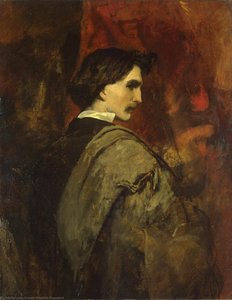
Anselm Feuerbach (12 September 1829 – 4 January 1880) was a German painter. He was the leading neoclassical painter of the German 19th-century school. == Biography == === Early life === Feuerbach was born at Speyer, the son of the archaeologist ...
Anselm Feuerbach, born in Speyer in 1829, emerged from a family deeply steeped in intellectual and artistic tradition. His father, Joseph Anselm Feuerbach, was a respected archaeologist, and his uncle, Ludwig Feuerbach, a prominent philosopher whose materialist views would ironically contrast with the artist’s later spiritual preoccupations. This environment fostered an early appreciation for classical antiquity – not merely as historical relics, but as embodiments of ideal form and enduring beauty. Young Anselm's initial artistic training at the Düsseldorf Academy laid a solid foundation in academic realism, emphasizing precise draftsmanship and anatomical accuracy. However, it was his subsequent studies in Munich that began to reveal a yearning beyond strict adherence to convention; a desire for something more evocative, more emotionally resonant than purely technical skill could provide. The seeds of Feuerbach’s distinctive style – a blend of rigorous classical technique with Romantic sensibility – were sown during these formative years, hinting at a future where mythological narratives and idealized figures would take center stage.
Parisian Influences & 'Hafiz at the Fountain': A Turning Point
Anselm Feuerbach (12 September 1829 – 4 January 1880) was a German painter. He was the leading neoclassical painter of the German 19th-century school.
The artistic landscape of Paris in the 1850s proved to be a crucible for Feuerbach’s developing vision. He entered the studio of Thomas Couture, a painter known for his dramatic compositions and historical subjects. While initially benefiting from Couture's emphasis on compositional strength and narrative clarity, Feuerbach soon found himself drawn to the more radical currents swirling within the city’s art scene. The realism of Gustave Courbet and the expressive colorism of Eugène Delacroix exerted a powerful influence, prompting him to question the constraints of academic tradition. This period culminated in his masterpiece, Hafiz at the Fountain (1852). The painting, inspired by Persian poetry, depicts the celebrated poet Hafiz contemplating his reflection in a moonlit fountain, surrounded by allegorical figures representing inspiration and beauty. It’s not merely a depiction of a literary scene; it's an exploration of artistic creation itself – a meditation on the power of imagination and the pursuit of ideal form. The work signaled a decisive break from Feuerbach’s earlier academic exercises, establishing him as a unique voice within the German art world.
The Italian Years: Rediscovering Beauty and Mythological Themes
German Romanticism (German: Deutsche Romantik) was the dominant intellectual movement of German-speaking countries in the late 18th and early 19th centuries, influencing philosophy, aesthetics, literature, and criticism. Compared to English Romantici...
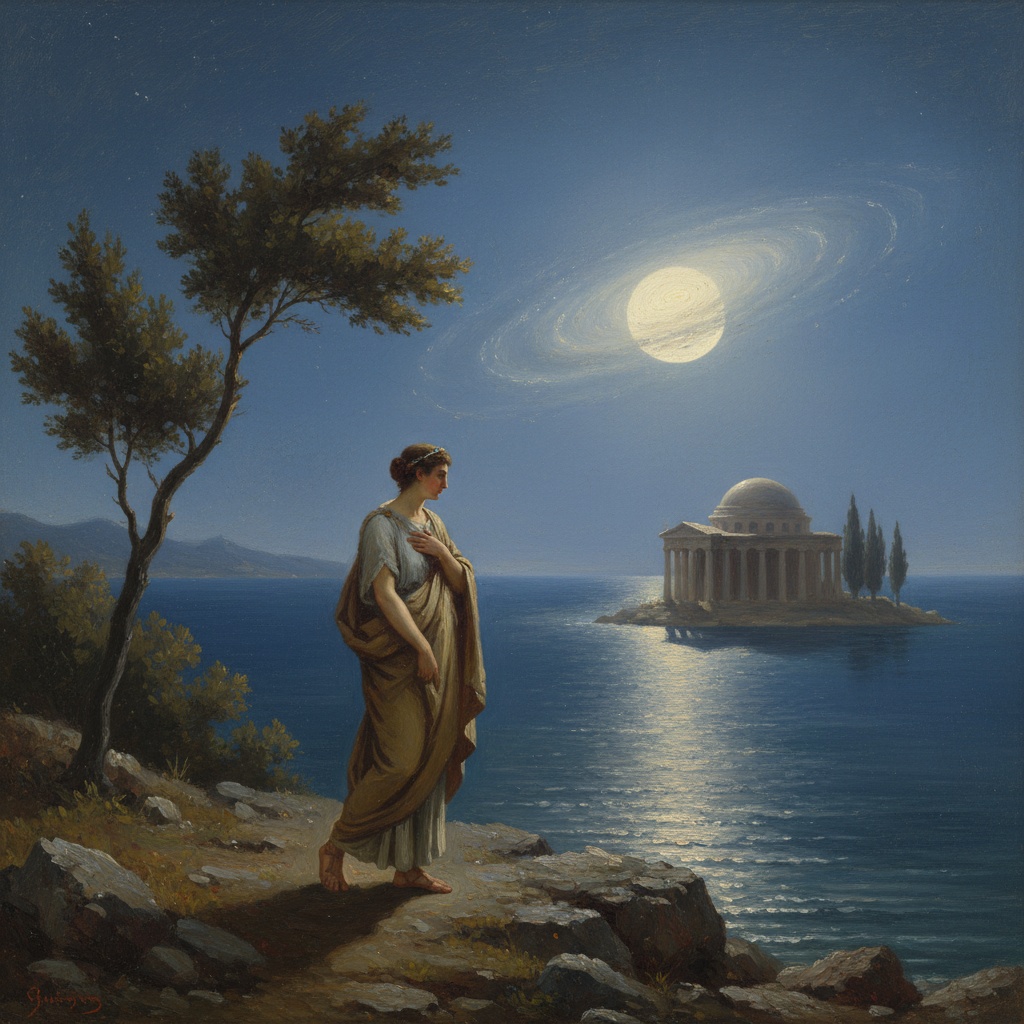
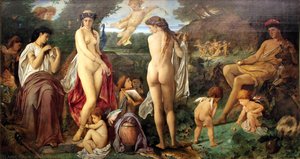
Funded by Grand Duke Friedrich of Baden, Feuerbach embarked on an extended sojourn to Italy in 1854, a journey that would profoundly shape his artistic trajectory. Venice, Florence, and Rome became his sanctuaries – cities brimming with the legacy of Renaissance masters. He immersed himself in the works of Raphael, Titian, and Correggio, absorbing their mastery of color, composition, and idealized form. This period witnessed a shift towards mythological subjects, imbued with a lyrical elegance and spiritual depth. Paintings like Iphigenia (in two versions, 1862 & 1871) demonstrate his fascination with classical narratives – not as historical events, but as vehicles for exploring universal themes of sacrifice, love, and fate. Feuerbach wasn’t simply recreating ancient myths; he was reinterpreting them through a Romantic lens, infusing them with a sense of melancholy beauty and psychological complexity. The Italian light, the rich color palettes, and the emphasis on graceful figures became hallmarks of his mature style.
Feuerbach's Portraits: Capturing Inner Worlds with Neoclassical Precision
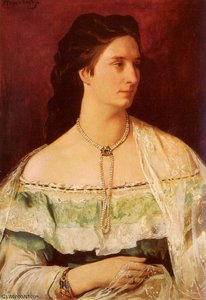 Portrait of a lady wearing a pearl necklace
Admire Anselm Feuerbach’s ‘Portrait of a Lady,’ a neoclassical masterpiece showcasing academic realism & elegant figures. Explore this 19th-century oil painting's rich details & symbolic jewelry.
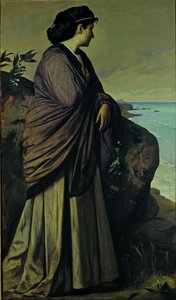
While renowned for his mythological scenes, Feuerbach also excelled as a portraitist. His portraits are not merely likenesses; they are profound psychological studies, revealing the inner lives of his sitters with remarkable sensitivity and nuance. The series of portraits he painted of Nanna Risi between 1860 and 1865 stands as a testament to his skill in this genre. These images transcend conventional portraiture, capturing Nanna’s ethereal beauty and enigmatic personality with an almost haunting intensity. He employed a neoclassical precision – carefully modeled forms, subtle gradations of light and shadow – but infused them with a Romantic sensibility that set his work apart. Later portraits, such as those of Lucia Brunacci, continued this exploration of inner character, demonstrating Feuerbach’s ability to convey emotion through gesture, expression, and the symbolic use of jewelry and clothing.
Spiritual Yearnings & The Fall of the Titans: Artistic Disillusionment
Despite his artistic successes, Feuerbach was plagued by a deep sense of spiritual yearning. He sought to imbue his art with a higher purpose, to express not merely beauty but also truth and meaning. This quest for transcendence culminated in The Fall of the Titans, a monumental ceiling mural commissioned for the Great Hall of the Vienna Academy of Fine Arts (1873). However, the work proved deeply controversial. Critics found it lacking in clarity and emotional impact, dismissing it as overly intellectual and devoid of genuine feeling. Feuerbach was devastated by the negative reception, viewing it as a rejection of his artistic vision. This disillusionment led to his resignation from the Academy in 1876 and a return to Venice, where he died two years later. The Fall of the Titans, intended as his magnum opus, became a symbol of his artistic struggles – a testament to the challenges of reconciling classical form with Romantic sensibility and the pursuit of spiritual expression.
Legacy and Influence: Feuerbach’s Enduring Impact on 19th-Century Art
Although he faced criticism during his lifetime, Anselm Feuerbach left an indelible mark on 19th-century art. His unique blend of academic realism, Romantic idealism, and mythological themes inspired a generation of German painters. He championed the importance of technical mastery – arguing that skillful craftsmanship was essential for expressing even the loftiest ideas – while simultaneously rejecting the rigid constraints of academic convention. His emphasis on spiritual yearning and psychological depth resonated with artists seeking to imbue their work with greater meaning. Feuerbach’s posthumous reputation soared, fueled by the publication of his letters and autobiographical notes compiled by his stepmother, Henriette Feuerbach. Today, he is recognized as a leading figure in German Romanticism, whose paintings continue to captivate audiences with their beauty, elegance, and profound emotional resonance. Discover the timeless masterpieces of Anselm Feuerbach – and experience the enduring power of art that seeks not merely to depict the world, but to reveal its hidden truths – at ArtsDot.com.