 Preview
 Send
Send Share
Share
 Details

 Download
 Similars
 X-Ray
X-Ray Diaporama
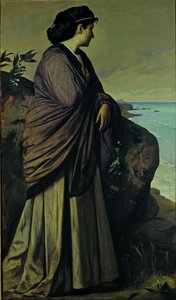
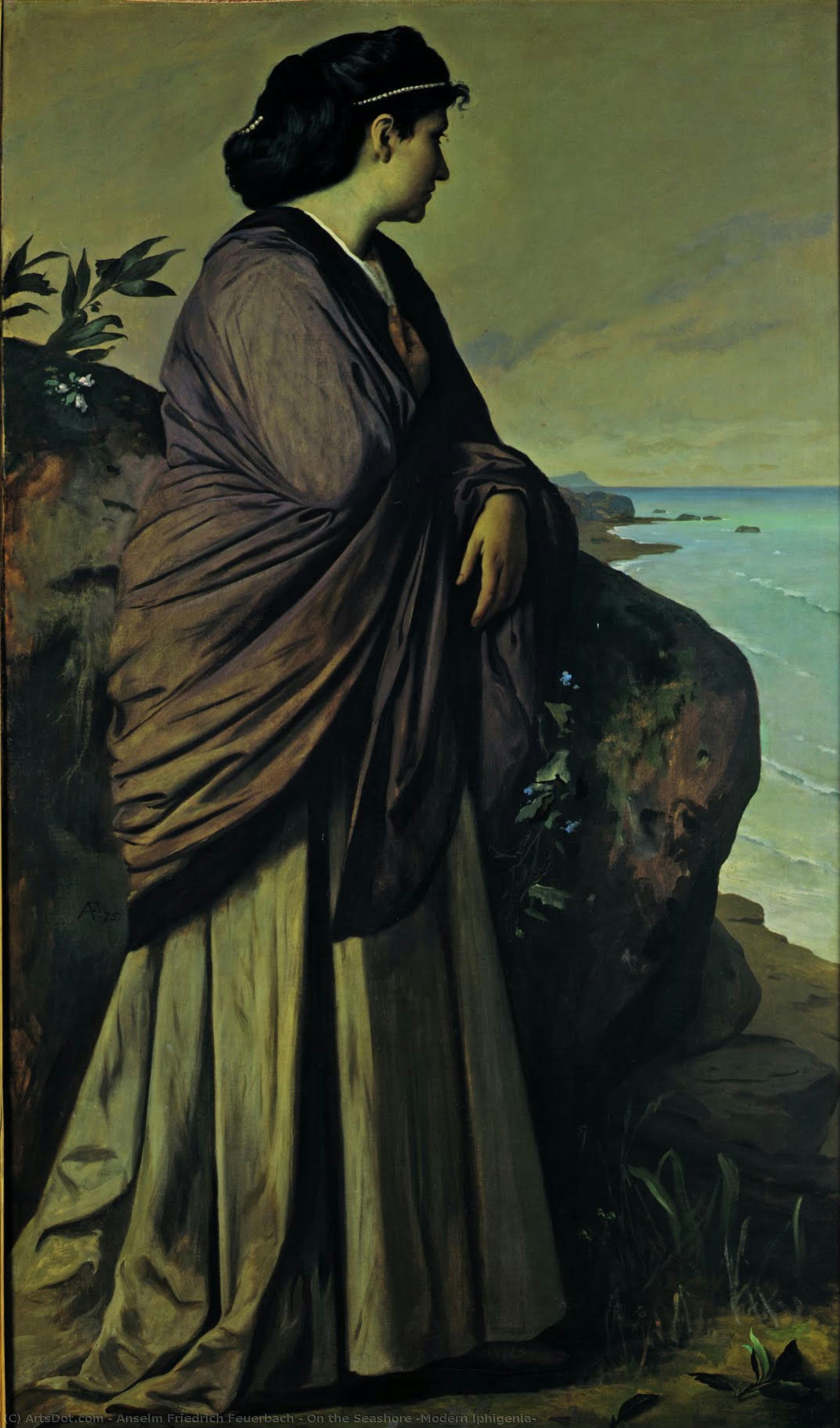
On the Seashore (Modern Iphigenia)
 Acrylic On Canvas
- WallArt
- Academic Neoclassicism
 1875
1875 1355.0 x 1970.0 cm
 Kunstpalast
 Read More
Hand Made Oil Reproduction
Hand-painted oil on canvas in your size and frame, made to order by our artists. ( Buy Print Buy Image)




P118B $10

P118H $10

P118W $10

P438Z $10

P508JH $12

P508YH $12

P805H $10

P805Z $10

P919BZ $10

P919G $10

P919XJ $10

P959ZH $10

P968JZ $12

W106C $8

W218G $10

W218JH $8

W218Y $10

W307PJ $10

W316G $10

W316PJ $8

W316Y $10

W398PJ $8

W4111J $10

W500HY $15

W500JH $15

W692G $12

W849H $8

W940BG $15

W953PJ $8




Pick from our preset sizes that match the artwork's original proportions.

You may enter your own dimensions to fit a specific frame or space. If your selected size does not match the original image's proportions, we will either crop the artwork or extend the painting with additional hand-painted elements. A digital mockup will be sent for your approval before production begins.
Please note that the on-screen preview does not reflect the actual cropping or extension. Only the mockup will accurately show the final composition.
While custom sizes are available, we recommend selecting a dimension from the predefined list to preserve the original proportions.
After order, ArtsDot.com team will email client for instructions and provide a mockup preview
Worldwide Delivery () in 3/4 weeks instead of standard 5 weeks. (16 August). No compromise on quality.

Free Worldwide Express Shipping

High-Quality Linen Canvas

Full Shipping Insurance

Customs Tax Refund Guarantee

True Color Matching Guarantee

60-Day Return Policy (Defects Only)

100% Money-Back Guarantee

Bulk Discount Offer
 Glass option is only available in size under 110 CM

On the Seashore (Modern Iphigenia)
Reproduction Medium
Reproduction Size
-


Total Price
$ 263
Artwork Description
On the Seashore (Modern Iphigenia): A Portrait of Yearning
Anselm Friedrich Feuerbach’s “On the Seashore (Modern Iphigenia)” – a monumental canvas measuring an impressive 1355 x 1970 cm – is not merely a depiction of a woman gazing out at the ocean; it's a profound meditation on loss, longing, and the enduring pull of home. Painted in 1875, this work stands as a pivotal piece within Feuerbach’s oeuvre, encapsulating his fascination with the Greek myth of Iphigenia – a tale of sacrifice, exile, and the bittersweet ache of separation – while simultaneously imbuing it with a distinctly modern sensibility. The painting immediately draws the viewer in with its subdued palette; predominantly cool blues and greys dominate, mirroring the vastness and melancholy of the sea, creating an atmosphere thick with unspoken emotion.
Feuerbach’s artistic journey was deeply rooted in classical tradition, yet he sought to transcend mere imitation. Influenced by figures like Heinrich Hoffmann and the Düsseldorf Academy's rigorous training, he initially embraced Neoclassical techniques – precise lines, idealized forms, and a focus on historical narrative. However, his time in Paris exposed him to Impressionism and Japanese prints, subtly shifting his approach towards capturing fleeting moments of light and atmosphere. “On the Seashore” exemplifies this evolution; while retaining a formal structure reminiscent of academic painting, it’s imbued with a sensitivity to color and texture that anticipates later artistic developments.
The Mythic Echoes of Iphigenia
At the heart of the composition stands Lucia Brunacci, a model who became Feuerbach's favored subject for several years. Her posture is strikingly deliberate – she’s not simply looking out at the sea; her gaze is directed downwards, as if lost in contemplation or perhaps yearning for something just beyond reach. The dress she wears, a long flowing garment of deep purple, adds to the sense of melancholy and distance, suggesting both regal heritage and the weight of sorrow. The reference to Iphigenia is unmistakable, though Feuerbach deliberately avoids direct representation. Instead, he evokes the spirit of the myth through the woman’s posture, her expression, and the overall mood of the painting.
Feuerbach's interpretation of Iphigenia isn’t one of tragic victimhood but rather a poignant portrayal of a soul grappling with an unfulfilled destiny. The artist deliberately places her on the shore, a liminal space between land and sea – a symbol of transition and uncertainty. The inclusion of two birds—one near the top left corner and another towards the bottom right—adds layers of symbolic meaning. Birds are often associated with freedom and longing, further emphasizing the subject’s yearning for a return to her homeland, Greece. The boat floating on the water below serves as a reminder of journeys undertaken and destinations unattainable.
Technique and Artistic Intent
Feuerbach's masterful technique is evident in the meticulous detail with which he renders the textures of the sea, the fabric of the dress, and the subtle nuances of Lucia Brunacci’s face. He employs a glazing technique—applying thin layers of paint to build up color and depth gradually—creating a luminous quality that captures the play of light on the water's surface. The use of muted colors contributes to the painting’s overall sense of quiet contemplation, while strategically placed highlights draw attention to key elements within the composition.
The choice of a large scale – 1355 x 1970 cm – further amplifies the emotional impact of the work. It invites viewers to become fully immersed in the scene, allowing them to connect with the subject’s feelings on a visceral level. “On the Seashore (Modern Iphigenia)” is more than just a beautiful painting; it's a powerful exploration of universal themes—loss, longing, and the enduring human desire for connection and belonging – rendered with remarkable skill and sensitivity by one of 19th-century Germany’s most distinguished artists.
Collecting and Displaying
Reproductions of “On the Seashore (Modern Iphigenia)” offer a stunning addition to any art collection or interior space. The painting's evocative imagery and profound emotional depth make it particularly well-suited for rooms where contemplation and serenity are valued. Consider framing the reproduction in a dark wood frame to complement the painting’s muted palette, or displaying it alongside other works that explore themes of travel, memory, or mythology. The scale of the original—and therefore the recommended size of reproductions—is substantial, so ensure adequate wall space is available for optimal impact.
Related Artworks




Artist Biography
Early Life and Formation
Anselm Friedrich Feuerbach, born in Speyer, Germany, in 1829, emerged from a uniquely intellectual lineage that profoundly shaped his artistic sensibilities. His father, Joseph Anselm Feuerbach, was a respected archaeologist, while his grandfather, Paul Johann Anselm Ritter von Feuerbach, distinguished himself as a prominent legal scholar. This environment fostered a deep appreciation for classical learning and rigorous thought—qualities that would become hallmarks of the artist’s work. Feuerbach's formal artistic training began at the local gymnasium in Speyer before he ventured to Düsseldorf to study at the prestigious Düsseldorf Academy under luminaries such as Johann Wilhelm Schirmer, Wilhelm von Schadow, and Carl Sohn. This initial exposure laid a foundation in traditional techniques, but Feuerbach’s restless spirit soon led him further afield. He continued his studies in Antwerp with Gustav Wappers and then embarked on a pivotal sojourn to Paris between 1852 and 1854, where he immersed himself in the studio of Thomas Couture. It was in Paris that the seeds of his distinctive style—a blend of classical rigor and Romantic expressiveness—began to germinate.A Synthesis of Styles: Neoclassicism Infused with Romanticism
Feuerbach stands as a leading figure of German Neoclassicism, yet to categorize him solely within that framework would be an oversimplification. His artistic journey was one of constant synthesis, drawing inspiration from diverse sources and forging a unique path. Initially influenced by the Düsseldorf school’s emphasis on classical forms, he increasingly gravitated towards the allure of the Italian Renaissance and the emotional intensity of French Romanticism during his time in Antwerp and Paris. This confluence of influences resulted in paintings characterized by statuesque figures rendered with meticulous detail, often set within scenes steeped in classical mythology or historical narratives. He wasn’t merely replicating the past; rather, he sought to breathe new life into ancient themes, imbuing them with a contemporary sensibility. Feuerbach aimed to reconcile technical mastery—the precision of Old Masters—with subject matter that resonated with his own era and explored universal human emotions. His figures possess an idealized beauty, yet they are not cold or distant; instead, they convey a sense of inner life and psychological depth.Iconic Works and Artistic Achievements
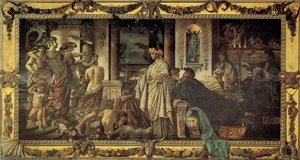
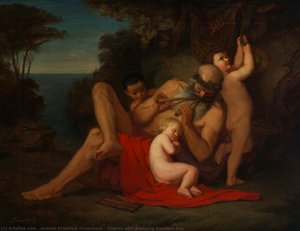
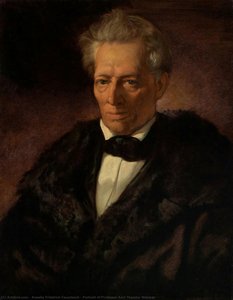
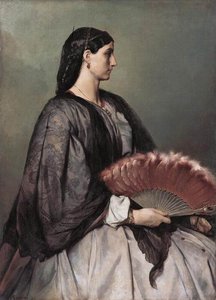
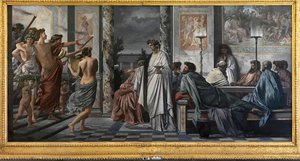
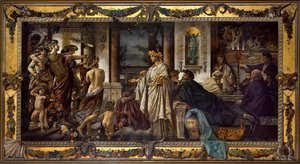
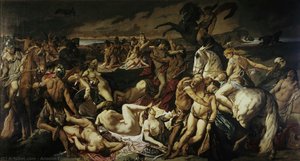
Throughout his career, Feuerbach produced a series of works that cemented his reputation as one of Germany’s most important 19th-century painters. Hafiz at the Fountain, created during his Parisian period in 1852, is an early masterpiece demonstrating his burgeoning style and fascination with exotic subjects. The painting captures a moment of poetic contemplation, showcasing Feuerbach's ability to create atmosphere and evoke emotion through color and composition. Silenus with Sleeping Bacchus Boy, housed at the Staatliche Kunsthalle Karlsruhe, exemplifies his graceful depiction of classical mythology, while The Battle of the Amazons reveals his skill in portraying dynamic movement and dramatic scenes on a grand scale. His talent for portraiture is evident in works like Portrait of Professor Karl Theodor Welcker, where he captures not only the subject’s physical likeness but also their intellectual character with remarkable precision. Perhaps his most celebrated achievements are the two versions of Plato’s Symposium. These paintings, depicting a scene from Plato's philosophical dialogue, are testaments to Feuerbach’s ability to translate abstract ideas into visual form, focusing on idealized beauty and intellectual discourse within a meticulously rendered classical setting. Other notable works include his evocative portraits of the model Nanna Risi, which demonstrate his mastery of capturing personality and emotion through subtle nuances of expression.Legacy and Historical Significance
Anselm Feuerbach is rightfully recognized as the leading classicist painter of the German 19th-century school. He bridged a critical gap between classical traditions and the evolving artistic trends of his time, influencing a generation of German artists with his emphasis on technical skill and idealized forms. While he initially garnered praise for his virtuosity, Feuerbach faced criticism during his lifetime from those who perceived his style as overly academic or detached. However, his reputation has steadily grown since his death, as scholars and art enthusiasts have come to appreciate the depth and complexity of his work. His lasting impact lies not only in the beauty and craftsmanship of his paintings but also in his exploration of timeless themes—beauty, emotion, intellect—within a classical framework. Feuerbach’s works continue to captivate audiences today, solidifying his place as a significant figure in 19th-century German art and a master of neoclassical painting infused with Romantic sensibility.
Anselm Friedrich Feuerbach
1829 - 1880 , Germany
Quick Facts
- Artistic Movement Or Style: Neoclassicism, Romanticism
- Artists Or Movements Influenced By This Artist: ['German artists']
- Artists Who Influenced This Artist:
- Schirmer
- Schadow
- Couture
- Date Of Birth: September 12, 1829
- Date Of Death: January 4, 1880
- Full Name: Anselm Friedrich Feuerbach
- Nationality: German
- Notable Artworks:
- Hafiz at the Fountain
- Silenus with Bacchus
- Battle of Amazons
- Plato’s Symposium
- Place Of Birth: Speyer, Germany
Related Articles
Anselm Feuerbach: Romantic Idealism & the Search for Spiritual Harmony in 19th-Century Painting
Explore the life & work of Anselm Feuerbach, a leading German Neoclassical painter. Discover his Romantic idealism, mythological scenes, and stunning portraits. Learn about his influences & lasting legacy with ArtsDot.
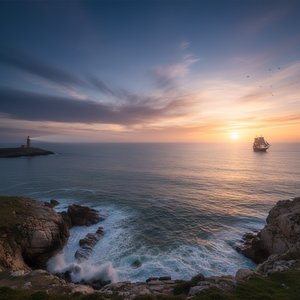
The Allure of the Horizon: A Comprehensive Exploration of Seascape Art Through History & Emotion
Explore the captivating world of seascape art! Discover its history, key artists & movements – from Dutch Masters to Impressionism. Expert insights for collectors and enthusiasts at ArtsDot.
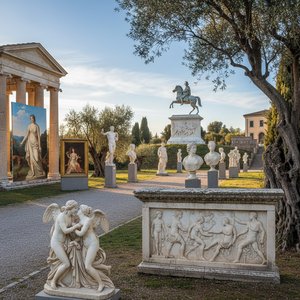
Neoclassical Art: 10 Masterpieces That Shaped History |
Explore 10 defining Neoclassical masterpieces by David, Ingres & Canova. Discover the history, symbolism & artistry behind these iconic paintings and sculptures. Find museum-quality art reproductions at – elevate your home with timeless beauty.

The Revival of Antiquity: Exploring Neoclassical Art's Ideals & Enduring Legacy
Explore the revival of classical ideals in Neoclassical art! Discover Jacques-Louis David & the movement's impact on painting, sculpture & architecture. Expert insights & high-quality reproductions at ArtsDot.

The Revival of Antiquity: Exploring the Neoclassical Movement & its Enduring Legacy
Explore the revival of classical art with our deep dive into Neoclassicism! Discover key artists like Jacques-Louis David, Enlightenment influences & lasting impact on art history. High-quality reproductions at ArtsDot.