 Preview
 Send
Send Share
Share
 Details

 Download
 Similars
 X-Ray
X-Ray Diaporama
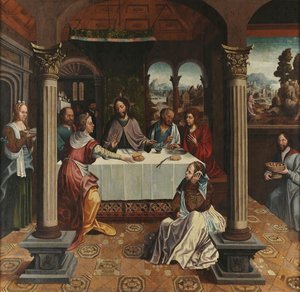
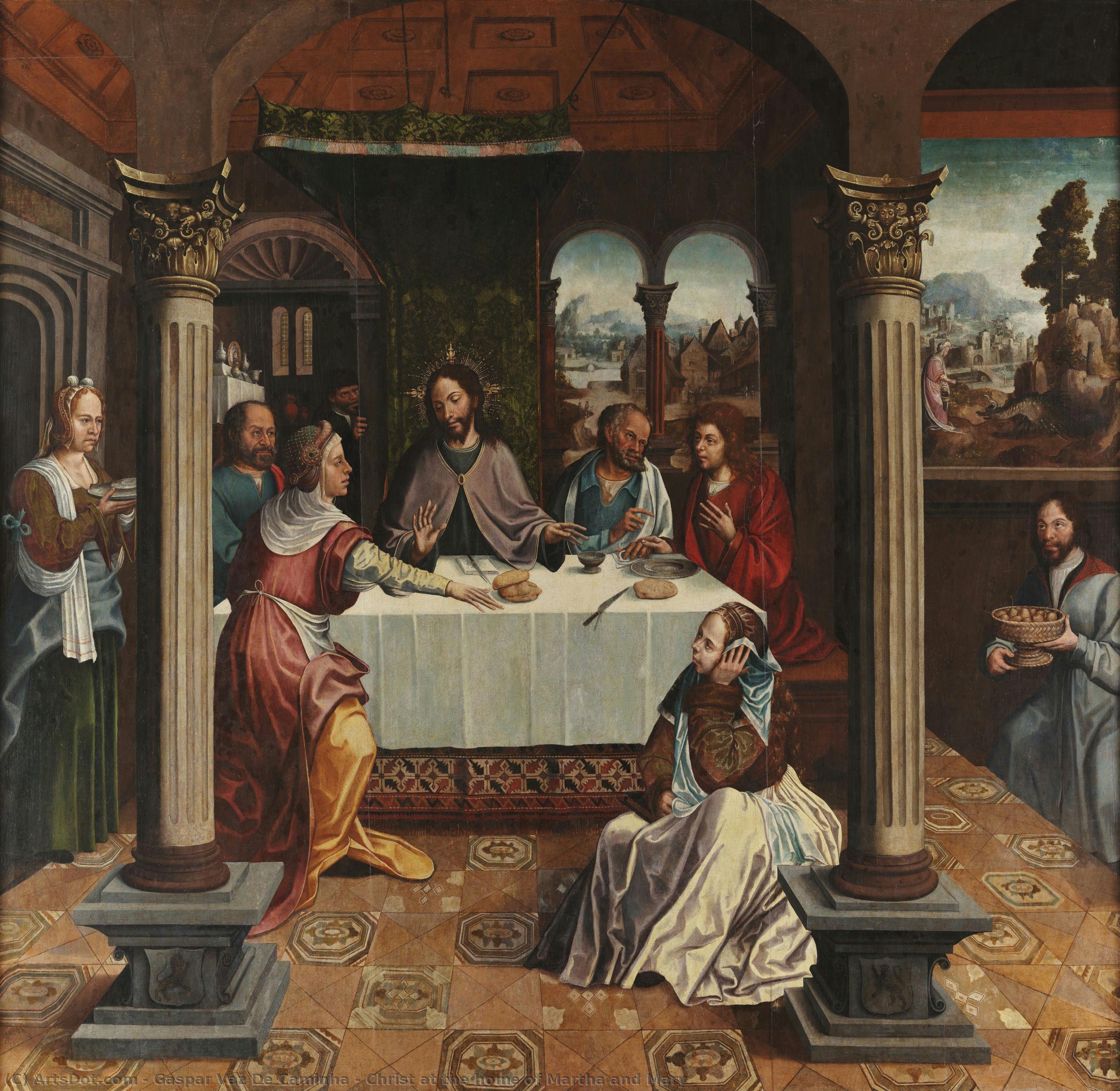
Christ at the home of Martha and Mary
 Acrylic On Canvas
- WallArt
- Mannerism Late Renaissance
 1540
1540 228.0 x 235.0 cm
 Grão Vasco National Museum
 Read More
Hand Made Oil Reproduction
Hand-painted oil on canvas in your size and frame, made to order by our artists. ( Buy Print Buy Image)




P118B $10

P118H $10

P118W $10

P438Z $10

P508JH $12

P508YH $12

P805H $10

P805Z $10

P919BZ $10

P919G $10

P919XJ $10

P959ZH $10

P968JZ $12

W106C $8

W218G $10

W218JH $8

W218Y $10

W307PJ $10

W316G $10

W316PJ $8

W316Y $10

W398PJ $8

W4111J $10

W500HY $15

W500JH $15

W692G $12

W849H $8

W940BG $15

W953PJ $8




Pick from our preset sizes that match the artwork's original proportions.

You may enter your own dimensions to fit a specific frame or space. If your selected size does not match the original image's proportions, we will either crop the artwork or extend the painting with additional hand-painted elements. A digital mockup will be sent for your approval before production begins.
Please note that the on-screen preview does not reflect the actual cropping or extension. Only the mockup will accurately show the final composition.
While custom sizes are available, we recommend selecting a dimension from the predefined list to preserve the original proportions.
After order, ArtsDot.com team will email client for instructions and provide a mockup preview
Worldwide Delivery () in 3/4 weeks instead of standard 5 weeks. (20 August). No compromise on quality.

Free Worldwide Express Shipping

High-Quality Linen Canvas

Full Shipping Insurance

Customs Tax Refund Guarantee

True Color Matching Guarantee

60-Day Return Policy (Defects Only)

100% Money-Back Guarantee

Bulk Discount Offer
 Glass option is only available in size under 110 CM

Christ at the home of Martha and Mary
Reproduction Medium
Reproduction Size
-


Total Price
$ 263
Artwork Description
Christ at the Home of Martha and Mary – A Masterpiece of Vasari’s Mannerist Vision
The painting “Christ at the Home of Martha and Mary,” executed by Giorgio Vasari in 1540, stands as a testament to the artistic fervor of the Florentine Renaissance and embodies the stylistic hallmarks of Mannerism. Commissioned for the chapel of the Episcopal Palace of Fontelo, Viseu, Portugal, this monumental artwork transcends mere depiction; it delves into profound theological themes interwoven with intricate compositional devices that captivated audiences of its time and continue to inspire admiration today. Vasari’s masterful handling of wood – a medium favored by artists seeking textural richness and expressive nuance – elevates the scene beyond simple realism, prioritizing psychological depth and spiritual contemplation.A Scene Steeped in Biblical Narrative
The painting recounts the Gospel account of Jesus dining with Martha and Mary (Luke 10:38–42), portraying an iconic moment of Christian piety. At the center stands Christ himself, bathed in a luminous glow emanating from above – a deliberate artistic choice reflecting the divine presence at the heart of faith. Flanking him are figures representing the contrasting virtues of contemplation and action: Mary Magdalene, seated gracefully at Jesus’s feet, embodies spiritual devotion and receptiveness to divine revelation; Martha, positioned on the right, diligently attends to domestic duties, symbolizing earthly responsibility and practical engagement with God's will. The inclusion of Peter and John reinforces the narrative’s significance as a depiction of the apostles’ role in witnessing Christ’s ministry.Mannerist Composition and Artistic Innovation
Vasari skillfully employs Mannerist techniques—characterized by elongated figures, stylized drapery, and dramatic perspective—to heighten the emotional impact of the scene. The figures are rendered with exaggerated proportions, conveying an unsettling beauty that challenges conventional artistic conventions. The draperies swirl and ripple with movement, creating a sense of dynamism and instability, mirroring the turbulent spiritual landscape of the era. Vasari’s use of chiaroscuro – dramatic contrasts between light and shadow – sculpts the forms of Christ and his companions, emphasizing their physicality while simultaneously conveying an ethereal quality. Notably, Vasari's meticulous attention to detail—evident in the rendering of textures and fabrics—demonstrates a commitment to artistic realism tempered by expressive stylistic considerations.Symbolism and Spiritual Resonance
Beyond its formal artistry, “Christ at the Home of Martha and Mary” resonates with rich symbolic meaning. The juxtaposition of Mary and Martha represents the duality inherent in Christian faith: the importance of both inner contemplation and outward service. Christ’s radiant presence symbolizes divine grace and compassion, offering solace to those seeking spiritual enlightenment. The chapel setting underscores the painting's sacred purpose—a visual meditation on the Gospels intended to inspire devotion and reverence. Vasari’s depiction aligns with broader artistic trends reflecting a preoccupation with theological themes and conveying profound emotional depth – a hallmark of Mannerist art that distinguishes it from earlier Renaissance styles.A Legacy Preserved in Bolognese Art History
Today, “Christ at the Home of Martha and Mary” resides within the Pinacoteca Nazionale di Bologna, where its enduring beauty continues to captivate visitors. Its preservation underscores the significance of Vasari’s contribution to Bolognese art history and serves as a reminder of the transformative power of artistic expression—a testament to Vasari's genius and his ability to capture the essence of Christian faith within a breathtaking visual masterpiece.Related Artworks
Artist Biography
early life and artistic pursuits
gaspar vaz de caminha, a knight by title, was born in 1540 in mogi das cruzes, brazil. his life took an intriguing turn when he accompanied pedro álvares cabral to india in 1500 as a secretary to the royal factory. this pivotal journey would later influence his artistic expressions.artistic contributions and notable works
gaspar vaz de caminha is best known for his masterpiece, christ at the home of martha and mary, created in 1540 using wood as his medium. this piece not only showcases his skill but also offers a glimpse into his spiritual inclinations.- medium: wood
- year: 1540
- location: india, during his tenure with pedro álvares cabral
museological significance and preservation
though the details of gaspar vaz de caminha's life are sparse, his artwork has been preserved and showcased in various museums. for instance, the new hall art collection (cambridge, united kingdom) is one such institution that has contributed to the conservation of art pieces like gaspar vaz de caminha’s.- museum: the new hall art collection
- location: cambridge, united kingdom
- notable collections: over 400 artworks from renowned artists
tragic end and lasting legacy
gaspar vaz de caminha’s life was cut short in a riot in calicut, india, at the end of 1501. despite his untimely demise, his artwork continues to inspire and intrigue art enthusiasts worldwide.- year of passing: 1501
- location of passing: calicut, india
- lasting impact: his artwork remains a testament to his skill and artistic vision
further exploration and resources
for more insights into gaspar vaz de caminha’s life and works, explore the following links: - [https://ArtsDot.com/@/gaspar-vaz-de-caminha](https://ArtsDot.com/@/gaspar-vaz-de-caminha) - a comprehensive overview of his artistic contributions. - /en/art/show/art-d3alr5-en/ - discover the new hall art collection, featuring gaspar vaz de caminha’s notable piece. delve into the enigmatic world of gaspar vaz de caminha and uncover the mysteries behind his timeless masterpieces.
gaspar vaz de caminha
1540 - 1501 , Brazil
Quick Facts
- Artistic Movement Or Style: Renaissance/Early Brazil
- Artists Or Movements Influenced By This Artist: ['']
- Artists Who Influenced This Artist: ['']
- Date Of Birth: 1540
- Date Of Death: 1501
- Full Name: Gaspar Vaz de Caminha
- Nationality: Brazilian
- Notable Artworks: ['Christ at the Home of Martha and Mary']
- Place Of Birth: Mogi das Cruzes, Brazil
Related Articles

Fra Angelico's Masterpieces: 25 Renaissance Paintings for Your Home | ArtsDot
Explore 25 breathtaking masterpieces by Fra Angelico, a Renaissance master. Discover the stories behind his iconic frescoes, Annunciations & religious art. Find museum-quality reproductions and elevate your home decor with ArtsDot.com.

Jacob Henricus Maris: A Master of Dutch Atmospheric Realism & the Intimate Landscape
Explore the captivating world of Jacob Henricus Maris, a leading figure of the Dutch Hague School. Discover his atmospheric landscapes, signature brushstrokes & lasting influence on 19th-century art. Learn more at ArtsDot.
Mannerism: Bridging Renaissance Harmony & Baroque Drama – A Study of Style & Affectation
Explore the fascinating world of Mannerism! Discover its key characteristics, pioneering artists like Pontormo & Bronzino, and its pivotal role in bridging Renaissance harmony to Baroque drama. A comprehensive guide for art enthusiasts.
El Greco's Masterpieces: Explore 25 Iconic Paintings & Spiritual Visions | ArtsDot
Journey through El Greco's 25 most iconic paintings! Explore the spiritual depth & dramatic beauty of this Spanish Renaissance master. Discover art history, techniques & find museum-quality reproductions for your home at ArtsDot.com.

Illuminating Faith: Biblical Narrative & Artistic Expression Through the Ages
Explore the rich history of biblical art from Giotto to the Renaissance masters with ArtsDot. Discover symbolism, techniques & enduring legacies. Museum-quality reproductions & expert insights.