 Preview
 Send
Send Share
Share
 Details

 Download
 Similars
 X-Ray
X-Ray Diaporama
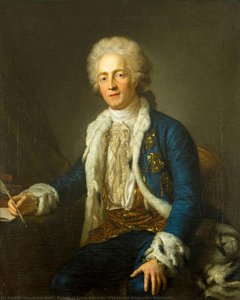
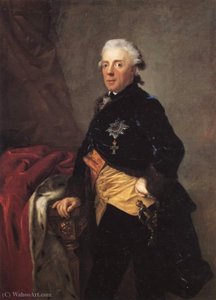
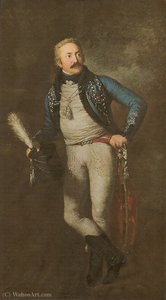
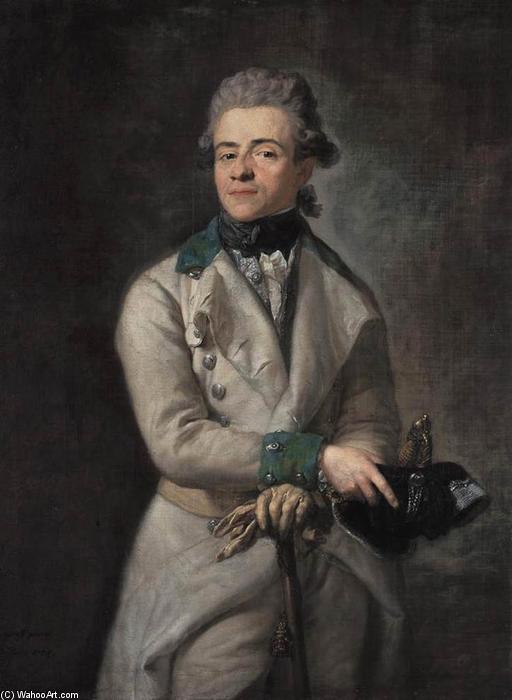
Heinrich XIII, Graf Reuss
 Acrylic On Canvas
- WallArt
- Neoclassical Painting
 1775
1775 113.0 x 84.0 cm
 Neue Pinakothek
 Read More
Hand Made Oil Reproduction
Hand-painted oil on canvas in your size and frame, made to order by our artists. ( Buy Print Buy Image)




P118B $10

P118H $10

P118W $10

P438Z $10

P508JH $12

P508YH $12

P805H $10

P805Z $10

P919BZ $10

P919G $10

P919XJ $10

P959ZH $10

P968JZ $12

W106C $8

W218G $10

W218JH $8

W218Y $10

W307PJ $10

W316G $10

W316PJ $8

W316Y $10

W398PJ $8

W4111J $10

W500HY $15

W500JH $15

W692G $12

W849H $8

W940BG $15

W953PJ $8




Pick from our preset sizes that match the artwork's original proportions.

You may enter your own dimensions to fit a specific frame or space. If your selected size does not match the original image's proportions, we will either crop the artwork or extend the painting with additional hand-painted elements. A digital mockup will be sent for your approval before production begins.
Please note that the on-screen preview does not reflect the actual cropping or extension. Only the mockup will accurately show the final composition.
While custom sizes are available, we recommend selecting a dimension from the predefined list to preserve the original proportions.
After order, ArtsDot.com team will email client for instructions and provide a mockup preview
Worldwide Delivery () in 3/4 weeks instead of standard 5 weeks. (18 August). No compromise on quality.

Free Worldwide Express Shipping

High-Quality Linen Canvas

Full Shipping Insurance

Customs Tax Refund Guarantee

True Color Matching Guarantee

60-Day Return Policy (Defects Only)

100% Money-Back Guarantee

Bulk Discount Offer
 Glass option is only available in size under 110 CM

Heinrich XIII, Graf Reuss
Reproduction Medium
Reproduction Size
-


Total Price
$ 263
Artwork Description
A Window into Enlightenment Aristocracy: Anton Graff’s Heinrich XIII, Graf Reuss
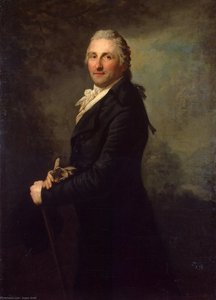
Anton Graff's portrait of Heinrich XIII, Graf Reuss stands as a quintessential emblem of the late Baroque and early Neoclassical era—a period characterized by intellectual curiosity, artistic refinement, and an unwavering fascination with classical ideals. Executed in 1775, this canvas transcends mere likeness; it’s a meticulously crafted tableau that speaks volumes about the social dynamics and cultural sensibilities of its time.
- Subject Matter: The portrait depicts Heinrich XIII, Prince Reuss of Greiz, Untergreiz, and Obergreiz—a prominent figure within the influential Reuss family. This lineage had ascended to princely status in 1778, marking a significant moment in Saxon history.
- Style & Technique: Graff’s masterful application of oil paint on canvas exemplifies Neoclassical precision. Fine details – the textured fabric of Heinrich XIII's coat, the subtle modeling of his face—demonstrate an unwavering commitment to realism, mirroring the artistic conventions championed by artists like Johann Joachim Winckelmann and Jacques-Louis David.
- Historical Context: Painted during the Enlightenment, this artwork reflects the burgeoning interest in reason and observation. Heinrich XIII’s dignified pose and contemplative gaze align perfectly with the philosophical currents of the time, embodying a desire for composure amidst intellectual upheaval.
Light & Shadow – The Language of Emotion
Graff skillfully employs chiaroscuro—the dramatic interplay of light and shadow—to imbue the portrait with depth and psychological nuance. Light illuminates Heinrich XIII’s face, highlighting his features and conveying a sense of inner seriousness. Conversely, darker tones envelop the background, creating a stark contrast that emphasizes the subject's stature and reinforces the solemn mood.
Symbolism: Dress & Status – Reflections of Power
Heinrich XIII’s attire—a richly embroidered coat adorned with epaulettes and buttons—serves as a powerful visual symbol of his noble rank. The cravat, fashionable during the period, further underscores his social standing. These elements communicate not only material wealth but also adherence to established hierarchies and traditions.
A Legacy Preserved in Paint
“Heinrich XIII, Graf Reuss” remains a testament to Graff’s artistic prowess and his ability to capture the essence of an era—a time when portraiture served as both documentation and aspiration. Its enduring appeal lies in its capacity to transport viewers back to 1775, offering a glimpse into the world of aristocratic nobility and the profound influence of classical aesthetics.
Related Artworks
Artist Biography
A Life Etched in Likeness: The World of Anton Graff
Anton Graff, born in Winterthur, Switzerland in 1736, emerged as one of the most celebrated portraitists of his era—a period defined by the Enlightenment’s intellectual fervor and the burgeoning Neoclassical aesthetic. His story is not merely a chronicle of artistic skill but a fascinating journey through the social and cultural landscapes of 18th and early 19th century Europe, intimately connected with some of its most brilliant minds. Graff's beginnings were humble; he received his initial training in Winterthur under Johann Ulrich Schellenberg before venturing to Augsburg where his talent quickly outpaced the local guild’s comfort level. Forced to move on due to the anxieties of less gifted contemporaries, he found mentorship with Johann Jakob Haid and later, Leonhard Schneider in Ansbach, honing his skills while absorbing diverse artistic influences. These early experiences instilled in him not only technical proficiency but also a resilience that would characterize his career. Frequent trips to Munich allowed him to study masterworks, laying the foundation for his distinctive style—a blend of meticulous detail, psychological insight, and an emerging Neoclassical sensibility.From Dresden Court Painter to Chronicler of an Era
The pivotal moment in Graff’s career arrived with his appointment as court painter to the Saxon electorate in Dresden in 1766. This position provided him not only financial security but also access to a vibrant intellectual circle and a steady stream of prominent sitters. He quickly became *the* portraitist of choice for the leading figures of the German Enlightenment, immortalizing individuals like Friedrich Schiller, Christoph Willibald Gluck, Gotthold Ephraim Lessing, Moses Mendelssohn, and Johann Gottfried Herder on canvas. These were not simply likenesses; Graff possessed a remarkable ability to capture the inner lives of his subjects—their intellect, their passions, and their vulnerabilities. He wasn’t merely painting faces; he was documenting an intellectual revolution. His portraits became visual embodiments of the era's philosophical and artistic currents. The invitation from Christian Ludwig von Hagedorn, director of the Dresden Art Academy, initially met with Graff’s own self-doubt, speaks volumes about his humility despite undeniable talent. It was a self-portrait that ultimately secured his position, demonstrating a confidence and skill that resonated deeply within the court.A Master of Light, Shadow, and Social Nuance
Graff's artistic technique was characterized by a masterful command of light and shadow, influenced significantly by the work of Ján Kupecký, whose paintings he studied intently. He employed this skill to draw attention to the faces of his sitters, imbuing them with depth and psychological complexity. However, Graff wasn’t oblivious to the social conventions of his time; while focusing on the face for male subjects, he often subtly highlighted the décolletage of female sitters—a nod to prevailing aesthetic expectations. His attention to detail extended beyond the human form, encompassing the textures of fabrics and draperies with a precision reminiscent of French court painters like Hyacinthe Rigaud. Initially favoring monochrome backgrounds, Graff later embraced outdoor settings, reflecting the growing trend in English portraiture. The price of his portraits reflected not only his time but also the intricacy of the sitter’s attire—a testament to the importance placed on social status and material wealth during that period. He was a keen observer of human nature, famously noting Schiller's difficulty in remaining still for a sitting – a charming anecdote revealing both his patience and his perceptive eye.Legacy and Historical Significance
Anton Graff’s influence extended beyond the realm of portraiture. As a teacher at the Dresden Art Academy, he nurtured the talents of future generations of artists, including Emma Körner, Philipp Otto Runge, and Karl Ludwig Kaaz. His work represents a crucial bridge between the Rococo and Neoclassical styles, embodying both the elegance and ornamentation of the former with the clarity and restraint of the latter. He painted nearly 1,000 portraits during his lifetime, creating an invaluable visual record of the German Enlightenment and its leading figures. Perhaps his most celebrated work is the portrait of Frederick the Great, a masterpiece created without ever having the king pose for him directly. Graff cleverly observed the monarch during military parades, capturing his commanding presence and steely gaze with remarkable accuracy. This painting, housed at Schloss Charlottenburg, remains an iconic image of Prussian power and leadership. Anton Graff’s legacy endures not only through his stunning portraits but also as a testament to the power of art to capture the spirit of an age. He was more than just a painter; he was a chronicler, a social commentator, and a master of human representation whose work continues to resonate with audiences today.A Lasting Impression
Despite receiving lucrative offers from other academies, including one in Berlin, Graff remained committed to Dresden, solidifying his position as the leading portrait painter in Germany throughout the late 18th and early 19th centuries. His clientele extended beyond the German nobility to include Russian, Polish, and Baltic aristocrats, further cementing his international reputation. He was a favorite among poets, musicians, diplomats, and scholars—individuals who appreciated his ability to capture their essence on canvas. Graff’s portraits offer a unique window into a pivotal period in European history, providing invaluable insights into the lives, thoughts, and aspirations of those who shaped the Enlightenment and laid the foundations for the Romantic era. His work stands as a lasting tribute to the power of portraiture to transcend mere representation and become a profound expression of human experience.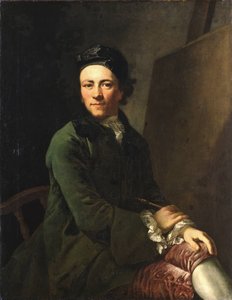
Anton Graff
1736 - 1813 , Switzerland
Quick Facts
- Artistic Movement Or Style: Neoclassical painting
- Artists Or Movements Influenced By This Artist:
- Emma Körner
- Philipp Otto Runge
- Karl Ludwig Kaaz
- Artists Who Influenced This Artist:
- Ján Kupecký
- Hyacinthe Rigaud
- Date Of Birth: 1736
- Date Of Death: 1813
- Full Name: Anton Graff
- Nationality: Swiss
- Notable Artworks:
- Frederick the Great
- Portrait of Schiller
- Place Of Birth: Winterthur, Switzerland
Related Articles
Neoclassical Art: 10 Masterpieces That Shaped History |
Explore 10 defining Neoclassical masterpieces by David, Ingres & Canova. Discover the history, symbolism & artistry behind these iconic paintings and sculptures. Find museum-quality art reproductions at – elevate your home with timeless beauty.
The Revival of Antiquity: Exploring Neoclassical Art's Ideals & Enduring Legacy
Explore the revival of classical ideals in Neoclassical art! Discover Jacques-Louis David & the movement's impact on painting, sculpture & architecture. Expert insights & high-quality reproductions at ArtsDot.
The Revival of Antiquity: Exploring the Neoclassical Movement & its Enduring Legacy
Explore the revival of classical art with our deep dive into Neoclassicism! Discover key artists like Jacques-Louis David, Enlightenment influences & lasting impact on art history. High-quality reproductions at ArtsDot.
Beyond Myth & Madness: Exploring the Visionary Art of Johann Heinrich Füssli
Explore the captivating world of Johann Heinrich Füssli (Henry Fuseli), a master of Romantic art. Discover his iconic 'The Nightmare' and Shakespearean scenes, plus insights for collectors & enthusiasts.
The Enduring Legacy of Neoclassical Art: Order, Reason & Antiquity's Revival
Explore the enduring legacy of Neoclassical art! Discover masterpieces by David, Girodet & Garnier. Expert analysis, custom reproductions & art appraisal at ArtsDot.