 Preview
 Send
Send Share
Share
 Details

 Download
 Similars
 X-Ray
X-Ray Diaporama
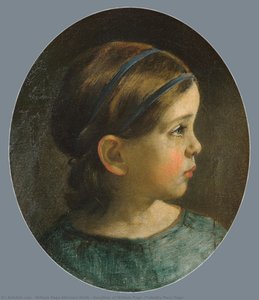
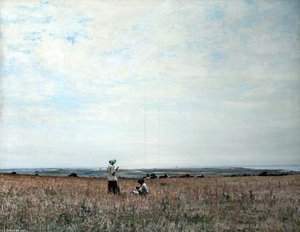
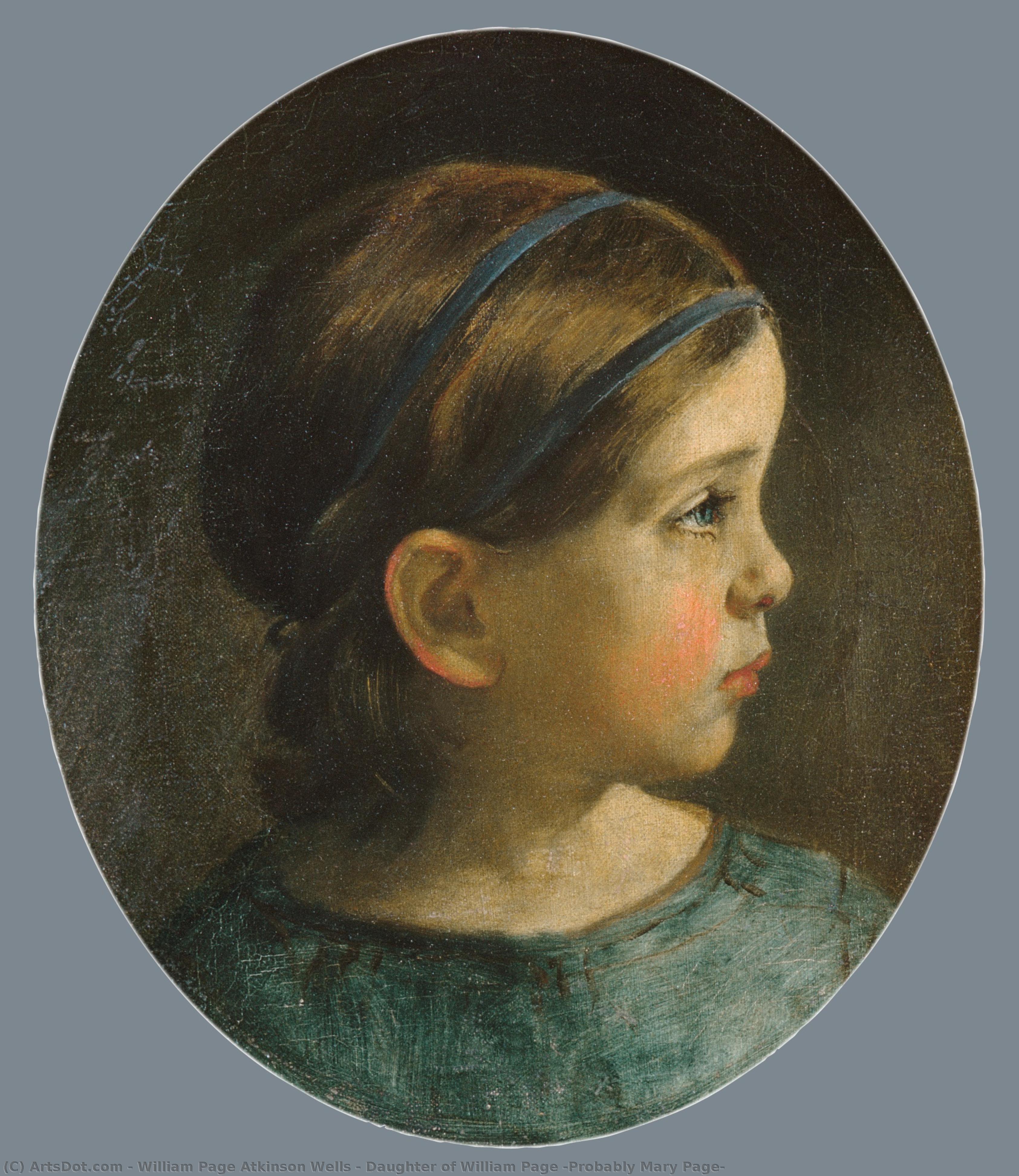
Daughter of William Page (Probably Mary Page)
 Acrylic On Canvas
- WallArt
- Barbizon School
 1840
1840 36.0 x 31.0 cm
 Metropolitan Museum of Art
 Read More
Hand Made Oil Reproduction
Hand-painted oil on canvas in your size and frame, made to order by our artists. ( Buy Print Buy Image)




P118B $10

P118H $10

P118W $10

P438Z $10

P508JH $12

P508YH $12

P805H $10

P805Z $10

P919BZ $10

P919G $10

P919XJ $10

P959ZH $10

P968JZ $12

W106C $8

W218G $10

W218JH $8

W218Y $10

W307PJ $10

W316G $10

W316PJ $8

W316Y $10

W398PJ $8

W4111J $10

W500HY $15

W500JH $15

W692G $12

W849H $8

W940BG $15

W953PJ $8




Pick from our preset sizes that match the artwork's original proportions.

You may enter your own dimensions to fit a specific frame or space. If your selected size does not match the original image's proportions, we will either crop the artwork or extend the painting with additional hand-painted elements. A digital mockup will be sent for your approval before production begins.
Please note that the on-screen preview does not reflect the actual cropping or extension. Only the mockup will accurately show the final composition.
While custom sizes are available, we recommend selecting a dimension from the predefined list to preserve the original proportions.
After order, ArtsDot.com team will email client for instructions and provide a mockup preview
Worldwide Delivery () in 3/4 weeks instead of standard 5 weeks. (17 August). No compromise on quality.

Free Worldwide Express Shipping

High-Quality Linen Canvas

Full Shipping Insurance

Customs Tax Refund Guarantee

True Color Matching Guarantee

60-Day Return Policy (Defects Only)

100% Money-Back Guarantee

Bulk Discount Offer
 Glass option is only available in size under 110 CM

Daughter of William Page (Probably Mary Page)
Reproduction Medium
Reproduction Size
-


Total Price
$ 263
Artwork Description
A Moment Frozen in Time: Exploring William Page Atkinson Wells’s “Daughter of William Page (Probably Mary Page)”
The painting "Daughter of William Page (Probably Mary Page)" by William Page Atkinson Wells stands as a testament to the Barbizon School's influence on British landscape art—a movement dedicated to capturing the sublime beauty of nature through tonal harmonies and direct observation. Completed in 1840, this serene depiction resides within the Metropolitan Museum of Art’s collection, offering viewers a glimpse into Victorian sensibilities and an artist’s profound connection with the Scottish countryside. Wells's artistic vision was undeniably shaped by his exposure to French landscape painters like Jean-François Millet and Gustave Courbet, who championed a revolutionary approach—abandoning idealized representations for honest portrayals of rural life. This commitment is palpable in every brushstroke of “Daughter,” where Wells meticulously renders the girl’s face bathed in soft light, conveying an understated emotion that transcends mere visual detail. The subtle gradations of color – predominantly blues and greens – create a captivating atmosphere reminiscent of misty mornings over Loch Lomond or Skye. The composition itself is deceptively simple: a young woman seated outdoors, gazing directly at the viewer. This gaze isn’t merely observational; it possesses an intimacy that invites contemplation. Scholars believe Wells intended to depict Mary Page, daughter of William Page Atkinson Wells and Eliza Jane Wells (née MacLeod), capturing her youthful innocence against the backdrop of Scotland's majestic landscape. The ribbon in her hair—a common accessory for young ladies during the Victorian era—adds a touch of decorative elegance while subtly reinforcing themes of femininity and domestic tranquility. Technically, Wells employed oil paints on canvas, utilizing layering techniques to achieve remarkable depth and luminosity. He skillfully blended pigments to create tonal harmonies that mimic the natural world, prioritizing atmospheric perspective – demonstrating an understanding of how light interacts with surfaces to convey realism. The meticulous attention to detail extends beyond color; subtle nuances in texture contribute to the painting's tactile quality, transporting the viewer into the scene. Beyond its aesthetic beauty, “Daughter” speaks to broader cultural anxieties surrounding Victorian ideals of motherhood and childhood. The girl’s serene expression embodies a yearning for purity and contentment—values prized during a period marked by social upheaval and moral scrutiny. Wells’s masterful rendering captures not just a portrait but also an emotional resonance that continues to captivate audiences today, cementing its place as a significant work within the canon of British landscape painting. Its enduring appeal lies in its ability to evoke feelings of peace and nostalgia—a timeless reminder of Scotland's pastoral charm and the artist’s unwavering dedication to capturing the essence of human experience through the language of art.Related Artworks
Artist Biography
The Soul of the British Landscape
In the quiet, mist-laden reaches of the late Victorian and Edwardian eras, the work of William Page Atkinson Wells emerged as a profound meditation on the natural world. Born in the evocative landscape of Sunderland Point, Northumberland, Wells possessed an innate connection to the rugged beauty of the British Isles. His artistry was not merely a recording of scenery but an attempt to capture the very breath of the earth, a pursuit deeply rooted in the Barbizon School tradition. By prioritizing direct observation and the subtle interplay of light and shadow, he brought a sense of palpable realism and emotional depth to his canvases, transforming the Scottish Highlands and coastal vistas into timeless realms of peace.Artistic Lineage and Technical Mastery
The foundation of Wells’s evocative style was laid during his formative years at the Newcastle Art College. It was here that he absorbed the stylistic precepts of masters such as Jean-François Millet and Gustave Courbet, whose commitment to honest, unidealized portrayals of nature resonated with his own sensibilities. This influence is most evident in his meticulous technique; Wells was a master of layering thin, translucent glazes of oil paint upon toned canvases. This method allowed him to achieve a remarkable luminosity, capturing the subtle gradations of color found in a shifting sky or the soft glow of dawn. His ability to render complex textures—the coarse heather of a hillside or the rhythmic surge of a coastal wave—demonstrated an exceptional command over topographical representation and atmospheric perspective.A Legacy of Serenity
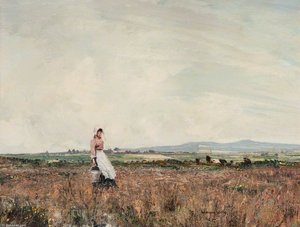
The enduring power of Wells’s work lies in its ability to transport the viewer to a state of quiet contemplation. His paintings serve as windows into a pastoral world, where the passage of time is marked only by the changing seasons and the movement of light. Through his dedication to tonal harmony and the emotional resonance of the landscape, he left behind a legacy that continues to enchant, offering a sanctuary of stillness. Among his most celebrated contributions to British landscape art are:- October Winds, a hauntingly beautiful portrayal of autumnal foliage caught in the soft, diffused sunlight of a fading season.
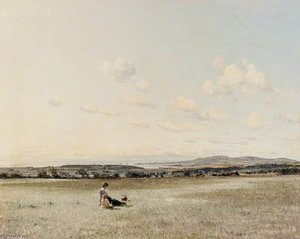
- The Fields Of Ballacallow, Isle Of Man, which stands as a masterclass in depicting pastoral tranquility and the simple beauty of rural life.
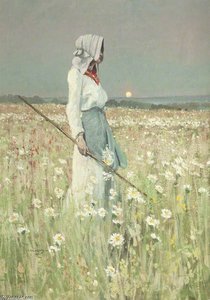
- Margeurites In The Meadow, an impressionistic exploration of naturalism and the delicate textures of the meadowland.
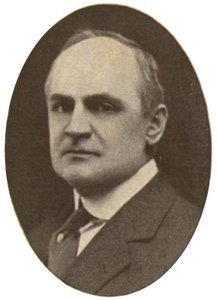
William Page Atkinson Wells
1871 - 1923 , United Kingdom
Quick Facts
- Artistic Movement Or Style: Barbizon School
- Artists Or Movements Influenced By This Artist: ['Impressionism']
- Artists Who Influenced This Artist:
- Gustave Courbet
- Jean-François Millet
- Date Of Death: 1923
- Full Name: William Page Atkinson Wells
- Nationality: British
- Notable Artworks:
- October Winds
- The Fields Of Ballacallow, Isle Of Man
- Place Of Birth: United Kingdom
Related Articles

Beyond the Horizon: 10 Landscape Masterpieces for Your Home Decor
Journey through 10 breathtaking landscape paintings by Monet, Van Gogh & more! Explore iconic artworks, artistic techniques & find inspiration for your home decor. Museum-quality reproductions at ArtsDot.com. Discover all masterpieces on ArtsDot.com

Romantic Landscapes: 10 Masterpieces for Your Home | ArtsDot
Journey through 10 Romantic landscape masterpieces by Friedrich, Turner & Cole. Explore emotional art, sublime nature scenes & iconic 19th-century paintings. Find museum-quality reproductions for your home at ArtsDot.com – discover the full collection online!
Sir William George Gillies: A Scottish Colourist's Journey Through Landscape & Abstraction
Explore the captivating world of Sir William George Gillies, a leading Scottish Colourist. Discover his journey from Cubism to iconic landscapes & still lifes. Expert insights for collectors and art enthusiasts.

John Constable's Masterpieces: Explore 25 Iconic Landscapes for Your Home
Journey through John Constable's 25 most celebrated landscapes. Explore Romanticism, Dedham Vale & his masterful use of light in iconic paintings like 'Hay Wain'. Find museum-quality art reproductions and elevate your home decor on ArtsDot.com.
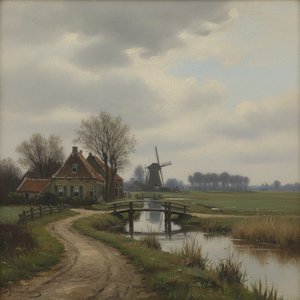
Jacob Henricus Maris: A Master of Dutch Atmospheric Realism & the Intimate Landscape
Explore the captivating world of Jacob Henricus Maris, a leading figure of the Dutch Hague School. Discover his atmospheric landscapes, signature brushstrokes & lasting influence on 19th-century art. Learn more at ArtsDot.