 Preview
 Send
Send Share
Share
 Details

 Download
 Similars
 X-Ray
X-Ray Diaporama
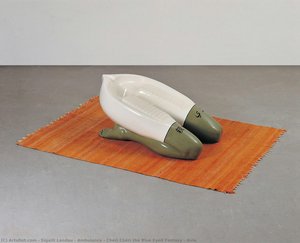
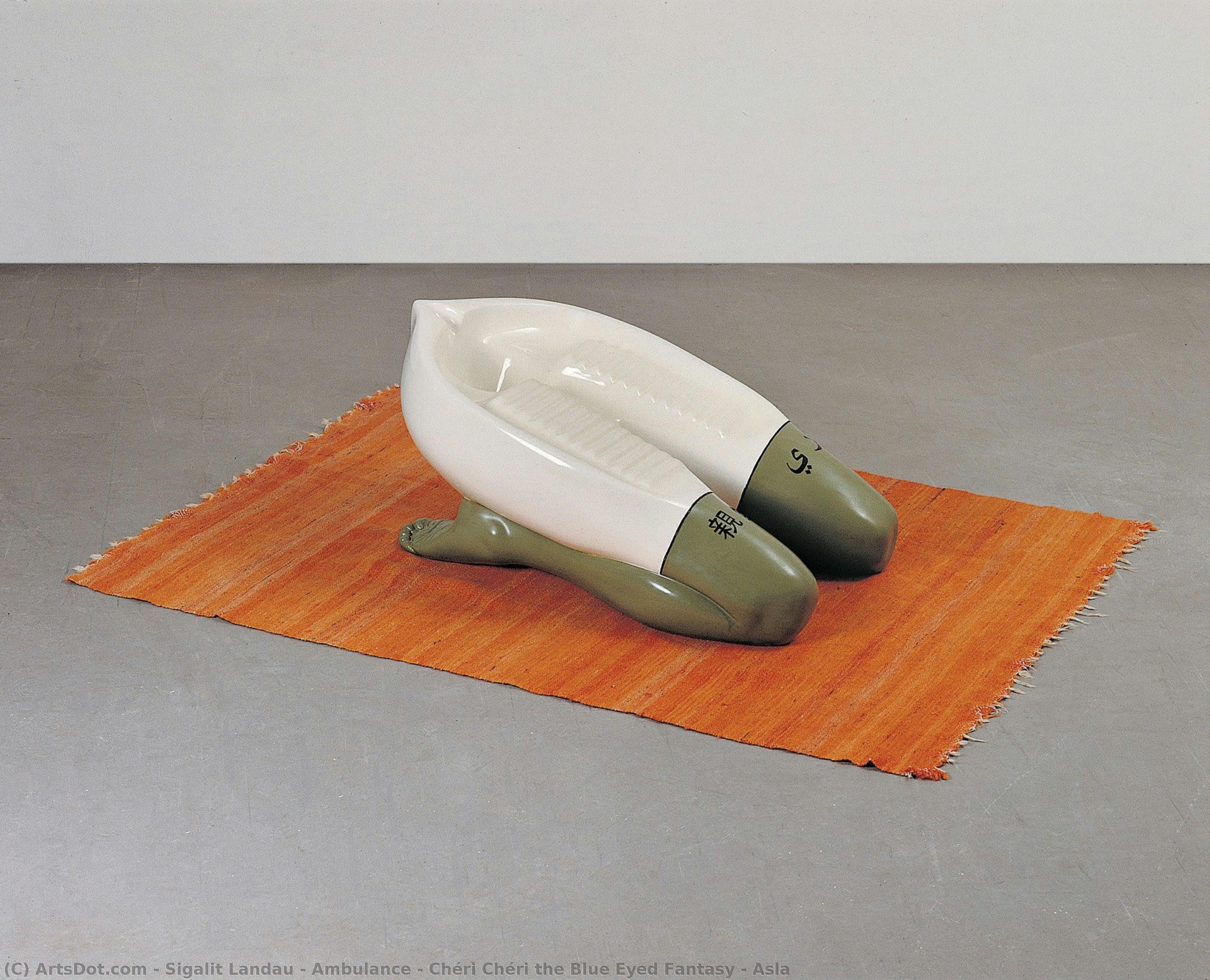
Ambulance / Chéri Chéri the Blue Eyed Fantasy / Asla


 Read More
Hand Made Oil Reproduction
Hand-painted oil on canvas in your size and frame, made to order by our artists. ( Buy Print Buy Image)




P118B $10

P118H $10

P118W $10

P438Z $10

P508JH $12

P508YH $12

P805H $10

P805Z $10

P919BZ $10

P919G $10

P919XJ $10

P959ZH $10

P968JZ $12

W106C $8

W218G $10

W218JH $8

W218Y $10

W307PJ $10

W316G $10

W316PJ $8

W316Y $10

W398PJ $8

W4111J $10

W500HY $15

W500JH $15

W692G $12

W849H $8

W940BG $15

W953PJ $8




Pick from our preset sizes that match the artwork's original proportions.

You may enter your own dimensions to fit a specific frame or space. If your selected size does not match the original image's proportions, we will either crop the artwork or extend the painting with additional hand-painted elements. A digital mockup will be sent for your approval before production begins.
Please note that the on-screen preview does not reflect the actual cropping or extension. Only the mockup will accurately show the final composition.
While custom sizes are available, we recommend selecting a dimension from the predefined list to preserve the original proportions.
After order, ArtsDot.com team will email client for instructions and provide a mockup preview
Worldwide Delivery () in 3/4 weeks instead of standard 5 weeks. (4 September). No compromise on quality.

Free Worldwide Express Shipping

High-Quality Linen Canvas

Full Shipping Insurance

Customs Tax Refund Guarantee

True Color Matching Guarantee

60-Day Return Policy (Defects Only)

100% Money-Back Guarantee

Bulk Discount Offer
 Glass option is only available in size under 110 CM

Ambulance / Chéri Chéri the Blue Eyed Fantasy / Asla
Reproduction Medium
Reproduction Size
-


Total Price
$ 263
Sigalit Landau’s “Ambulance / Chéri Chéri the Blue Eyed Fantasy / Asla”: A Meditation on Weight and Absence
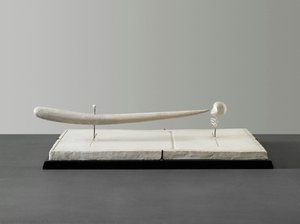
Sigalit Landau's "Ambulance / Chéri Chéri the Blue Eyed Fantasy / Asla" is a profoundly unsettling work, a bronze sculpture that immediately commands attention with its impossible geometry and haunting stillness. Created in 1999, this piece, currently residing within the Tel Aviv Museum of Art’s collection, transcends simple representation, inviting viewers into a complex meditation on weight, absence, and the precariousness of existence. Landau's masterful manipulation of bronze – its rich textures, subtle shifts in color, and inherent solidity – creates an object that feels both monumental and fragile, mirroring the themes at its core.
- The Uncanny Composition: The central image is a white boat or raft, rendered with meticulous detail, supporting two strikingly green legs. This juxtaposition immediately establishes an unsettling atmosphere, blurring the lines between natural forms and manufactured objects. The raft’s apparent levitation – suspended in mid-air as if carried by an unseen force – adds to this sense of unease, suggesting a detachment from earthly constraints.
- Bronze's Weighty Presence: Landau’s choice of bronze is crucial. Bronze, historically associated with strength and permanence, ironically contributes to the work’s vulnerability. The material’s density emphasizes the weight implied by the raft and legs, while its surface patina hints at the passage of time and the inevitable decay of even the most robust materials.
- A Dialogue with History: While Landau herself has described her work as confronting uncomfortable truths, "Ambulance / Chéri Chéri..." subtly echoes historical narratives surrounding rescue, fragility, and the burden of responsibility. The title itself – a layered invocation of both emergency services and a fantastical, almost childlike yearning – adds another layer of complexity.
Symbolism and Interpretation: A Weightless Burden
The symbolism within "Ambulance / Chéri Chéri..." is deliberately ambiguous, inviting multiple interpretations. The raft, traditionally associated with journeys and escape, here seems trapped in a perpetual state of suspension. The green legs, often linked to fertility and growth, are presented in an unnatural position, suggesting a disruption or imbalance. This combination evokes a sense of vulnerability and the potential for collapse – a poignant commentary on the human condition.
- The “Ambulance” Motif: The title’s reference to an ambulance subtly introduces themes of emergency response, care, and potentially, futile attempts at rescue. However, the raft's inability to move suggests that help is unavailable or unattainable.
- Color as a Disruptive Element: The vibrant green of the legs stands in stark contrast to the muted tones of the bronze, further intensifying the work’s unsettling effect. Green has long been associated with life and hope, but here it feels corrupted, hinting at a loss of innocence or a distorted perception of reality.
Technique and Artistic Vision
Landau's technical skill is evident in every detail of "Ambulance / Chéri Chéri..." Her mastery of bronze casting allows her to achieve an astonishing level of realism in the rendering of the raft and legs, while simultaneously creating a sense of ethereal lightness. The surface texture of the bronze – achieved through careful polishing and patination – adds depth and complexity to the sculpture, inviting viewers to explore its contours with their eyes.
- Sculptural Process: Landau’s process likely involved meticulous modeling, casting in a traditional foundry, and then extensive hand-finishing to achieve the desired level of detail and texture.
- Conceptual Depth: Beyond technical skill, Landau's vision is what truly elevates this work. She doesn’t simply create an object; she crafts an experience – one that challenges our assumptions about reality, beauty, and the nature of existence.
Collecting and Displaying “Ambulance / Chéri Chéri…”
"Ambulance / Chéri Chéri the Blue Eyed Fantasy / Asla" is a compelling addition to any serious art collection. Its unique aesthetic and thought-provoking themes make it an ideal piece for both private residences and corporate spaces. The sculpture’s substantial size (though unknown) ensures that it will command attention, while its bronze construction guarantees durability and timeless appeal. Consider displaying this work in a space where contemplation and reflection are valued – perhaps a library, study, or gallery-inspired room. A high-quality hand-painted reproduction offers an accessible way to appreciate Landau’s genius and bring the unsettling beauty of “Ambulance / Chéri Chéri…” into your home.
Related Artworks

Artist Biography
Kara Walker: Unearthing the Shadows of American History
Kara Elizabeth Walker, born in November 1969 in Stockton, California, is a towering figure in contemporary art—a silhouettist, painter, printmaker, installation artist, filmmaker, and professor whose work confronts the uncomfortable truths of American history through a lens of racial violence, gender dynamics, and societal hypocrisy. Her distinctive style, characterized by large-scale, hand-cut black paper silhouettes depicting scenes from antebellum plantations and other historical contexts, immediately grabs attention while simultaneously demanding deeper reflection. Walker’s art isn't merely visually arresting; it’s a potent interrogation of the nation’s past and its ongoing legacy.Early Life and Artistic Beginnings
Walker’s childhood was shaped by significant geographical and cultural shifts. Her father, Larry Walker, a painter and professor, moved the family from California to Stone Mountain, Georgia, in 1973, a move that dramatically altered her young life. This relocation thrust her into an environment starkly different from her previous suburban upbringing—a place where the vestiges of the Ku Klux Klan still lingered, creating a palpable sense of racial tension and historical weight. As she herself described later, this experience profoundly impacted her artistic trajectory, fueling a desire to grapple with the complexities of race relations in America. Her mother, Gwendolyn Walker, worked as an administrative assistant, providing a stable home environment amidst these significant changes. This early exposure to both art through her father and the realities of racial inequality instilled within her a critical perspective that would become central to her artistic vision. She began drawing at a young age, initially inspired by the illustrations in children’s books, but quickly developed a fascination with silhouette art—a technique she would master and transform into her signature style.The Rise of Fons Americanus and Critical Recognition
Walker's artistic breakthrough came in 1997 when she was awarded the prestigious MacArthur Fellowship, often referred to as a “genius grant.” This recognition catapulted her onto the international art scene and solidified her position as one of the most important voices addressing issues of race and identity. Around this time, she began creating her now-iconic "Fons Americanus" series (1997–2000), a collection of monumental room-sized installations depicting scenes of sexual violence and exploitation within the context of Southern plantations. These works, rendered entirely in black paper silhouettes, are both visually stunning and deeply unsettling, forcing viewers to confront the brutal realities of slavery and its enduring impact on American society. The scale of these installations—often spanning entire rooms—amplifies the emotional intensity of the scenes, creating an immersive experience that is simultaneously captivating and disturbing. The series’ title, derived from a Roman fountain symbolizing fertility, serves as a pointed commentary on the distorted notions of family and reproduction within the context of slavery.Technique and Symbolism: The Power of Silhouette
Walker's artistic technique is deceptively simple yet profoundly effective. She meticulously cuts intricate silhouettes from black paper—a process that demands immense patience and precision. The stark contrast between the dark silhouette and the surrounding space creates a dramatic visual effect, drawing attention to the figures within and emphasizing their vulnerability. The choice of silhouette itself is significant; it strips away individual identity, reducing each figure to a symbolic representation of a larger group or experience. This anonymity allows viewers to project their own interpretations onto the images, fostering a deeper engagement with the work’s themes. Furthermore, Walker's use of historical imagery—scenes from antebellum plantations, slave auctions, and other disturbing events—grounds her art in a specific context, reminding us of the painful realities of American history. The absence of color further intensifies the emotional impact, creating a sense of timelessness and universality.Legacy and Continuing Influence
Kara Walker’s work has had a profound and lasting influence on contemporary art. Her unflinching exploration of race, gender, and violence has challenged conventional narratives about American history and sparked critical conversations about power, representation, and social justice. She has been the Tepper Chair in Visual Arts at the Mason Gross School of the Arts, Rutgers University since 2015, continuing to mentor emerging artists and shape the direction of contemporary art. Her work is exhibited widely around the world, and her influence can be seen in the work of countless other artists who are grappling with similar themes. Walker’s legacy extends beyond the realm of art; she has become a significant voice in broader discussions about race relations and social justice, demonstrating the power of art to provoke dialogue and inspire change. Her continued exploration of these complex issues ensures that her work will remain relevant and impactful for generations to come.
sigalit landau
1969 - , Israel
Quick Facts
- Artistic Movement Or Style: Silhouettist, installation artist
- Artists Or Movements Influenced By This Artist: ['Contemporary Black American artists']
- Artists Who Influenced This Artist: ['Augustus Saint-Gaudens']
- Date Of Birth: November 26, 1969
- Full Name: Kara Elizabeth Walker
- Nationality: American
- Notable Artworks:
- Darkytown Rebellion
- no place (like home)
- Place Of Birth: Stockton, California, USA
Related Articles

Bronze Age to Modern Masters: 10 Sculptures That Redefined Art | ArtsDot
Journey through art history with 10 legendary bronze sculptures – from Michelangelo's David to Rodin’s Thinker. Explore the stories, techniques & timeless beauty of these masterpieces. Find museum-quality reproductions & elevate your home decor on ArtsDot.com.

Bronze Sculptures That Defined Art History | ArtsDot
Journey through art history with our Top 10 bronze sculptures! Explore masterpieces by Rodin, Michelangelo & more. Discover stories behind iconic statues and find museum-quality reproductions for your home decor at ArtsDot.com.

The Enduring Legacy of Bronze: A Historical & Artistic Exploration for the Collector
Explore the rich history & enduring appeal of bronze sculpture with expert insights for collectors at ArtsDot. Learn about casting techniques, iconic artists, collecting tips & contemporary interpretations.

The Enduring Legacy of Bronze: History, Technique & Artistic Expression for the Collector
Explore the rich history & enduring appeal of bronze sculpture with expert insights for collectors at ArtsDot. Learn about casting techniques, iconic artists, and collecting tips.

The Enduring Legacy of Bronze Sculpture: A Collector's Guide to Form & Cultural Significance
Explore the rich history & enduring appeal of bronze sculpture with expert insights for collectors at ArtsDot. Learn about casting techniques, iconic artists, and collecting tips to build a discerning art collection.