

 Preview
 Send
Send Share
Share
 Details

 Download
 Similars
 X-Ray
X-Ray Diaporama
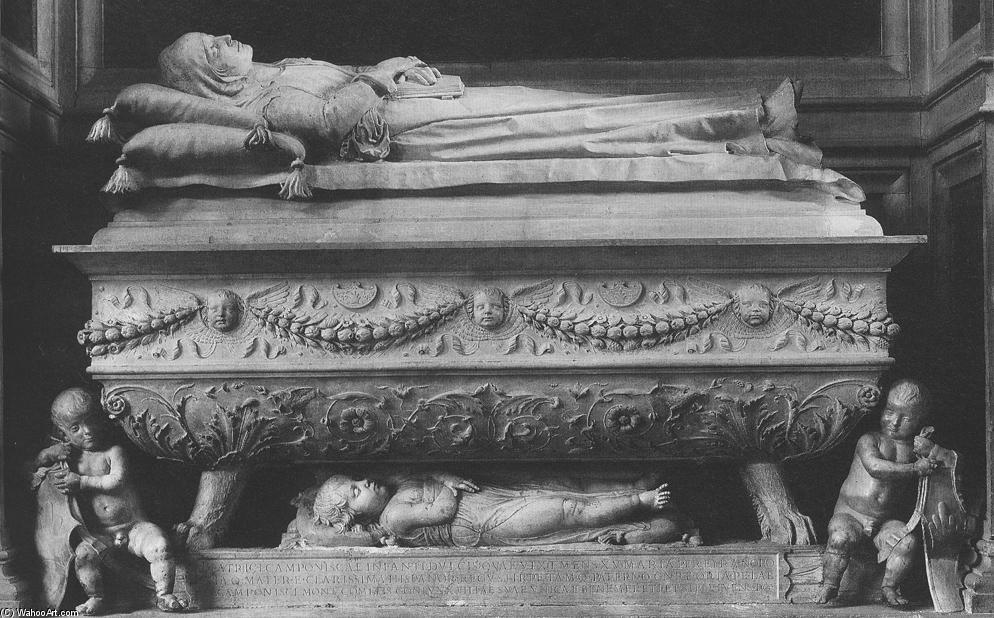
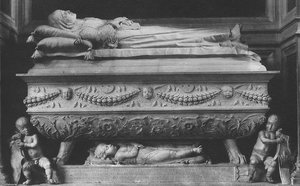
Monument of Maria Pereira and Beatrice Camponeschi (detail)


 Read More
Hand Made Oil Reproduction
Hand-painted oil on canvas in your size and frame, made to order by our artists. ( Buy Print Buy Image)




































Pick from our preset sizes that match the artwork's original proportions.

You may enter your own dimensions to fit a specific frame or space. If your selected size does not match the original image's proportions, we will either crop the artwork or extend the painting with additional hand-painted elements. A digital mockup will be sent for your approval before production begins.
Please note that the on-screen preview does not reflect the actual cropping or extension. Only the mockup will accurately show the final composition.
While custom sizes are available, we recommend selecting a dimension from the predefined list to preserve the original proportions.
After order, ArtsDot.com team will email client for instructions and provide a mockup preview
Worldwide Delivery () in 3/4 weeks instead of standard 5 weeks. (5 September). No compromise on quality.

Free Worldwide Express Shipping

High-Quality Linen Canvas

Full Shipping Insurance

Customs Tax Refund Guarantee

True Color Matching Guarantee

60-Day Return Policy (Defects Only)

100% Money-Back Guarantee

Bulk Discount Offer
 Glass option is only available in size under 110 CM

Monument of Maria Pereira and Beatrice Camponeschi (detail)
Reproduction Medium
Reproduction Size
-


Total Price
$ 263
Related Artworks


Artist Biography
A Florentine Echo in Abruzzo’s Stone
Silvestro dell'Aquila, known to history also as Silvestro di Giacomo da Sulmona, remains one of the most compelling figures of the late Quattrocento, a sculptor whose hands breathed life into the rugged landscapes of the Abruzzo region. Born around 1450 in the mountain town of Sulmona, his life and artistry represent a profound intersection between local tradition and the burgeoning humanism of the Italian Renaissance. While the precise details of his early education remain shrouded in the mists of time, there is an undeniable resonance within his work that suggests a deep connection to the artistic revolution occurring in Florence. This stylistic bridge allowed him to translate the sophisticated, classical ideals of masters like Brunelleschi and Donatello into a localized vernacular, creating a sculptural language that was both intellectually rigorous and deeply rooted in the spiritual fabric of L'Aquila.
The foundations of his meticulous craftsmanship likely trace back to his lineage; he is believed to have been the son of Giacomo di Paolo Sulmente, a skilled goldsmith who operated a workshop in L’Aquila. This early exposure to the delicate precision of metalwork undoubtedly informed the refined modeling and intricate textures found in his later stone and wood carvings. To study Silvestro's work is to witness a master navigating the transition from the decorative elegance of the mid-century to the monumental, emotionally charged realism that defined the height of the Renaissance. His ability to manipulate medium—whether through the warmth of wood or the permanence of marble—allowed him to capture the nuanced human condition, imbuing his subjects with a sense of divine presence and earthly weight.
Masterpieces of Devotion and Memory
The artistic legacy of Silvestro dell'Aquila is best understood through his most significant commissions, which served as both spiritual anchors for his community and enduring monuments to the nobility. His ability to blend sacred narrative with classical grace is perhaps nowhere more evident than in his celebrated wooden sculpture of San Silvestro (1478). Housed within the Museo Nazionale d’Abruzzo, this work stands as a poignant testament to his skill in capturing the solemnity and sanctity of the saint, utilizing the organic nature of wood to evoke a sense of lifelike vulnerability.
Beyond the realm of pure devotion, Silvestro excelled in the creation of funerary art, a genre that demanded both technical mastery and an understanding of lineage and prestige. His contributions to the architectural and commemorative landscape of L'Aquila include:
- The Monument of Cardinal Amico Agnifili (1476–1480): A grand achievement for the Duomo of L'Aquila, demonstrating his ability to handle large-scale ecclesiastical commissions with dignity and classical poise.
- The Funeral Monument for Beatrice Camponeschi and Maria Pereyra (1490–1500): A complex work that showcases his capacity for narrative depth and the delicate rendering of commemorative figures.
- Terracotta Group of the Virgin and Child (c. 1494–99): Located in the church of San Bernardino, this piece highlights his versatility in working with clay to achieve a soft, intimate tenderness.
Through these works, Silvestro did more than merely decorate churches and tombs; he sculpted the very identity of the Abruzzo region during a period of intense cultural growth. His ability to synthesize the Florentine emphasis on anatomical accuracy and perspective with the local demand for devotional clarity ensured that his influence would endure long after his death in 1504. He remains a vital link in the chain of Italian Renaissance art, a sculptor who turned stone and wood into a lasting dialogue between the earthly and the eternal.
Silvestro dell'Aquila
1450 - 1504 , Italy
Quick Facts
- Artistic Movement Or Style: Late Quattrocento
- Artists Or Movements Influenced By This Artist: ['Renaissance Italy']
- Artists Who Influenced This Artist: ['Florentine Sculpture']
- Date Of Birth: c. 1450, Sulmona
- Date Of Death: c. 1504
- Full Name: Silvestro dell'Aquila
- Nationality: Italian
- Notable Artworks:
- San Silvestro statue
- Cardinal Agnifili monument
- Funeral monument Beatrice Camponeschi
- Place Of Birth: Sulmona, Italy

