 Preview
 Send
Send Share
Share
 Details

 Download
 Similars
 X-Ray
X-Ray Diaporama
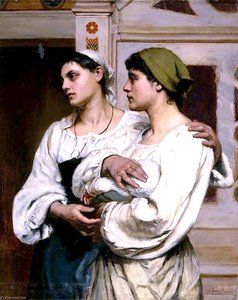
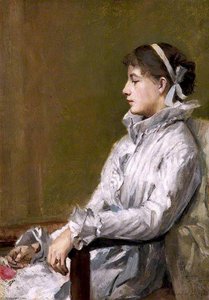
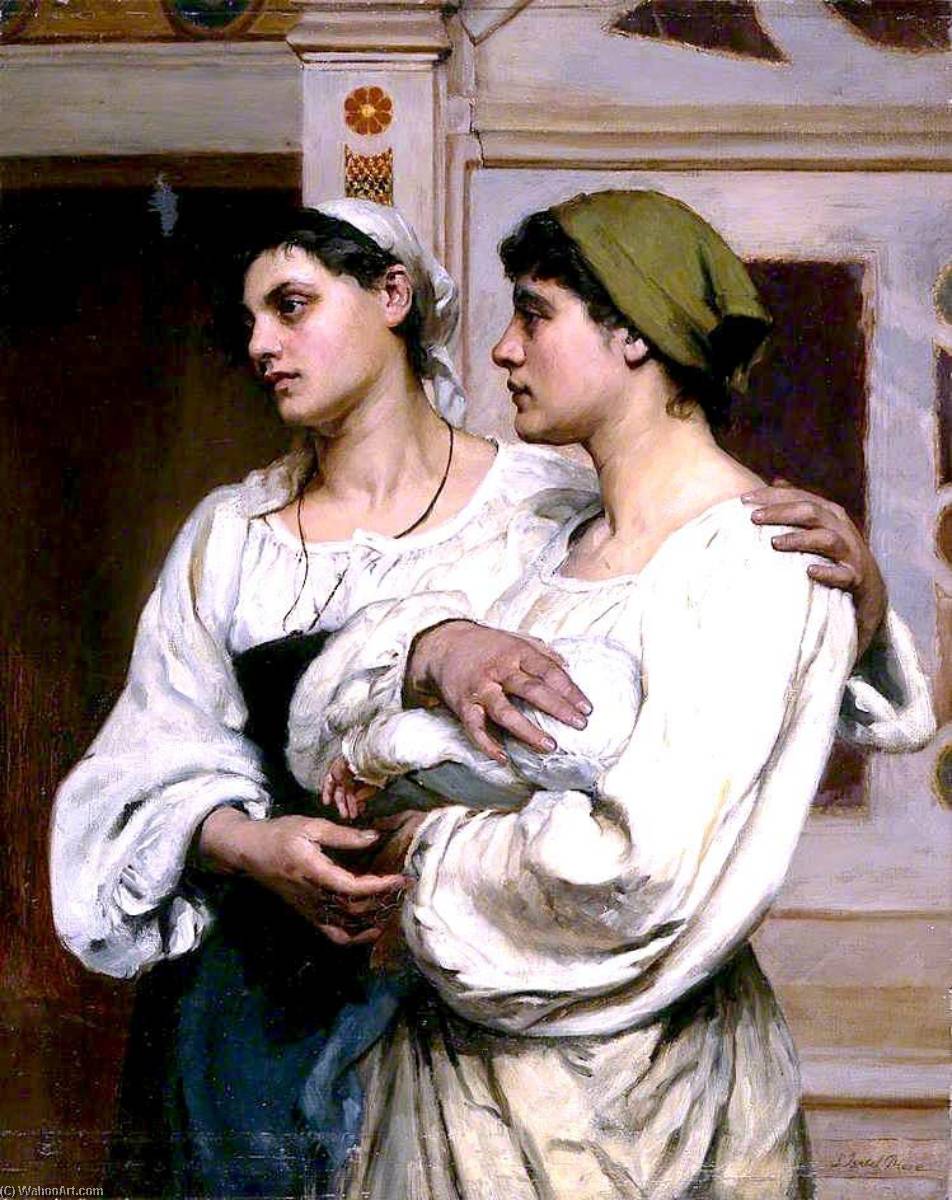
Italian Women in Church
 Oil On Canvas
- WallArt
- Academic Realism
 76.0 x 61.0 cm
 Manchester Art Gallery
 Read More
Hand Made Oil Reproduction
Hand-painted oil on canvas in your size and frame, made to order by our artists. ( Buy Print Buy Image)




P118B $10

P118H $10

P118W $10

P438Z $10

P508JH $12

P508YH $12

P805H $10

P805Z $10

P919BZ $10

P919G $10

P919XJ $10

P959ZH $10

P968JZ $12

W106C $8

W218G $10

W218JH $8

W218Y $10

W307PJ $10

W316G $10

W316PJ $8

W316Y $10

W398PJ $8

W4111J $10

W500HY $15

W500JH $15

W692G $12

W849H $8

W940BG $15

W953PJ $8




Pick from our preset sizes that match the artwork's original proportions.

You may enter your own dimensions to fit a specific frame or space. If your selected size does not match the original image's proportions, we will either crop the artwork or extend the painting with additional hand-painted elements. A digital mockup will be sent for your approval before production begins.
Please note that the on-screen preview does not reflect the actual cropping or extension. Only the mockup will accurately show the final composition.
While custom sizes are available, we recommend selecting a dimension from the predefined list to preserve the original proportions.
After order, ArtsDot.com team will email client for instructions and provide a mockup preview
Worldwide Delivery () in 3/4 weeks instead of standard 5 weeks. (16 August). No compromise on quality.

Free Worldwide Express Shipping

High-Quality Linen Canvas

Full Shipping Insurance

Customs Tax Refund Guarantee

True Color Matching Guarantee

60-Day Return Policy (Defects Only)

100% Money-Back Guarantee

Bulk Discount Offer
 Glass option is only available in size under 110 CM

Italian Women in Church
Reproduction Medium
Reproduction Size
-


Total Price
$ 288
Artwork Description
A Moment of Quiet Contemplation: Unveiling Susan Isabel Dacre’s “Italian Women in Church”
Susan Isabel Dacre's "Italian Women in Church," a captivating oil painting from the late 19th century, isn’t merely a depiction of two women within a church interior; it’s a carefully constructed tableau brimming with subtle symbolism and reflecting the evolving social landscape of Victorian Britain. Painted by a remarkably resilient artist navigating both artistic circles and personal challenges, Dacre masterfully captures an atmosphere of quiet contemplation and understated grace. The work immediately draws the viewer in with its muted palette – predominantly creams, beiges, and soft blues and greens – creating a sense of serene stillness that belies the complexities of the scene.
Dacre’s academic realism is evident in her meticulous attention to detail. The figures are rendered with an almost sculptural quality, their forms defined by smooth lines and carefully observed drapery. The architectural background, hinting at a classical or Renaissance setting – perhaps inspired by Dacre's travels in Italy – adds depth and reinforces the painting’s sense of timelessness. Notice particularly the delicate floral motif adorning the panels, a common decorative element during that period, suggesting an appreciation for beauty and refinement.
The Artist: Susan Isabel Dacre - A Pioneer of Victorian Art
Born in Leamington Spa, England, in 1844, Susan Isabel Dacre’s life was one marked by both artistic dedication and personal fortitude. Her early years were shaped by convent schooling and governess positions, experiences that instilled within her a keen awareness of the world beyond her immediate surroundings. Notably, she witnessed the tumultuous events of the Franco-Prussian War during a period spent in Paris – an experience undoubtedly shaping her perspective on social upheaval and human resilience. Dacre’s artistic journey was not without its challenges; she faced societal constraints imposed upon women artists at the time, yet persevered through sheer determination and talent.
Dacre's membership in the Manchester Society of Women Artists, founded in 1876, represents a significant step forward for female artists seeking recognition. Her involvement with this organization highlights her commitment to challenging traditional artistic boundaries and advocating for greater opportunities within the art world. Furthermore, her association with Annie Swynnerton, another pioneering artist, underscores the importance of female collaboration and mutual support in navigating the complexities of Victorian society.
Symbolism and Context: Echoes of Sisterhood and Victorian Values
The painting’s subject matter – two young women standing side-by-side within a church – carries layers of symbolic meaning. In Victorian England, the church represented not just religious devotion but also social order and moral values. The scene subtly suggests themes of sisterhood, domesticity, and perhaps even a touch of melancholy or introspection. The women’s posture—one gazing slightly downward, the other with a more contemplative expression—hints at private thoughts and shared experiences.
Considering Dacre's own life and the broader historical context, "Italian Women in Church" can be interpreted as a reflection on the evolving role of women within society. The painting subtly challenges traditional gender roles while simultaneously embracing Victorian ideals of piety and domesticity. The choice of an Italian setting—a place often associated with beauty, art, and cultural refinement—further enhances the work’s evocative power.
A Legacy in Reproduction: Bringing Dacre's Vision to Life
ArtsDot.com is proud to offer meticulously crafted hand-painted reproductions of Susan Isabel Dacre’s “Italian Women in Church.” Each reproduction captures the essence of the original painting – its delicate color palette, meticulous detail, and profound sense of atmosphere – ensuring that this remarkable work of art continues to inspire and captivate for generations to come. Whether adorning a private residence or gracing a corporate space, Dacre’s masterpiece offers a timeless reminder of beauty, contemplation, and the enduring power of human connection.
Related Artworks
Artist Biography
A Life Painted in Resilience: The Story of Susan Isabel Dacre
Susan Isabel Dacre, born in 1844 amidst the burgeoning Victorian era, was more than just a painter; she was a testament to the quiet revolution unfolding within British society. Her life, stretching into the early decades of the 20th century, mirrored the shifting landscapes of artistic expression and the fervent struggle for women’s rights. Born in Leamington Spa, Dacre's path wasn’t one of immediate privilege or established patronage. Instead, it was forged through observation, dedicated practice, and a determined spirit that refused to be confined by societal expectations. Early years spent moving between convent schooling and governess positions – even witnessing the turmoil of the Franco-Prussian War firsthand during a period in Paris – instilled within her a keen awareness of the world’s complexities, an understanding that would later permeate her art. This early exposure to different cultures and political climates undoubtedly shaped her perspective, fostering both a sensitivity to human emotion and a commitment to social justice.Artistic Development and Influences
Dacre's artistic journey began in earnest upon returning to England in 1871, enrolling at the Manchester School of Art where she quickly distinguished herself, winning the prestigious Queen’s Prize in 1875. This marked a turning point, solidifying her commitment to painting as a profession – a bold move for a woman during that period. Her style evolved from meticulous realism, characteristic of much Victorian art, towards a more nuanced approach incorporating subtle romanticism and an emerging sensitivity to light and color. While pinpointing specific artistic influences proves challenging due to limited documentation, it’s clear her work resonated with the prevailing realist tendencies of the time. However, hints of Impressionistic sensibilities – particularly in her landscape paintings – suggest an openness to contemporary movements unfolding across the Channel. The influence of Lord Leighton is also noteworthy; he provided guidance and observations on painting techniques during a stay in Capri, demonstrating a willingness from established male artists to mentor emerging female talent. Dacre’s portraits, however, remained central to her practice, allowing her to explore character and individuality with remarkable depth.Themes and Notable Works
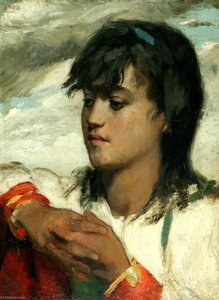
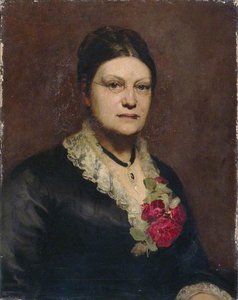
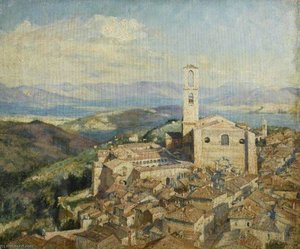
Dacre's oeuvre is remarkably diverse, encompassing evocative landscapes, intimate genre scenes, and compelling portraits. Italian Women in Church, a poignant depiction of female figures within a religious setting, exemplifies her ability to capture emotional resonance through subtle gestures and atmospheric composition. Her fascination with Italy is further revealed in works like Assisi from Perugia and Assisi from the City Walls, where she masterfully conveys the beauty and tranquility of the Italian countryside using soft brushstrokes and muted tones. Perhaps one of her most tender pieces, The Artist’s Mother, showcases her skill in portraying familial bonds with sensitivity and grace. Recurring themes throughout her work include a celebration of female strength and individuality – often evident in her portraits – alongside an enduring appreciation for the beauty of nature and glimpses into everyday Victorian life. These weren't merely aesthetic choices; they were reflections of her own values and beliefs, subtly challenging conventional representations of women and society.A Champion of Women Artists and Suffrage
Susan Isabel Dacre’s legacy extends far beyond the canvas. She was a dedicated activist who actively championed both artistic opportunities for women and the broader cause of suffrage. In 1876, alongside Annie Louise Swynnerton, she co-founded the Manchester Society of Women Artists, providing a crucial platform for female artists to exhibit their work and network with peers – a space that was sorely lacking at the time. She served as president of this vital organization, demonstrating her leadership and commitment to fostering a supportive community. Her activism didn’t stop there; Dacre was also a member of the executive committee of the Manchester National Society for Women's Suffrage for a decade (1885-95), tirelessly advocating for women’s right to vote. After years of campaigning, she successfully became a member of the council of the Manchester Academy of Fine Arts in 1897, breaking down barriers and paving the way for future generations of female artists to gain recognition within established institutions.Enduring Significance
Susan Isabel Dacre passed away in 1933, leaving behind a body of work that continues to resonate with viewers today. Her significance lies not only in her artistic contributions – the evocative landscapes, compelling portraits, and sensitive genre scenes – but also in her unwavering commitment to social justice. She challenged societal norms, defied expectations, and actively worked to create opportunities for women in both the art world and beyond. Dacre’s life serves as a powerful reminder of the importance of perseverance, artistic vision, and the courage to fight for what one believes in. Her paintings offer valuable insights into Victorian society, gender roles, and the burgeoning feminist movement, making her work not just aesthetically pleasing but historically significant. She was a pioneer who helped shape a more inclusive and equitable future for women artists, ensuring that their voices would be heard and their talents celebrated.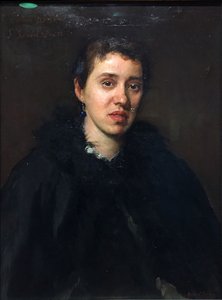
Susan Isabel Dacre
1844 - 1933 , United Kingdom
Quick Facts
- Artistic Movement Or Style: Realism, Romanticism
- Date Of Birth: 1844
- Date Of Death: 1933
- Full Name: Susan Isabel Dacre
- Nationality: British
- Notable Artworks:
- Italian Women in Church
- A View in Venice
- The Artist’s Mother
- Assisi from Perugia
- Assisi from the City Walls
- Place Of Birth: Leamington Spa, UK
Related Articles

The Enduring Legacy of Oil on Canvas: Technique, History & Aesthetic Impact
Explore the rich history & techniques of oil painting – from Renaissance masters to Impressionism. Discover pigments, layering methods, and why this timeless medium endures. Expert insights for artists & art enthusiasts.
Neo-Classicism's Greatest Hits: 10 Masterpieces for Your Home |
Journey through Neo-Classicism's finest! Explore 10 iconic masterpieces by David, Ingres & Canova. Discover art history, techniques & timeless beauty – perfect for inspiring your home decor. Find museum-quality reproductions at
The Subdued Resonance: Exploring Emotional Depth & Artistic Nuance within Muted Color Palettes
Explore the captivating world of muted colors in art & design! Discover historical context, psychological effects, techniques, and inspiration for creating serene spaces. Elevate your aesthetic with ArtsDot.

Oil on Canvas: A Historical & Technical Exploration of a Timeless Artistic Medium
Explore the rich history & enduring techniques of oil painting on canvas. Discover the science behind its longevity, conservation practices, and contemporary relevance. Expert insights for art enthusiasts.
Timeless Elegance: The Ultimate Buyer's Guide to Choosing Classical Portraits for Sophisticated Interiors
Discover how to select the perfect classical portrait for your home. Our expert guide explores matching art styles to interiors, choosing between hand-painted oils and Giclée prints, and transforming personal photos into timeless masterpieces with professional artistry.