

 Preview
 Send
Send Share
Share
 Details

 Download
 Similars
 X-Ray
X-Ray Diaporama
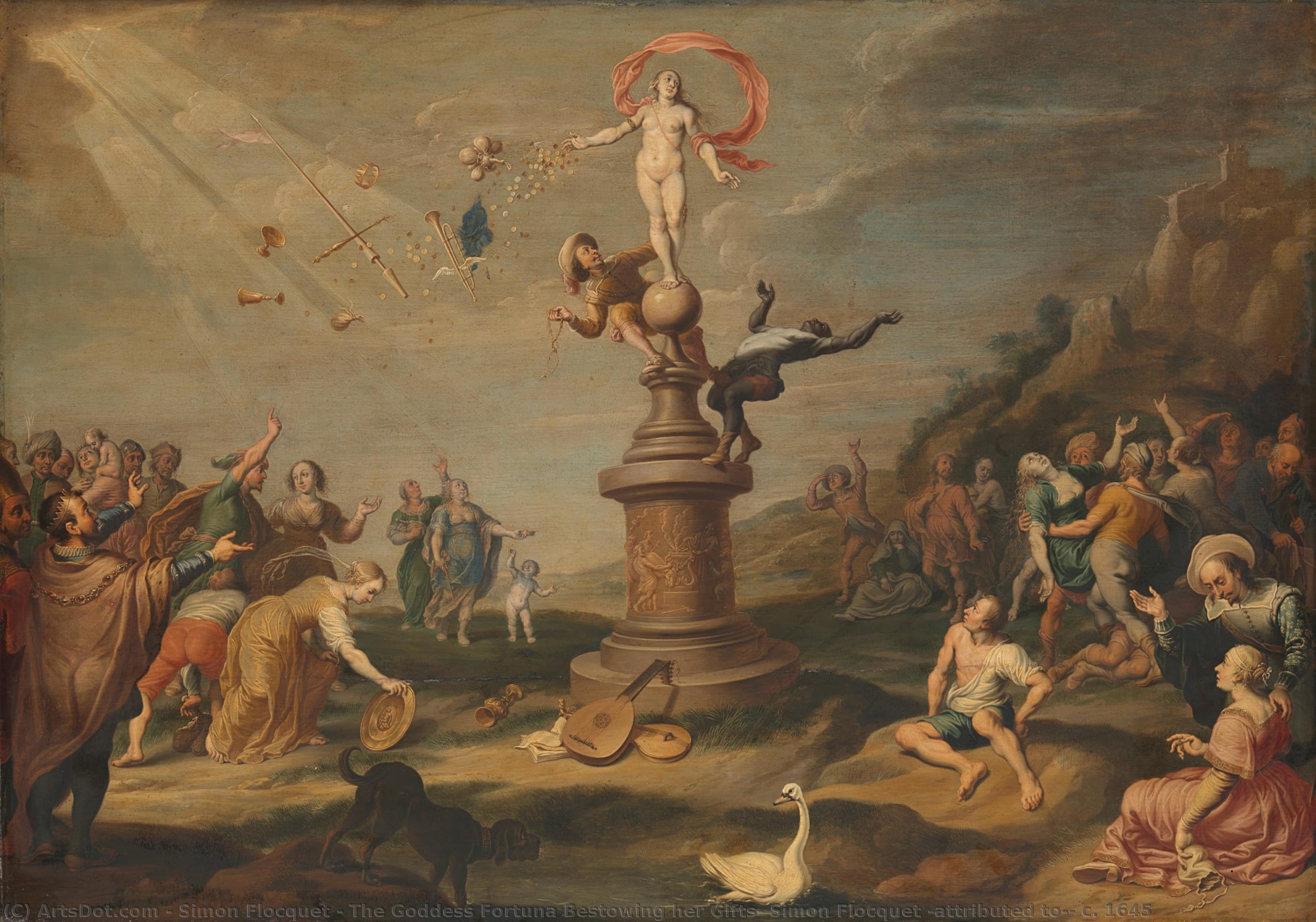
The Goddess Fortuna Bestowing her Gifts, Simon Flocquet (attributed to), c. 1645
 1645
1645 74.0 x 105.0 cm
 Read More
Purchase a high-resolution, enhanced digital image, far superior to the online preview.
Each file is meticulously prepared by our in-house specialists using advanced tools and expert manual retouching. We ensure every image has exceptional clarity, precise color accuracy, and fine detail.
The final file is delivered via email within 72 hours, optimized for immediate use in professional, editorial, and print environments. This is the same quality trusted by top-tier design studios, publishers, and galleries.
Digital Image
Download a high-resolution file for personal display, printing, and creative projects. ( Buy Print Buy Hand Made Painting)
Included in Every Digital Image Order
Expert Digital Delivery, Guaranteed
When you choose ArtsDot.com, you're not just getting an image - you're receiving a professionally enhanced digital artwork, crafted with precision and backed by a satisfaction guarantee. Here's everything that comes with your order, automatically:

Fast Email Delivery
Your high-resolution digital image file will be emailed to you within 72 hours of ordering - ready for immediate use.

AI-Enhanced Digital File
Your artwork is professionally optimized using advanced AI tools and manual editing, ensuring maximum detail, clarity, and color accuracy.

Free Lifetime Re-Delivery
Accidentally deleted or lost your file? No worries - we'll resend it to you anytime, free of charge.

No Import Fees - Ever
Enjoy your artwork instantly with zero customs, duties, or delivery fees - digital downloads are always tax-free.

Color Accuracy Guarantee
We ensure your digital image reflects the original colors as closely as possible using professional tools and color management.

60-Day Satisfaction Guarantee
If you're not satisfied with your digital image, we'll revise it or refund 100% within 60 days - no questions asked.

100% Money-Back Guarantee
Not satisfied? Get a full refund within 60 days of receiving your digital file - no questions asked.

Bulk Order Discounts
Buy 3 images, save 10% - Buy 5, save 15% - Buy 10+, save 20%. Great for creative projects, galleries, and agencies.
Related Artworks









Artist Biography
A Shadow of Fortune: The Enigmatic World of Simon Flocquet (Attributed To)
The name Simon Flocquet resonates with a quiet mystery within the annals of 17th-century French art. While concrete biographical details remain elusive, his attributed works – most notably *The Goddess Fortuna Bestowing her Gifts* – offer compelling glimpses into a skilled artist deeply engaged with classical iconography and Baroque sensibilities. Flocquet’s existence is largely defined by attribution; few paintings are definitively signed, leading scholars to cautiously label him as “attributed to,” yet the consistency of style across several canvases suggests a singular hand at play. He appears to have been active around 1645, a period brimming with artistic innovation and patronage in France, though pinpointing his exact place within the Parisian art scene proves challenging. The scarcity of documentation only adds to the allure surrounding this artist, inviting speculation about his training, influences, and potential connections to more prominent masters of the era.Classical Echoes and Baroque Flourishes
Flocquet’s artistic language is immediately recognizable for its blend of classical composure and dynamic Baroque energy. *The Goddess Fortuna Bestowing her Gifts* exemplifies this fusion beautifully. The central figure, a richly adorned Fortuna, embodies the Roman goddess of luck and prosperity. Her gesture – scattering coins and gifts upon eager recipients – speaks to the capricious nature of fortune itself. However, unlike some more overtly dramatic Baroque compositions, Flocquet’s work maintains a certain restraint. The figures are not caught in moments of extreme emotional upheaval; instead, they exhibit a dignified acceptance of their fate, whether blessed or wanting. This balance suggests an influence from earlier Renaissance and Mannerist traditions, perhaps filtered through the lens of contemporary French classicism championed by artists like Nicolas Poussin. The composition itself is carefully structured, with a clear focal point and balanced distribution of light and shadow, indicative of a strong understanding of pictorial principles.Themes of Prosperity and Divine Favor
The recurring theme of Fortuna in Flocquet’s attributed paintings points to the desires and anxieties of his likely clientele – members of the burgeoning merchant class or those seeking favor within the royal court. Images of prosperity, abundance, and divine blessing were potent symbols during this period, reflecting a society preoccupied with social mobility and economic success. The artist skillfully employed allegorical figures and symbolic objects to convey these messages. Coins represent wealth, cornucopias signify plenty, and celestial imagery alludes to the benevolent influence of fate or higher powers. It’s plausible that Flocquet catered specifically to patrons who wished to visually articulate their aspirations for good fortune and social standing. The paintings weren't merely decorative; they were statements of intent, imbued with a hopeful optimism about the future.A Place Within the French Baroque Landscape
Determining Flocquet’s precise position within the broader context of 17th-century French art remains an ongoing scholarly endeavor. He was undoubtedly working during a period dominated by giants like Poussin, Claude Lorrain, and Charles Le Brun. While he doesn't share their monumental scale or historical subject matter, his paintings reveal a similar commitment to classical ideals and refined technique. Some scholars suggest possible connections to the workshop of Simon Vouet, a leading figure in Parisian art who fostered a generation of talented painters. However, without more definitive evidence, such claims remain speculative. What is clear is that Flocquet possessed a distinct artistic voice – one characterized by elegant compositions, subtle emotionality, and a masterful handling of light and color. His work offers a fascinating glimpse into the diverse currents flowing within the French Baroque landscape, representing a lesser-known but nonetheless significant strand of artistic expression.The Enduring Appeal of an Unknown Master
Despite the uncertainties surrounding his life and career, Simon Flocquet (attributed to) continues to captivate art enthusiasts with the beauty and intrigue of his paintings. *The Goddess Fortuna Bestowing her Gifts*, in particular, stands as a testament to his skill and artistic vision. The painting’s enduring appeal lies not only in its aesthetic qualities but also in the sense of mystery it evokes. Who was this artist? What were his aspirations? And what other masterpieces might remain hidden, awaiting attribution? These questions fuel ongoing research and contribute to the growing appreciation for a painter who, though shrouded in shadow, left behind a legacy of elegance, symbolism, and quiet beauty. The very act of contemplating his work becomes an invitation to delve deeper into the complexities of 17th-century French art and the lives of those artists whose stories have yet to be fully told.
Quick Facts
- Artistic Movement Or Style: Baroque
- Date Of Death: Living
- Full Name: Simon Flocquet
- Notable Artworks: ['The Goddess Fortuna Bestowing her Gifts']

