

 Preview
 Send
Send Share
Share
 Details

 Download
 Similars
 X-Ray
X-Ray Diaporama
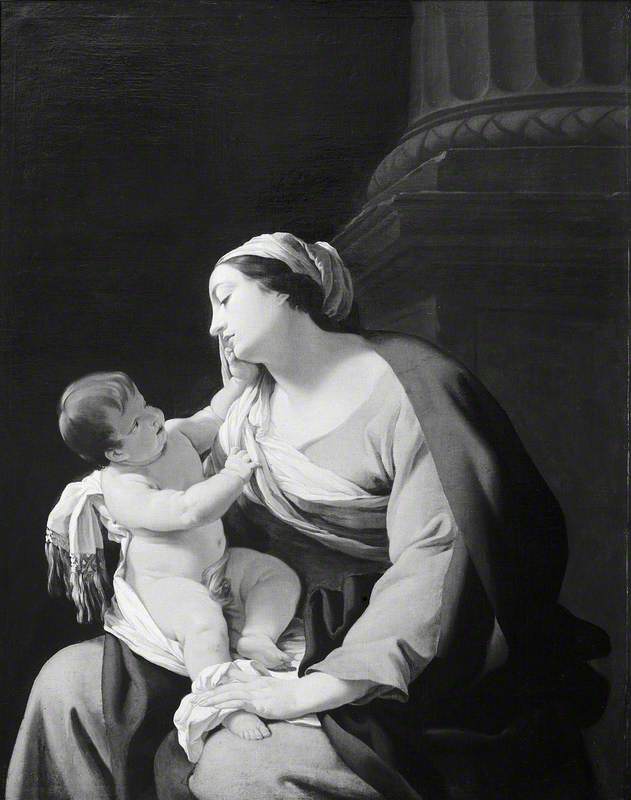
The Virgin and Child (of the Column)
 Oil On Canvas
- WallArt
- Baroque
 1640
1640 135.0 x 108.0 cm
 The Ashmolean Museum of Art And Archaeology
 Read More
Purchase a high-resolution, enhanced digital image, far superior to the online preview.
Each file is meticulously prepared by our in-house specialists using advanced tools and expert manual retouching. We ensure every image has exceptional clarity, precise color accuracy, and fine detail.
The final file is delivered via email within 72 hours, optimized for immediate use in professional, editorial, and print environments. This is the same quality trusted by top-tier design studios, publishers, and galleries.
Digital Image
Download a high-resolution file for personal display, printing, and creative projects. ( Buy Print Buy Hand Made Painting)
Included in Every Digital Image Order
Expert Digital Delivery, Guaranteed
When you choose ArtsDot.com, you're not just getting an image - you're receiving a professionally enhanced digital artwork, crafted with precision and backed by a satisfaction guarantee. Here's everything that comes with your order, automatically:

Fast Email Delivery
Your high-resolution digital image file will be emailed to you within 72 hours of ordering - ready for immediate use.

AI-Enhanced Digital File
Your artwork is professionally optimized using advanced AI tools and manual editing, ensuring maximum detail, clarity, and color accuracy.

Free Lifetime Re-Delivery
Accidentally deleted or lost your file? No worries - we'll resend it to you anytime, free of charge.

No Import Fees - Ever
Enjoy your artwork instantly with zero customs, duties, or delivery fees - digital downloads are always tax-free.

Color Accuracy Guarantee
We ensure your digital image reflects the original colors as closely as possible using professional tools and color management.

60-Day Satisfaction Guarantee
If you're not satisfied with your digital image, we'll revise it or refund 100% within 60 days - no questions asked.

100% Money-Back Guarantee
Not satisfied? Get a full refund within 60 days of receiving your digital file - no questions asked.

Bulk Order Discounts
Buy 3 images, save 10% - Buy 5, save 15% - Buy 10+, save 20%. Great for creative projects, galleries, and agencies.
Collectible Description
A Testament to Faith: Simon Vouet’s “The Virgin and Child (of the Column)”
Simon Vouet's "The Virgin and Child (of the Column)," painted in 1640, is more than just a depiction of a sacred scene; it’s a masterful distillation of the burgeoning Baroque style and a poignant expression of maternal devotion. This captivating work, now meticulously reproduced as a hand-painted artwork, transports viewers to a world where divine grace intertwines with earthly tenderness. The painting immediately draws the eye to the central figures – Mary cradling the Christ Child – their expressions radiating an almost palpable serenity. The composition isn’t merely static; it possesses a dynamic quality, achieved through subtle shifts in pose and gaze that invite contemplation.
Vouet, a pivotal figure in transitioning French painting from Mannerism to Baroque, was deeply influenced by his time spent in Italy, particularly the works of Caravaggio. This influence is evident in the dramatic use of light and shadow, creating a sense of depth and volume within the figures. The muted color palette – primarily grays, creams, and browns – serves not as an absence of vibrancy but rather as a deliberate choice to emphasize form and texture. The artist skillfully employs tonal variations, mimicking the appearance of fabric folds and the rough surface of the column behind Mary, lending a remarkable sense of realism to the scene.
A Baroque Masterpiece: Style, Technique, and Historical Context
“The Virgin and Child (of the Column)” firmly establishes Vouet within the Baroque movement. Characterized by emotional intensity, dramatic lighting, and a heightened sense of realism, Baroque art sought to evoke powerful feelings in the viewer. Vouet’s approach is particularly notable for its meticulous attention to detail – from the delicate folds of Mary's garments to the subtle expressions on the faces of the children. The painting demonstrates a sophisticated understanding of perspective, creating an illusion of three-dimensionality that anchors the scene within a believable space.
Painted during a period of significant religious and political upheaval in France, this work reflects the Counter-Reformation’s emphasis on piety and devotion. Columns depicting the Virgin Mary were increasingly popular throughout Europe as a tangible expression of faith – a visible reminder of divine protection and grace. The choice to depict the scene “of the Column” likely alludes to an ancient Roman tradition where columns were erected in honor of deities, subtly connecting this religious image with a rich historical precedent.
Symbolism and Emotional Resonance
Beyond its aesthetic qualities, "The Virgin and Child (of the Column)" is laden with symbolic meaning. The column itself represents strength, stability, and divine support – mirroring Mary’s role as both mother and protector. The Christ Child's upward gaze symbolizes his innocence and vulnerability, while Mary’s serene expression embodies maternal love and spiritual devotion. The two figures in the background, often interpreted as John the Baptist and Joseph, add depth to the narrative, suggesting a broader community united in faith.
The painting’s emotional impact is profound. It evokes feelings of tenderness, peace, and reverence – inviting viewers to contemplate the timeless themes of motherhood, faith, and divine grace. It's not merely a representation of a biblical scene; it’s an invitation to connect with something larger than oneself.
Artistic Details & Reproduction
Measuring 135 x 108 cm, “The Virgin and Child (of the Column)” is a substantial work that commands attention. Simon Vouet's masterful technique—characterized by precise rendering of form and texture through tonal variations—is faithfully reproduced in our hand-painted reproductions. Each brushstroke captures the essence of the original, ensuring an authentic and captivating experience. The artwork’s rich detail and nuanced color palette are brought to life with exceptional clarity, making it a stunning addition to any home or office.
Available as a high-quality reproduction, this iconic piece offers a timeless expression of faith and beauty – a perfect choice for art enthusiasts, collectors, and those seeking to infuse their spaces with a touch of Baroque elegance.
Related Artworks
Artist Biography
Simon Vouet: A Pioneer of French Baroque Painting
- Born: January 9, 1590, Paris, France
- Died: June 30, 1649, Paris, France
Simon Vouet was a pivotal figure in the transition of French painting from Mannerism to the Baroque style. Born into an artistic family – his father Laurent was a painter and his brother Aubin also pursued art – Vouet received early training that laid the foundation for his future success. His grandson, Ludovico Dorigny, would continue the family’s artistic legacy.
Early Career and Italian Influences (1608-1627)
- Early Portraiture: Vouet began his career as a portraitist, demonstrating early talent.
- Travel to England (1608): At the young age of 14, he traveled to England to paint a commissioned portrait, showcasing his burgeoning reputation.
- Ottoman Empire and Venice: In 1611, Vouet joined the entourage of Baron de Sancy, French ambassador to the Ottoman Empire, again for portraiture work. This journey took him through Constantinople and then to Venice in 1612.
- Rome (1614-1627): His time in Rome proved transformative. He remained there for thirteen years, immersing himself in the vibrant artistic scene of the burgeoning Baroque period.
During his Italian sojourn, Vouet absorbed a diverse range of influences. He studied the dramatic lighting techniques pioneered by Caravaggio, embraced elements of Italian Mannerism, and meticulously analyzed the color palettes and di sotto in su (foreshortened perspective) employed by Paolo Veronese. He also drew inspiration from the works of Carracci, Guercino, Lanfranco, and Guido Reni, synthesizing these diverse styles into a unique artistic vision.
Development of Vouet’s Distinctive Style
- Election to Accademia di San Luca (1624): His success in Rome culminated in his election as president of the prestigious Accademia di San Luca, a testament to his skill and recognition within the Italian art world.
- Synthesis of Influences: Vouet’s style was characterized by its ability to absorb and distill various artistic influences. He didn't simply copy; he integrated these elements into a cohesive and distinctly Italianate Baroque aesthetic.
- Introduction of Baroque to France: Upon his return to France in 1627, Vouet played a crucial role in introducing the Italian Baroque style to French painting, significantly impacting the artistic landscape of the country.
Major Achievements and Legacy
- Premier Peintre du Roi: Vouet was appointed Premier peintre du Roi (First Painter to the King) – a position of considerable prestige and influence.
- Prolific Workshop: He maintained a large and active workshop, training numerous artists who would shape the subsequent generation of French painters.
- Notable Pupils: Among his most influential pupils were Charles Le Brun (who later organized all decorative painting at Versailles), Valentin de Boulogne, Charles Alphonse du Fresnoy, Pierre Mignard, Eustache Le Sueur, and Claude Mellan.
- Influence on French Art: Vouet’s impact extended beyond his own works; his students carried his style and techniques throughout France, establishing a distinctively Baroque school of painting. His influence is particularly evident in the grand decorative schemes commissioned by Louis XIV.
Historical Significance
Simon Vouet's legacy rests on his pivotal role as a bridge between Italian and French art. He successfully imported the dynamism and grandeur of the Italian Baroque, transforming it into a style that resonated with the tastes of the French court and aristocracy. His influence is undeniable in the development of French painting during the 17th century, and his contributions continue to be recognized by art historians today.
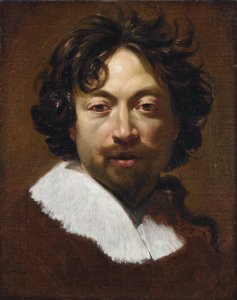
Simon Vouet
1590 - 1649 , France
Quick Facts
- Artistic Movement Or Style: Baroque painting
- Artists Or Movements Influenced By This Artist:
- Charles Le Brun
- Valentin de Boulogne
- French Baroque painting
- Artists Who Influenced This Artist:
- Caravaggio
- Paolo Veronese
- Carracci
- Guercino
- Lanfranco
- Guido Reni
- Date Of Birth: January 9, 1590
- Date Of Death: June 30, 1649
- Full Name: Simon Vouet
- Nationality: French
- Place Of Birth: Paris, France

