 Preview
 Send
Send Share
Share
 Details

 Download
 Similars
 X-Ray
X-Ray Diaporama
In a Garden


 Read More
Hand Made Oil Reproduction
Hand-painted oil on canvas in your size and frame, made to order by our artists. ( Buy Print Buy Image)




P118B $10

P118H $10

P118W $10

P438Z $10

P508JH $12

P508YH $12

P805H $10

P805Z $10

P919BZ $10

P919G $10

P919XJ $10

P959ZH $10

P968JZ $12

W106C $8

W218G $10

W218JH $8

W218Y $10

W307PJ $10

W316G $10

W316PJ $8

W316Y $10

W398PJ $8

W4111J $10

W500HY $15

W500JH $15

W692G $12

W849H $8

W940BG $15

W953PJ $8




Pick from our preset sizes that match the artwork's original proportions.

You may enter your own dimensions to fit a specific frame or space. If your selected size does not match the original image's proportions, we will either crop the artwork or extend the painting with additional hand-painted elements. A digital mockup will be sent for your approval before production begins.
Please note that the on-screen preview does not reflect the actual cropping or extension. Only the mockup will accurately show the final composition.
While custom sizes are available, we recommend selecting a dimension from the predefined list to preserve the original proportions.
After order, ArtsDot.com team will email client for instructions and provide a mockup preview
Worldwide Delivery () in 3/4 weeks instead of standard 5 weeks. (17 August). No compromise on quality.

Free Worldwide Express Shipping

High-Quality Linen Canvas

Full Shipping Insurance

Customs Tax Refund Guarantee

True Color Matching Guarantee

60-Day Return Policy (Defects Only)

100% Money-Back Guarantee

Bulk Discount Offer
 Glass option is only available in size under 110 CM

In a Garden
Reproduction Medium
Reproduction Size
-


Total Price
$ 263
Artwork Description
A Serene Encounter with Victorian Splendor
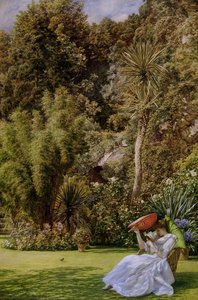
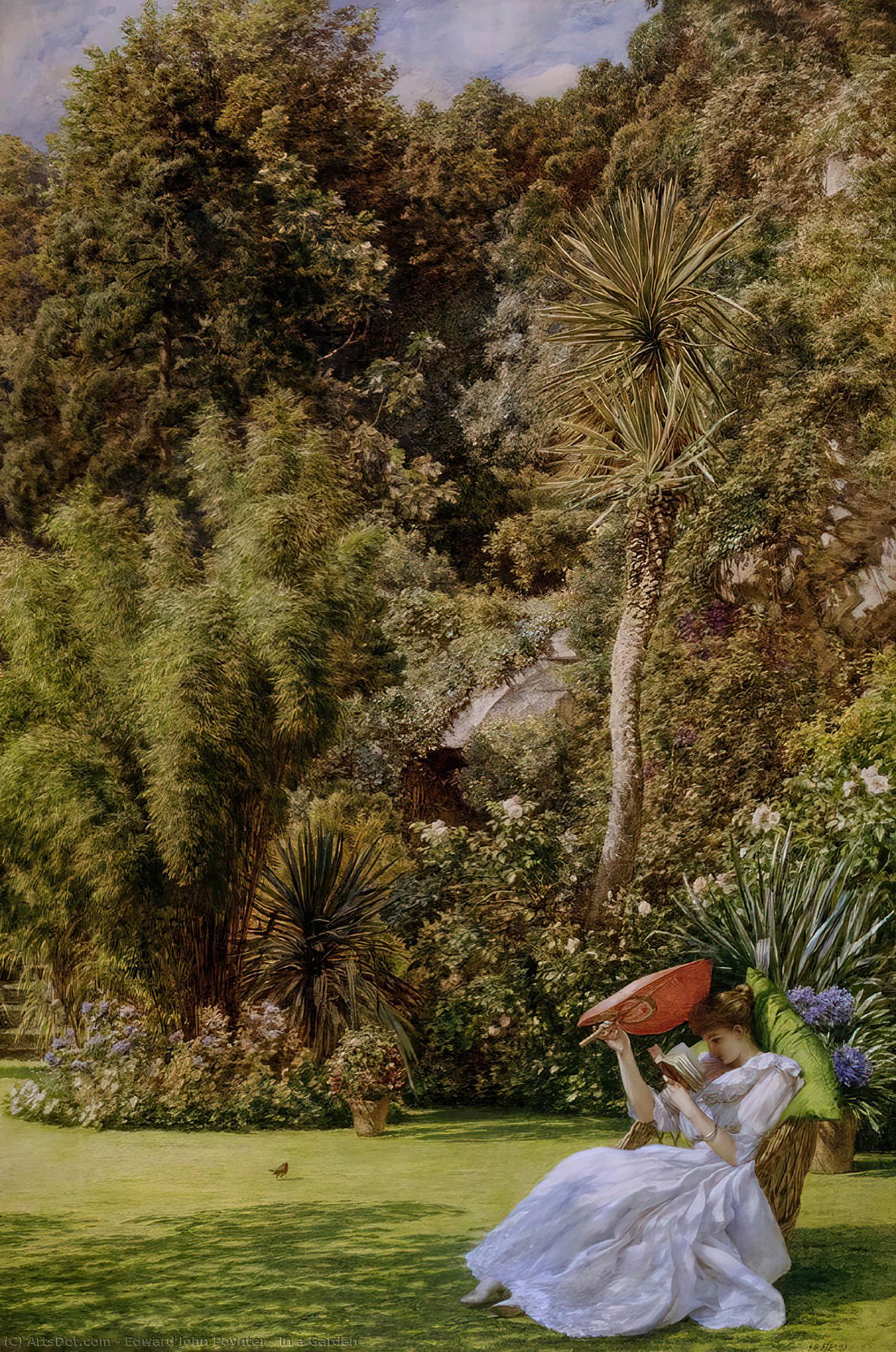
In the quiet corners of art history, few works capture the essence of late 19th-century tranquility quite like Sir Edward John Poynter’s "In a Garden." Painted in 1891, this exquisite oil on canvas serves as a window into a lost era of grace and contemplative stillness. The scene unfolds within a lush, verdant sanctuary where the boundaries between humanity and nature seem to dissolve. At the heart of this botanical paradise sits a woman, her presence marked by an elegant simplicity; she is dressed in a pristine white gown that catches the dappled sunlight, topped with a striking red hat that provides a singular, vibrant focal point amidst the sea of emerald foliage. As she turns her gaze toward something unseen beyond the frame, the viewer is invited to share in her moment of quiet wonder, feeling the gentle pull of a world far removed from the frantic pace of modern life.
The technical mastery of Poynter is on full display through his meticulous attention to detail and his sophisticated command of light. As a leading figure of the Victorian era and a former President of the Royal Academy, Poynter possessed an unparalleled ability to render textures—the soft weight of fabric, the delicate petals of wildflowers, and the intricate patterns of leaves—with breathtaking precision. His brushwork does not merely depict a garden; it breathes life into it. The interplay of light and shadow creates a rhythmic movement across the canvas, guiding the eye from the seated figure to the fluttering birds that dance through the branches. This careful orchestration of color and luminosity imbue the painting with a sense of depth, making the lush landscape feel almost tangible to the touch.
Symbolism and the Soul of the Landscape
Beyond its surface beauty, "In a Garden" is rich with the symbolic language characteristic of the period. The garden itself acts as a powerful metaphor for a tranquil oasis, a protected space of peace amidst the complexities of the external world. Within this Edenic setting, the presence of birds adds a layer of profound meaning; they serve as emblems of freedom and the ephemeral nature of beauty, flitting through the composition like fleeting thoughts. The harmony between the woman and her environment suggests a deep, spiritual connection to the natural world, a theme that resonated deeply with Victorian sensibilities. For the discerning collector or interior designer, this painting offers more than just decoration; it provides a narrative of balance and emotional equilibrium.
For those looking to infuse their living spaces with a sense of historical prestige and calm, a high-quality reproduction of this masterpiece is an incomparable choice. Whether placed in a sunlit library or a sophisticated drawing room, the painting’s soft palette and romantic atmosphere can transform a room into a sanctuary of refinement. It stands as a testament to the enduring power of classical beauty, offering a timeless piece of art that continues to inspire awe and provide a much-needed moment of repose for all who behold it.
Related Artworks


Artist Biography
Sir Edward John Poynter: A Life in Art
Early Life and Education
Sir Edward John Poynter, 1st Baronet GCVO, PRA (born March 20, 1836 – died July 26, 1919) was a leading English painter, designer, and draughtsman. He served as President of the Royal Academy, solidifying his place in Victorian art history. Poynter was born in Paris, France, to architect Ambrose Poynter, though his family soon returned to Britain. His early education took place at Brighton College and Ipswich School, but ill health led him to spend winters in Madeira and Rome. It was in Rome in 1853 that he met Frederick Leighton, a pivotal encounter that profoundly influenced his artistic direction. He furthered his studies at Leigh's Academy in London and the Royal Academy Schools before venturing to Paris, where he studied under the classicist painter Charles Gleyre, alongside fellow students James McNeill Whistler and George du Maurier..Artistic Development and Influences
Poynter’s artistic development was shaped by a blend of classical ideals, historical narratives, and an emerging interest in exoticism. His early works demonstrated a strong foundation in academic technique, honed through his rigorous training. Leighton's influence is evident in Poynter’s meticulous attention to detail and refined aesthetic sensibility. The atmosphere of Paris and the teachings of Gleyre instilled in him an appreciation for classical form and composition. He was also influenced by archaeological discoveries and a growing Victorian fascination with ancient cultures, particularly those of Egypt and the Near East.Major Works and Themes
Poynter is best known for his large-scale historical paintings. Some of his most celebrated works include:- Israel in Egypt (1867): A dramatic depiction of the biblical exodus, showcasing Poynter’s skill in narrative composition and atmospheric effects.
- St George for England (1869): A mosaic created for the Palace of Westminster, embodying a patriotic theme and demonstrating his versatility as an artist.
- The Visit of the Queen of Sheba to King Solomon (1871-75): Perhaps his most famous work, this painting exemplifies Victorian Orientalism and showcases opulent detail and dramatic storytelling.
- King Solomon (1890): Another significant work exploring biblical themes with a focus on grandeur and historical accuracy.
Official Positions and Recognition
Poynter’s career extended beyond painting; he held several prestigious positions within the art establishment:- First Slade Professor at University College London (1871-1875)
- Principal of the National Art Training School (1875-1881)
- Director of the National Gallery (1894-1904), overseeing the opening of the Tate Gallery.
Historical Significance and Legacy
Sir Edward John Poynter’s contributions to Victorian art were substantial. As an artist, he captured the spirit of his age through grand historical paintings and evocative depictions of classical themes. His leadership roles within the Royal Academy helped shape artistic education and policy during a period of significant change. He bridged the gap between academic tradition and emerging modern trends. Furthermore, his family connections – including ties to Rudyard Kipling and Stanley Baldwin – placed him at the heart of Victorian society. His work continues to be admired for its technical skill, narrative power, and insightful reflection of the Victorian era’s cultural values.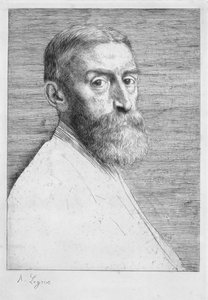
sir edward john poynter
1836 - 1919
Quick Facts
- Birth_Date: 1836
- Birth_Place: Paris
- Death_Date: 1919
- Influenced_By:
- Frederick Leighton
- Charles Gleyre
- Movement:
- Victorian art
- Academic art
- Orientalism
- Name: Sir Edward John Poynter
- Nationality: British
- Notable_Works:
- Israel in Egypt
- St George for England
- The Visit of the Queen of Sheba to King Solomon
Related Articles

White on Canvas: 10 Masterpieces & Timeless Elegance for Your Home Decor
Explore 10 iconic white paintings by Monet, Whistler & Rothko! Discover the stories behind these serene masterpieces and their impact on art history. Find museum-quality reproductions for your home decor at .

Crimson Threads of Narrative: Exploring Symbolism & Representation in Artworks Featuring the Red Dress
Explore the rich symbolism of the red dress in art history! From ancient power displays to iconic portraits like Cézanne’s 'Madame Cezanne', discover the cultural and artistic significance behind this captivating color. Expert analysis & insights.
Cultivating Paradise: A Historical & Artistic Exploration of Gardens in Painting
Explore the rich history of gardens in painting! Discover masterpieces from Renaissance to Impressionism & beyond. Learn about symbolism, artists like Monet & Klimt, and find your perfect artwork at ArtsDot.

Dante Gabriel Rossetti's 25 Masterpieces: A Journey Through Victorian Art & Symbolism | ArtsDot
Explore 25 iconic artworks by Dante Gabriel Rossetti, a leading Pre-Raphaelite artist. Discover the stories behind masterpieces like 'Proserpine' & 'Beata Beatrix'. Find museum-quality art reproductions and elevate your home decor with ArtsDot.com.

Mark Rothko's Masterpieces: 25 Paintings That Define Abstract Expressionism | ArtsDot
Explore 25 iconic Mark Rothko paintings that define Abstract Expressionism. Discover the stories, colors & emotions behind these masterpieces. Find museum-quality art reproductions and curated decor ideas at ArtsDot.com.