 Preview
 Send
Send Share
Share
 Details

 Download
 Similars
 X-Ray
X-Ray Diaporama
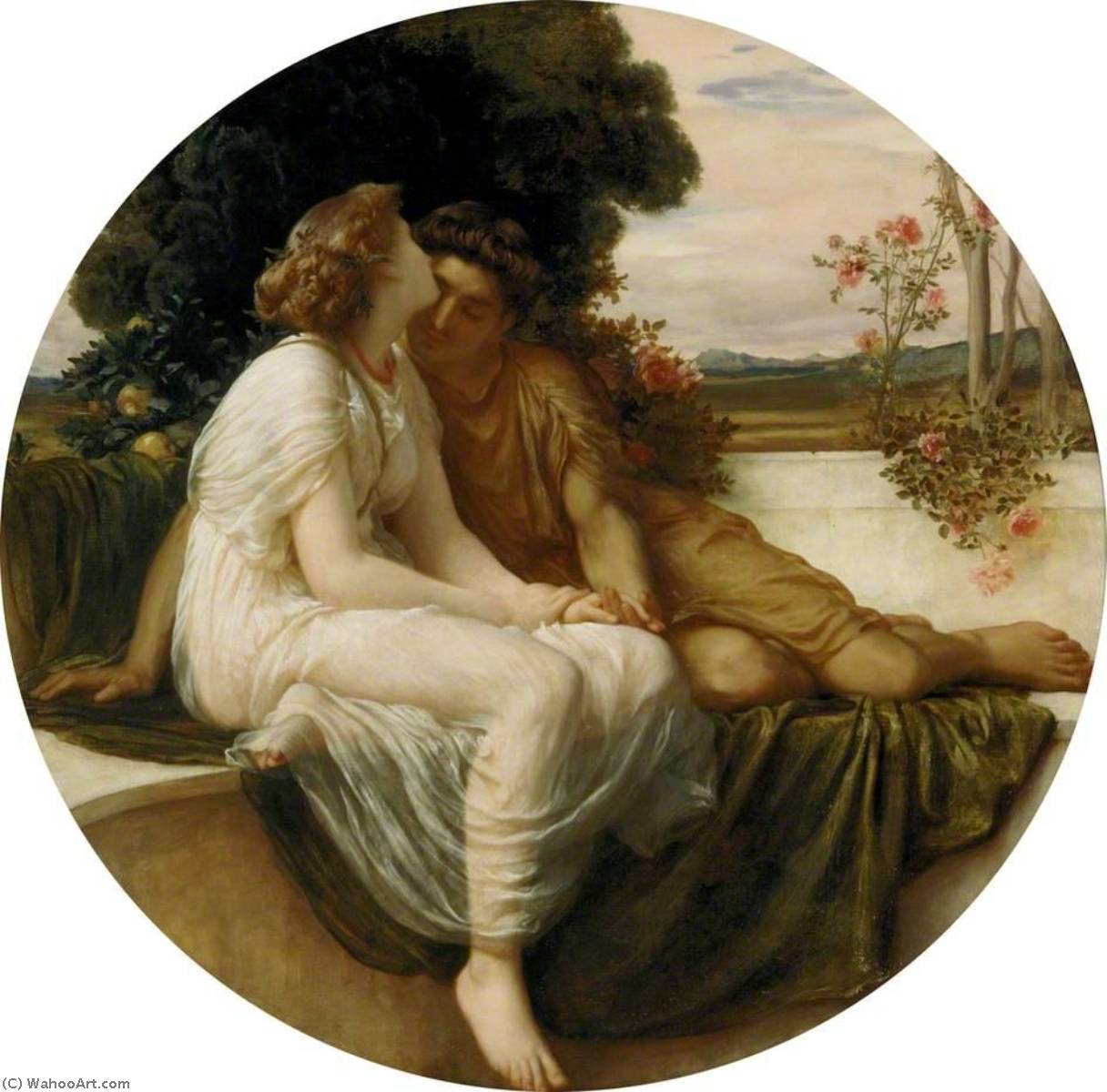
Acme and Septimius


 Read More
Hand Made Oil Reproduction
Hand-painted oil on canvas in your size and frame, made to order by our artists. ( Buy Print Buy Image)




P118B $10

P118H $10

P118W $10

P438Z $10

P508JH $12

P508YH $12

P805H $10

P805Z $10

P919BZ $10

P919G $10

P919XJ $10

P959ZH $10

P968JZ $12

W106C $8

W218G $10

W218JH $8

W218Y $10

W307PJ $10

W316G $10

W316PJ $8

W316Y $10

W398PJ $8

W4111J $10

W500HY $15

W500JH $15

W692G $12

W849H $8

W940BG $15

W953PJ $8




Pick from our preset sizes that match the artwork's original proportions.

You may enter your own dimensions to fit a specific frame or space. If your selected size does not match the original image's proportions, we will either crop the artwork or extend the painting with additional hand-painted elements. A digital mockup will be sent for your approval before production begins.
Please note that the on-screen preview does not reflect the actual cropping or extension. Only the mockup will accurately show the final composition.
While custom sizes are available, we recommend selecting a dimension from the predefined list to preserve the original proportions.
After order, ArtsDot.com team will email client for instructions and provide a mockup preview
Worldwide Delivery () in 3/4 weeks instead of standard 5 weeks. (17 August). No compromise on quality.

Free Worldwide Express Shipping

High-Quality Linen Canvas

Full Shipping Insurance

Customs Tax Refund Guarantee

True Color Matching Guarantee

60-Day Return Policy (Defects Only)

100% Money-Back Guarantee

Bulk Discount Offer
 Glass option is only available in size under 110 CM

Acme and Septimius
Reproduction Medium
Reproduction Size
-


Total Price
$ 288
Artwork Description
A Vision of Eternal Romance
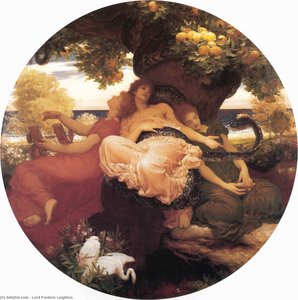
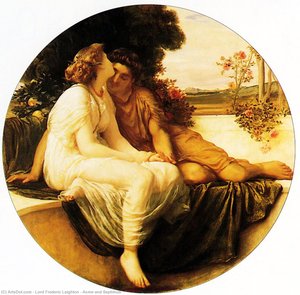
In the soft, golden glow of 1868, Sir Frederic Lord Leighton captured a moment of profound intimacy that transcends the boundaries of time. Acme and Septimius is not merely a painting; it is a window into a dreamlike realm where classical elegance meets the raw emotion of human connection. Rendered in a striking circular format, the composition draws the viewer into a tender embrace between two figures, their bodies forming a gentle, rhythmic curve that anchors the entire piece. This unique tondo-style presentation creates an immersive, almost hypnotic effect, focusing all attention on the central protagonists as they are cradled by a lush, verdant garden. The atmosphere is thick with the scent of imagined roses and the warmth of a fading afternoon, making it a centerpiece that promises to breathe life and soul into any sophisticated interior.
The artistry behind this work showcases Leighton’s mastery of the Academic style, blended seamlessly with the sensuality of the Pre-Raphaelite movement. Through the meticulous application of thin, translucent glazes, the artist achieves a skin tone that appears to glow from within, contrasted beautifully against the rich, heavy textures of flowing drapery. Every petal in the surrounding garden and every leaf in the distant, hazy landscape is rendered with an exacting precision that speaks to his disciplined training. The lighting is masterfully diffused, casting soft shadows that define the musculature and delicate features of the lovers without breaking the dreamlike, ethereal quality of the scene. For the discerning collector, this technique offers a tactile depth that makes a high-quality reproduction feel remarkably alive.
Symbolism and the Classical Ideal
Beyond its surface beauty, Acme and Septimius is steeped in a rich tapestry of symbolism designed to evoke the idyllic splendor of antiquity. The garden setting serves as more than just a backdrop; it is an earthly paradise, a sanctuary of peace far removed from the industrializing world of the late 19th century. The presence of roses—symbols of enduring love and fleeting beauty—intertwines with the figures, suggesting that their passion is both natural and divine. Leighton utilizes atmospheric perspective to suggest a vast, infinite world beyond this intimate circle, where distant trees and pale skies hint at a larger, mythological universe. This sense of depth and scale provides a wonderful balance for interior design, offering a focal point that feels both intimate enough for a private study and grand enough to command a formal living space.
To possess a reproduction of this masterpiece is to invite the spirit of the Victorian Golden Age into one's home. It serves as an evocative conversation piece, reflecting a deep appreciation for classical history, romanticism, and the technical heights of oil painting. Whether placed in a sunlit gallery or a moody, library-style room, the painting’s warm palette and emotive subject matter provide a sense of timeless luxury and emotional tranquility, making it an incomparable choice for those looking to curate a space filled with beauty, history, and grace.
Related Artworks
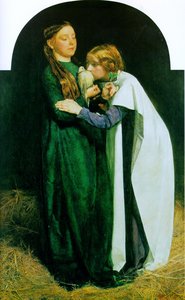
Artist Biography
A Life Bathed in Light: The World of Sir Frederic Leighton
Born into privilege in Scarborough, England, in 1830, Frederic Leighton’s path to artistic renown was paved by a unique confluence of wealth, education, and an insatiable curiosity for the classical world. His grandfather's distinguished service as physician to the Russian Tsars provided a financial foundation that allowed young Frederic to pursue his passion without constraint—a rare advantage in the often-precarious life of a 19th-century artist. This freedom enabled him to embark on extensive travels across Europe, immersing himself in the artistic currents of Italy, Germany, and France. It was during these formative years, studying under masters like Eduard von Steinle and Giovanni Costa, that Leighton began to cultivate his distinctive style—a blend of academic precision, Pre-Raphaelite sensuality, and a deep reverence for classical antiquity. A particularly poignant moment in his early life occurred at the age of seventeen when he encountered the philosopher Arthur Schopenhauer in Frankfurt, creating the only known full-length portrait of the famously reclusive thinker. This encounter hints at Leighton’s intellectual depth and his fascination with exploring the complexities of the human condition—themes that would permeate his art for decades to come.The Painterly Embrace of Myth and History
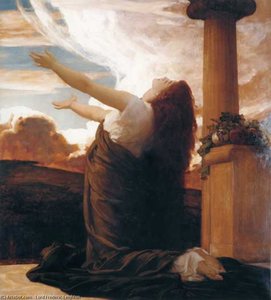
Leighton's artistic career flourished in an era captivated by historical narratives, biblical tales, and classical mythology. He didn’t merely illustrate these subjects; he *inhabited* them, meticulously researching costumes, settings, and the nuances of ancient life to create works that felt both authentic and dramatically compelling. His paintings weren’t simply depictions—they were immersive experiences, transporting viewers to worlds of gods, heroes, and forgotten empires. Clytie, perhaps one of his most celebrated works, exemplifies this approach. The painting portrays the nymph Clytie transformed into a sunflower, yearning for the sun god Apollo. It's not just a beautiful image; it’s an exploration of unrequited love, longing, and the transformative power of nature—rendered with breathtaking detail and a luminous quality that seems to emanate from within. Similarly, The Daphnephoria, depicting a procession honoring the god Apollo, showcases Leighton's mastery of composition, color, and his ability to capture movement and energy on canvas. He wasn’t afraid to embrace opulent textures, rich fabrics, and dramatic lighting—elements that contributed to the sheer visual splendor of his work.Beyond the Canvas: Sculpture and Architectural Vision
While primarily known as a painter, Leighton's artistic ambitions extended beyond the two-dimensional realm. He was a gifted sculptor, and his Athlete Wrestling with a Python, created between 1888 and 1891, marked a pivotal moment in British sculpture—often credited with initiating a renaissance in contemporary sculptural practice known as the “New Sculpture.” This work, carved from pristine white marble, embodies both physical power and dramatic tension. But Leighton’s creative vision didn't stop there. He was also an avid collector of art and artifacts, particularly those from the Near East. These treasures weren’t merely displayed; they were integrated into the very fabric of his home, Leighton House in Holland Park, London. Designed by George Aitchison, Leighton House is a masterpiece in its own right—a stunning example of Aestheticism that served as both a residence and a studio. The iconic Arab Hall, with its intricate tilework and soaring arches, stands as a testament to Leighton’s eclectic tastes and his desire to create a total work of art—an environment that would inspire and nurture his creativity.Legacy and the Echoes of an Era
Leighton's influence on British art was profound. He served as President of the Royal Academy from 1878 until his death in 1896, a position he held with distinction, championing artistic excellence and fostering a vibrant creative community. He was knighted in 1878, made a baronet in 1886, and remarkably, granted a peerage just one day before his passing—a testament to the immense respect he commanded within the art world and beyond. While his work fell out of favor for some time after his death, eclipsed by the rise of modernism, there has been a significant resurgence of interest in Leighton’s art in recent decades. Today, his paintings and sculptures are celebrated for their technical brilliance, their evocative power, and their ability to transport viewers to worlds of beauty and wonder.- His works continue to inspire artists and captivate audiences around the globe.
- Leighton House Museum stands as a lasting tribute to his artistic vision and remains a vital cultural landmark.
- He represents a fascinating intersection of Victorian ideals, classical influences, and Pre-Raphaelite sensibilities—a unique voice in the history of British art.
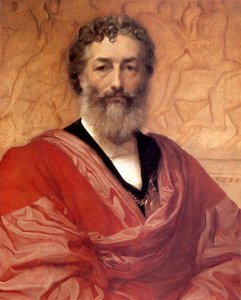
Sir Frederic Lord Leighton
1830 - 1896 , United Kingdom
Quick Facts
- Artistic Movement Or Style: Academic, Pre-Raphaelite
- Artists Or Movements Influenced By This Artist: ['New Sculpture movement']
- Artists Who Influenced This Artist:
- Eduard von Steinle
- Giovanni Costa
- Date Of Birth: December 3, 1830
- Date Of Death: January 25, 1896
- Full Name: Sir Frederic Lord Leighton
- Nationality: British
- Notable Artworks:
- Clytie
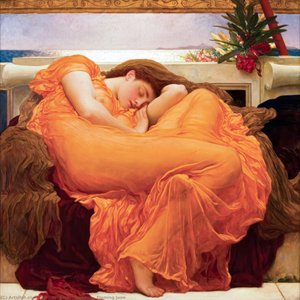
- Flaming June
- Athlete wrestling python
- Place Of Birth: Scarborough, UK
Related Articles
Dante Gabriel Rossetti's 25 Masterpieces: A Journey Through Victorian Art & Symbolism | ArtsDot
Explore 25 iconic artworks by Dante Gabriel Rossetti, a leading Pre-Raphaelite artist. Discover the stories behind masterpieces like 'Proserpine' & 'Beata Beatrix'. Find museum-quality art reproductions and elevate your home decor with ArtsDot.com.
Edmund Blair Leighton: Victorian Romance & Narrative Painting's Golden Age
Explore the captivating world of Edmund Blair Leighton, Victorian master of romantic narrative painting. Discover his iconic works & Pre-Raphaelite influences at ArtsDot.
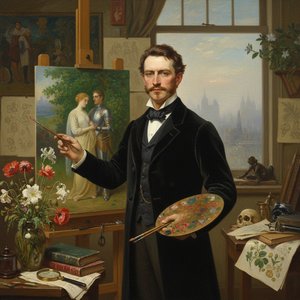
Sir John Everett Millais: Pre-Raphaelite Rebellion & Victorian Narrative Detail
Explore the revolutionary art of Sir John Everett Millais & the Pre-Raphaelite Brotherhood. Discover their radical realism, symbolic narratives, and lasting impact on Victorian aesthetics. A deep dive into 19th-century masterpieces.
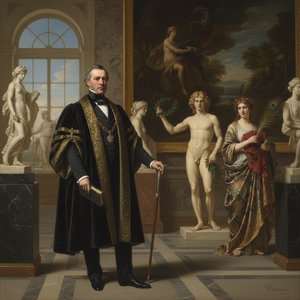
Sir Frederic Leighton: Aestheticism, Academic Mastery & Victorian Masculinity
Explore the life & art of Sir Frederic Leighton, a master of Victorian Aestheticism. Discover his academic training, sculptural innovations, and captivating depictions of beauty. Expert insights for collectors.
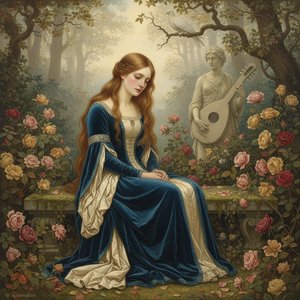
Arthur Hughes: Pre-Raphaelite Visions of Beauty & Melancholy
Explore the captivating world of Arthur Hughes (1832-1915), a leading Pre-Raphaelite painter. Discover his dreamy landscapes, poetic narratives & iconic Victorian artworks. Learn about his life, style & collecting today.