Introduction: The Allure of Victorian Storytelling
 Edmund Blair Leighton
Discover Edmund Blair Leighton's romantic paintings of Regency & medieval England. Explore chivalry, courtly love, and dramatic scenes from this Pre-Raphaelite inspired artist.
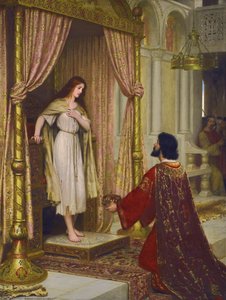
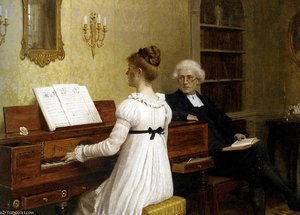
The late 19th century witnessed a remarkable flourishing of narrative painting, a genre that sought not merely to depict scenes but to *tell* stories—to evoke emotion, explore morality, and transport viewers to other times and places. At the heart of this movement stood Edmund Blair Leighton, an artist whose name became synonymous with romantic idealism and meticulous historical detail. While often associated with the Pre-Raphaelite Brotherhood, Leighton carved his own distinct path, creating a body of work that resonated deeply with Victorian sensibilities and continues to captivate audiences today. His paintings are not simply beautiful; they are windows into a world steeped in chivalry, courtly love, and a longing for a bygone era.
Leighton's Early Life & Artistic Formation: From Illustration to Oil Painting
Born in 1852, Edmund Blair Leighton inherited an artistic lineage from his father, Charles Blair Leighton, also a painter. However, young Edmund’s initial trajectory wasn’t immediately focused on fine art. He began his career working for a tea merchant, a practical necessity that nonetheless allowed him the opportunity to pursue evening classes in South Kensington. This early dedication to self-improvement led him to the Heatherley School of Fine Art and eventually, at the age of 21, to the prestigious Royal Academy Schools. His formative years were marked by a shift from monochrome illustrations for publications like Cassell’s Magazine – work that honed his observational skills and attention to detail – towards the richer medium of oil paint. This transition proved pivotal; it allowed him to fully realize his vision of dramatic historical scenes, imbued with color, texture, and emotional depth. His early success with “A Flaw in the Title” (1874), selling for a respectable £200, signaled a promising future dedicated to canvas.
Chivalry, Courtly Love & Historical Detail: Defining Themes in Leighton’s Art
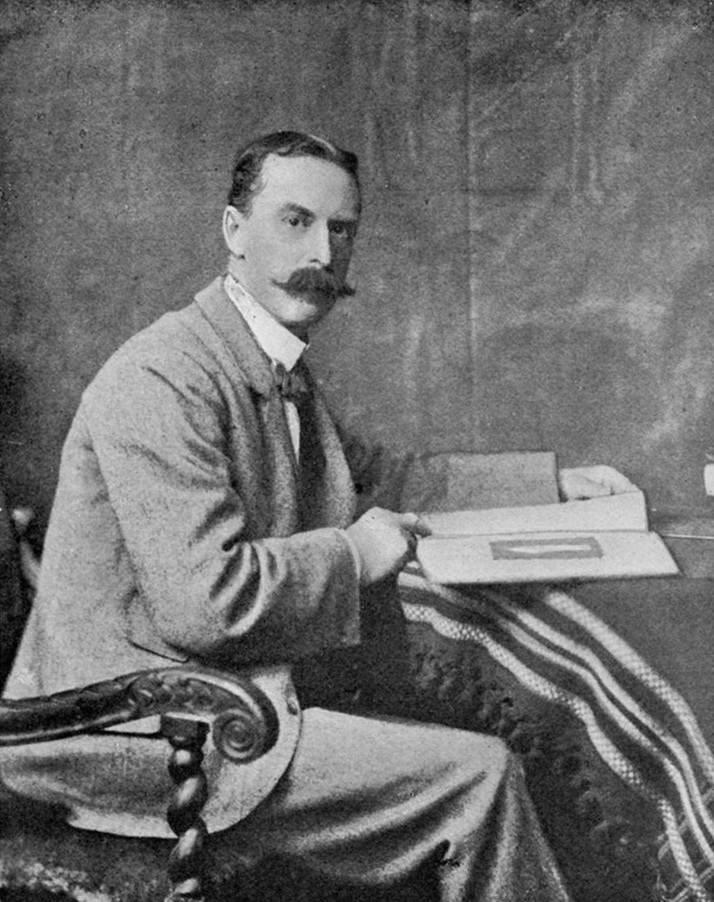 Wikipedia: Edmund Leighton
Edmund Blair Leighton (21 September 1852 – 1 September 1922) was an English painter of historical genre scenes, specialising in Regency and medieval subjects. His art is associated with the pre-Raphaelite movement of the mid-to-late nineteenth and e...
Leighton's oeuvre is characterized by a consistent focus on Regency and medieval subjects. He wasn’t interested in simply recreating historical events; rather, he sought to capture the *spirit* of these eras – the ideals of chivalry, the complexities of courtly love, and the elegance of aristocratic life. His paintings often depict moments of heightened drama or quiet intimacy, revealing a keen understanding of human emotion and social dynamics. The Accolade, perhaps his most famous work, exemplifies this perfectly: a knight receives recognition for his valor, surrounded by onlookers whose expressions convey both admiration and subtle intrigue. Similarly, scenes of elopements, clandestine meetings, and tender farewells populate his canvases, each meticulously researched and rendered with breathtaking accuracy. He wasn’t merely painting history; he was constructing idealized narratives that spoke to Victorian values and aspirations.
Masterpieces of Romance: 'The Accolade', 'A Wet Sunday Morning', and Beyond
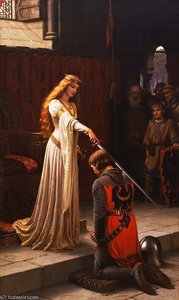 the accolate
Discover 'The Accolate' by Edmund Blair Leighton – a stunning Pre-Raphaelite oil painting of chivalry & ceremony. Explore its rich detail, historical themes, and dramatic lighting.
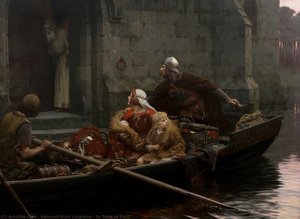
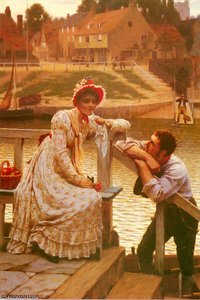
Consider “The Accolade”, a stunning example of Leighton’s mastery. The composition is rich with detail – the gleaming armor, the vibrant tapestries, the expressive faces of the assembled court. But beyond the technical skill lies a deeper narrative: a celebration of honor, loyalty, and romantic heroism. “A Wet Sunday Morning”, in contrast, offers a more intimate glimpse into Victorian life. The painting depicts a clandestine encounter between two lovers, sheltering from the rain – a scene brimming with unspoken emotions and subtle tension. Other notable works like “God Speed!” (1900) and “On the Threshold” (1900) further demonstrate his ability to capture fleeting moments of beauty and drama. Each painting is a testament to his meticulous craftsmanship, his understanding of light and shadow, and his talent for storytelling.
Leighton and the Pre-Raphaelite Influence: A Naturalistic Approach
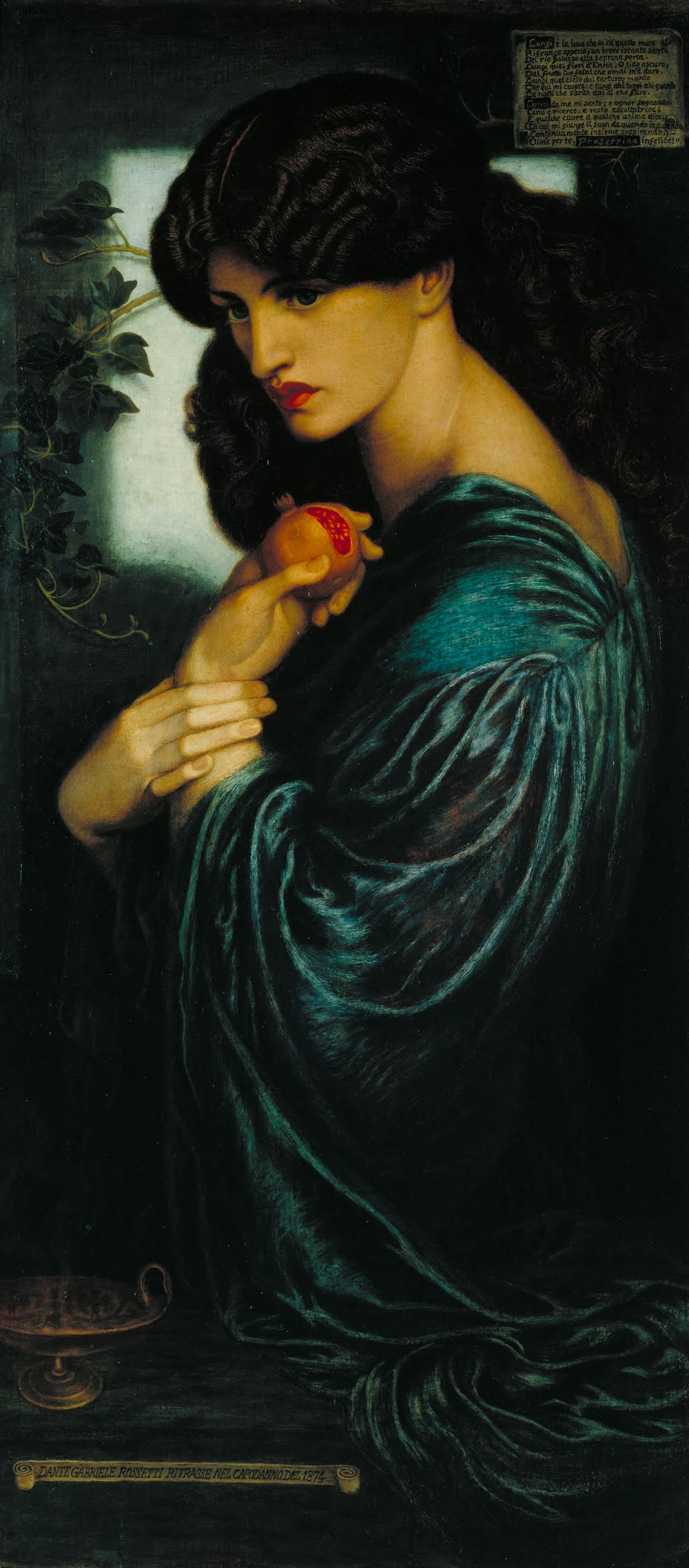 Wikipedia: Pre-Raphaelite Brotherhood
The Pre-Raphaelite Brotherhood (PRB), later known as the Pre-Raphaelites, was a group of English painters, poets, and art critics, founded in 1848 by William Holman Hunt, John Everett Millais, Dante Gabriel Rossetti, William Michael Rossetti, James ...
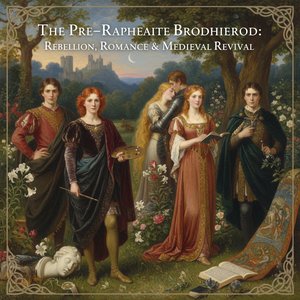
While often categorized alongside the Pre-Raphaelites, Leighton’s style diverges in significant ways. The Brotherhood championed a return to the detail and vibrant colors of early Italian Renaissance art, rejecting what they perceived as the artificiality of academic painting. Leighton shared their appreciation for meticulous realism but eschewed the overtly symbolic and sometimes stylized approach favored by artists like Dante Gabriel Rossetti or John Everett Millais. His work is less concerned with moral allegory and more focused on capturing a sense of naturalism and psychological depth. He possessed an exceptional ability to render fabrics, textures, and human anatomy with astonishing accuracy, creating paintings that feel remarkably lifelike despite their romanticized subject matter. He absorbed the Pre-Raphaelite emphasis on detail but tempered it with a greater concern for conventional beauty and narrative clarity.
Legacy and Enduring Appeal: Why Leighton's Paintings Still Captivate Today
Edmund Blair Leighton’s paintings continue to resonate with audiences over a century after their creation. His ability to evoke emotion, transport viewers to other times, and celebrate the ideals of chivalry and courtly love remains powerfully compelling. While he never achieved the academic status enjoyed by some of his contemporaries, his popularity during his lifetime was undeniable – he successfully supported himself through his art, a rare feat for many Victorian painters. Today, his works are prized for their technical brilliance, historical accuracy, and romantic charm. At ArtsDot
, we offer high-quality reproductions of Leighton’s masterpieces, allowing you to bring the beauty and drama of the Victorian era into your own home. Explore our collection and discover the enduring allure of Edmund Blair Leighton – a true master of narrative painting whose legacy continues to inspire.