 Preview
 Send
Send Share
Share
 Details

 Download
 Similars
 X-Ray
X-Ray Diaporama
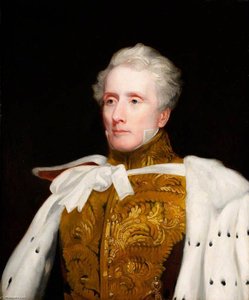
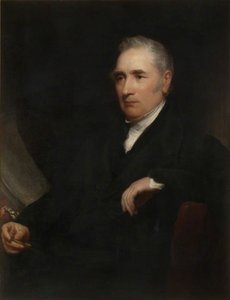
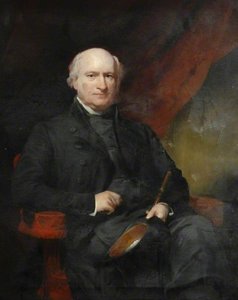
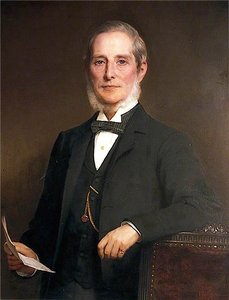
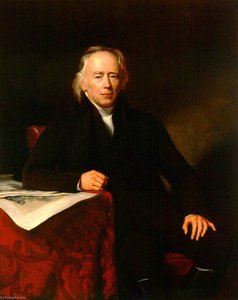
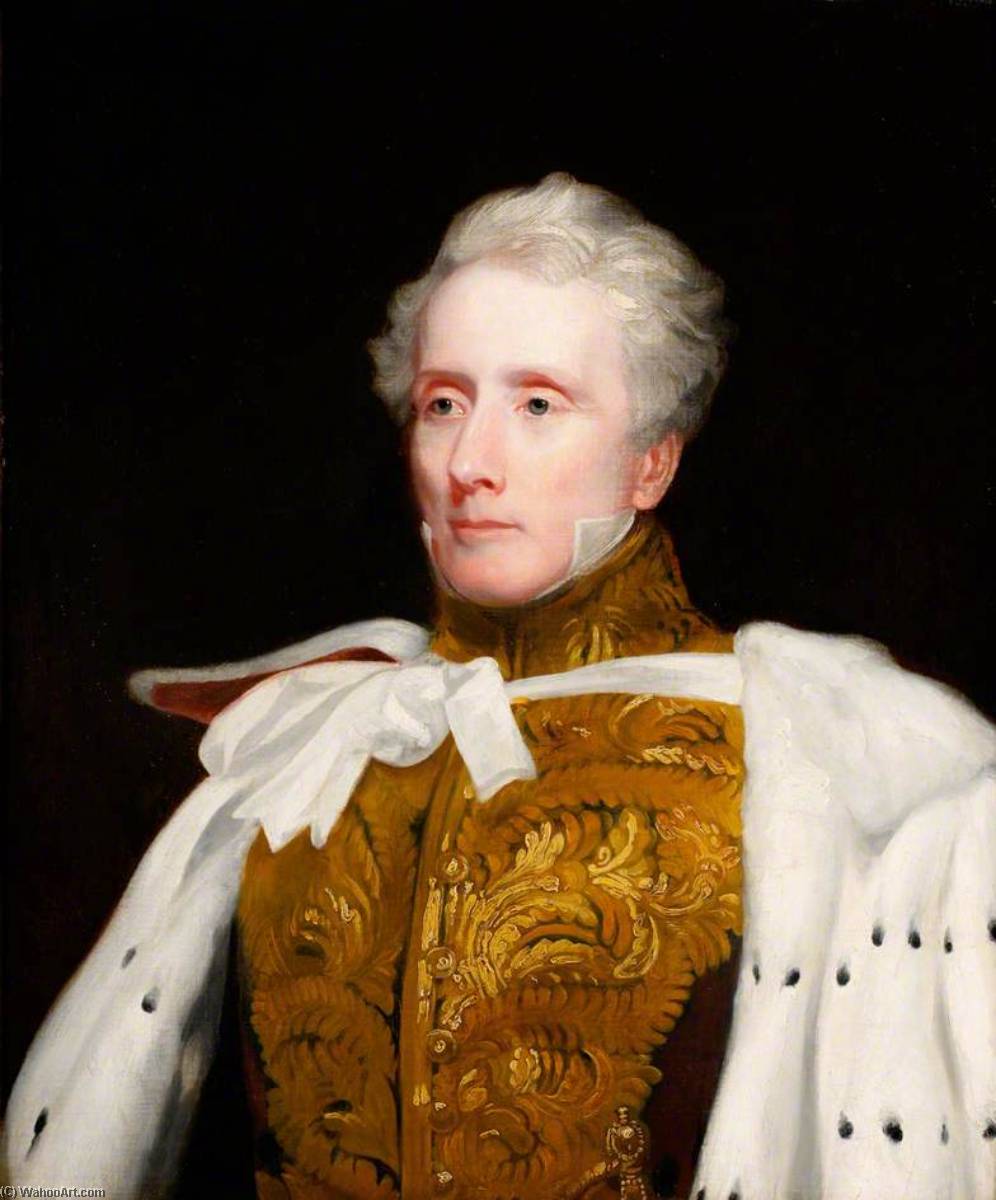
Charles Grant (1778–1866), 1st Baron Glenelg, Politician
 Oil
Oil- WallArt
- Academic/Neoclassical
 1837
1837- 19th Century
 77.0 x 64.0 cm
 Government Art Collection
 Read More
Giclée / Art Print
Museum-quality giclée or canvas print with fast production and flexible finish options. ( Buy Hand Made Painting Buy Image)




P118B $10

P118H $10

P118W $10

P438Z $10

P508JH $12

P508YH $12

P805H $10

P805Z $10

P919BZ $10

P919G $10

P919XJ $10

P959ZH $10

P968JZ $12

W106C $8

W218G $10

W218JH $8

W218Y $10

W307PJ $10

W316G $10

W316PJ $8

W316Y $10

W398PJ $8

W4111J $10

W500HY $15

W500JH $15

W692G $12

W849H $8

W940BG $15

W953PJ $8




Pick from our preset sizes that match the artwork's original proportions.

You may enter your own dimensions to fit a specific frame or space. If your selected size does not match the original image's proportions, we will either crop the artwork or extend the image with a mirrored or solid-fill edge. A digital mockup will be sent for your approval before production begins.
Please note that the on-screen preview does not reflect the actual cropping or extension. Only the mockup will accurately show the final composition.
While custom sizes are available, we recommend selecting a dimension from the predefined list to preserve the original proportions.
Worldwide Delivery () in 2 weeks instead of standard 4/5 weeks. (26 August)

Free Worldwide Express Shipping

High-Quality Linen Canvas

Full Shipping Insurance

Customs Tax Refund Guarantee

True Color Matching Guarantee

60-Day Return Policy (Defects Only)

100% Money-Back Guarantee

Bulk Discount Offer
 Glass option is only available in size under 110 CM

Charles Grant (1778–1866), 1st Baron Glenelg, Politician
Giclée / Art Print
Reproduction Size
-


Total Price
$ 63
Collectible Description
A Regal Vision in Gold and Shadow
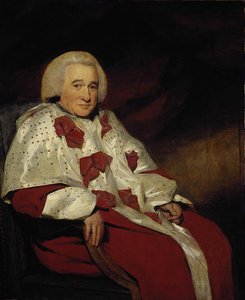
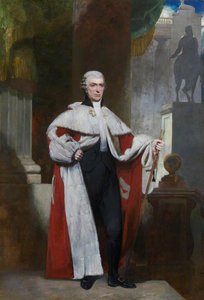
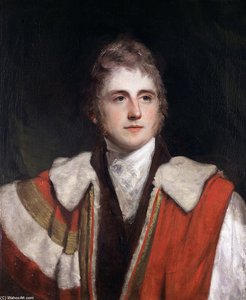
In this captivating portrait by the Victorian master Sir Thomas Francis Dicksee, we are transported to an era of profound theatricality and aristocratic splendor. The painting centers on a figure of immense presence, draped in a luminous yellow coat adorned with intricate gold trim that seems to catch a hidden light source. This central subject, rendered with a meticulous attention to texture and luster, wears a crown that signals a narrative of sovereignty or perhaps a dramatic portrayal of historical nobility. Dicksee, renowned for his ability to breathe life into Shakespearean drama and romanticized history, utilizes a rich palette to create a sense of weight and importance, ensuring the viewer's gaze is immediately anchored by the subject's commanding, regal demeanor.
The composition is masterfully balanced through a play of light and deep, atmospheric shadows. While the man’s face and golden attire dominate the foreground, the background recedes into a dark, enigmatic sky that lends the piece an almost operatic intensity. This use of chiaroscuro—the dramatic contrast between light and dark—does more than just provide depth; it creates a psychological space where the subject feels both monumental and isolated in his grandeur. The subtle presence of secondary figures on the periphery adds a layer of narrative complexity, suggesting a larger courtly scene or a moment captured from a grand theatrical performance, yet they remain intentionally understated to preserve the focus on the central protagonist.
The Artistry of Victorian Romanticism
Technically, the work showcases Dicksee’s exceptional skill in capturing the tactile qualities of fabric and the subtle nuances of human expression. The brushwork, while precise enough to define the delicate white bow tie and the heavy embroidery of the coat, retains a painterly softness that contributes to the romantic atmosphere of the piece. As an artist who excelled in visual storytelling, Dicksee employs color not merely as a descriptive tool but as an emotional one; the warmth of the gold against the somber, dark backdrop evokes feelings of nostalgia, power, and the fleeting nature of glory.
For the discerning collector or interior designer, this painting offers more than just a historical window; it serves as a profound statement piece. Its dramatic scale and intense color palette make it an ideal focal point for a sophisticated study, a grand library, or a formal dining room where one wishes to evoke a sense of heritage and timeless elegance. A high-quality reproduction of this work allows the splendor of the 19th-century aesthetic to inhabit modern spaces, bringing with it a touch of the theatrical and an enduring connection to the golden age of British portraiture.
Related Artworks
Artist Biography
Sir Thomas Francis Dicksee: A Victorian Master of Shakespearean Drama
Sir Thomas Francis Dicksee (1819-1895) stands as a significant, yet often overlooked, figure in 19th-century British art. More than simply a portrait painter, Dicksee carved out a distinctive niche for himself through his evocative depictions of Shakespearean scenes and meticulously rendered Victorian genre works. His canvases are imbued with a romantic sensibility, capturing not just likenesses but also the emotional depth and dramatic intensity of literary characters and everyday life. Born in London, Dicksee’s artistic journey was shaped by early instruction from his father, a painter himself, laying the foundation for a career dedicated to visual storytelling.
Dicksee's artistic development can be traced through his early exhibitions at the Royal Academy, beginning in 1841. Initially, he focused on portraiture, quickly establishing a reputation for capturing the personalities of his subjects with remarkable accuracy and sensitivity. However, it was his fascination with Shakespeare that truly defined his oeuvre. He didn’t merely paint scenes from plays; he sought to embody the spirit of the characters within them – Ophelia’s tragic beauty, Beatrice’s fiery wit, Miranda’s ethereal grace, and Ariel's mischievous charm. These weren’t illustrations for a play, but independent works of art, imbued with Dicksee’s own artistic vision.
The Influence of Romanticism and Victorian Sensibilities
Dicksee’s work is deeply rooted in the Romantic movement, inheriting its emphasis on emotion, imagination, and the sublime. Yet, he skillfully adapted these principles to the specific context of Victorian England. The Victorian era was characterized by a fascination with morality, social order, and domesticity – themes that frequently appear in Dicksee's genre scenes. He often depicted women engaged in quiet domestic activities—reading, sewing, or receiving visitors—but always with an underlying sense of melancholy or longing. This juxtaposition of Romantic idealism and Victorian restraint is what gives his paintings their unique character.
Furthermore, Dicksee’s artistic training under H.P. Briggs at the Royal Academy Schools provided him with a solid technical foundation. He mastered the techniques of oil painting, particularly in rendering fabrics, textures, and light. His meticulous attention to detail—the folds of a gown, the sparkle of jewelry, the expression on a face—contributes significantly to the realism and emotional impact of his works. He was also influenced by artists like Thomas Lawrence, whose portraiture emphasized elegance and social grace, though Dicksee injected a greater degree of dramatic intensity into his subjects.
Key Works and Notable Commissions
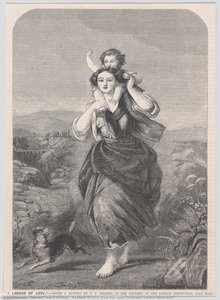
Dicksee’s most celebrated paintings are undoubtedly those depicting Shakespearean characters. “A Labour of Love,” exhibited at the Illustrated London News in 1876, remains one of his most iconic works. The scene captures Ophelia's poignant farewell to Hamlet, rendered with exquisite detail and a palpable sense of sorrow. Other notable examples include "Beatrice," which perfectly embodies the character’s fiery spirit, and “Miranda,” capturing her innocence and beauty within the confines of Prospero’s island.
Beyond his Shakespearean subjects, Dicksee also produced a substantial body of portraiture. He painted numerous members of the British aristocracy, including prominent figures such as Richard Jenkyns, Thomas Young (a copy after Thomas Lawrence), and Sir Francis Grant himself. These portraits are not merely likenesses; they reveal the personalities and social standing of their sitters with remarkable insight. His ability to capture both physical appearance and inner character made him a sought-after portraitist among the wealthy and influential.
Legacy and Historical Significance
Despite his considerable talent and success, Dicksee’s work has often been overshadowed by that of other Victorian artists. However, recent scholarship is beginning to recognize his unique contribution to British art history. His Shakespearean scenes, in particular, offer a valuable window into the Victorian fascination with literature and drama. Dicksee's paintings are not simply decorative; they are imbued with a profound sense of human emotion and psychological depth.
Furthermore, Dicksee’s career reflects the broader social and cultural changes taking place in 19th-century Britain. His work provides insights into Victorian attitudes towards gender roles, class distinctions, and the relationship between art and society. His legacy continues to resonate today, reminding us of the enduring power of visual storytelling and the importance of preserving the artistic heritage of a bygone era.
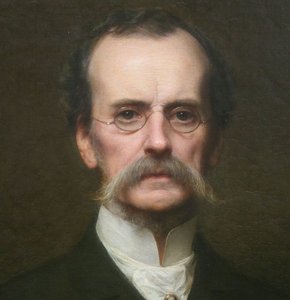
sir thomas francis dicksee
1819 - 1895
Quick Facts
- Artistic Movement Or Style: Victorian painting
- Artists Or Movements Influenced By This Artist:
- Romanticism
- Shakespearean scenes
- Artists Who Influenced This Artist:
- Thomas Lawrence
- Francis Grant
- Date Of Birth: 1819
- Date Of Death: 1895
- Full Name: Sir Thomas Francis Dicksee
- Nationality: British
- Notable Artworks:
- A Labour of Love
- Ophelia
- Beatrice
- Miranda
- Richard Jenkyns
- Place Of Birth: London, England
Related Articles

The Enduring Legacy of Oil on Canvas: Technique, History & Aesthetic Impact
Explore the rich history & techniques of oil painting – from Renaissance masters to Impressionism. Discover pigments, layering methods, and why this timeless medium endures. Expert insights for artists & art enthusiasts.

Oil on Canvas: A Historical & Technical Exploration of a Timeless Artistic Medium
Explore the rich history & enduring techniques of oil painting on canvas. Discover the science behind its longevity, conservation practices, and contemporary relevance. Expert insights for art enthusiasts.

The Enduring Power of Painting: A Historical & Contemporary Exploration of Form and Emotion
Explore the rich history & enduring techniques of oil painting with ArtsDot. Discover masterpieces, learn about art collecting, and find authentic handmade reproductions crafted by skilled artists.

19th Century Masterpieces: 10 Paintings That Defined an Era | ArtsDot
Journey through 19th century art with ArtsDot! Explore 10 iconic paintings – from Monet & Renoir to Courbet – and discover the stories behind Romanticism, Realism & Impressionism. Find museum-quality reproductions for your home decor. Explore the full collection online!

The Enduring Legacy of Oil on Canvas: Technique, History & Contemporary Practice
Explore the rich history & enduring techniques of oil painting on canvas. Discover the science behind its longevity, conservation practices, and contemporary relevance. Expert insights for art enthusiasts.