 Preview
 Send
Send Share
Share
 Details

 Download
 Similars
 X-Ray
X-Ray Diaporama
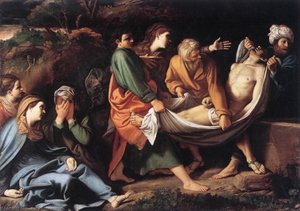
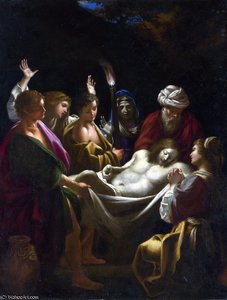
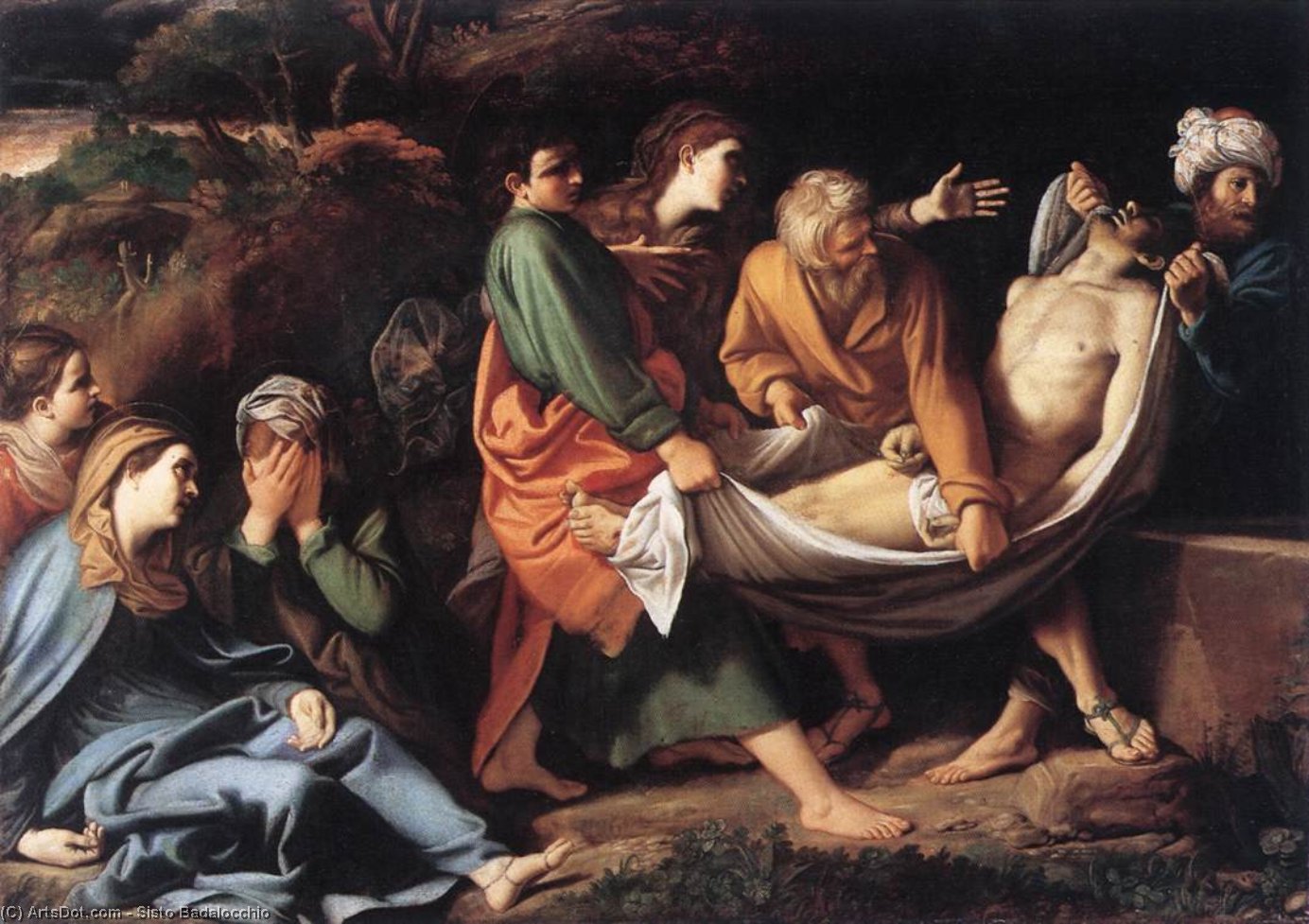
The Entombment of Christ


 Read More
Hand Made Oil Reproduction
Hand-painted oil on canvas in your size and frame, made to order by our artists. ( Buy Print Buy Image)




P118B $10

P118H $10

P118W $10

P438Z $10

P508JH $12

P508YH $12

P805H $10

P805Z $10

P919BZ $10

P919G $10

P919XJ $10

P959ZH $10

P968JZ $12

W106C $8

W218G $10

W218JH $8

W218Y $10

W307PJ $10

W316G $10

W316PJ $8

W316Y $10

W398PJ $8

W4111J $10

W500HY $15

W500JH $15

W692G $12

W849H $8

W940BG $15

W953PJ $8




Pick from our preset sizes that match the artwork's original proportions.

You may enter your own dimensions to fit a specific frame or space. If your selected size does not match the original image's proportions, we will either crop the artwork or extend the painting with additional hand-painted elements. A digital mockup will be sent for your approval before production begins.
Please note that the on-screen preview does not reflect the actual cropping or extension. Only the mockup will accurately show the final composition.
While custom sizes are available, we recommend selecting a dimension from the predefined list to preserve the original proportions.
After order, ArtsDot.com team will email client for instructions and provide a mockup preview
Worldwide Delivery () in 3/4 weeks instead of standard 5 weeks. (17 August). No compromise on quality.

Free Worldwide Express Shipping

High-Quality Linen Canvas

Full Shipping Insurance

Customs Tax Refund Guarantee

True Color Matching Guarantee

60-Day Return Policy (Defects Only)

100% Money-Back Guarantee

Bulk Discount Offer
 Glass option is only available in size under 110 CM

The Entombment of Christ
Reproduction Medium
Reproduction Size
-


Total Price
$ 263
Artwork Description
The Somber Majesty of “The Entombment of Christ” by Sisto Badalocchio
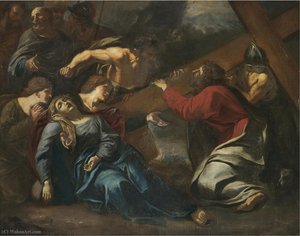
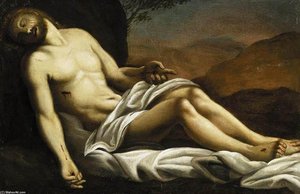
Sisto Badalocchio’s “The Entombment of Christ,” painted in 1610, is more than just a depiction of a biblical scene; it's a profound meditation on loss, sacrifice, and the enduring power of faith. Housed within the hallowed halls of the Galleria Borghese in Rome, this oil-on-canvas masterpiece offers a glimpse into the heart of Bolognese Baroque artistry – a style characterized by its dramatic lighting, dynamic compositions, and a deep reverence for classical ideals. Badalocchio, born in Parma in 1585 and passing away in 1647, skillfully bridged the gap between the rigorous training he received from the Carracci brothers and his own distinctive artistic vision, creating a work that resonates with both historical weight and emotional depth.
A Study in Contrasts: Style and Technique
Badalocchio’s approach to painting is immediately striking. He masterfully employs chiaroscuro – the dramatic interplay of light and shadow – to draw the viewer's eye directly to Christ’s body, laid upon the bier. The figures surrounding him are rendered with a remarkable attention to detail, each garment meticulously depicted with varying textures and folds that suggest both wealth and social standing. Notice how the drapery clings realistically to the bodies, conveying a sense of weight and sorrow. The artist utilizes a technique reminiscent of the Carracci brothers – a blend of realism and idealized forms – creating figures that are undeniably human in their suffering yet imbued with an almost ethereal quality. The landscape behind them, rendered in muted earth tones, provides a stark contrast to the vibrant colors used for the figures, further emphasizing the central drama of the scene.
Historical Context and Artistic Influences
“The Entombment of Christ” was painted during a period of significant artistic ferment in Rome. The Counter-Reformation was actively shaping the visual landscape, with the Catholic Church seeking to utilize art as a powerful tool for spiritual renewal. Badalocchio’s work reflects this context, conveying a sense of solemnity and reverence appropriate for a religious subject. His training under Agostino and Annibale Carracci undoubtedly shaped his style; he inherited their commitment to classical composition, anatomical accuracy, and the use of light to create dramatic effects. However, Badalocchio subtly departs from the strictures of the Carracci’s earlier work, injecting a greater sense of emotional intensity into his depictions of human suffering – a hallmark of the evolving Baroque aesthetic.
Symbolism and Narrative Depth
Beyond its immediate depiction of Christ's burial, “The Entombment” is rich in symbolic meaning. The diverse array of figures surrounding the body represent the grief and mourning of humanity. The Roman attire worn by some suggests a connection to the ancient world, highlighting the enduring relevance of Christ’s sacrifice across time. The positioning of the figures – clustered around the central figure – emphasizes the communal nature of sorrow and the shared responsibility for honoring the fallen savior. The very act of entombment itself symbolizes both death and resurrection, hinting at the promise of eternal life offered through faith. The somber palette reinforces this message, evoking a sense of profound loss and anticipation.
A Timeless Masterpiece: Reproduction and Beyond
“The Entombment of Christ” remains a powerfully evocative work of art, captivating viewers with its dramatic composition, masterful technique, and profound emotional resonance. Reproductions offer an accessible way to experience the beauty and depth of this iconic painting in your own home or office space. When selecting a reproduction, consider the quality of materials used – a high-quality print on archival canvas will ensure that the colors remain vibrant for years to come, faithfully capturing Badalocchio’s original vision. This piece is not merely decoration; it's an invitation to contemplate themes of faith, sacrifice, and the enduring legacy of one of Italy’s most celebrated artists.
Related Artworks
Artist Biography
Sisto Badalocchio: Bridging Bolognese Baroque and Northern Italian Vision
Sisto Badalocchio (1585-1647) stands as a pivotal figure in the artistic landscape of 16th and early 17th century Italy, specifically within the vibrant Bolognese School. Born in Parma, he embarked on his artistic journey under the tutelage of Agostino Carracci and Annibale Carracci—luminaries whose influence would shape his stylistic sensibilities and propel him to prominence in Rome. His collaboration with Annibale Carracci extended until 1609, fostering a dynamic exchange of ideas that cemented his position within the burgeoning Roman Baroque movement. Recognizing the potential for artistic innovation beyond the capital city, Badalocchio subsequently relocated to Parma, where he continued to hone his craft and establish himself as a respected artist in his own right.- Early Influences & Training: Badalocchio’s formative years were deeply rooted in the Carracci workshop tradition—a bastion of classical idealism infused with Baroque dynamism. The brothers Carracci championed disegno, or drawing, emphasizing meticulous observation and anatomical accuracy as foundational to artistic excellence. This rigorous training instilled in Badalocchio a profound understanding of perspective and composition, elements that would permeate his subsequent works.
- Rome & Collaboration with Raphael: His time in Rome proved instrumental in broadening Badalocchio’s horizons. He joined forces with Giovanni Lanfranco, a fellow student under Raphael, undertaking the monumental task of recreating Raphael's frescoes for the Vatican Loggia—a project that demanded unparalleled technical skill and artistic vision. The resulting images captured the grandeur and spiritual fervor characteristic of Raphael’s workshop, demonstrating Badalocchio’s ability to execute complex commissions with remarkable precision.
The Frescoes of San Giovanni Evangelista: Echoes of Correggio
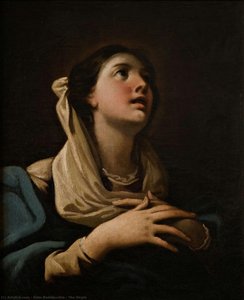
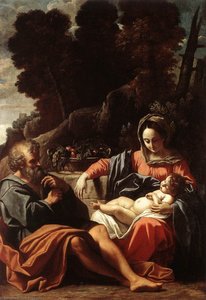
Badalocchio's most enduring legacy resides in his contribution to the decoration of San Giovanni Evangelista, Reggio Emilia—a church commissioned by Cardinal Federico Borromeo and conceived as a deliberate homage to Correggio’s pioneering frescoes. Badalocchio skillfully interpreted Correggio’s innovative use of illusionistic perspective and atmospheric haze, elevating the church's interior space into an ethereal realm of divine beauty. His meticulous attention to detail and masterful execution ensured that the church’s decoration faithfully conveyed Correggio’s groundbreaking aesthetic principles—a testament to Badalocchio’s artistic erudition and his commitment to upholding the highest standards of Baroque art.- Notable Works: Beyond San Giovanni Evangelista, Badalocchio produced several significant paintings, including ‘The Holy Family,’ ‘The Virgin,’ and ‘The Entombment of Christ.’ These works exemplify his characteristic style—characterized by luminous color palettes, dramatic chiaroscuro effects, and a profound sense of emotional depth.
- Recognition & Legacy: While Badalocchio’s collaborations with Lanfranco often garnered considerable acclaim, he remained somewhat overshadowed by his peers. Nevertheless, he is recognized today as an indispensable figure in disseminating the stylistic innovations of the Bolognese Baroque throughout Northern Italy—a testament to his enduring artistic contribution.
Stylistic Characteristics & Artistic Significance
Badalocchio’s oeuvre embodies the core tenets of Bolognese Baroque, blending classical ideals with dramatic theatricality. His masterful handling of disegno ensured that his paintings possessed both anatomical accuracy and compositional elegance—qualities that distinguished him from many of his contemporaries. Furthermore, Badalocchio's embrace of Correggio’s techniques—particularly illusionistic perspective—demonstrated a willingness to push artistic boundaries and elevate the visual experience for viewers. He stands as an exemplar of Baroque artistry, securing his place in art history as a conduit between Bolognese artistic tradition and the broader European Baroque movement.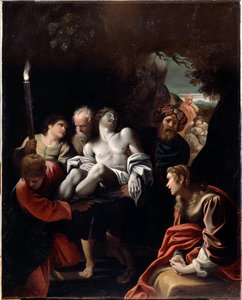
Sisto Badalocchio
1585 - 1647 , Italy
Quick Facts
- Artistic Movement Or Style: Italian Baroque
- Artists Or Movements Influenced By This Artist: ['Correggio']
- Artists Who Influenced This Artist:
- Agostino Carracci
- Annibale Carracci
- Date Of Birth: Parma, Italy (1585)
- Date Of Death: 1647
- Full Name: Sisto Badalocchio Rosa
- Nationality: Italian
- Notable Artworks:
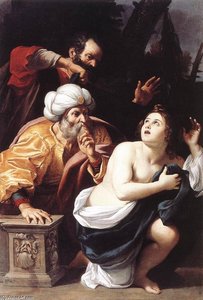
- Susanna and the Elders
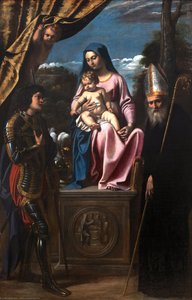
- The Virgin
- The Entombment of Christ
- Place Of Birth: Parma
Related Articles

The Dramatic Flourish: Exploring the Baroque Movement's Enduring Legacy in Art History
Explore the dramatic world of Baroque art! Discover iconic artists like Caravaggio & Rubens, defining techniques, and its lasting impact on art history. Expert insights for collectors & enthusiasts at ArtsDot.

Baroque Drama: Bringing Opulence & Emotion into Contemporary Interiors
Explore the opulent world of Baroque interior design! Discover key elements, modern applications & how to bring dramatic elegance into your home with 's authentic reproductions.

The Visceral Stage: Exploring Dramatic Narratives & Emotional Intensity in Baroque Art
Explore the dramatic world of Baroque art! Discover iconic masters like Caravaggio & Rembrandt, their techniques, and the movement's lasting impact. Expert insights for collectors & enthusiasts at ArtsDot.

Baroque Masterpieces: 10 Paintings That Defined an Era |
Journey through the drama & grandeur of Baroque art! Explore 10 masterpieces by Caravaggio, Rembrandt, Rubens & more. Discover stunning oil paintings, rich colors & timeless stories. Find museum-quality reproductions at .

Theatricality & Triumph: Baroque Drama in Painting & Sculpture
Explore the dramatic world of Baroque art! Discover its history, defining characteristics, & lasting influence on painting & sculpture. Expert insights into Caravaggio, Zurbarán, and Bernini – plus high-quality reproductions at ArtsDot.