

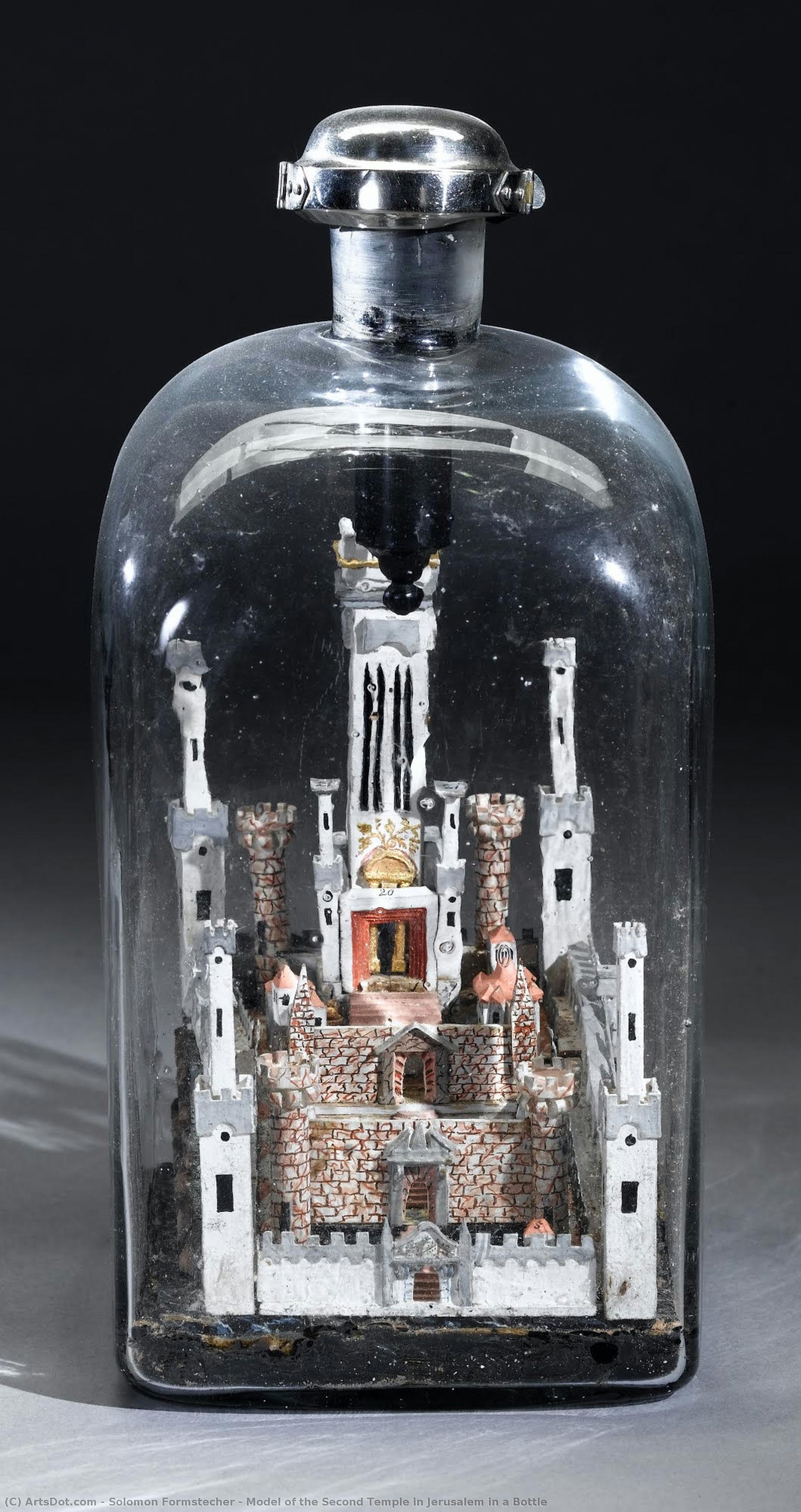
 Preview
 Send
Send Share
Share
 Details

 Download
 Similars
 X-Ray
X-Ray Diaporama
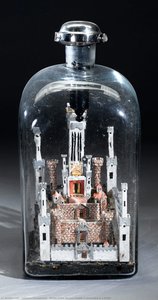
Model of the Second Temple in Jerusalem in a Bottle
 Oil On Paper
- Realism
 1813
1813- 19th Century
 28.0 x 12.0 cm
 The Jewish Museum
 Read More
Purchase a high-resolution, enhanced digital image, far superior to the online preview.
Each file is meticulously prepared by our in-house specialists using advanced tools and expert manual retouching. We ensure every image has exceptional clarity, precise color accuracy, and fine detail.
The final file is delivered via email within 72 hours, optimized for immediate use in professional, editorial, and print environments. This is the same quality trusted by top-tier design studios, publishers, and galleries.
Digital Image
Download a high-resolution file for personal display, printing, and creative projects. ( Buy Print Buy Hand Made Painting)
Included in Every Digital Image Order
Expert Digital Delivery, Guaranteed
When you choose ArtsDot.com, you're not just getting an image - you're receiving a professionally enhanced digital artwork, crafted with precision and backed by a satisfaction guarantee. Here's everything that comes with your order, automatically:

Fast Email Delivery
Your high-resolution digital image file will be emailed to you within 72 hours of ordering - ready for immediate use.

AI-Enhanced Digital File
Your artwork is professionally optimized using advanced AI tools and manual editing, ensuring maximum detail, clarity, and color accuracy.

Free Lifetime Re-Delivery
Accidentally deleted or lost your file? No worries - we'll resend it to you anytime, free of charge.

No Import Fees - Ever
Enjoy your artwork instantly with zero customs, duties, or delivery fees - digital downloads are always tax-free.

Color Accuracy Guarantee
We ensure your digital image reflects the original colors as closely as possible using professional tools and color management.

60-Day Satisfaction Guarantee
If you're not satisfied with your digital image, we'll revise it or refund 100% within 60 days - no questions asked.

100% Money-Back Guarantee
Not satisfied? Get a full refund within 60 days of receiving your digital file - no questions asked.

Bulk Order Discounts
Buy 3 images, save 10% - Buy 5, save 15% - Buy 10+, save 20%. Great for creative projects, galleries, and agencies.
Collectible Description
A Miniature Miracle: Solomon Formstecher's "Model of the Second Temple"
- The Enigma Within
- Formstecher’s Vision
- Craftsmanship and Symbolism
- Historical Resonance
Solomon Formstecher's "Model of the Second Temple in Jerusalem in a Bottle," created in 1813, is far more than a meticulously crafted miniature; it’s an arresting meditation on faith, history, and the very act of preservation. The artwork presents a breathtaking scene – a painstakingly detailed representation of the Second Temple, housed entirely within a silver-stoppered glass bottle. This seemingly simple presentation immediately evokes a sense of wonder, prompting questions about the artist's intent and the profound symbolism embedded within this unique creation.
Formstecher’s Vision
Born in Frankfurt am Main in 1808, Francisco Solomon Formstecher was a German miniature painter known for his intricate and often religiously themed works. His background reflects the artistic currents of early 19th-century Europe, blending influences from Neoclassicism with a burgeoning interest in realism. Formstecher’s dedication to detail is immediately apparent in this piece; the temple model itself showcases an astonishing level of architectural accuracy, capturing the grandeur and complexity of the Second Temple with remarkable precision. The artist's skill isn't merely technical; it’s infused with a deep respect for the subject matter – a structure of immense religious significance to Judaism.
Craftsmanship and Symbolism
- Technique: The model is constructed using miniature painting on various materials, likely paper or thin wood, demonstrating an extraordinary level of patience and skill. The use of straight lines to define the temple’s architecture contrasts beautifully with the curved form of the bottle, creating a dynamic visual tension.
- Materials: Small pieces of painted paper, wood, glue, and other fine craft materials were meticulously assembled to create this intricate scene. The smooth glass surface of the bottle juxtaposes sharply with the textured brickwork and figures within, highlighting Formstecher’s understanding of material contrast.
- Symbolism: The act of encapsulating the temple within a bottle carries significant symbolic weight. It speaks to themes of preservation, containment, and perhaps even a desire to hold onto faith in the face of uncertainty. The silver stopper, gleaming against the glass, adds another layer of meaning – representing protection, sanctity, or even divine intervention.
Historical Resonance
Created in 1813, this artwork reflects a period of significant religious and political upheaval. The Second Temple had been destroyed by the Romans in 70 CE, making its reconstruction a deeply emotional and spiritual endeavor for Jewish communities worldwide. Formstecher’s creation can be seen as a poignant reminder of lost grandeur and a testament to enduring faith. The piece resonates with broader artistic trends of the time – a fascination with historical subjects and an exploration of religious themes through meticulous detail. It's a tangible link to a pivotal moment in Jewish history, rendered with breathtaking artistry.
This 28 x 12 cm artwork offers a captivating glimpse into the mind of a skilled craftsman and his profound engagement with history and faith. A hand-painted reproduction captures the essence of Formstecher’s vision, offering a unique piece for collectors and interior designers seeking to infuse their spaces with beauty, contemplation, and a touch of historical wonder.
Related Artworks
Artist Biography
Francisco Goya: A Revolutionary Voice of His Time
Francisco José de Goya y Lucientes, born in 1746 in Fuendetodos, Spain, was more than just a painter; he was a chronicler of his era, a visionary who captured the tumultuous shifts of Spanish society and the darkest recesses of the human psyche. His life spanned nearly six decades, witnessing revolutions, wars, and profound personal tragedies – experiences that indelibly shaped his artistic vision and cemented his place as one of history’s most influential artists. Goya's journey from court painter to independent voice is a testament to his relentless pursuit of truth and innovation, leaving behind an extraordinary body of work encompassing portraits, landscapes, etchings, and the deeply unsettling “Black Paintings.”Early Years and Court Service
Goya’s early artistic training began in Zaragoza under José Luzán y Martínez, a local artist influenced by Neoclassical styles. He later moved to Madrid, where he studied with Francisco Bayeu, a prominent court painter whose sister he married. This connection opened doors to service within the Spanish royal court, initially as an assistant and then as a principal portraitist for Charles III and Ferdinand VI. During this period, Goya produced numerous formal portraits of the royal family and nobility – works characterized by their meticulous detail, elegant compositions, and adherence to prevailing artistic conventions. However, even in these seemingly conventional pieces, subtle hints of Goya’s emerging individuality began to surface, particularly in his depictions of the subjects' personalities and the underlying social dynamics at play. He was a master of capturing the superficial glamour of court life while subtly hinting at its corruption and emptiness.The Disasters of War and Shifting Perspectives
A pivotal moment in Goya’s career arrived with the Napoleonic invasion of Spain in 1808. Witnessing firsthand the brutality of war and the suffering inflicted upon his countrymen, Goya abandoned his previous court sympathies and embarked on a series of powerful prints known as *Los Desastres de la Guerra* (The Disasters of War). These etchings and aquatints are not romanticized depictions of battle; instead, they offer unflinching portrayals of violence, death, and despair. From the chaotic street fighting in Madrid to the execution of Spanish rebels, Goya’s images expose the horrors of war with a stark realism that was revolutionary for its time. The series marked a dramatic shift in his artistic approach, moving away from idealized representations towards a more direct engagement with contemporary events and human suffering. This period also saw the creation of *The Third of May 1808*, arguably Goya’s most famous work, which depicts the execution of Spanish rebels by French soldiers. The painting's dramatic composition, emotional intensity, and focus on the victims rather than the perpetrators established a new standard for depicting war and its consequences.Beyond the Battlefield: Portraits, Caprichos, and the Later Years
Following the restoration of the monarchy, Goya returned to court service but increasingly felt constrained by the demands of his patrons. He began to pursue more independent projects, producing a series of portraits that reflected his evolving artistic style and personal experiences. The *Los Majas* (The Maja Series) are particularly noteworthy for their bold depictions of Spanish women – figures of pleasure, power, and sometimes unsettling sensuality. Simultaneously, Goya explored a range of other subjects in his *Caprichos* (Follies), satirical prints that critiqued the follies and vices of Spanish society. As he aged, Goya’s artistic vision became increasingly introspective and melancholic. He retreated to his estate near Bordeaux, where he created a series of haunting paintings known as the “Black Paintings.” These works, executed directly on the walls of his home, are characterized by their dark colors, grotesque imagery, and profound sense of despair – reflections of Goya’s own declining health and disillusionment with humanity.Legacy and Influence
Francisco Goya's legacy is immense and multifaceted. He is considered a pivotal figure in the transition from Neoclassicism to Romanticism and a precursor to modern art. His unflinching realism, his exploration of psychological themes, and his willingness to confront difficult subjects profoundly influenced generations of artists, including Eugène Delacroix, Édouard Manet, Pablo Picasso, and many others. Goya’s work continues to resonate with audiences today, reminding us of the enduring power of art to expose injustice, challenge conventions, and capture the complexities of the human condition. His ability to blend technical mastery with emotional depth ensures that his paintings and prints will remain vital works of art for centuries to come.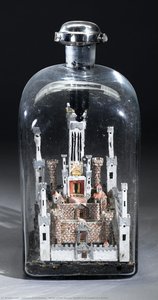
solomon formstecher
1808 - 1889 , Germany
Quick Facts
- Artistic Movement Or Style: Romanticism, Neoclassicism
- Artists Or Movements Influenced By This Artist:
- Picasso
- Dalí
- Expressionists
- Artists Who Influenced This Artist:
- Tiepolo
- Mengs
- Velázquez
- Date Of Birth: March 30, 1746
- Date Of Death: April 16, 1828
- Full Name: Francisco Goya y Lucientes
- Nationality: Spanish
- Notable Artworks:
- The Third of May, 1808
- Saturn Devouring His Son
- The Naked Maja
- Place Of Birth: Fuendetodos, Spain

