 Send
Send Share
Share
 Details

 Download
 Similars
 Diaporama
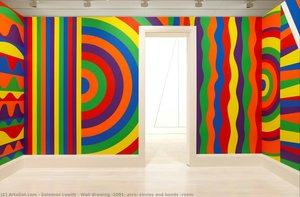
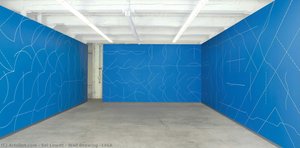
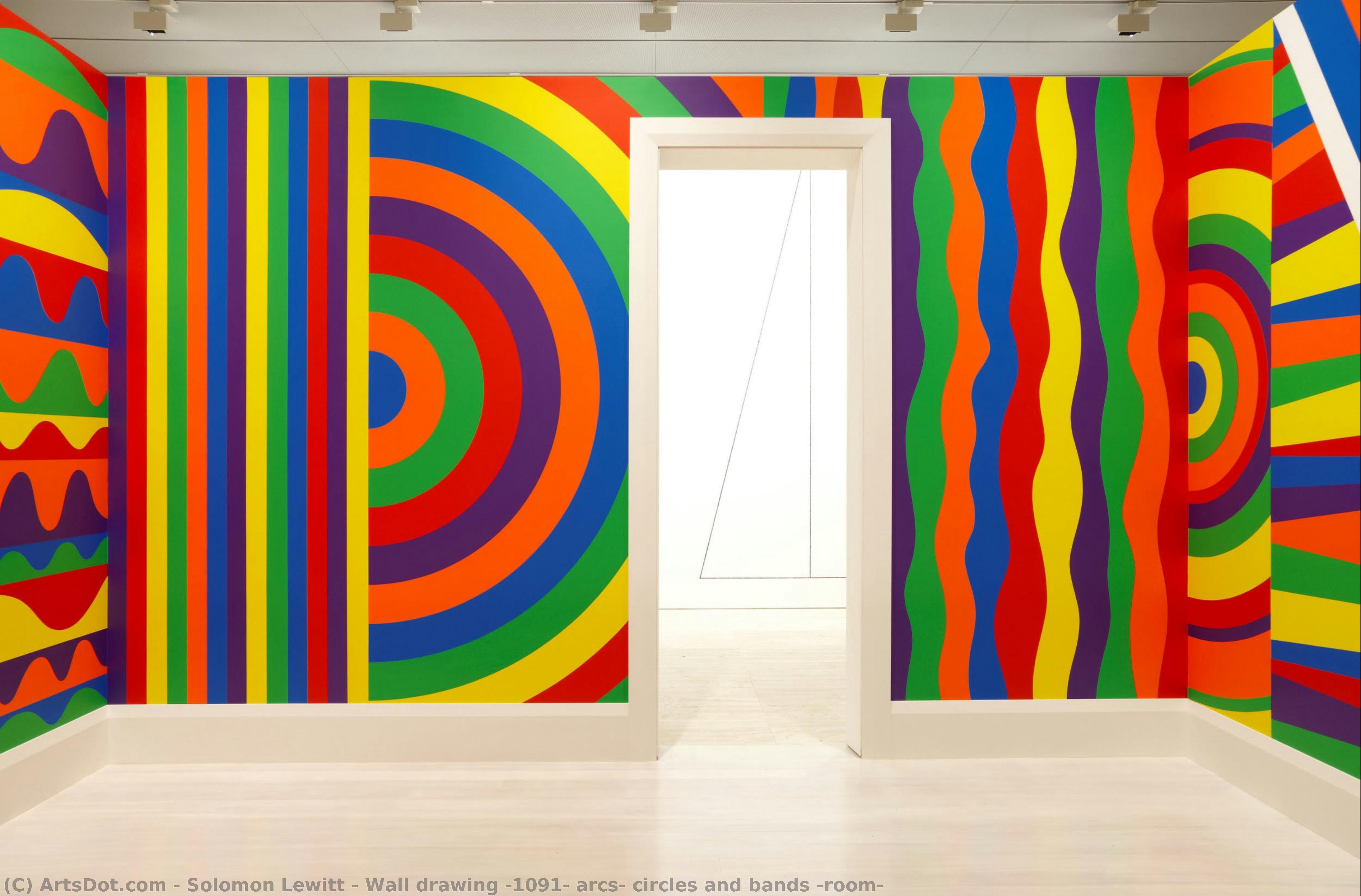
Wall drawing #1091: arcs, circles and bands (room)
 Installation Art
- Installation
- Minimalism
 2003
2003 200.0 x 1600.0 cm
 Art Gallery of New South Wales
 Read More
Giclée / Art Print
Museum-quality giclée or canvas print with fast production and flexible finish options. ( Buy Hand Made Painting Buy Image)




































Pick from our preset sizes that match the artwork's original proportions.

You may enter your own dimensions to fit a specific frame or space. If your selected size does not match the original image's proportions, we will either crop the artwork or extend the image with a mirrored or solid-fill edge. A digital mockup will be sent for your approval before production begins.
Please note that the on-screen preview does not reflect the actual cropping or extension. Only the mockup will accurately show the final composition.
While custom sizes are available, we recommend selecting a dimension from the predefined list to preserve the original proportions.
Worldwide Delivery () in 2 weeks instead of standard 4/5 weeks. (17 August)

Free Worldwide Express Shipping

High-Quality Linen Canvas

Full Shipping Insurance

Customs Tax Refund Guarantee

True Color Matching Guarantee

60-Day Return Policy (Defects Only)

100% Money-Back Guarantee

Bulk Discount Offer
 Glass option is only available in size under 110 CM

Wall drawing #1091: arcs, circles and bands (room)
Giclée / Art Print
Reproduction Size
-


Total Price
$ 63
Collectible Description
A Renaissance in Color: Exploring LeWitt's Wall Drawing #1091
To stand before Wall drawing #1091: arcs, circles and bands (room) is to witness not merely an arrangement of pigment on a surface, but the vibrant echo of artistic reinvention. This monumental piece by Solomon Lewitt captures a moment of profound resurgence in his later career. Where earlier works might have favored a more restrained palette, this drawing explodes with exuberant color—a joyous chromatic symphony applied across the architectural expanse of a room. The interplay between fundamental geometric shapes—the perfect arc, the encompassing circle, and the rhythmic band—suggests an underlying mathematical harmony, yet the sheer saturation of yellow, red, blue, green, and orange imbues it with an almost visceral energy.
The Influence of Place and Time
The context surrounding this work is as rich as its surface. Created in 2003, it draws palpable inspiration from the artistic traditions of Perugia, where Lewitt spent his final years. This geographical immersion seems to have catalyzed a renaissance within his practice, leading observers to draw parallels between his later output and the luminous frescoes of Italian masters. It is a visual dialogue across centuries; the rigorous conceptual framework that defined his career meets the warm, saturated storytelling quality reminiscent of Renaissance decoration. The technique itself speaks volumes—the colors were applied in thin, accumulating layers, building up until they achieved a state of rich, almost breathable saturation.
Conceptual Depth and Visual Delight
At its core, Lewitt remains a pioneer of Conceptual Art, an artist who elevates the idea above the object. However, in Wall drawing #1091, this intellectual rigor is paired with an undeniable visual delight. The structure suggests systems—the way arcs curve into circles, or how bands segment space—inviting the viewer to trace invisible lines of logic across the wall. Yet, these underlying structures are softened and energized by the sheer pleasure of color theory in action. It challenges the viewer to see beyond the pattern and appreciate the joyful act of pure visual organization.
Integrating Art into Living Space
For collectors and designers alike, this piece offers a unique bridge between high conceptual art and immersive interior decoration. Its scale (a breathtaking 200 x 1600 cm) demands attention, transforming any gallery wall or grand hall into an experiential environment. The visible doorway in the background, along with the suggestion of everyday furniture like the nearby chair, grounds the abstract geometry within a habitable reality. Reproducing this work allows one to bring that same sense of vibrant, structured life—that feeling of artistic rebirth—into your own curated space.
Related Artworks
Artist Biography
The Architect of Ideas: The Life and Legacy of Sol LeWitt
In the vast landscape of twentieth-century modernism, few figures cast as long or as intellectually profound a shadow as Solomon LeWitt. Born on September 9, 1928, in Hartford, Connecticut, to a family of Jewish immigrants from Russia, LeWitt’s journey was one defined by the pursuit of pure thought over mere physical execution. His early years were shaped by a rigorous analytical curiosity, a trait nurtured by his studies at Syracuse University between 1945 and 1949. This academic foundation in mathematics and geometry would later become the very heartbeat of his artistic language, allowing him to strip away the decorative excesses of traditional art to reveal the skeletal beauty of logic and structure.
LeWitt’s evolution as an artist was not a sudden rupture but a deliberate migration from the tangible to the conceptual. While his early explorations involved the tactile nature of painting and drawing, he soon found himself increasingly drawn to the idea behind the mark rather than the mark itself. This shift marked the birth of a pioneer who would bridge the gap between Minimalism and Conceptual Art. He began to view the artist not as a craftsman bound by the hand, but as an architect of instructions. By prioritizing the mental blueprint over the finished object, LeWitt challenged the very definition of authorship, suggesting that once an idea is conceived, its physical manifestation is merely a secondary consequence.
The Revolution of the Wall Drawing
The late 1960s witnessed one of the most radical transformations in contemporary art with the emergence of LeWitt’s iconic wall drawings. Rejecting the permanence and preciousness of traditional sculpture, he introduced "structures"—a term he preferred over "sculptures" to emphasize their mathematical essence—and a series of instructions that could be executed by anyone trained to follow them. These works were not merely decorations but lived experiences, often composed of precise geometric patterns, arcs, and interlocking shapes that breathed life into the architectural spaces they inhabited.
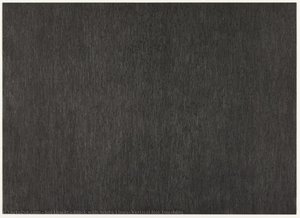
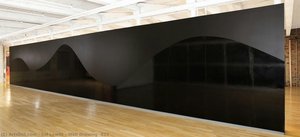
To witness a LeWitt wall drawing is to see logic transformed into poetry. Whether it was the stark, rhythmic repetition found in Black with White Lines, Vertical Not Touching or the vibrant, exuberant energy of Wall Drawing #1091: arcs, circles and bands, his work utilized the power of the line to command space. These pieces often relied on a system of logical, often mathematical instructions that guided assistants or museum installers in their production. This method democratized the act of creation while simultaneously elevating the importance of the concept, ensuring that the artwork existed fundamentally as an intellectual spark before it ever touched a wall.
A Lasting Impression on Modernity
Throughout his prolific career, which spanned decades and included mastery in printmaking, photography, and installation, LeWitt remained steadfast in his commitment to clarity and precision. His ability to find profound beauty in the simplest of forms—such as the striking white Pyramid or the complex, colorful rhythms of his crayon-based wall works—redefined the aesthetic boundaries of the late 20th century. He proved that art could be stripped of its ego and its ornament, yet still retain a soul that resonates deeply with the human desire for order and discovery.
The historical significance of Sol LeWitt cannot be overstated. He provided the vocabulary for generations of artists to explore the boundaries between thought and matter. His legacy lives on in every museum and gallery where the line between the creator and the executor is blurred, and where the strength of an idea is recognized as the ultimate medium. As we look back upon his life, from his beginnings in Hartford to his final days in New York City in 2007, we see a man who did not just make art, but who taught us how to see the profound architecture of thought itself.
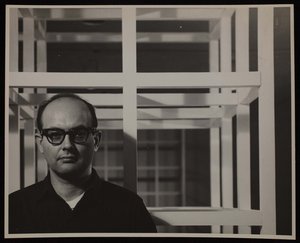
solomon lewitt
1928 - 2007 , United States of America
Quick Facts
- Artistic Movement Or Style: Minimalism & Conceptual Art
- Artists Or Movements Influenced By This Artist: ['Minimalism']
- Artists Who Influenced This Artist: ['Frank Lloyd Wright']
- Date Of Birth: September 9, 1928
- Date Of Death: April 8, 2007
- Full Name: Solomon Lewitt
- Nationality: American
- Notable Artworks:
- Distorted Cubes Bozuk Küpler
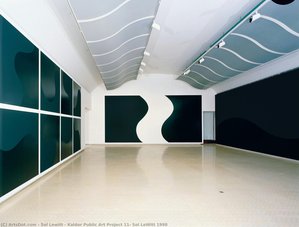
- Kaldor Public Art Project 11: Sol LeWitt 1998
- Place Of Birth: Hartford, United States
Related Articles

Geometric Abstraction's 10 Defining Masterpieces | Art for Your Home - ArtsDot
Explore 10 defining masterpieces of Geometric Abstraction! Discover Kandinsky, Mondrian & Malevich’s iconic works. Find museum-quality art reproductions and curated decor ideas to elevate your home at ArtsDot.com.

Kandinsky's Masterpieces: 25 Paintings That Define Abstract Art | ArtsDot
Journey through Wassily Kandinsky's 25 most iconic abstract paintings. Explore his revolutionary use of color, form & spiritual expressionism. Find museum-quality Kandinsky reproductions and elevate your home decor with ArtsDot.com. Discover all masterpieces on ArtsDot.com!
Fernand Léger's Masterpieces: 25 Iconic Paintings & The Machine Age Aesthetic | ArtsDot
Explore 25 iconic Fernand Léger paintings that defined the Machine Age & Cubism. Discover the stories behind his bold colors, geometric forms & avant-garde style. Find museum-quality art reproductions on ArtsDot.com.
Beyond Form & Color: Geometric Abstraction's Enduring Legacy in Art History
Explore the captivating world of geometric abstraction! Discover its origins, key artists like Malevich & Mondrian, and why this movement remains highly valued by art collectors today. Expert insights at ArtsDot.
Beyond Form & Color: Geometric Abstraction's Evolution in 20th/21st Century Art
Explore the evolution of geometric abstraction from Cubism to contemporary art. Discover key artists like Malevich & Mondrian, investment insights, and expert collecting advice at ArtsDot.