 Preview
 Send
Send Share
Share
 Details

 Download
 Similars
 X-Ray
X-Ray Diaporama
 Stats
StatsThe Circassian Guards
 Academic Realism
 56.0 x 41.0 cm
 Read More
Hand Made Oil Reproduction
Hand-painted oil on canvas in your size and frame, made to order by our artists. ( Switch to Print Switch to Digital Image)




P118B $10

P118H $10

P118W $10

P438Z $10

P508JH $12

P508YH $12

P805H $10

P805Z $10

P919BZ $10

P919G $10

P919XJ $10

P959ZH $10

P968JZ $12

W106C $8

W218G $10

W218JH $8

W218Y $10

W307PJ $10

W316G $10

W316PJ $8

W316Y $10

W398PJ $8

W4111J $10

W500HY $15

W500JH $15

W692G $12

W849H $8

W940BG $15

W953PJ $8




Pick from our preset sizes that match the artwork's original proportions.

You may enter your own dimensions to fit a specific frame or space. If your selected size does not match the original image's proportions, we will either crop the artwork or extend the painting with additional hand-painted elements. A digital mockup will be sent for your approval before production begins.
Please note that the on-screen preview does not reflect the actual cropping or extension. Only the mockup will accurately show the final composition.
While custom sizes are available, we recommend selecting a dimension from the predefined list to preserve the original proportions.
After order, ArtsDot.com team will email client for instructions and provide a mockup preview
Worldwide Delivery () in 3/4 weeks instead of standard 5 weeks. (13 September). No compromise on quality.

Free Worldwide Express Shipping

High-Quality Linen Canvas

Full Shipping Insurance

Customs Tax Refund Guarantee

True Color Matching Guarantee

100-Day Return Policy (Defects Only)

100% Money-Back Guarantee

Bulk Discount Offer
 Glass option is only available in size under 110 CM

The Circassian Guards
Reproduction Medium
Reproduction Size
-


Total Price
$ 263
Related Artworks
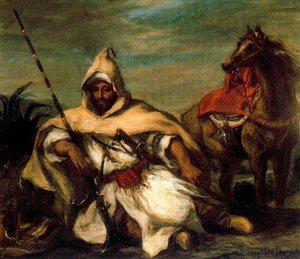
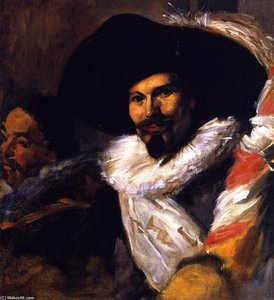
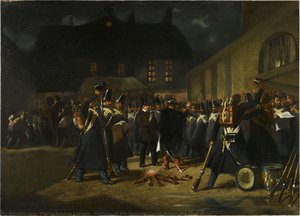
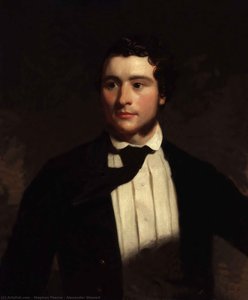
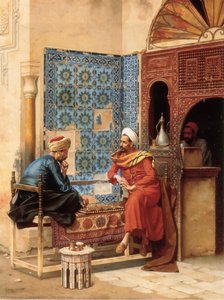
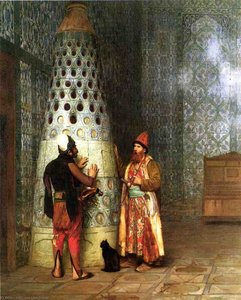
Artist Biography
A Life Immersed in Eastern Light: The World of Stanislaus von Chlebowski
Stanislaus von Chlebowski, a name perhaps less immediately recognizable than some of his contemporaries, nevertheless occupies a fascinating and important niche within the landscape of 19th-century Orientalist painting. Born into Polish nobility – a lineage steeped in history and often marked by political upheaval – Chlebowski’s life was one of displacement and adaptation, ultimately finding artistic expression in the vibrant cultures of the Ottoman Empire and beyond. While precise details regarding his early years remain somewhat elusive, it is understood he received formal training in art, likely within European academic traditions, before embarking on a journey that would irrevocably shape his aesthetic vision. This journey wasn’t merely geographical; it was an immersion into a world brimming with exoticism, intricate detail, and a spiritual depth that captivated the Western imagination. He spent significant periods living in Turkey, Egypt, and other regions of the Middle East during the latter half of the 19th century, becoming deeply familiar with the customs, architecture, and people he would later portray on canvas. This firsthand experience distinguishes his work from many of his peers who relied more heavily on secondhand accounts or studio recreations.The Allure of Orientalism: Influences and Artistic Development
Chlebowski’s artistic development was profoundly influenced by the prevailing currents of Orientalism, a movement that reflected Europe's fascination with – and often romanticized perceptions of – the “Orient.” Artists like Eugène Delacroix, Jean-Léon Gérôme, and Osman Hamdi Bey served as key figures in this sphere. However, Chlebowski carved out his own distinct path within it. While he shared the meticulous attention to detail characteristic of Gérôme, his work often possesses a softer, more atmospheric quality than the latter’s hyper-realism. Delacroix's influence can be seen in the dynamic compositions and rich color palettes found in some of Chlebowski’s earlier pieces, but he ultimately moved towards a style that prioritized narrative storytelling and ethnographic accuracy. His paintings are not simply depictions of exotic scenes; they are windows into everyday life, capturing moments of quiet contemplation, bustling market activity, and the solemnity of religious rituals. He wasn't solely focused on grand historical events or dramatic encounters; instead, he found beauty in the mundane, elevating ordinary individuals to subjects worthy of artistic attention. This focus is particularly evident in his depictions of Islamic architecture, which are rendered with a reverence for detail that suggests a genuine appreciation for their aesthetic and spiritual significance.Major Achievements: Portraits of a Vanishing World
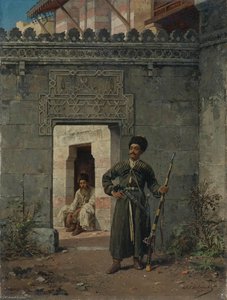
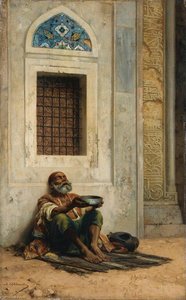
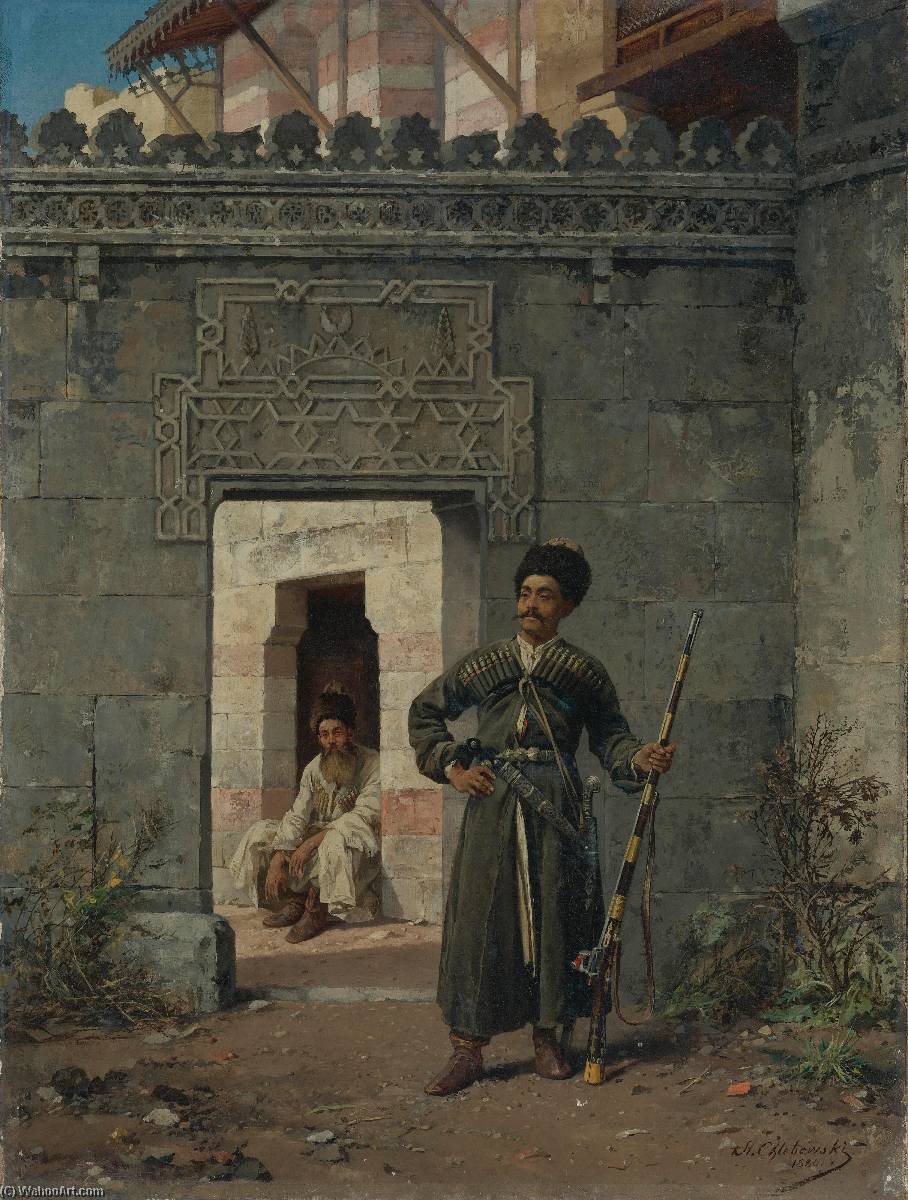
Chlebowski’s oeuvre encompasses a wide range of subjects, but he is best known for his portraits and genre scenes set within the Ottoman Empire. “The Circassian Guards,” perhaps his most celebrated work, exemplifies his ability to blend historical context with compelling character studies. The painting depicts a group of Circassian women serving as bodyguards – a practice that was relatively common in the harems of wealthy Ottoman officials. It’s not merely a depiction of exotic beauty; it offers a glimpse into the complex social dynamics and power structures within the Ottoman court. Similarly, “Mendicant at the Mosque Door” showcases his sensitivity to religious themes and his ability to capture the dignity of individuals from diverse backgrounds. His architectural studies, such as those depicting mosques and other Islamic buildings, are remarkable for their precision and atmospheric depth.- His mastery of light and shadow creates a sense of realism that draws the viewer into the scene.
- He often incorporated intricate details – textiles, jewelry, calligraphy – to enhance the authenticity of his depictions.
- His portraits are notable for their psychological depth, revealing the inner lives of his subjects.
Historical Significance and Legacy
Stanislaus von Chlebowski’s work holds significant historical value as a visual record of 19th-century Ottoman life. While it's important to acknowledge that Orientalist paintings often reflect Western biases and preconceptions, Chlebowski’s commitment to firsthand observation sets his work apart. He wasn’t simply perpetuating stereotypes; he was attempting to capture the reality of a world that was rapidly changing due to modernization and political upheaval. His paintings provide valuable insights into the customs, dress, and social structures of the Ottoman Empire during a period of significant transformation. Furthermore, his work contributed to the broader cultural exchange between East and West, fostering a greater understanding – albeit often filtered through a Western lens – of Islamic art and culture. Today, Chlebowski’s paintings are held in numerous museums and private collections around the world, serving as enduring testaments to his artistic skill and his unique perspective on a fascinating era. His legacy lies not only in the beauty and technical brilliance of his work but also in its ability to spark dialogue about the complexities of cultural representation and the enduring power of art to bridge divides.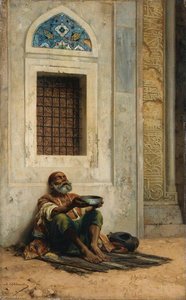
Quick Facts
- Artistic Movement Or Style: Orientalism
- Date Of Death: Living
- Full Name: Stanislaus von Chlebowski
- Notable Artworks:
- The Circassian Guards
- Mendicant at the Mosque Door
Related Articles
19th Century Masterpieces: 10 Paintings That Defined an Era | ArtsDot
Journey through 19th century art with ArtsDot! Explore 10 iconic paintings – from Monet & Renoir to Courbet – and discover the stories behind Romanticism, Realism & Impressionism. Find museum-quality reproductions for your home decor. Explore the full collection online!
Turn Your Digital Art Into Hand‑Painted Oil Masterpieces—Earn Big on Every Sale and Build an Enduring Legacy
Transform your NFT collection into hand‑painted oil masterpieces with ArtsDot’s expert artisans. Enjoy museum‑grade quality, free worldwide shipping, and a 100% satisfaction guarantee—turn digital art into a lasting legacy that earns you real value.
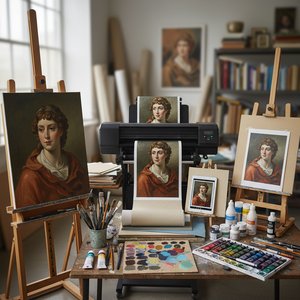
Reproducing Artistry: A Guide to Oil, Canvas & Paper Reproduction Mediums
Explore the world of art reproduction! Learn about oil, canvas & paper options with our expert guide. Discover museum-quality reproductions for your home or collection.
The Enduring Legacy of Hand-Painted Oil Paintings: Aesthetic Value, Longevity & Emotional Resonance
Explore the enduring legacy of hand-painted oil paintings. Discover the aesthetic value, material longevity & emotional resonance that sets original art—and expertly crafted reproductions—apart. Invest in timeless beauty.
From Initial Sketch to Enduring Legacy: A Comprehensive Exploration of the Oil Painting Reproduction Process
Discover the art of museum-quality oil painting reproduction. Explore our expert process, skilled artists & authentic replicas. Elevate your home with timeless beauty – handcrafted and customized to your vision.