 Preview
 Send
Send Share
Share
 Details

 Download
 Similars
 X-Ray
X-Ray Diaporama
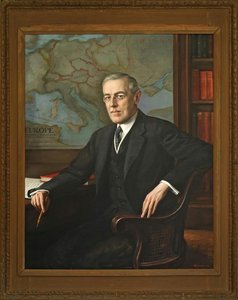
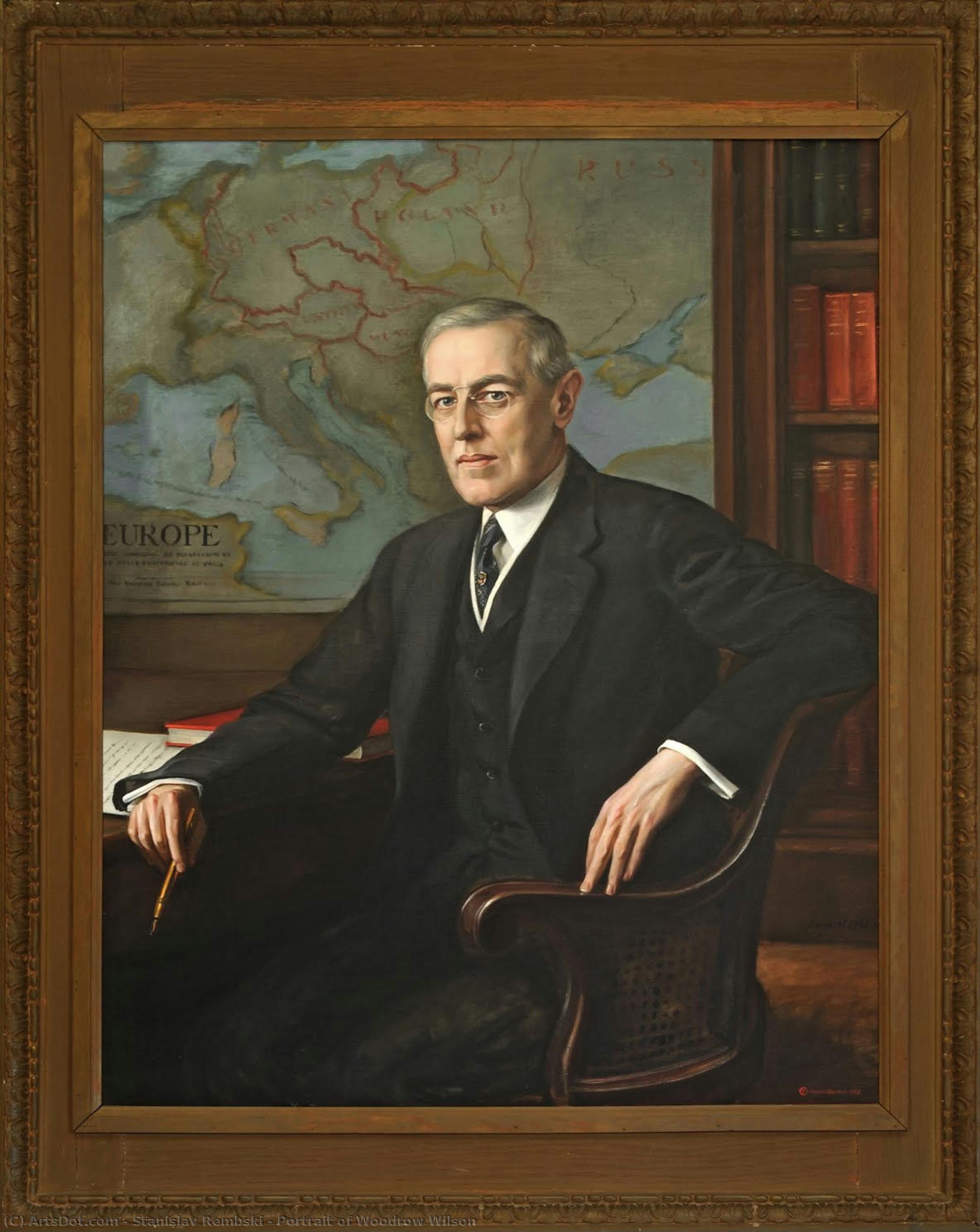
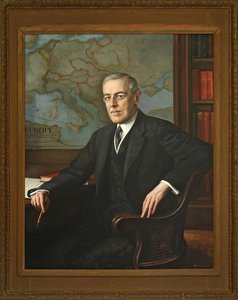
Portrait of Woodrow Wilson


 Read More
Giclée / Art Print
Museum-quality giclée or canvas print with fast production and flexible finish options. ( Buy Hand Made Painting Buy Image)




































Pick from our preset sizes that match the artwork's original proportions.

You may enter your own dimensions to fit a specific frame or space. If your selected size does not match the original image's proportions, we will either crop the artwork or extend the image with a mirrored or solid-fill edge. A digital mockup will be sent for your approval before production begins.
Please note that the on-screen preview does not reflect the actual cropping or extension. Only the mockup will accurately show the final composition.
While custom sizes are available, we recommend selecting a dimension from the predefined list to preserve the original proportions.
Worldwide Delivery () in 2 weeks instead of standard 4/5 weeks. (25 August)

Free Worldwide Express Shipping

High-Quality Linen Canvas

Full Shipping Insurance

Customs Tax Refund Guarantee

True Color Matching Guarantee

60-Day Return Policy (Defects Only)

100% Money-Back Guarantee

Bulk Discount Offer
 Glass option is only available in size under 110 CM

Portrait of Woodrow Wilson
Giclée / Art Print
Reproduction Size
-


Total Price
$ 63
Related Artworks




Artist Biography
A Century of Precision and Polish Soul
The life of Stanislav Rembski (1896–1998) reads like a sweeping epic of the twentieth century, a journey that spanned continents and survived the most turbulent eras of human history. Born in the quiet village of Sochaczew, Poland, during the twilight of Tsarist rule, Rembski’s destiny was intertwined with the fine arts from his earliest breaths. Nurtured by a father who was both an artist and a prominent interior decorator, the young boy found himself immersed in a world where aesthetics and discipline were inseparable. This early exposure to the meticulous demands of design instilled in him a lifelong devotion to technical perfection, a trait that would eventually allow him to produce an astonishing repertoire of over 1,500 portraits and landscapes.
Rembski’s path to mastery was paved with rigorous academic training across Europe's most prestigious institutions. While his initial studies at the Warsaw Technological Institute provided him with an engineering foundation—a discipline that likely contributed to his structural precision—it was under the guidance of Stanislav Lenc that his true artistic voice began to emerge. His thirst for knowledge led him through the vibrant, intellectual atmosphere of the École des Beaux Arts in Paris and eventually to the Royal Academy of Fine Arts in Berlin, where he studied under Erich Wolfs_feld. These formative years were not merely about learning brushwork; they were an immersion into the classical traditions of the Renaissance masters. He drew profound inspiration from the intricate detail of Albrecht Dürer and the harmonious compositions of Raphael, seeking to marry the sculptural weight of artists like Veit Stoss with a modern, sensitive touch.
The Art of the Human Essence
To encounter a Rembski portrait is to engage in a silent dialogue with history. He was, above all, a master of academic realism, possessing an uncanny ability to translate the psychological depth of his subjects onto the canvas. His technique was characterized by an unparalleled precision that went beyond mere mimicry; he sought to capture the very soul behind the eyes. Whether painting the gravitas of political figures like Woodrow Wilson or the rugged character of American icons such as Babe Ruth, Rembski utilized light and shadow to create a palpable sense of presence. His brushwork, though controlled and disciplined, possessed a warmth that prevented his realism from ever feeling cold or clinical.
His career was marked by remarkable transitions and triumphs that mirrored the shifting tides of the world:
- The Early Years in Europe: Following his studies, Rembski spent time painting the German nobility in the early 1920s, honing a style that commanded respect within European high society.
- The American Dream: Moving to New York in 1929 and becoming a U.S. citizen, he established a studio in Brooklyn, eventually achieving widespread acclaim following a landmark one-man show at Carnegie Hall in 1934.
- The Baltimore Legacy: Settling in Baltimore in 1940, he became a cornerstone of the local art community, teaching charcoal sketching and painting notable figures such as the Maryland first ladies and even the legendary Johns Hopkins.
A Lasting Artistic Legacy
Beyond the fame of his individual portraits, Rembski’s significance lies in his role as a bridge between the classical traditions of the Old World and the evolving landscape of American art. His work serves as a vital historical record, capturing the likenesses of leaders, athletes, and luminaries with a timelessness that transcends their era. Even in moments of extreme personal peril—such as his narrow escape from execution by German forces during his youth—his instinct remained focused on the power of the sketch and the observation of life. Today, his works reside in prestigious museums and private collections across Europe, North America, and Australia, standing as a testament to a century defined by an unwavering pursuit of beauty, truth, and the enduring human spirit.
stanislav rembski
Poland
Quick Facts
- Artistic Movement Or Style: Academic Realism
- Artists Or Movements Influenced By This Artist: ['Flemish Painting']
- Artists Who Influenced This Artist:
- Albrecht Durer
- Raphael
- Date Of Birth: Soczewa, Poland ()
- Date Of Death: Living
- Full Name: Stanislav Rembski
- Nationality: Polish
- Notable Artworks:
- Portrait of Woodrow Wilson
- Baltimore City Police History
- Place Of Birth: Soczewa
Related Articles

The Enduring Legacy of Oil on Canvas: Technique, History & Aesthetic Impact
Explore the rich history & techniques of oil painting – from Renaissance masters to Impressionism. Discover pigments, layering methods, and why this timeless medium endures. Expert insights for artists & art enthusiasts.

Oil on Canvas: A Historical & Technical Exploration of a Timeless Artistic Medium
Explore the rich history & enduring techniques of oil painting on canvas. Discover the science behind its longevity, conservation practices, and contemporary relevance. Expert insights for art enthusiasts.

The Enduring Power of Painting: A Historical & Contemporary Exploration of Form and Emotion
Explore the rich history & enduring techniques of oil painting with ArtsDot. Discover masterpieces, learn about art collecting, and find authentic handmade reproductions crafted by skilled artists.

The Enduring Legacy of Oil on Canvas: Technique, History & Contemporary Practice
Explore the rich history & enduring techniques of oil painting on canvas. Discover the science behind its longevity, conservation practices, and contemporary relevance. Expert insights for art enthusiasts.
Academic Realism's Finest: 10 Masterpieces for Art Lovers & Home Decor
Explore 10 defining Academic Realism masterpieces by Bouguereau, Gérôme & Cabanel. Discover the stories behind these iconic paintings and bring timeless art into your home with museum-quality reproductions from ArtsDot.com. Explore the full collection online!