 Preview
 Send
Send Share
Share
 Details

 Download
 Similars
 X-Ray
X-Ray Diaporama
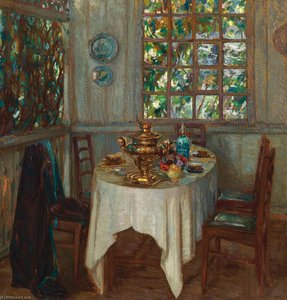
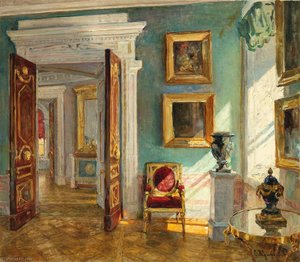
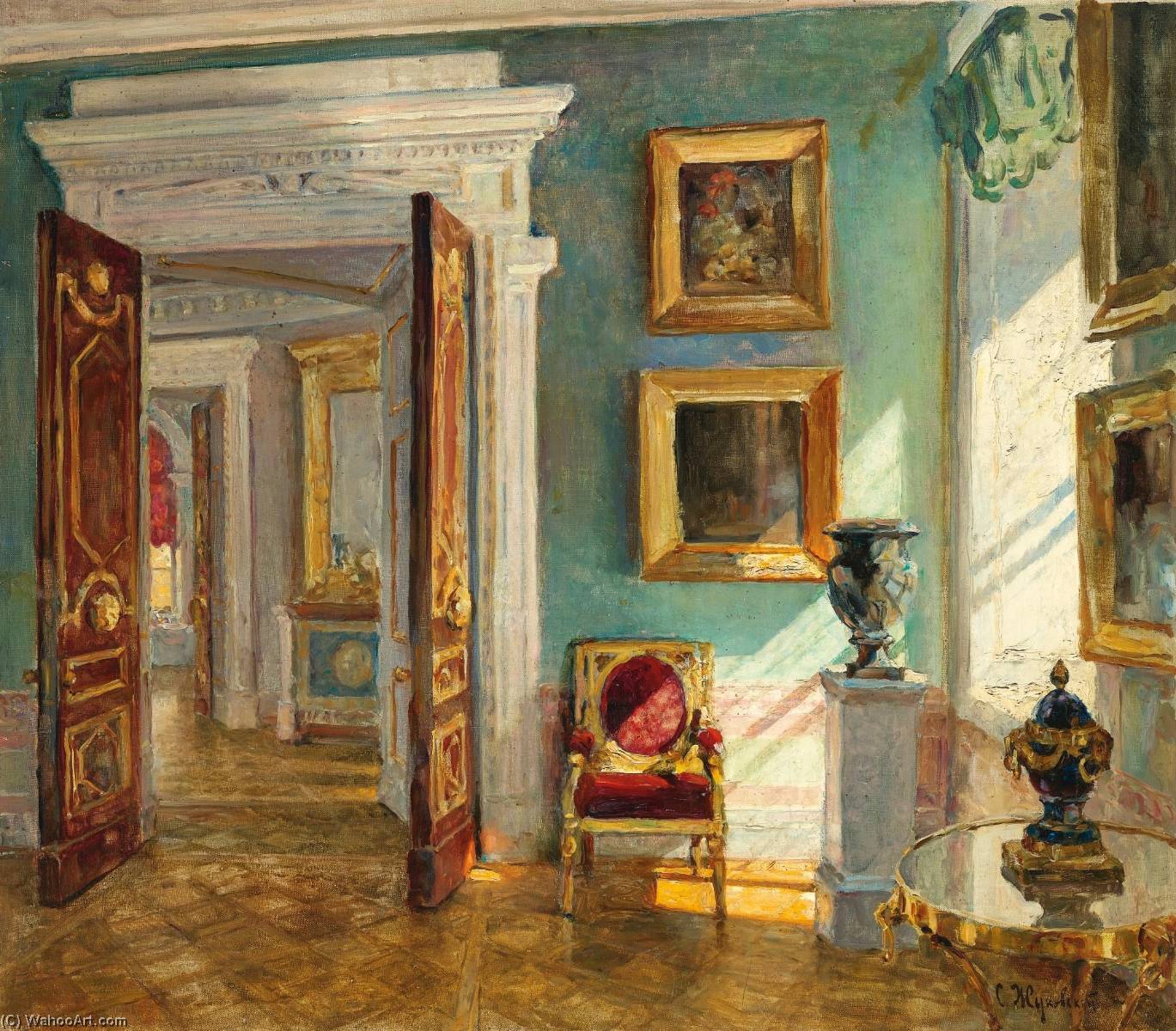
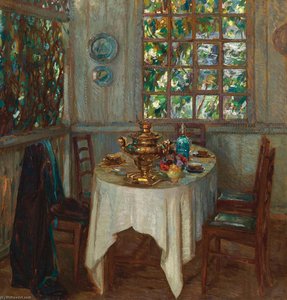
Interior of the Picture Gallery, Pavlovsk
 Read More
Giclée / Art Print
Museum-quality giclée or canvas print with fast production and flexible finish options. ( Buy Hand Made Painting Buy Image)




































Pick from our preset sizes that match the artwork's original proportions.

You may enter your own dimensions to fit a specific frame or space. If your selected size does not match the original image's proportions, we will either crop the artwork or extend the image with a mirrored or solid-fill edge. A digital mockup will be sent for your approval before production begins.
Please note that the on-screen preview does not reflect the actual cropping or extension. Only the mockup will accurately show the final composition.
While custom sizes are available, we recommend selecting a dimension from the predefined list to preserve the original proportions.
Worldwide Delivery () in 2 weeks instead of standard 4/5 weeks. (4 September)

Free Worldwide Express Shipping

High-Quality Linen Canvas

Full Shipping Insurance

Customs Tax Refund Guarantee

True Color Matching Guarantee

60-Day Return Policy (Defects Only)

100% Money-Back Guarantee

Bulk Discount Offer
 Glass option is only available in size under 110 CM

Interior of the Picture Gallery, Pavlovsk
Giclée / Art Print
Reproduction Size
-


Total Price
$ 63
Related Artworks









Artist Biography
The Lyrical Landscapes of Stanislav Zhukovsky
In the vast tapestry of Russian art, few threads are as delicately woven as those left by Stanislav Yulianovich Zhukovsky. A painter whose soul seemed inextricably linked to the shifting light of the Eastern European countryside, Zhukovsky occupied a unique space between the rigorous traditions of Russian Realism and the fleeting, sensory magic of Impressionism. Born in 1873 in Yendrikhovtsy, within the Grodno Province, his heritage was a rich blend of Polish and Russian influences—a duality that perhaps allowed him to view the landscapes of his homeland with both an intimate familiarity and a poetic distance.
His artistic journey was shaped by the mentorship of giants. While some accounts link his early sensibilities to the profound influence of Ivan Kramskoy, it was his time as a student of Isaac Levitan that truly refined his ability to breathe life into the landscape. Under such tutelage, Zhukovsky learned that a forest or a lake was not merely a subject of topography, but a vessel for emotion. He became a master of capturing the ephemeral: the way a sudden sunbeam pierces through a canopy of autumn leaves, or the heavy, melancholic stillness of a summer afternoon by the water.
A Symphony of Light and Texture
To observe a Zhukovsky canvas is to experience the seasons in real-time. His technique was characterized by a masterful command of impasto, where thick, textured applications of oil paint created a tactile dimension that mirrored the ruggedness of nature itself. He embraced the plein air method, working directly from the outdoors to catch the precise atmospheric nuances of his subjects. This approach allowed him to utilize a vibrant, saturated palette that felt remarkably alive.
His works often oscillate between two worlds:
- The Impressionistic Impulse: Through loose brushstrokes and an obsession with light, he achieved a sense of movement and airiness reminiscent of the great French masters, yet he remained fiercely proud of his identity as a Russian Impressionist.
- The Realist Foundation: Despite his experimental textures, his compositions maintained a structural integrity and a sincere devotion to the truth of the Russian landscape, avoiding the purely decorative in favor of something much more profound.
In celebrated pieces such as “Indian Summer” (1899), one can see this duality at work. The painting is not merely a depiction of autumn; it is an immersive experience of warmth and transition, where the golden hues of the trees seem to radiate their own internal heat, inviting the viewer into a moment of quiet, seasonal reflection.
Legacy and Historical Resonance
Beyond his individual canvases, Zhukovsky played a vital role in the broader artistic ecosystem of his era. As a member of the Mir iskusstva (World of Art) movement, he was part of a generation that sought to elevate the aesthetic value of art beyond mere documentation. His Moscow studio became a sanctuary for burgeoning talent, where he mentored future luminaries such as the avant-garde artist Liubov Popova and even the poet Vladimir Mayakovsky during his early years.
As history moved into the Soviet era, Zhukovsky’s work provided a necessary bridge. While the prevailing winds of Socialist Realism often demanded overt political messaging, Zhukovsky maintained a steadfast commitment to the natural world. He found a way to celebrate the grandeur and vitality of his nation through its scenery rather than its propaganda, portraying the Russian landscape as a symbol of enduring resilience and quiet beauty. Today, his legacy lives on in the halls of the Tretyakov Gallery and in the hearts of those who find solace in the serene, textured vistas of a master who truly knew how to see.
Quick Facts
- Artistic Movement Or Style: Soviet Realism
- Artists Or Movements Influenced By This Artist: ['Romanticism']
- Artists Who Influenced This Artist: ['Impressionists']
- Date Of Death: 1944
- Full Name: Stanislav Yulianovich Zhukovsky
- Nationality: Russian
- Notable Artworks:
- Indian Summer
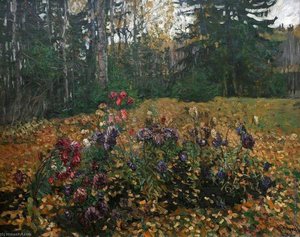
- Fading Asters
- Lake Moldino
- Place Of Birth: Pavlovsk, Russia