 Preview
 Send
Send Share
Share
 Details

 Download
 Similars
 X-Ray
X-Ray Diaporama
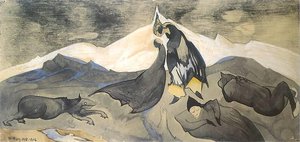
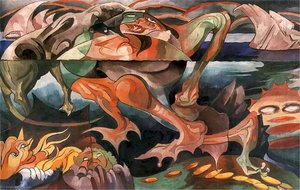
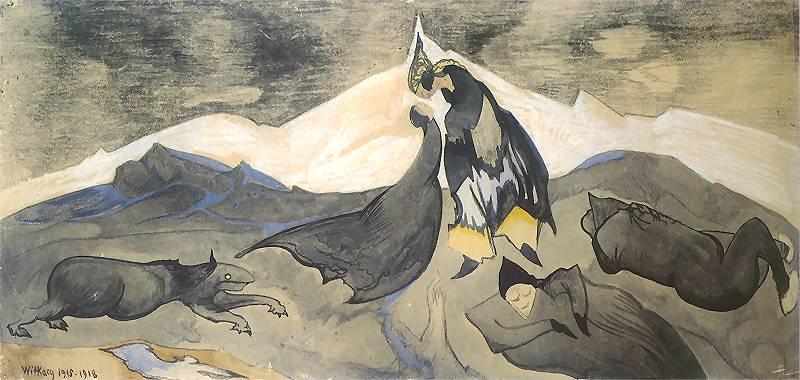
Kiss of the Mongol prince in an ice desert


 Read More
Hand Made Oil Reproduction
Hand-painted oil on canvas in your size and frame, made to order by our artists. ( Buy Print Buy Image)




P118B $10

P118H $10

P118W $10

P438Z $10

P508JH $12

P508YH $12

P805H $10

P805Z $10

P919BZ $10

P919G $10

P919XJ $10

P959ZH $10

P968JZ $12

W106C $8

W218G $10

W218JH $8

W218Y $10

W307PJ $10

W316G $10

W316PJ $8

W316Y $10

W398PJ $8

W4111J $10

W500HY $15

W500JH $15

W692G $12

W849H $8

W940BG $15

W953PJ $8




Pick from our preset sizes that match the artwork's original proportions.

You may enter your own dimensions to fit a specific frame or space. If your selected size does not match the original image's proportions, we will either crop the artwork or extend the painting with additional hand-painted elements. A digital mockup will be sent for your approval before production begins.
Please note that the on-screen preview does not reflect the actual cropping or extension. Only the mockup will accurately show the final composition.
While custom sizes are available, we recommend selecting a dimension from the predefined list to preserve the original proportions.
After order, ArtsDot.com team will email client for instructions and provide a mockup preview
Worldwide Delivery () in 3/4 weeks instead of standard 5 weeks. (1 September). No compromise on quality.

Free Worldwide Express Shipping

High-Quality Linen Canvas

Full Shipping Insurance

Customs Tax Refund Guarantee

True Color Matching Guarantee

60-Day Return Policy (Defects Only)

100% Money-Back Guarantee

Bulk Discount Offer
 Glass option is only available in size under 110 CM

Kiss of the Mongol prince in an ice desert
Reproduction Medium
Reproduction Size
-


Total Price
$ 263
A Visionary Echoes Through Frozen Landscapes: Exploring Witkiewicz’s “Kiss of the Mongol Prince”
Stanislaw Ignacy Witkiewicz, a name often whispered with reverence within Polish artistic circles, remains a figure whose oeuvre defies easy categorization. He wasn't merely a painter; he was a philosopher wrestling with existential questions, a playwright crafting narratives steeped in myth and folklore, and an architect shaping spaces that mirrored his profound engagement with the natural world. Born in Warsaw in 1885 into a family deeply rooted in artistic tradition—his father, Stanisław Witkiewicz, established himself as a prominent painter, architect, and theorist—Witkiewicz inherited not only creative lineage but also an intellectual crucible where radical ideas flourished. This confluence of influences propelled him to forge a singular path, one characterized by experimentation with form, perception, and the very essence of reality itself – a path that foreshadowed many artistic currents of the mid-20th century. His life tragically curtailed in 1939 amidst the devastation of World War II, Witkiewicz nevertheless bequeathed upon us a legacy of breathtaking originality. Examining his work reveals an artist relentlessly pursuing the boundaries of expression, driven by a conviction that art could illuminate the hidden depths of human experience and challenge conventional understandings of the world around him. This dedication to pushing artistic frontiers is particularly evident in “Kiss of the Mongol Prince in an Ice Desert,” a painting completed in 1918 that encapsulates Witkiewicz’s distinctive stylistic vision.Composition and Atmosphere: A Surreal Dialogue Between Figure and Landscape
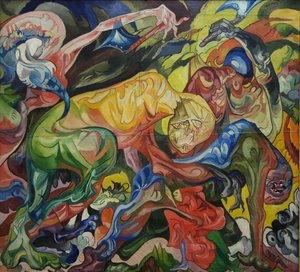
The artwork immediately commands attention with its horizontal format, emphasizing the immensity of the icy desert depicted—a landscape rendered with muted blues, grays, and whites that convey a palpable sense of desolation. However, it’s not merely scale that defines this scene; rather, it's the dynamic arrangement of figures within this barren expanse. The composition utilizes angular shapes and sharp contrasts to create tension and unease, mirroring Witkiewicz’s preoccupation with psychological states. A colossal winged creature dominates the center—a motif recurring throughout his oeuvre—representing both power and vulnerability simultaneously. Surrounding it are other forms—possibly human or animal—positioned in poses that suggest movement and disorientation, contributing to a feeling of unsettling drama. The flattened perspective reinforces this impression of two-dimensionality, stripping away illusionistic depth and focusing instead on conveying mood and emotion.Color Palette and Texture: Echoes of Symbolism
Witkiewicz’s masterful manipulation of color is central to the painting's impact. The dominant hues—cool blues, somber grays, and bleached whites—reflect the icy environment but also imbue the artwork with a deeper symbolic resonance. These muted tones underscore Witkiewicz’s embrace of Symbolist aesthetics, prioritizing emotional expression over literal representation. Loose brushstrokes reveal subtle variations in tone and depth, adding textural richness to the surface without distracting from the overall mood. The artist skillfully utilizes color to evoke feelings of isolation, fear, and contemplation—qualities that permeate throughout his artistic explorations.Style and Technique: Witkiewicz’s Expressionistic Impulse
“Kiss of the Mongol Prince” firmly establishes Witkiewicz's stylistic signature – an expressionistic impulse rooted in a desire to capture subjective experience with uncompromising honesty. Executed primarily in watercolor or gouache on paper, the technique involves layering washes of color and employing loose brushwork to generate atmosphere and dynamism. This approach aligns perfectly with Witkiewicz’s broader philosophical stance: art should serve as a conduit for confronting uncomfortable truths and exploring the complexities of human consciousness. The artist's meticulous attention to detail—particularly in rendering the contours of the winged creature and the figures—contrasts sharply with the overall flatness of the composition, creating a compelling visual paradox that underscores Witkiewicz’s artistic ambition.Symbolic Resonance: Mythical Encounter and Psychological Depth
The painting transcends mere depiction; it invites contemplation about themes of myth, power, and vulnerability. The winged creature itself embodies these concepts—a symbol drawn from folklore and mythology—representing both divine authority and inherent fragility. This motif reflects Witkiewicz’s fascination with archetypal imagery and his belief that art could tap into universal human anxieties. Ultimately, “Kiss of the Mongol Prince in an Ice Desert” stands as a testament to Witkiewicz's artistic genius – a hauntingly beautiful artwork that continues to inspire awe and provoke interpretation decades after its creation.Related Artworks

Artist Biography
A Visionary of Polish Modernism: The Life and Art of Stanisław Ignacy Witkiewicz
Stanisław Ignacy Witkiewicz, known to most as Witkacy, remains a pivotal yet often enigmatic figure in the landscape of 20th-century art. Born in Warsaw in 1885 into an artistic family—his father, Stanisław Witkiewicz, was a noted painter, architect, and theorist—the younger Witkiewicz inherited not only a creative lineage but also a fertile intellectual environment that would profoundly shape his multifaceted career. He wasn’t simply a painter; he was a philosopher, playwright, novelist, photographer, and art theorist, a true polymath whose work reflected the turbulent currents of interwar Poland and anticipated many of the artistic concerns that would dominate the latter half of the century. His life, tragically cut short in 1939 with the outbreak of World War II, was one dedicated to exploring the boundaries of form, perception, and the very nature of reality itself.Early Influences and Artistic Development
Witkiewicz’s early artistic training began within the familial sphere, absorbing his father's aesthetic principles and a deep engagement with Polish Romantic traditions. However, he quickly diverged from conventional paths. A formative experience was an anthropological expedition to Australia in 1914 alongside Bronisław Malinowski. Though cut short by the outbreak of World War I, this journey exposed him to radically different cultures and visual languages, sparking a fascination with primitive art and non-Western aesthetics. The subsequent upheaval of war—his experiences as a reserve officer in the Russian Army during the Revolution—left an indelible mark, fostering a sense of disillusionment and premonition about the fragility of civilization. This feeling would permeate much of his later work, manifesting as a profound catastrophism that saw modern society hurtling towards inevitable collapse. Returning to Poland after the war, he settled in Zakopane, a mountain resort town already steeped in artistic innovation thanks to his father’s pioneering “Zakopane Style” architecture which blended local traditions with Art Nouveau influences.A Synthesis of Styles: Painting, Theory and the Theatre
Witkiewicz's artistic output is remarkably diverse, defying easy categorization. Initially influenced by Symbolism and Expressionism, his paintings evolved into a unique blend of abstraction and figuration. His portraits, in particular, are striking for their distorted forms, vibrant colors, and psychological intensity. He sought to capture not merely the likeness of his subjects but also their inner states, often portraying them as fragmented or alienated figures. He developed what he termed “Pure Form” in painting, a theoretical approach that emphasized the autonomy of artistic elements—line, color, composition—over representational accuracy. This pursuit of pure form extended to his theatrical theories, outlined in *Introduction to the Theory of Pure Form in the Theatre* (1921). He envisioned a theatre that rejected psychological realism and embraced artificiality, grotesque exaggeration, and deliberate disruption of conventional dramatic structures – ideas that foreshadowed the later development of the Theatre of the Absurd. His plays, often characterized by their bizarre plots, illogical dialogues, and unsettling atmosphere, were intended to shock audiences out of complacency and confront them with the absurdity of existence.Major Works and Lasting Legacy
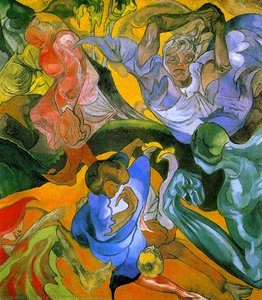
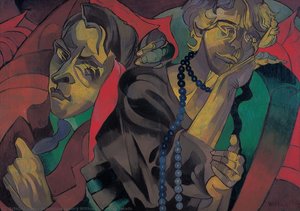
Among Witkiewicz’s most celebrated works are paintings like *Fight* (1922), a dynamic depiction of a man battling animals that embodies his sense of existential struggle, and *Creating the World* (c. 1930), a vibrant and chaotic composition reflecting his philosophical explorations. His numerous portraits, including *Portrait of Helena Białynicka-Birula*, showcase his mastery of pastel and oil techniques while revealing his unique psychological insight. His photographic work, often overlooked, demonstrates a similar experimentation with form and perspective. He also created the “Portrait Company”, a series of photographs where he would photograph people in various poses and expressions, creating composite portraits that captured multiple facets of their personality. Witkiewicz’s influence on Polish art and theatre is undeniable. His theoretical writings continue to be studied by artists and scholars, and his plays are still performed internationally. He anticipated many of the key concerns of modernism—the alienation of the individual, the breakdown of traditional values, the search for new forms of expression—making him a remarkably prescient figure whose work resonates powerfully with contemporary audiences. His tragic death in 1939, upon learning of the Soviet invasion of Poland, cemented his status as a symbol of artistic integrity and resistance against oppressive forces.Exploring Witkacy Further
- Museum Collections: His works can be found in prominent Polish museums, notably the Muzeum Narodowe w Warszawie (National Museum in Warsaw), which holds an extensive collection of European paintings.
- Online Resources: ArtsDot.com and ArtsDot.com offer reproductions and detailed information about his artworks.
- Further Reading: Explore resources like Britannica and Culture.pl for in-depth biographical details and critical analyses of his work.
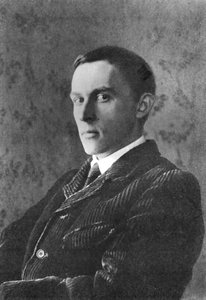
Stanisław Ignacy Witkiewicz
1885 - 1939 , Poland
Quick Facts
- Artistic Movement Or Style: Symbolism, Surrealism
- Artists Or Movements Influenced By This Artist: ['Theatre of the Absurd']
- Artists Who Influenced This Artist: ['Stanisław Witkiewicz (father)']
- Date Of Birth: 1885
- Date Of Death: 1939
- Full Name: Stanisław Ignacy Witkiewicz
- Nationality: Polish
- Notable Artworks:
- Portrait of Helena Białynicka-Birula
- Two heads
- Creating the world
- Fight
- Multiple portrait
- Place Of Birth: Warsaw, Poland
Related Articles

Romantic Landscapes: 10 Masterpieces for Your Home | ArtsDot
Journey through 10 Romantic landscape masterpieces by Friedrich, Turner & Cole. Explore emotional art, sublime nature scenes & iconic 19th-century paintings. Find museum-quality reproductions for your home at ArtsDot.com – discover the full collection online!

Evocations of Place: A Historical Journey Through Landscape Art
Explore the rich history of landscape art with ArtsDot. Discover renowned artists, movements like Impressionism & Romanticism, and expert guidance for collecting timeless pieces. Find your perfect serene escape today!

John Constable's Masterpieces: Explore 25 Iconic Landscapes for Your Home
Journey through John Constable's 25 most celebrated landscapes. Explore Romanticism, Dedham Vale & his masterful use of light in iconic paintings like 'Hay Wain'. Find museum-quality art reproductions and elevate your home decor on ArtsDot.com.

Evocations of Place: A Historical Journey Through Landscape Art
Explore the rich history of landscape art with ArtsDot. Discover renowned artists, movements like Impressionism & tonalism, and expert guidance for collecting timeless pieces. Find your perfect serene escape today!
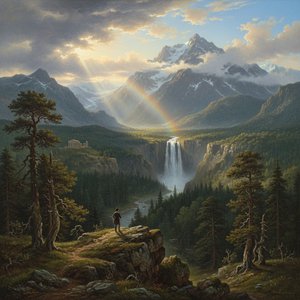
Evoking Nature's Sublime: A Comprehensive Exploration of 19th-Century Landscape Painting
Explore the captivating world of 19th-century landscape painting! Discover renowned artists like Friedrich & Monet, key movements, and find the perfect artwork to bring nature's serenity into your home. Expert insights at ArtsDot.