 Preview
 Send
Send Share
Share
 Details

 Download
 Similars
 X-Ray
X-Ray Diaporama
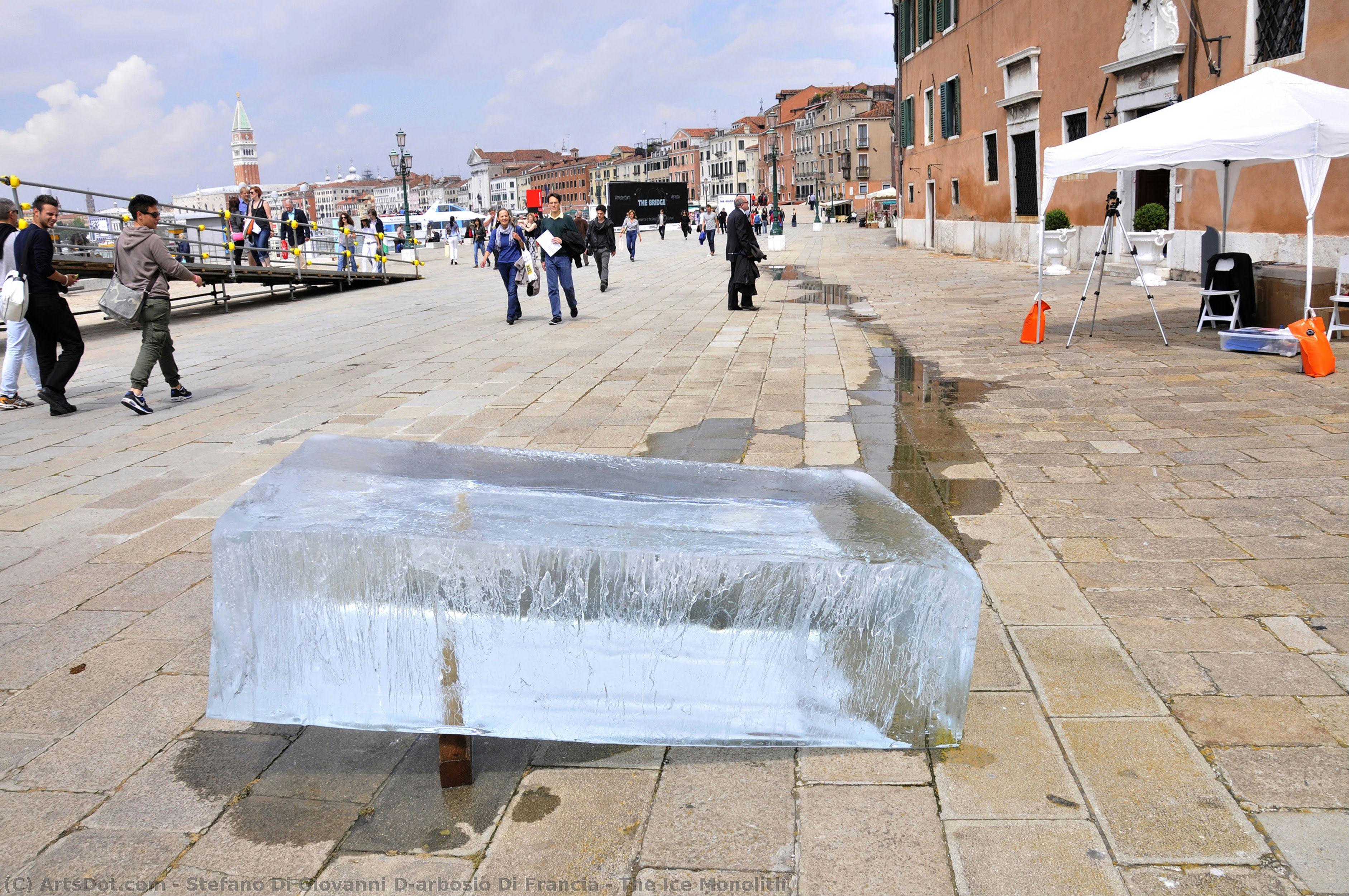
The Ice Monolith

 Read More
Giclée / Art Print
Museum-quality giclée or canvas print with fast production and flexible finish options. ( Buy Hand Made Painting Buy Image)




































Pick from our preset sizes that match the artwork's original proportions.

You may enter your own dimensions to fit a specific frame or space. If your selected size does not match the original image's proportions, we will either crop the artwork or extend the image with a mirrored or solid-fill edge. A digital mockup will be sent for your approval before production begins.
Please note that the on-screen preview does not reflect the actual cropping or extension. Only the mockup will accurately show the final composition.
While custom sizes are available, we recommend selecting a dimension from the predefined list to preserve the original proportions.
Worldwide Delivery () in 2 weeks instead of standard 4/5 weeks. (25 August)

Free Worldwide Express Shipping

High-Quality Linen Canvas

Full Shipping Insurance

Customs Tax Refund Guarantee

True Color Matching Guarantee

60-Day Return Policy (Defects Only)

100% Money-Back Guarantee

Bulk Discount Offer
 Glass option is only available in size under 110 CM

The Ice Monolith
Giclée / Art Print
Reproduction Size
-


Total Price
$ 63
Collectible Description
Related Artworks









Artist Biography
The Radiant Legacy of Stefano di Giovanni d'Arbosio di Francia
In the luminous dawn of the fifteenth century, a period where the elegance of the Middle Ages began to dance with the burgeoning realism of the Renaissance, the name Stefano di Giovanni d'Arbosio di Francia emerged as a beacon of the International Gothic style. Born around 1379 in the historic city of Verona, Stefano was a child of cultural convergence. His lineage itself tells a story of artistic migration; he was the son of Jean d'Arbois, a French painter whose journey from the Burgundian courts of Philip II to the prestigious Visconti court in Italy brought a sophisticated Northern European sensibility to the Italian peninsula. This unique heritage allowed Stefano to bridge the gap between the delicate, illuminated traditions of France and the grand, emerging narratives of Northern Italy.
Stefano’s formative years were shaped by an environment of unparalleled intellectual and artistic ferment. Under the tutelage of the master Michelino da Besozzo, he absorbed the intricate techniques of illumination and the graceful, flowing lines that defined the era. His training in Pavia served as a crucible where he refined his ability to blend Byzantine elegance with a burgeoning Northern realism. This stylistic synthesis—the hallmark of the International Gothic movement—allowed him to create works that were simultaneously decorative and deeply emotive, capturing the splendor of courtly life while maintaining a meticulous attention to the natural world.
A Tapestry of Technique and Symbolism
The oeuvre of Stefano da Verona is a testament to his extraordinary technical versatility. His mastery was not confined to a single medium but extended across religious iconography, portraiture, and exquisite decorative panels. He possessed a rare ability to manipulate light and color, often employing the gilded enamel technique to produce works of breathtaking brilliance. One such masterpiece, “Scolapasta 3 in metallo smaltao bianco,” showcases his command over vibrant colors and intricate floral motifs, reflecting the opulent tastes of his aristocratic patrons.
Beyond mere decoration, Stefano’s work often pulsed with deep symbolic meaning, a characteristic essential to the late Gothic period. His compositions frequently utilized animal imagery and natural elements to convey complex narratives of fertility, love, and good fortune. This is perhaps most evocatively seen in works such as “Magic Bunny,” where he utilizes symbolic imagery to evoke profound narrative emotion, or the opulent “Rabbit Chair Gold,” which reflects a luxurious aesthetic where even functional forms are imbued with the gentle, auspicious spirit of the natural world. Through his brush, the boundary between the physical object and the spiritual symbol became beautifully blurred.
Historical Significance and Artistic Impact
The historical significance of Stefano di Giovanni d'Arbosio di Francia lies in his role as a cultural conduit. By weaving together the meticulous detail of Burgundian manuscript illumination with the monumental ambitions of Italian painting, he helped facilitate the transition toward the Renaissance. His influence can be traced through the palpable echoes of Jean Fouquet and Simone Martini within his compositions, marking him as a central figure in a movement that prioritized decorative splendor alongside an emerging humanistic focus.
Today, we remember Stefano not merely as a painter of the Visconti court, but as a master who captured the very essence of an era in transition. His ability to harmonize the following elements remains his greatest achievement:
- The fusion of Northern European realism with Italian grace.
- The use of intricate gilding and enamel to elevate decorative arts.
- The integration of profound symbolic narratives within courtly aesthetics.
His legacy continues to resonate, offering a window into a world where art was a sacred language of beauty, status, and spiritual hope.

Quick Facts
- Artistic Movement Or Style: International Gothic
- Artists Or Movements Influenced By This Artist: ['Michelino da Besozzo']
- Artists Who Influenced This Artist: ["Jean d'Arbois"]
- Date Of Birth: ca. 1379
- Date Of Death: Living
- Full Name: Stefano di Giovanni d'Arbosio di Francia
- Nationality: Italian
- Notable Artworks:
- Scolapasta 3 in metallo smaltao bianco
- Rabbit Chair Gold
- Magic Bunny
- Place Of Birth: Verona, Italy