 Preview
 Send
Send Share
Share
 Details

 Download
 Similars
 X-Ray
X-Ray Diaporama
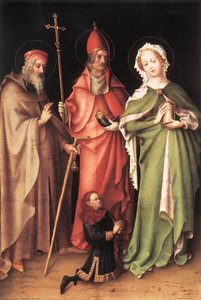
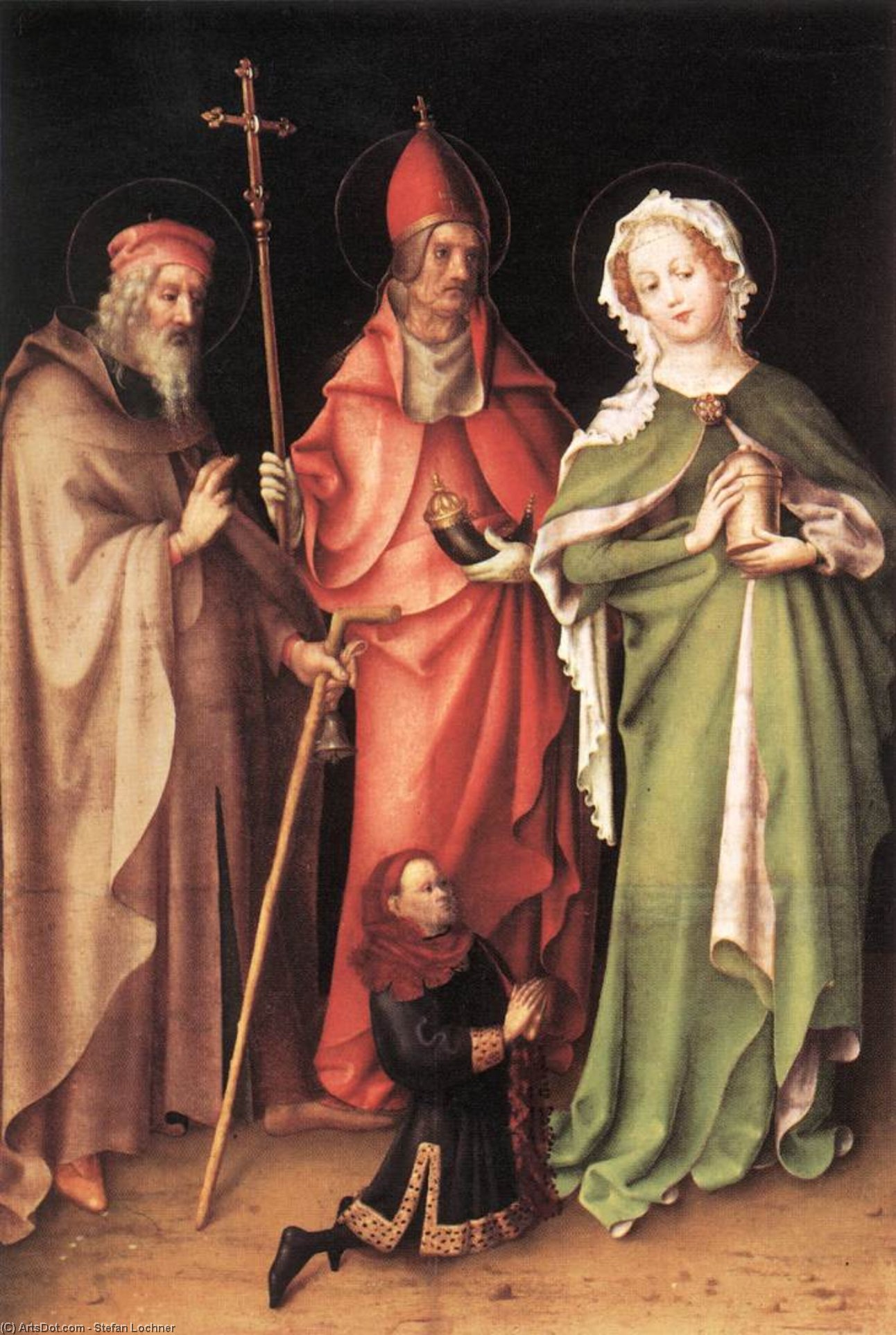
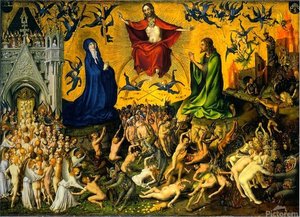
Sts Anthony the Hermit, Cornelius and Mary Magdalen with a Donor
 Oil On Canvas
- WallArt
- Northern Renaissance
 1445
1445 120.0 x 80.0 cm
 Alte Pinakothek
 Read More
Hand Made Oil Reproduction
Hand-painted oil on canvas in your size and frame, made to order by our artists. ( Buy Print Buy Image)




P118B $10

P118H $10

P118W $10

P438Z $10

P508JH $12

P508YH $12

P805H $10

P805Z $10

P919BZ $10

P919G $10

P919XJ $10

P959ZH $10

P968JZ $12

W106C $8

W218G $10

W218JH $8

W218Y $10

W307PJ $10

W316G $10

W316PJ $8

W316Y $10

W398PJ $8

W4111J $10

W500HY $15

W500JH $15

W692G $12

W849H $8

W940BG $15

W953PJ $8




Pick from our preset sizes that match the artwork's original proportions.

You may enter your own dimensions to fit a specific frame or space. If your selected size does not match the original image's proportions, we will either crop the artwork or extend the painting with additional hand-painted elements. A digital mockup will be sent for your approval before production begins.
Please note that the on-screen preview does not reflect the actual cropping or extension. Only the mockup will accurately show the final composition.
While custom sizes are available, we recommend selecting a dimension from the predefined list to preserve the original proportions.
After order, ArtsDot.com team will email client for instructions and provide a mockup preview
Worldwide Delivery () in 3/4 weeks instead of standard 5 weeks. (16 August). No compromise on quality.

Free Worldwide Express Shipping

High-Quality Linen Canvas

Full Shipping Insurance

Customs Tax Refund Guarantee

True Color Matching Guarantee

60-Day Return Policy (Defects Only)

100% Money-Back Guarantee

Bulk Discount Offer
 Glass option is only available in size under 110 CM

Sts Anthony the Hermit, Cornelius and Mary Magdalen with a Donor
Reproduction Medium
Reproduction Size
-


Total Price
$ 313
Artwork Description
A Vision of Faith: Stephan Lochner’s 1445 Masterpiece
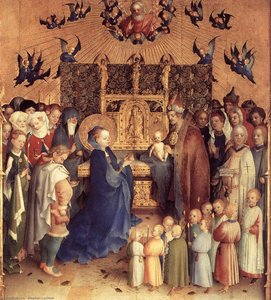
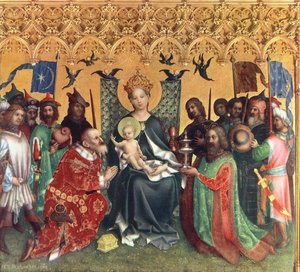
This captivating oil on canvas, painted in 1445 by German master Stephan Lochner, presents a serene yet profoundly spiritual scene featuring Sts Anthony the Hermit, Cornelius, and Mary Magdalen alongside a devout donor. Measuring 120 x 80 cm, the work exemplifies the transition from late Gothic to Early Northern Renaissance aesthetics. Lochner, flourishing in a period of artistic innovation (1410-1451), skillfully blends detailed realism with lingering elements of International Gothic grace. The composition is carefully balanced, arranged in a triangular formation that draws the eye towards the central figures – Bishop Cornelius at the apex, flanked by St. Anthony and Mary Magdalen. Their slightly turned poses invite contemplation, creating an intimate connection between the sacred subjects and the viewer.Style & Technique: Northern Renaissance Refinement
Lochner’s technique is characterized by a meticulous attention to detail and a vibrant palette. Rich colors, achieved through layering oil paints, imbue the scene with luminosity. Notice the delicate rendering of fabrics – the flowing robes of the bishop, the simple habit of St. Anthony, and Mary Magdalen's garments—each meticulously defined by precise lines and subtle shading. While perspective remains somewhat flattened, a hallmark of the period, Lochner creates depth through skillful use of overlapping forms and tonal variations. The brushstrokes are visible, adding texture and materiality to the figures and their surroundings. This isn’t about strict realism; it's about conveying spiritual truth through carefully constructed visual language. The overall effect is one of refined elegance and devotional intensity.Symbolism & Historical Context
The selection of these three saints is significant. St. Anthony the Hermit, a patron saint of lost things, represents solitude and spiritual seeking. Cornelius, a Roman centurion converted to Christianity, embodies faith and courage. Mary Magdalen, a follower of Christ often depicted as a penitent, symbolizes redemption and devotion. The inclusion of a donor – likely a wealthy patron who commissioned the work – was common practice in this era, signifying their piety and securing prayers for themselves or loved ones. Painted during a period of religious fervor and artistic patronage, the artwork reflects the growing importance of individual devotion within the Church. Lochner’s style, influenced by his travels to the Low Countries, demonstrates an embrace of emerging Renaissance ideals while retaining distinctly German sensibilities.- The bishop's staff symbolizes authority and spiritual guidance.
- The vessel held may represent the Eucharist or alms giving.
- The saints’ gestures – hands raised in blessing or supplication – reinforce their roles as intercessors.
Emotional Resonance & Interior Design Considerations
This painting evokes a sense of solemn reverence and quiet contemplation. The figures' serene expressions and the harmonious composition create an atmosphere of peace and spiritual upliftment. Its muted yet rich color scheme – deep blues, reds, and golds – lends itself beautifully to a variety of interior design styles. A high-quality reproduction would be particularly striking in a library, study, or chapel setting, adding a touch of historical elegance and contemplative beauty. The artwork’s vertical format makes it well-suited for hallways or above fireplaces. Consider pairing it with antique furniture and warm lighting to enhance its timeless appeal. This piece isn't merely a decorative element; it is an invitation to pause, reflect, and connect with centuries of artistic and spiritual tradition.Related Artworks

Artist Biography
Stephan Lochner: Bridging Gothic Splendor and Northern Renaissance Innovation
Born around 1410 in the picturesque town of Meersburg, Germany – a location steeped in legend and nestled amongst the stunning Lake Constance – Stephan Lochner’s life was tragically cut short in Cologne around 1451. Despite his brief career, this enigmatic painter left an indelible mark on the art world, skillfully blending the opulent traditions of International Gothic with the burgeoning realism and innovative iconography characteristic of the early Northern Renaissance. Lochner's legacy lies not just in the beauty of his individual works but also in his influence on subsequent generations of artists, particularly Rogier van der Weyden and Hans Memling – painters who would carry forward elements of his distinctive style.
Little is definitively known about Lochner’s early life. Art historical consensus suggests he spent a portion of his formative years apprenticed within the Low Countries, an experience that profoundly shaped his artistic sensibilities. Exposure to the vibrant colors, intricate detailing, and evolving iconography prevalent in Flemish painting undoubtedly influenced his approach to composition, color palettes, and the depiction of religious figures. This international exposure is believed to be a key factor in the unique synthesis of styles found throughout his oeuvre.
A Master of Color and Texture: Artistic Style and Notable Works
Lochner’s paintings are immediately recognizable for their arresting use of color, dynamic long lines, and remarkably virtuosic surface textures. He eschewed the muted tones often associated with earlier Gothic art, embracing a brighter, more luminous palette – a characteristic that aligns him firmly within the emerging Renaissance aesthetic. His works frequently feature rich reds, blues, and golds, applied with a masterful understanding of light and shadow to create a sense of depth and drama.
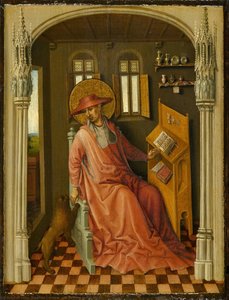
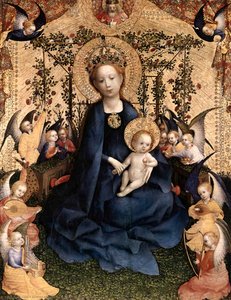
Among his most celebrated pieces is “Madonna of the Rose Bush” (51 x 40 cm, Wallraf-Richartz Museum, Cologne), a masterpiece that exemplifies Lochner’s technical skill and expressive power. The painting showcases his ability to imbue religious subjects with an almost palpable sense of emotion and spirituality. “St. Jerome in His Study” (30 x 39 cm, oil on panel) further demonstrates his capacity for capturing the essence of his subjects – a quiet contemplation rendered with remarkable detail and psychological insight. The “Three Saints,” a complex composition brimming with grace and poise, highlights Lochner’s skill in depicting multiple figures within a single frame, creating a dynamic and engaging visual narrative.
Another significant work is the "Dombild Altarpiece" (or Kölner Dombild), originally commissioned for Cologne Cathedral. This monumental triptych, now housed within the cathedral's Marienkapelle, remains one of the most important examples of his art and a testament to his artistic vision. The altarpiece’s intricate details, vibrant colors, and symbolic imagery continue to fascinate viewers today.
Influence and Legacy: A Bridge Between Styles
Stephan Lochner's influence on subsequent generations of Northern artists was substantial. His distinctive style – characterized by flowing lines, brilliant colors, and a focus on emotional expression – resonated deeply with his contemporaries, inspiring them to incorporate elements of his approach into their own work. Rogier van der Weyden, in particular, is believed to have been profoundly influenced by Lochner’s use of color and composition, while Hans Memling similarly adopted aspects of his style in his devotional panels.
The “Dombild Altarpiece” stands as a particularly compelling example of Lochner's influence. Its innovative approach to depicting religious narratives – combining Gothic elegance with emerging Renaissance realism – paved the way for future developments in Northern European painting. The altarpiece’s intricate details and symbolic imagery served as a model for countless artists who followed, solidifying Lochner’s position as a pivotal figure in the transition from late Gothic to early Renaissance art.
Museum Collections and Continuing Appreciation
Lochner's works are treasured within several prominent museums around the world. The Wallraf-Richartz Museum in Cologne houses “Madonna of the Rose Bush,” offering visitors a direct encounter with this iconic painting. The Städel Museum in Frankfurt displays “The Flémalle Panels” (68 x 160 cm, oak), showcasing Lochner’s mastery of panel painting and his ability to create complex compositions filled with detail and symbolism. Beyond these key institutions, fragments of his work can be found in various collections, ensuring that his artistic legacy continues to be appreciated by art enthusiasts worldwide.
Today, Stephan Lochner's paintings are celebrated for their beauty, technical skill, and profound emotional resonance. His ability to seamlessly blend the traditions of International Gothic with the innovations of the early Northern Renaissance cemented his place as a truly exceptional artist – a master who bridged two distinct artistic eras and left an enduring legacy on the art world.
stephan lochner
1410 - 1451 , Germany
Quick Facts
- Artistic Movement Or Style: Late Gothic, International Gothic
- Artists Or Movements Influenced By This Artist:
- International Gothic
- Early Northern Renaissance
- Artists Who Influenced This Artist:
- Rogier van der Weyden
- Hans Memling
- Date Of Birth: c. 1410
- Date Of Death: 1451
- Full Name: Stefan Lochner
- Nationality: German
- Notable Artworks:
- Madonna of the Rose Bush
- St. Jerome in his study
- Three Saints
- Dombild Altarpiece
- Place Of Birth: Meersburg, Germany
Related Articles

Oil on Canvas: A Historical & Technical Exploration of a Timeless Artistic Medium
Explore the rich history & enduring techniques of oil painting on canvas. Discover the science behind its longevity, conservation practices, and contemporary relevance. Expert insights for art enthusiasts.

The Enduring Legacy of Oil on Canvas: Technique, History & Aesthetic Impact
Explore the rich history & techniques of oil painting – from Renaissance masters to Impressionism. Discover pigments, layering methods, and why this timeless medium endures. Expert insights for artists & art enthusiasts.

The Enduring Legacy of Oil on Canvas: Technique, History & Contemporary Practice
Explore the rich history & enduring techniques of oil painting on canvas. Discover the science behind its longevity, conservation practices, and contemporary relevance. Expert insights for art enthusiasts.
Oil on Canvas Masters: 10 Paintings That Redefined Art History |
Journey through art history with our guide to 10 legendary oil on canvas masterpieces! Explore iconic works by Van Gogh, Monet & Rembrandt. Find museum-quality reproductions and elevate your home decor at . Discover all masterpieces online.

The Enduring Power of Painting: A Historical & Contemporary Exploration of Form and Emotion
Explore the rich history & enduring techniques of oil painting with ArtsDot. Discover masterpieces, learn about art collecting, and find authentic handmade reproductions crafted by skilled artists.