

![[lucy Stone]\n\n(main View) — Sumner B. Heald](/media/artworks/images/full/07/dd/07dd153e1c1c475281d1101f4006f6b4.Jpg)
 Send
Send Share
Share
 Details

 Download
 Similars
 Diaporama
[Lucy Stone]\n\n(Main View)


 Read More
Hand Made Oil Reproduction
Hand-painted oil on canvas in your size and frame, made to order by our artists. ( Buy Print Buy Image)




































Pick from our preset sizes that match the artwork's original proportions.

You may enter your own dimensions to fit a specific frame or space. If your selected size does not match the original image's proportions, we will either crop the artwork or extend the painting with additional hand-painted elements. A digital mockup will be sent for your approval before production begins.
Please note that the on-screen preview does not reflect the actual cropping or extension. Only the mockup will accurately show the final composition.
While custom sizes are available, we recommend selecting a dimension from the predefined list to preserve the original proportions.
After order, ArtsDot.com team will email client for instructions and provide a mockup preview
Worldwide Delivery () in 3/4 weeks instead of standard 5 weeks. (19 August). No compromise on quality.

Free Worldwide Express Shipping

High-Quality Linen Canvas

Full Shipping Insurance

Customs Tax Refund Guarantee

True Color Matching Guarantee

60-Day Return Policy (Defects Only)

100% Money-Back Guarantee

Bulk Discount Offer
 Glass option is only available in size under 110 CM

[Lucy Stone]\n\n(Main View)
Reproduction Medium
Reproduction Size
-


Total Price
$ 263
Artwork Description
A Glimpse into Victorian Elegance: The Portrait of Lucy Stone
This evocative black and white photograph, dating from 1870, presents us with a moment suspended in time—a portrait centered around the figure of Lucy Stone. The composition immediately draws the eye to the central subject, whose gaze seems both direct and deeply thoughtful, engaging the viewer across the decades that separate us. Dressed in attire suggesting the refined sensibilities of the late Victorian era, her presence anchors the scene with an undeniable air of quiet dignity. While two other figures occupy the background, they recede slightly, serving not as distractions, but as subtle contextual elements that lend depth and narrative weight to the primary subject.
The Artistry of Memory: Technique and Composition
Though a photograph rather than a painting, this image possesses the formal qualities worthy of deep artistic contemplation. The photographer, whose work we are emulating through reproduction, masterfully balanced the composition. The central figure is framed with such care that she commands attention, while the background elements—the indistinct forms and setting—provide a necessary sense of place without ever overpowering the portrait's emotional core. The monochrome palette itself contributes profoundly to the mood; it strips away the distraction of color, forcing us instead to focus on texture, gesture, and the subtle interplay of light and shadow across the fabric of her dress and the planes of her face.
Historical Echoes: Life in the 1870s
To view this portrait is to step directly into the social currents of the 1870s. This was a period marked by significant shifts in women's roles, intellectual awakening, and evolving standards of public presentation. Lucy Stone herself represents an era of burgeoning female influence, even as societal expectations remained rigidly defined. The formality of her dress speaks to the codes of elegance required for portraiture during that time—a visual testament to social standing and personal aspiration. For those interested in historical décor or collecting pieces that evoke a sense of bygone refinement, this image offers a tangible connection to that sophisticated past.
Emotional Resonance and Decorative Appeal
The emotional impact of the photograph is one of profound introspection. It invites us to wonder about the stories held behind that steady gaze—the ambitions, the quiet triumphs, and the personal reflections of a woman navigating a complex age. When considering this piece for an interior space, it functions as more than mere decoration; it acts as a conversation starter, a focal point imbued with intellectual weight. A high-quality reproduction allows one to bring this captured moment of Victorian grace into a modern setting, lending an air of curated history and timeless elegance to any room.
Related Artworks
Artist Biography
Albert Pinkham Ryder: A Visionary of American Isolation
Born in New Bedford, Massachusetts, on March 19, 1847, Albert Pinkham Ryder remains one of the most enigmatic and intensely private figures in American art history. His life was a tapestry woven with threads of eccentricity, solitude, and an unwavering dedication to his unique artistic vision. While he achieved some recognition during his lifetime, Ryder largely shunned the conventions of the art world, preferring the quiet company of his studio and the landscapes that fueled his imagination. His work, characterized by its dreamlike quality, evocative color palettes, and a profound sense of melancholy, continues to captivate viewers with its intimate portrayal of interior spaces, coastal scenes, and solitary figures.
Ryder’s early life offered little indication of the artist he would become. He received limited formal training, initially studying at the National Academy of Design in New York City but finding it restrictive. Instead, he honed his skills through independent study and observation, absorbing influences from European tonalist painters like Jean-François Millet and the Dutch Masters—particularly their use of light and shadow to create mood and atmosphere. This exposure to the Barbizon School’s emphasis on capturing the essence of nature rather than mere representation proved crucial to his development. His brother, Albert Rosenbaum, a successful restaurateur in New York City, provided him with a stable home and a space where he could continue to paint, fostering an environment that allowed Ryder to dedicate himself entirely to his art.
The Studio as Sanctuary: A World Apart
Ryder’s most defining characteristic was his almost obsessive dedication to his studio. For nearly fifty years, he maintained a small, cluttered workspace in Greenwich Village, New York City—a space that served not just as a place of work but as his entire world. He rarely exhibited publicly and avoided social gatherings, preferring the solitude of his studio where he could immerse himself in his art. This deliberate isolation profoundly shaped his artistic output. Accounts from acquaintances describe him as a reclusive figure, often dressed in old clothes, eating simple meals, and spending hours lost in contemplation before his easel.
The studio itself became a subject of fascination for those who encountered it. It was filled with unfinished paintings, sketches, and an accumulation of objects—seashells, bits of driftwood, discarded furniture, and even the occasional animal—that served as inspiration or simply occupied space within his creative domain. This carefully constructed environment fostered a sense of timelessness and detachment from the outside world, allowing Ryder to explore themes of memory, loneliness, and the passage of time with unparalleled depth.
A Palette of Moods: Style and Technique
Ryder’s artistic style is instantly recognizable. He eschewed academic techniques in favor of a highly personal approach that prioritized mood and atmosphere over precise representation. His paintings are characterized by their muted, atmospheric color palettes—often dominated by blues, greens, and grays—and a deliberate blurring of form. He employed a technique known as “tonalism,” emphasizing subtle gradations of tone to create a sense of depth and luminosity. Unlike the bright, vibrant colors associated with Impressionism, Ryder’s palette was deliberately subdued, reflecting the introspective nature of his subject matter.
His subjects—often solitary figures in dimly lit interiors or desolate coastal scenes—were rendered with an almost dreamlike quality. He frequently depicted rooms filled with shadows and indistinct shapes, creating a sense of mystery and unease. Ryder’s use of light was particularly masterful, employing it not to illuminate but to evoke mood and atmosphere. His paintings are less about depicting reality than about conveying a specific emotional state—a feeling of loneliness, longing, or quiet contemplation.
Legacy and Recognition
Despite his reclusive nature, Albert Pinkham Ryder’s work gradually gained recognition in the decades following his death on March 28, 1917. His paintings are now celebrated for their emotional intensity, atmospheric quality, and unique vision. He is considered a pivotal figure in American art, bridging the gap between academic tradition and modernism. His influence can be seen in the work of later artists who explored themes of isolation, memory, and the subjective experience of reality.
Today, Ryder’s paintings are housed in major museums around the world, including the Metropolitan Museum of Art, the Art Institute of Chicago, and the Smithsonian American Art Museum. His legacy as a visionary artist continues to inspire and intrigue viewers who appreciate his ability to capture the essence of human experience through the power of color and form.
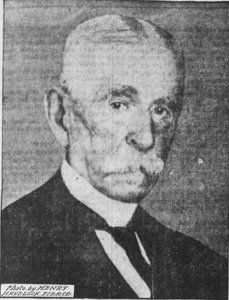
sumner b. heald
1847 - 1922 , United States of America
Quick Facts
- Artistic Movement Or Style: Tonalism, Symbolism
- Artists Or Movements Influenced By This Artist:
- Modernism
- American Impressionism
- Artists Who Influenced This Artist:
- William Merritt Chase
- John Singer Sargent
- Date Of Birth: March 19, 1847
- Date Of Death: March 28, 1917
- Full Name: Albert Pinkham Ryder
- Nationality: American
- Notable Artworks:
- The Music-Harpers
- The Dives of Pompeii
- The Old Man
- The Sea
- Place Of Birth: New Bedford, Massachusetts
Related Articles

Gordon Parks: A Poetic Lens on American Life – Photography, Social Justice & Storytelling
Explore the profound work of Gordon Parks, a groundbreaking photographer who documented American life with unparalleled empathy and artistry. Discover his iconic images & lasting impact on social justice through Life magazine & beyond.

Beyond the Lens: Photography's Enduring Influence on Modern & Contemporary Art
Explore photography's pivotal role in shaping modern & contemporary art. Discover key movements, influential artists like Stieglitz, and expert collecting advice from ArtsDot.

Monochrome Visions: Exploring the Aesthetic & Historical Significance of Black & White Photography
Explore the rich history & artistic power of black and white photography. From early techniques to iconic masters like Ansel Adams, discover why monochrome continues to captivate art lovers today. Expert insights for collectors.

Witnessing History Through Lens & Light: Documentary Photography's Enduring Legacy
Explore the powerful history of documentary photography – from its origins to contemporary masters like Gordon Parks & W. Eugene Smith. Discover how this art form shapes our understanding of society and witness pivotal moments in time.

Grant Wood & American Regionalism: Identity, Myth & the Rural Landscape
Explore the world of Grant Wood & American Regionalism with ArtsDot. Discover the symbolism behind 'American Gothic', recurring themes, and the movement's lasting impact on art history. High-quality reproductions available.
![[Lucy Stone]\n\n(Main View)](/media/artworks/images/thumbnails/d9/d7/d9d7f3ef4040486c886d38c053d69542.jpg)

