 Preview
 Send
Send Share
Share
 Details

 Download
 Similars
 X-Ray
X-Ray Diaporama
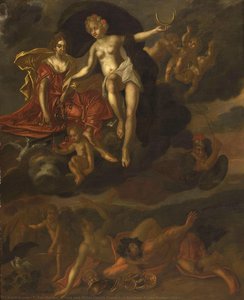
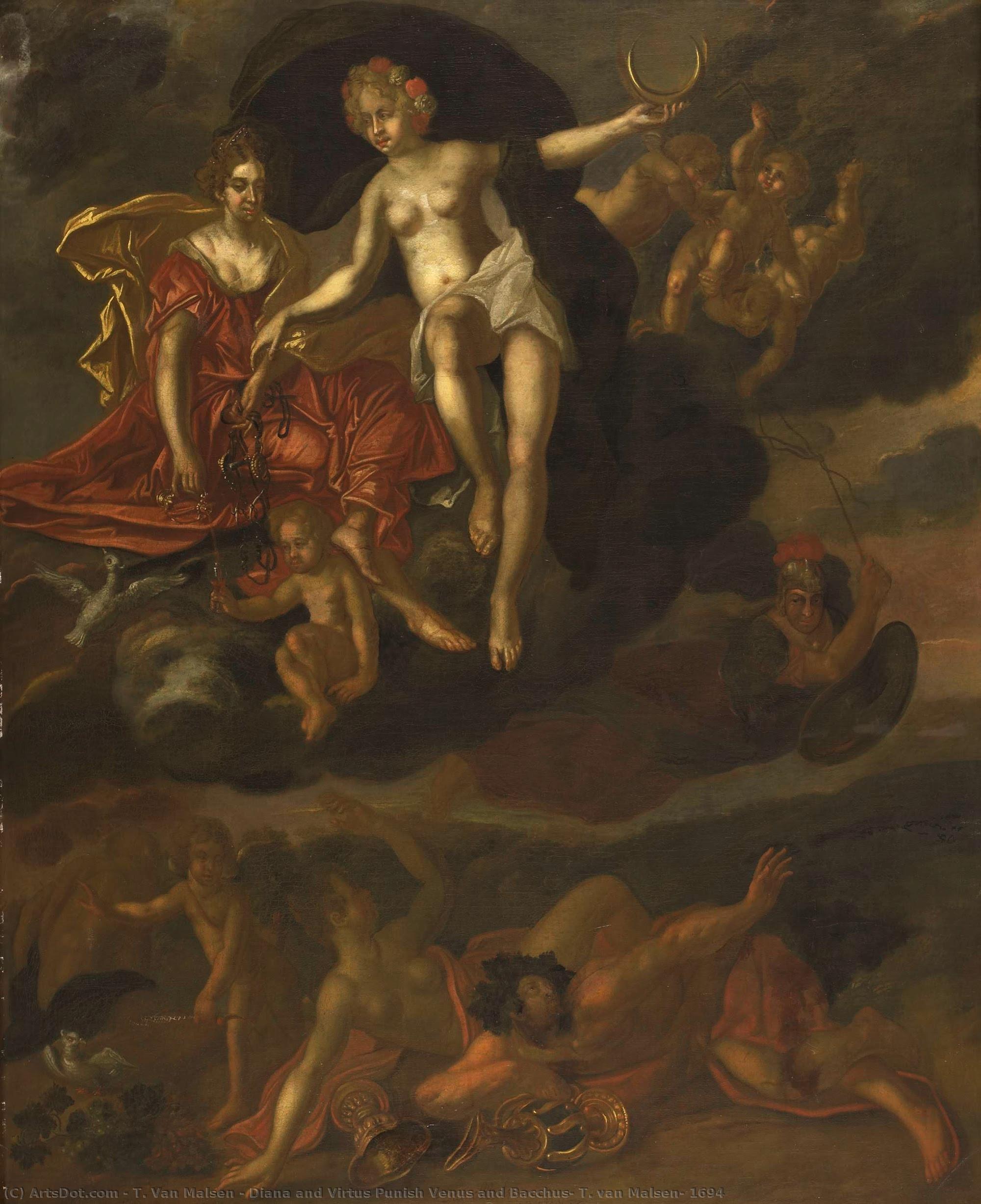
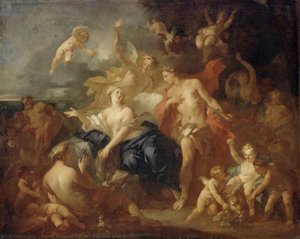
Diana and Virtus Punish Venus and Bacchus, T. van Malsen, 1694
 1694
1694 192.0 x 157.0 cm
 Read More
Giclée / Art Print
Museum-quality giclée or canvas print with fast production and flexible finish options. ( Buy Hand Made Painting Buy Image)




































Pick from our preset sizes that match the artwork's original proportions.

You may enter your own dimensions to fit a specific frame or space. If your selected size does not match the original image's proportions, we will either crop the artwork or extend the image with a mirrored or solid-fill edge. A digital mockup will be sent for your approval before production begins.
Please note that the on-screen preview does not reflect the actual cropping or extension. Only the mockup will accurately show the final composition.
While custom sizes are available, we recommend selecting a dimension from the predefined list to preserve the original proportions.
Worldwide Delivery () in 2 weeks instead of standard 4/5 weeks. (24 August)

Free Worldwide Express Shipping

High-Quality Linen Canvas

Full Shipping Insurance

Customs Tax Refund Guarantee

True Color Matching Guarantee

60-Day Return Policy (Defects Only)

100% Money-Back Guarantee

Bulk Discount Offer
 Glass option is only available in size under 110 CM

Diana and Virtus Punish Venus and Bacchus, T. van Malsen, 1694
Giclée / Art Print
Reproduction Size
-


Total Price
$ 63
Collectible Description
Related Artworks




Artist Biography
The Enigmatic Landscapes of T. Van Malsen
T. Van Malsen remains a somewhat elusive figure in the landscape painting tradition, yet his works possess a quiet power and atmospheric depth that have steadily garnered recognition among collectors and art historians alike. Born in an unknown location – details surrounding his early life are scarce – Van Malsen emerged onto the art scene with a distinctive style characterized by muted palettes, evocative skies, and a profound sense of solitude within nature. He wasn’t a painter who sought grand spectacle; instead, he focused on capturing the subtle nuances of light and shadow, the quiet drama unfolding in fields, forests, and along waterways. This dedication to atmospheric realism sets him apart from many of his contemporaries, placing him in a unique position between the Romantic tradition and the burgeoning Impressionist movement.Early Influences and Artistic Development
While concrete biographical information is limited, stylistic analysis suggests Van Malsen was deeply influenced by the Dutch landscape masters of the 17th century – painters like Jacob van Ruisdael and Aert van der Neer. The meticulous detail in rendering foliage, the dramatic use of cloud formations, and a similar penchant for depicting expansive skies all point to these early sources. However, Van Malsen wasn’t merely an imitator. He absorbed these influences and filtered them through his own sensibility, moving away from the precise topographical accuracy favored by earlier Dutch artists towards a more emotionally resonant interpretation of nature. His canvases aren't about *what* is depicted so much as *how* it feels to be in that place. The influence of the Barbizon school, with its emphasis on plein air painting and realistic depictions of rural life, also appears evident in his work, though Van Malsen’s palette remains considerably more restrained. He seems to have favored a limited range of earth tones – browns, grays, ochres, and muted greens – creating a sense of harmony and tranquility that is rarely broken by vibrant color.Themes and Techniques
Van Malsen's oeuvre primarily consists of landscapes, often featuring expansive fields, dense forests, or tranquil waterways under brooding skies. Recurring motifs include solitary trees, winding paths, and distant farmhouses – elements that contribute to the overall feeling of isolation and contemplation. He rarely included figures in his paintings, suggesting a desire to emphasize the power and indifference of nature itself. His technique is characterized by careful layering of paint, creating subtle gradations of tone and texture. He employed a scumbling technique – applying thin layers of broken color over an underpainting – to achieve a hazy atmospheric effect. This method allows light to penetrate the surface of the canvas, giving his landscapes a luminous quality that is particularly striking. He was also adept at capturing the effects of different weather conditions, from the soft glow of twilight to the dramatic intensity of approaching storms.Recognition and Legacy
Despite a relatively quiet career – Van Malsen did not actively seek fame or public recognition – his work has steadily gained appreciation in recent decades. His paintings are now held in numerous private collections, and he is increasingly recognized as an important figure in the development of atmospheric landscape painting.- His ability to evoke a sense of place and mood through subtle tonal variations.
- The quiet beauty and contemplative nature of his compositions.
- His unique blend of Dutch realism and Romantic sensibility.