 Preview
 Send
Send Share
Share
 Details

 Download
 Similars
 X-Ray
X-Ray Diaporama
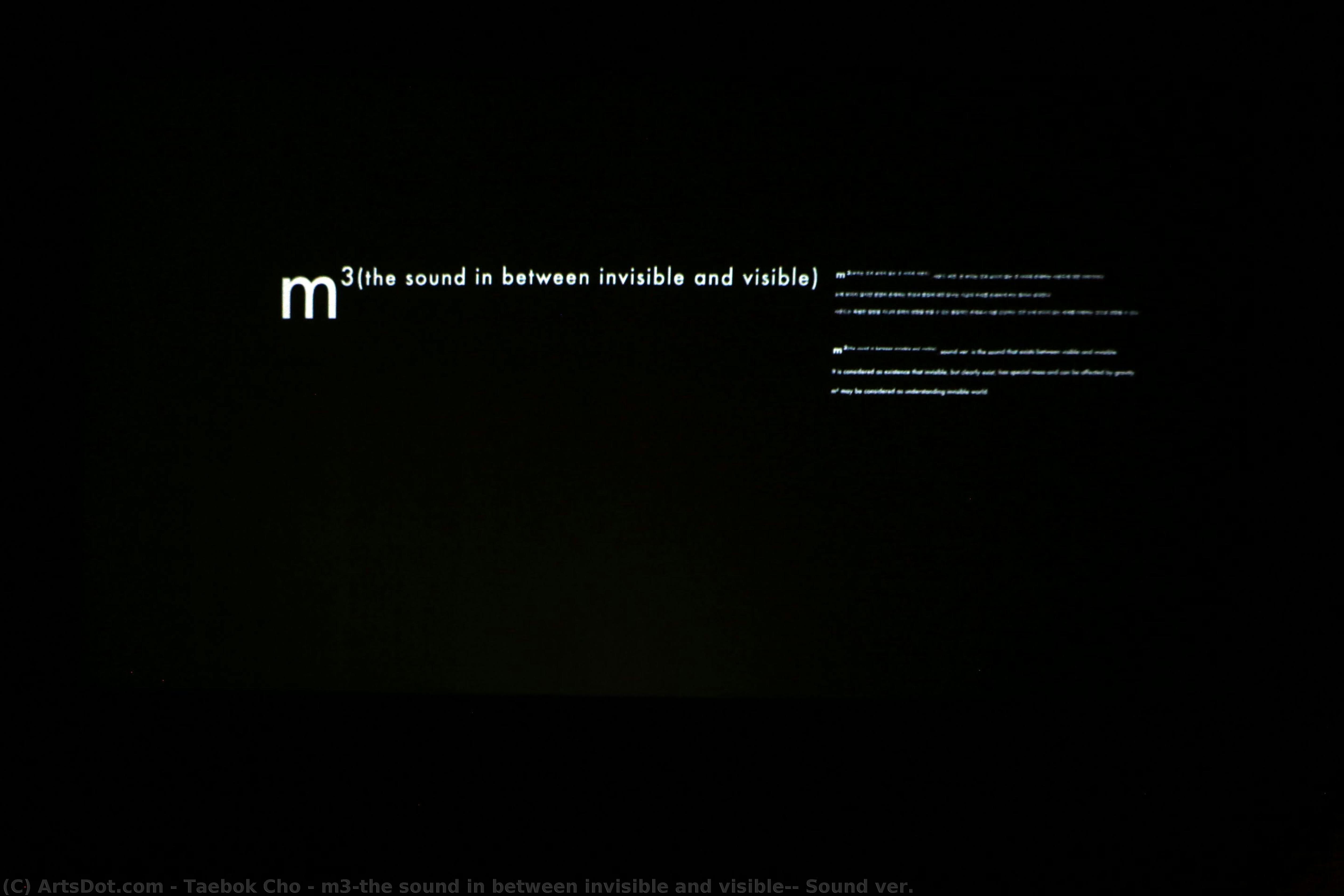
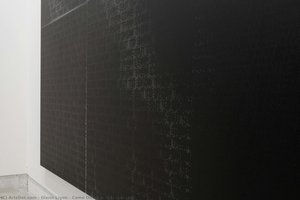
m3(the sound in between invisible and visible), Sound ver.


 Read More
Hand Made Oil Reproduction
Hand-painted oil on canvas in your size and frame, made to order by our artists. ( Buy Print Buy Image)




































Pick from our preset sizes that match the artwork's original proportions.

You may enter your own dimensions to fit a specific frame or space. If your selected size does not match the original image's proportions, we will either crop the artwork or extend the painting with additional hand-painted elements. A digital mockup will be sent for your approval before production begins.
Please note that the on-screen preview does not reflect the actual cropping or extension. Only the mockup will accurately show the final composition.
While custom sizes are available, we recommend selecting a dimension from the predefined list to preserve the original proportions.
After order, ArtsDot.com team will email client for instructions and provide a mockup preview
Worldwide Delivery () in 3/4 weeks instead of standard 5 weeks. (22 August). No compromise on quality.

Free Worldwide Express Shipping

High-Quality Linen Canvas

Full Shipping Insurance

Customs Tax Refund Guarantee

True Color Matching Guarantee

60-Day Return Policy (Defects Only)

100% Money-Back Guarantee

Bulk Discount Offer
 Glass option is only available in size under 110 CM

m3(the sound in between invisible and visible), Sound ver.
Reproduction Medium
Reproduction Size
-


Total Price
$ 263
Related Artworks







Artist Biography
George Orwell: A Life Forged in Defiance and Ink
George Orwell, a name synonymous with dystopian fiction and unwavering social critique, remains one of the 20th century’s most enduring literary voices. Born Eric Arthur Blair on June 25, 1903, in Motihari, British India – a landscape that would profoundly shape his worldview – his life was a relentless pursuit of truth and justice, often expressed through the stark realities depicted in works like *Animal Farm* and, most famously, *Nineteen Eighty-Four*. His journey from colonial subject to acclaimed author is a testament to resilience, intellectual curiosity, and an unyielding commitment to exposing the insidious nature of power. Orwell’s early years were marked by a nomadic existence, moving between Britain and India with his musical wallpaper merchant father and artistic mother. This itinerant upbringing instilled in him a deep appreciation for diverse cultures and a critical awareness of social inequalities – experiences that would later fuel his political activism and literary output. He attended Eton College, but found the rigid, class-conscious environment stifling, leading to a deliberate act of rebellion by enlisting in the Indian Imperial Police at age 18. This decision, driven by a desire to understand the realities of colonial rule firsthand, proved pivotal in shaping his political consciousness and ultimately informed the themes explored in *Burmese Days*.The Journalist and Revolutionary
Following his service in Burma, Orwell returned to Britain and began a career as a journalist, working for various publications including *Reynolds’s*, *The Manchester Guardian*, and *The Tribune*. During this period, he honed his observational skills and developed a sharp, incisive style – one that would become instantly recognizable. Crucially, he became deeply involved in the Spanish Civil War (1936-1939), fighting alongside the Republican forces against Franco’s Nationalist rebels. This experience proved transformative, exposing him to the brutality of totalitarianism and solidifying his opposition to fascism. It was during this time that he adopted the pen name “George Orwell,” a blend of his first and last names, intended to distance himself from his aristocratic background and project an image of authenticity. The Spanish War profoundly impacted his writing; *Homage to Catalonia* (1938), a brutally honest account of his experiences in the conflict, stands as a powerful testament to the human cost of ideological struggle. His time in Paris during the 1930s further broadened his intellectual horizons, exposing him to avant-garde art and literature – influences that subtly permeate his later works.The Creation of Dystopia: *Nineteen Eighty-Four* and *Animal Farm***
Orwell’s most enduring legacy rests on two seminal novels: *Animal Farm* (1945) and *Nineteen Eighty-Four* (1949). *Animal Farm*, a satirical allegory of the Russian Revolution, utilized anthropomorphic animals to expose the corruption and betrayal inherent in totalitarian regimes. Its deceptively simple narrative served as a potent critique of Stalinist Russia, demonstrating how revolutionary ideals could be perverted by power. However, it’s *Nineteen Eighty-Four* that has achieved unparalleled cultural resonance, becoming a chillingly prescient warning about the dangers of surveillance, propaganda, and thought control. Published in 1949, the novel depicts a bleak future society dominated by “Big Brother,” a ubiquitous and all-seeing leader who maintains power through constant monitoring and manipulation of information. The concepts introduced – Newspeak (a deliberately impoverished language designed to limit thought), doublethink (the ability to hold contradictory beliefs simultaneously), and Thought Police (an agency dedicated to suppressing dissent) – have become ingrained in the lexicon, serving as shorthand for totalitarian oppression. The novel’s enduring relevance lies in its exploration of fundamental human rights and the fragility of truth in the face of overwhelming power.Style and Influence: A Legacy of Clarity and Social Commentary**
Orwell's writing style is characterized by its stark clarity, directness, and unflinching honesty. He eschewed ornate prose and complex metaphors, prioritizing precision and accessibility. His work is rooted in meticulous observation and a deep understanding of human psychology. He was a master of understatement, allowing the horrors he depicted to speak for themselves. Orwell’s influence on 20th-century literature and political thought is immense. He profoundly shaped the genre of dystopian fiction, inspiring countless writers and artists who have grappled with similar themes. His concepts continue to inform debates about privacy, freedom of speech, and the role of government in society. Beyond his literary achievements, Orwell’s commitment to social justice and his willingness to challenge authority cemented his status as a voice for the marginalized and oppressed. His legacy extends beyond the pages of his books; he remains an enduring symbol of resistance against tyranny and a champion of truth and integrity.Later Life and Death**
Orwell’s later life was marked by continued writing, political activism, and declining health. He suffered from tuberculosis, which forced him to relocate to the countryside in Norfolk, where he found solace in farming and nature. He continued to write essays and articles on a range of topics, including education, poverty, and the dangers of propaganda. George Orwell died on January 21, 1950, at the age of 46, leaving behind a body of work that continues to resonate with readers around the world. His final book, *The Road Ahead*, published posthumously in 1952, offered a thoughtful reflection on the challenges facing Britain and the world, emphasizing the importance of independent thought and social responsibility. His life’s work serves as a powerful reminder of the enduring value of critical thinking, compassion, and unwavering commitment to justice.
taebok cho
1984 - , South Korea
Quick Facts
- Artistic Movement Or Style: Political satire
- Artists Or Movements Influenced By This Artist:
- Dystopian fiction
- Realism
- Artists Who Influenced This Artist:
- Aldous Huxley
- Bertrand Russell
- Date Of Birth: June 25, 1903
- Date Of Death: January 21, 1950
- Full Name: George Orwell
- Nationality: British
- Notable Artworks:
- Nineteen Eighty-Four
- Animal Farm
- Place Of Birth: Motihari, India