

 Preview
 Send
Send Share
Share
 Details

 Download
 Similars
 X-Ray
X-Ray Diaporama
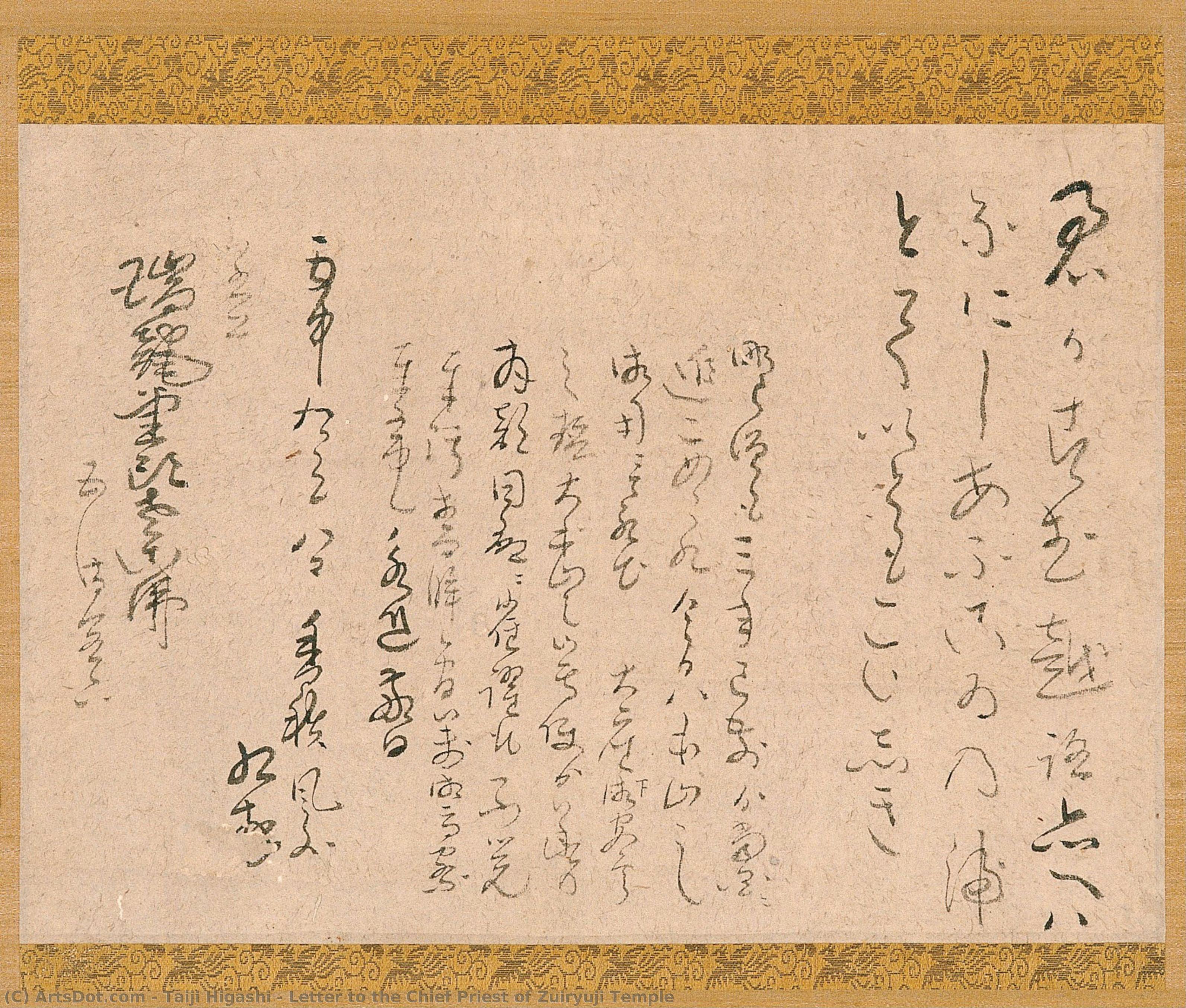
Letter to the Chief Priest of Zuiryuji Temple


 Read More
Purchase a high-resolution, enhanced digital image, far superior to the online preview.
Each file is meticulously prepared by our in-house specialists using advanced tools and expert manual retouching. We ensure every image has exceptional clarity, precise color accuracy, and fine detail.
The final file is delivered via email within 72 hours, optimized for immediate use in professional, editorial, and print environments. This is the same quality trusted by top-tier design studios, publishers, and galleries.
Digital Image
Download a high-resolution file for personal display, printing, and creative projects. ( Buy Print Buy Hand Made Painting)
Included in Every Digital Image Order
Expert Digital Delivery, Guaranteed
When you choose ArtsDot.com, you're not just getting an image - you're receiving a professionally enhanced digital artwork, crafted with precision and backed by a satisfaction guarantee. Here's everything that comes with your order, automatically:

Fast Email Delivery
Your high-resolution digital image file will be emailed to you within 72 hours of ordering - ready for immediate use.

AI-Enhanced Digital File
Your artwork is professionally optimized using advanced AI tools and manual editing, ensuring maximum detail, clarity, and color accuracy.

Free Lifetime Re-Delivery
Accidentally deleted or lost your file? No worries - we'll resend it to you anytime, free of charge.

No Import Fees - Ever
Enjoy your artwork instantly with zero customs, duties, or delivery fees - digital downloads are always tax-free.

Color Accuracy Guarantee
We ensure your digital image reflects the original colors as closely as possible using professional tools and color management.

100-Day Satisfaction Guarantee
If you're not satisfied with your digital image, we'll revise it or refund 100% within 100 days - no questions asked.

100% Money-Back Guarantee
Not satisfied? Get a full refund within 100 days of receiving your digital file - no questions asked.

Bulk Order Discounts
Buy 3 images, save 10% - Buy 5, save 15% - Buy 10+, save 20%. Great for creative projects, galleries, and agencies.
A Whisper from the Zen Past
In the quiet intersection of spiritual devotion and calligraphic mastery lies Taiji Higashi’s 1836 masterpiece, Letter to the Chief Priest of Zuiryuji Temple. This exquisite piece of Japanese history is far more than a mere correspondence; it is a tactile window into the soul of 19 th-century Zen Buddhism. As one gazes upon the aged, cream-colored paper, the visible textures of time—the delicate creases, subtle stains, and the warm discoloration of nearly two centuries—invite the viewer into a meditative state. The artwork serves as a profound testament to an era where communication was an art form, rendered with a meticulousness that demands slow, intentional observation.
The composition is anchored by a dense, rhythmic script that flows across the vertical plane like a silent prayer. Each brushstroke, executed in deep black ink, possesses a life of its own, varying in thickness and weight to convey the breath and movement of the artist. This calligraphic dance is elegantly framed by a decorative gold border, which provides a luminous contrast to the earthy, organic tones of the paper. The interplay between the structured, geometric patterns of the gold leaf and the fluid, organic nature of the ink creates a visual harmony that is both sophisticated and deeply grounded in traditional Japanese aesthetics.
The Intersection of Spirit and Ink
To understand this work, one must understand the man behind the brush. Taiji Higashi, also known by his religious name Fūgai Honkō, lived a life defined by the dualities of the monastic and the creative. As the 50th abbot of the prestigious Eiheiji Temple, his hand was guided by the rigorous discipline of Sōtō Zen. This spiritual weight is palpable in every line of the letter; there is no wasted motion, only a purposeful application of ink that reflects a mind attuned to clarity and presence. The letter itself, addressed to a fellow high priest, carries an inherent sanctity, transforming a piece of personal or religious correspondence into a sacred relic of cultural heritage.
For the discerning collector or interior designer, this artwork offers a unique opportunity to introduce a sense of profound tranquility and historical gravity into a space. The neutral, earthy palette makes it a versatile centerpiece for contemporary settings that value minimalism, yet its rich textures and golden accents provide enough visual complexity to anchor a room with elegance. Owning a reproduction of such a piece is not merely about decorating a wall; it is about curating an atmosphere of mindfulness, bringing the serene, disciplined beauty of the Edo period into the modern home.
Related Artworks
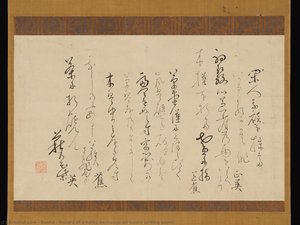
Artist Biography
A Life Immersed in Zen: The Art of Taiji Higashi (Fūgai Honkō)
Taiji Higashi, revered also by his name Fūgai Honkō, emerges as a compelling figure bridging the realms of spiritual practice and artistic expression within 19th-century Japan. Born in 1779 in Aichi Prefecture, his life unfolded within the rigorous discipline of Sōtō Zen Buddhism, ultimately shaping not only his personal journey but also the distinctive character of his artwork. While precise details regarding his early years remain somewhat elusive, it’s clear that from a young age, Higashi demonstrated an aptitude for artistic creation alongside a deep commitment to spiritual understanding. His path led him to Eiheiji Temple, a pivotal center of Zen Buddhism, where he eventually ascended to the position of 50th abbot – a testament to his profound dedication and intellectual prowess. This dual role as both religious leader and artist is crucial to appreciating the unique nature of Higashi’s artistic output; it wasn't merely aesthetic creation but an extension of his spiritual practice, a visual manifestation of Zen principles. His legacy extends beyond his artistry, notably including his significant contribution to Buddhist scholarship – overseeing the publication of a modern typeset edition of Dōgen’s *Shōbōgenzō*, a monumental work of Zen philosophy. He passed away in 1847, leaving behind a body of work that continues to resonate with its quiet power and contemplative depth.The Language of Dharma: Themes and Subjects
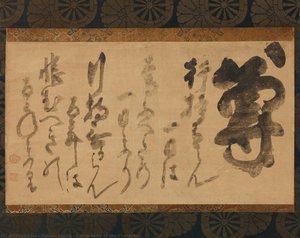
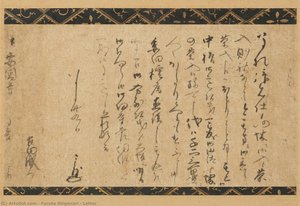
Higashi's artistic focus centered primarily on depictions of Buddhist themes, most notably the figures of dharma (Buddhist teachings) and Budai, the beloved Zen monk known for his jovial nature and profound wisdom. These weren’t simply representational portraits; rather, they were imbued with a spiritual essence, reflecting Higashi’s own understanding of these figures within the context of Zen practice. His depictions of Budai, in particular, are characterized by a gentle humor and an underlying sense of serenity, capturing the monk's embodiment of enlightenment through simplicity and acceptance. Beyond these central subjects, his calligraphy also holds immense significance. He was renowned for his expressive brushwork and elegant script, transforming written words into works of art that conveyed not just meaning but also emotion and spiritual insight. The “Letter to the Chief Priest of Zuiryuji Temple” and "Letter to Matsu" exemplify this skill, demonstrating a mastery of both calligraphy and composition, where each stroke seems deliberate and imbued with intention. These letters are more than mere correspondence; they are visual meditations on Zen principles, reflecting Higashi’s ability to integrate his spiritual practice with artistic expression.A Signature Style: The "Octopus Fūgai"
Higashi developed a distinctive style that earned him the affectionate nickname “octopus Fūgai.” This moniker wasn't derived from any visual representation of cephalopods, but rather from the complexity and abundance of his signature. He employed an elaborate and intricate seal, often incorporating multiple characters and layers of meaning – a testament to his erudition and artistic flair. His paintings themselves are characterized by their restrained palette, typically employing monochrome ink washes with subtle gradations of tone. This minimalist approach is deeply rooted in Zen aesthetics, emphasizing simplicity, directness, and the inherent beauty of natural materials. The use of space—or *ma*—is also crucial to understanding his work; empty areas are not merely absences but active components of the composition, allowing for contemplation and inviting the viewer into a meditative state. His technique involved a remarkable control over the brush, capable of producing both delicate washes and bold strokes with equal skill. This mastery allowed him to convey a wide range of emotions and ideas with remarkable economy.Legacy and Historical Significance
Taiji Higashi’s contribution to Japanese art history lies in his ability to seamlessly integrate spiritual practice with artistic creation. He wasn't simply an artist depicting Buddhist themes; he was a Zen monk using art as a vehicle for expressing and transmitting the principles of enlightenment. His work stands as a testament to the profound connection between Buddhism and aesthetics in traditional Japan, demonstrating how artistic expression can be elevated to a form of spiritual practice. While not widely known outside specialist circles until relatively recently, his reputation within Japanese Buddhist communities has always been strong. The rediscovery and appreciation of his art in recent decades have brought renewed attention to his unique perspective and the enduring power of Zen aesthetics. His paintings and calligraphy offer a window into the intellectual and spiritual world of 19th-century Japan, providing valuable insights into the practice of Sōtō Zen Buddhism and the role of art within that tradition. The Minneapolis Institute of Art’s holding of “Mountain Wandering” further underscores his importance as an artist who captured the restorative power of nature through a uniquely Zen lens.
taiji higashi
1779 - 1847 , Japan
Quick Facts
- Artistic Movement Or Style: Zen Buddhist Art, Ink Painting
- Date Of Birth: 1779
- Date Of Death: 1847
- Full Name: Taiji Higashi (Fūgai Honkō)
- Nationality: Japanese
- Notable Artworks:
- Letter to the Chief Priest
- Letter to Matsu
- Mountain Wandering
- Place Of Birth: Aichi Prefecture, Japan