 Preview
 Send
Send Share
Share
 Details

 Download
 Similars
 X-Ray
X-Ray Diaporama
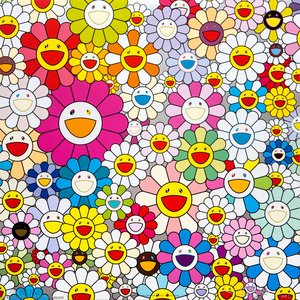
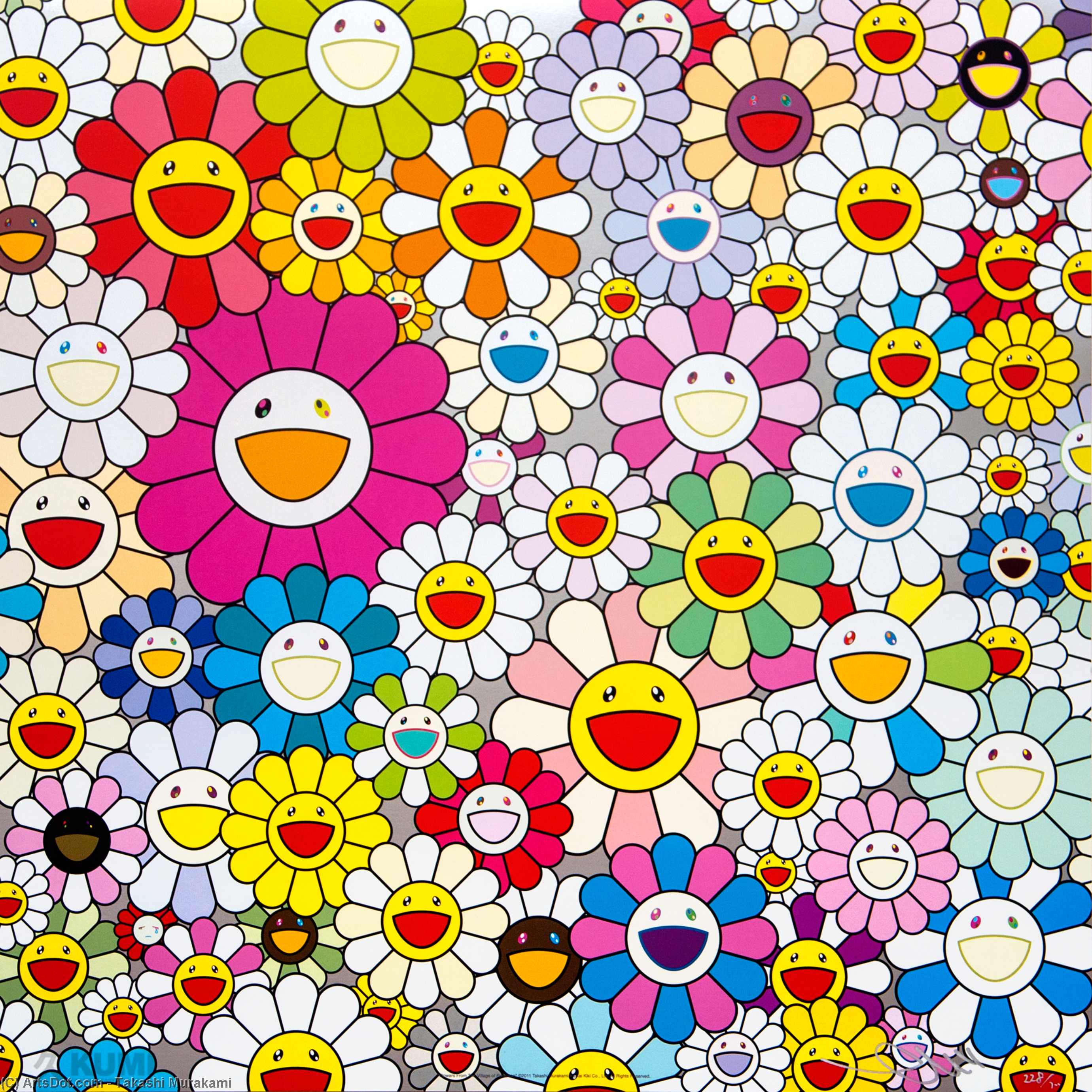
Flowers blooming in this world and the land of nirvana


 Read More
Giclée / Art Print
Museum-quality giclée or canvas print with fast production and flexible finish options. ( Buy Hand Made Painting Buy Image)




P118B $10

P118H $10

P118W $10

P438Z $10

P508JH $12

P508YH $12

P805H $10

P805Z $10

P919BZ $10

P919G $10

P919XJ $10

P959ZH $10

P968JZ $12

W106C $8

W218G $10

W218JH $8

W218Y $10

W307PJ $10

W316G $10

W316PJ $8

W316Y $10

W398PJ $8

W4111J $10

W500HY $15

W500JH $15

W692G $12

W849H $8

W940BG $15

W953PJ $8




Pick from our preset sizes that match the artwork's original proportions.

You may enter your own dimensions to fit a specific frame or space. If your selected size does not match the original image's proportions, we will either crop the artwork or extend the image with a mirrored or solid-fill edge. A digital mockup will be sent for your approval before production begins.
Please note that the on-screen preview does not reflect the actual cropping or extension. Only the mockup will accurately show the final composition.
While custom sizes are available, we recommend selecting a dimension from the predefined list to preserve the original proportions.
Worldwide Delivery () in 2 weeks instead of standard 4/5 weeks. (28 August)

Free Worldwide Express Shipping

High-Quality Linen Canvas

Full Shipping Insurance

Customs Tax Refund Guarantee

True Color Matching Guarantee

60-Day Return Policy (Defects Only)

100% Money-Back Guarantee

Bulk Discount Offer
 Glass option is only available in size under 110 CM

Flowers blooming in this world and the land of nirvana
Giclée / Art Print
Reproduction Size
-


Total Price
$ 63
A Kaleidoscope of Joy: Exploring Murakami's Vision
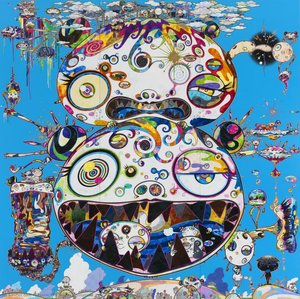
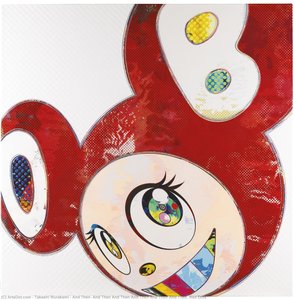
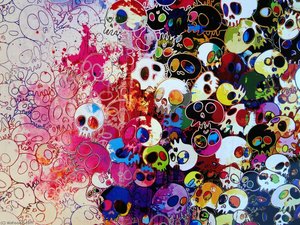
To stand before a piece like "Flowers blooming in this world and the land of nirvana" is to step directly into a vibrant, hyper-saturated dreamscape. It is an immediate sensory overload, yet one that feels utterly harmonious. The painting explodes with life, not through muted tones or subtle gradations, but through a joyous cacophony of color and smiling presence. At its heart lies the unmistakable signature of Takashi Murakami—an artist who has masterfully bridged the gap between the ephemeral energy of Japanese popular culture and the enduring weight of high art. The sheer proliferation of smiling faces, each rendered with those iconic, almost beatific yellow eyes and soft pink mouths, creates an overwhelming sense of communal bliss. It is a visual embrace, inviting the viewer to shed their anxieties at the threshold of its bright composition.
The Superflat Aesthetic and Cultural Dialogue
Murakami’s work is inseparable from his concept of Superflat. This aesthetic theory posits that the flatness inherent in traditional Japanese art forms—like woodblock prints or anime backgrounds—is not a limitation, but rather a profound strength. By flattening pictorial space, he collapses the hierarchy between "high" and "low" culture. Here, the delicate beauty of blooming flowers shares visual real estate with cartoonish, grinning visages and even the inclusion of a tangible object like a clock on the left. This juxtaposition is deliberate; it suggests that in the modern, globalized world, the sacred and the commercial, the profound and the playful, coexist without contradiction. The title itself hints at this duality: the earthly bloom meeting the eternal peace of nirvana.
Symbolism of Bloom and Bliss
The flowers scattered throughout the canvas are more than mere decoration; they are potent symbols of cyclical renewal and transient beauty. In many Eastern traditions, the blooming flower represents life's fleeting perfection—a moment of absolute zenith before inevitable change. When paired with the smiling faces, which embody an almost forced, yet utterly infectious happiness, the painting suggests a philosophy: true contentment is found by fully embracing the vibrant, sometimes overwhelming, present moment. It speaks to a universal yearning for uncomplicated joy, a visual antidote to modern complexity.
Technique and Emotional Resonance for the Collector
While the original execution involves Murakami's signature meticulous layering of paint—a technique that allows his graphic elements to pop with almost artificial luminosity—the reproduction captures this electric energy beautifully. For the collector or designer, this piece functions as a powerful focal point. It does not whisper; it sings. Its impact is immediate and emotionally uplifting. Incorporating such a vibrant work into an interior space transforms it from mere decoration into a cultural statement—a declaration that joy, in all its colorful, sometimes absurdly cheerful forms, deserves to be celebrated openly.
CLASSIFICATION: Pop ArtRelated Artworks

Artist Biography
A Universe of Superflat: The World of Takashi Murakami
Born in Tokyo in 1962, Takashi Murakami emerged as a pivotal figure in contemporary art, challenging conventional boundaries and forging a unique aesthetic language that resonates globally. His journey began with a childhood fascination for anime and manga, initially fueling aspirations to work within the animation industry. This early passion would profoundly shape his artistic vision, but his formal training took an unexpected turn when he enrolled at Tokyo University of the Arts. Though intending to hone skills applicable to animation, Murakami ultimately gravitated towards Nihonga, the traditional Japanese painting style steeped in centuries-old techniques and philosophical underpinnings. He excelled, earning a Ph.D., yet found himself increasingly disillusioned by its insular nature and rigid adherence to established norms. This dissatisfaction sparked a period of exploration, leading him to venture beyond tradition and embrace the dynamic possibilities of contemporary art.From Critique to Creation: The Genesis of Superflat
Murakami’s initial artistic explorations were rooted in social critique and satire, evident in projects like the Osaka Mixer Project (1992) and the Randoseru project (1991). These early works demonstrated a keen awareness of societal structures and a willingness to challenge them through art. A crucial turning point arrived with the introduction of “Mr. DOB,” a recurring motif that evolved into a form of self-portraiture, embodying both personal identity and broader cultural anxieties. The year 1994 proved transformative; a fellowship from the Asian Cultural Council facilitated his participation in the PS1 International Studio Program in New York City. Exposure to Western contemporaries like Anselm Kiefer and Jeff Koons broadened his perspective and ignited new creative avenues. It was during this period that the concept of “Superflat” began to crystallize, culminating in his groundbreaking 2000 exhibition at MOCA Los Angeles. Superflat wasn’t merely an aesthetic style; it was a theoretical framework positing a historical continuity of flattened imagery within Japanese art—from the elegant simplicity of Ukiyo-e woodblock prints to the vibrant dynamism of manga and anime. Murakami argued that post-war Japanese society had experienced a “flattening” of social classes, blurring distinctions between high and low culture, and this phenomenon was reflected in the visual landscape.Influences and Themes: A Tapestry of Culture
Murakami’s artistic universe is built upon a rich tapestry of influences. The stylized characters and vibrant color palettes of anime and manga are immediately apparent, lending his work a playful yet unsettling quality. He draws inspiration from the Pop Art movement, particularly its embrace of mass-produced imagery and consumer culture references, but infuses it with a distinctly Japanese sensibility. The flat perspective and bold compositions found in his paintings echo the legacy of Ukiyo-e, traditional Japanese woodblock prints renowned for their exquisite craftsmanship and evocative depictions of everyday life. A central theme in Murakami’s work is the complex relationship between consumerism and commercialization. He deliberately blurs the lines between fine art and commercial products, creating merchandise like plush toys and t-shirts—a provocative gesture that challenges traditional notions of artistic value and authorship. His exploration extends to Japanese subcultures, particularly otaku culture, incorporating elements of anime, manga, video games, and a fascination with all things cute or kawaii.Achievements and Legacy: A Global Impact
Takashi Murakami’s impact on the art world is undeniable. He founded Kaikai Kiki Co., Ltd., not only as a platform for his own work but also as a nurturing environment for younger artists, overseeing various projects and fostering a collaborative spirit. The Geisai art fair, which he organized, provided an invaluable launching pad for emerging Japanese talent. His exhibitions in major galleries and institutions worldwide have cemented his international recognition, while collaborations with luxury brands like Louis Vuitton—designing iconic handbags adorned with his signature motifs—have further blurred the boundaries between high art and commercial design. His work is now held in prominent museum collections globally, solidifying his status as a leading contemporary artist. Murakami’s “Superflat” theory has profoundly impacted contemporary art discourse, offering a fresh perspective on Japanese artistic traditions and post-war culture. He challenged conventional notions of artistic value by integrating commercial elements into his practice, influencing the development of Pop Art and consumer culture in art. His work helped introduce Japanese subcultures to a global audience, fostering cross-cultural understanding and appreciation. Takashi Murakami’s innovative approach continues to inspire countless artists and shape the landscape of contemporary art for generations to come.
Takashi Murakami
1962 - , Japan
Quick Facts
- Artistic Movement Or Style: Superflat, Neo-Pop
- Artists Or Movements Influenced By This Artist:
- Pop Art
- Contemporary art
- Artists Who Influenced This Artist:
- Anselm Kiefer
- Jeff Koons
- Date Of Birth: February 1, 1962
- Full Name: Takashi Murakami
- Nationality: Japanese
- Notable Artworks:
- Tan tan bo
- The world of sphere
- Flowers Have Bloomed
- Place Of Birth: Tokyo, Japan
Related Articles

Challenging Conventions: Pop Art's Origins, Evolution & Enduring Legacy
Explore the fascinating history of Pop Art, from its rebellious origins to its enduring influence on contemporary artists. Discover key figures like Warhol & Lichtenstein and learn about collecting this iconic movement.
Pop Art Icons: 10 Masterpieces That Revolutionized Modern Decor |
Explore 10 defining Pop Art masterpieces – from Warhol’s iconic Marilyn to Lichtenstein's bold dots. Discover the stories behind these revolutionary artworks & find museum-quality reproductions for your home at .
Blossoming Symbolism: A Historical Journey Through Flowers in Western Painting
Explore the rich history of flower symbolism in Western painting! Discover how artists from the Renaissance to Modernism used blossoms to convey meaning, emotion & beauty. Learn about iconic artworks and movements.

Hokusai's Masterpieces: 25 Iconic Prints & Paintings for Art Lovers | ArtsDot
Journey through Katsushika Hokusai’s 25 most iconic artworks, including *The Great Wave*. Explore the ukiyo-e master's history, style & timeless Japanese woodblock prints. Find museum-quality reproductions for your home at ArtsDot.com.
Blossoms of Time: A Historical Journey Through Flower Painting
Explore the captivating history of flower painting! Discover Dutch masters, symbolic meanings, & botanical art. Expert insights & high-quality reproductions at ArtsDot.