 Preview
 Send
Send Share
Share
 Details

 Download
 Similars
 X-Ray
X-Ray Diaporama
Landscape VII


 Read More
Hand Made Oil Reproduction
Hand-painted oil on canvas in your size and frame, made to order by our artists. ( Buy Print Buy Image)




P118B $10

P118H $10

P118W $10

P438Z $10

P508JH $12

P508YH $12

P805H $10

P805Z $10

P919BZ $10

P919G $10

P919XJ $10

P959ZH $10

P968JZ $12

W106C $8

W218G $10

W218JH $8

W218Y $10

W307PJ $10

W316G $10

W316PJ $8

W316Y $10

W398PJ $8

W4111J $10

W500HY $15

W500JH $15

W692G $12

W849H $8

W940BG $15

W953PJ $8




Pick from our preset sizes that match the artwork's original proportions.

You may enter your own dimensions to fit a specific frame or space. If your selected size does not match the original image's proportions, we will either crop the artwork or extend the painting with additional hand-painted elements. A digital mockup will be sent for your approval before production begins.
Please note that the on-screen preview does not reflect the actual cropping or extension. Only the mockup will accurately show the final composition.
While custom sizes are available, we recommend selecting a dimension from the predefined list to preserve the original proportions.
After order, ArtsDot.com team will email client for instructions and provide a mockup preview
Worldwide Delivery () in 3/4 weeks instead of standard 5 weeks. (18 August). No compromise on quality.

Free Worldwide Express Shipping

High-Quality Linen Canvas

Full Shipping Insurance

Customs Tax Refund Guarantee

True Color Matching Guarantee

60-Day Return Policy (Defects Only)

100% Money-Back Guarantee

Bulk Discount Offer
 Glass option is only available in size under 110 CM

Landscape VII
Reproduction Medium
Reproduction Size
-


Total Price
$ 263
Artwork Description
A Dreamscape of Brazilian Serenity
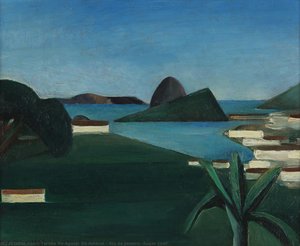
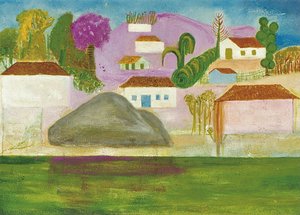
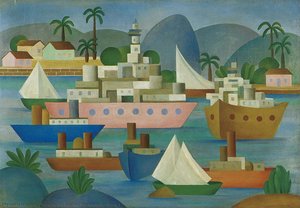
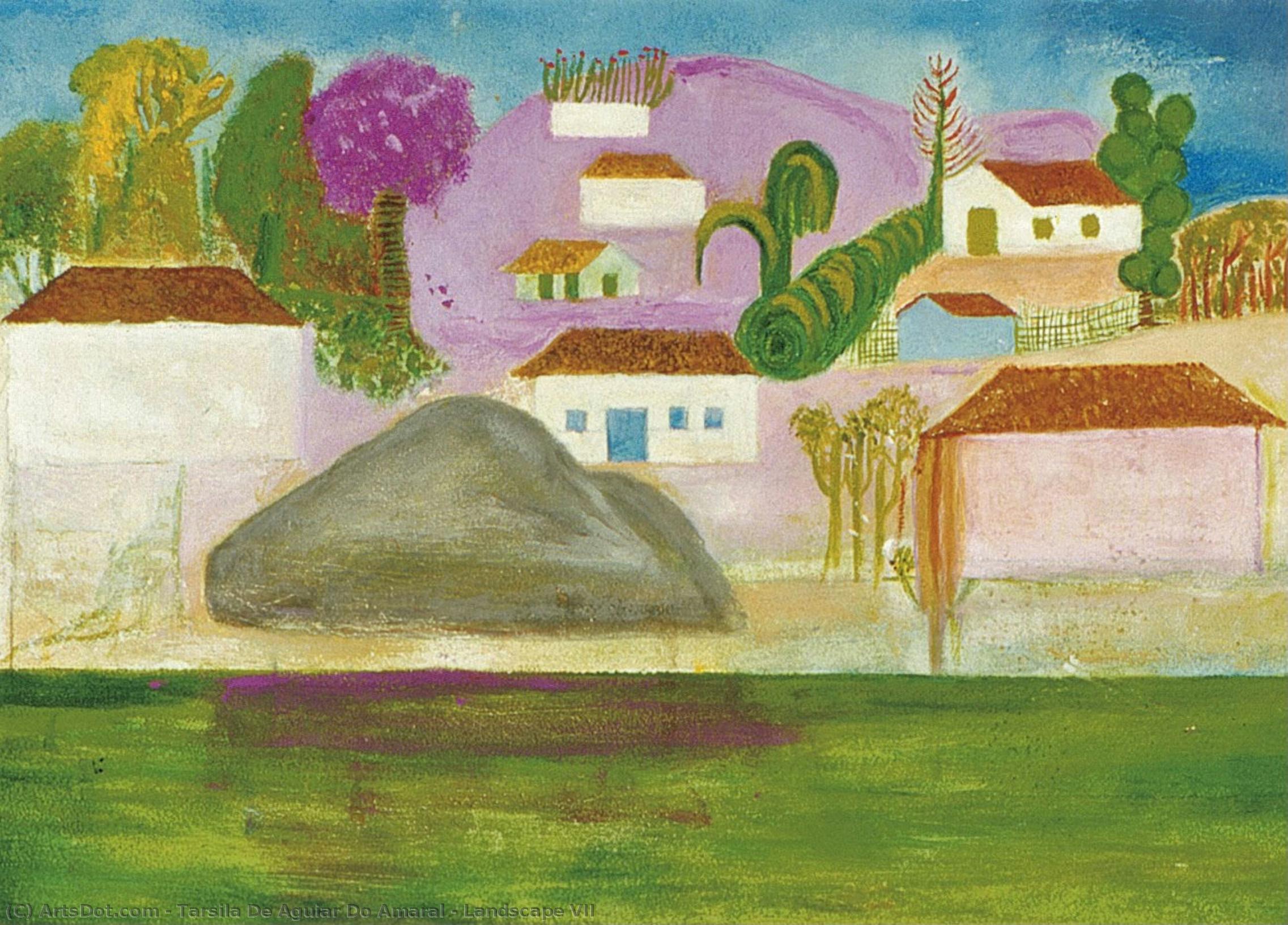
In the quiet corners of art history, few works capture the essence of pastoral tranquility as tenderly as Tarsila do Amaral’s Landscape VII. Created in 1971, toward the twilight of the artist's illustrious career, this piece serves as a window into a world where time seems to slow down. The painting presents a breathtakingly serene landscape, depicting a small, nestled village cradled by rolling hills and the gentle presence of water. It is an invitation to step away from the chaos of modernity and enter a realm of soft light and rhythmic simplicity. Through her masterful use of pastel shades—delicate pinks, ethereal blues, and lush greens—Amaral crafts a dreamlike atmosphere that feels both intimately familiar and otherworldly.
The composition is a masterclass in balanced, horizontal layering. The viewer’s eye is led through a series of soft bands: a verdant foreground suggesting cool water or thick vegetation, a central stage featuring quaint architecture and a striking rock formation, and finally, a background of pink-hued hills that melt into the horizon. There is a charming, almost naive quality to the perspective; by eschewing harsh linear recession in favor of a flatter, more two-dimensional arrangement, the artist emphasizes the decorative beauty of the scene. This approach allows the shapes—the rounded contours of the hills and the organic forms of the trees—to dance across the canvas with a rhythmic, folk-art grace.
Technique and the Texture of Memory
To behold Landscape VII is to witness the tactile power of oil on canvas. Amaral employs a technique characterized by visible, expressive brushstrokes that lend the work a vibrant, living energy. The application of paint is particularly noteworthy in the central rock formation and the surfaces of the buildings, where thick impasto creates a physical texture you can almost feel with your eyes. This ruggedness provides a beautiful counterpoint to the soft, diffused lighting that permeates the scene, suggesting the gentle glow of an overcast afternoon. Every stroke feels intentional, contributing to a surface that is as much about the physical presence of the medium as it is about the subject matter itself.
For the discerning collector or interior designer, this piece offers a unique opportunity to introduce a sense of calm and sophisticated nostalgia into a space. The artwork does not merely decorate a wall; it transforms an environment. Its soft palette and organic shapes make it an ideal centerpiece for rooms designed for relaxation, such as a master suite or a quiet reading nook. Because the style leans toward the Antropofagia movement's roots while embracing a more mature, simplified aesthetic, it bridges the gap between avant-garde history and timeless decorative elegance.
A Legacy of Peace and Identity
Beyond its visual splendor, Landscape VII carries a profound symbolic weight. As a pivotal figure in Brazilian Modernism, Tarsila do Amaral spent her life distilling the soul of her nation into bold, innovative forms. In this later work, that mission evolves into an exploration of harmony and peace. The village scene acts as a symbol of a life lived in equilibrium with nature, where human habitation and the earth exist in a seamless, unconflicted embrace. It evokes a sense of nostalgia for a simpler era, making it deeply resonant for anyone seeking to surround themselves with art that promotes emotional well-being.
Owning a high-quality reproduction of this masterpiece allows one to possess a fragment of Brazilian cultural identity. Whether you are an art historian captivated by her evolution from Cubist influences to folk-inspired simplicity, or a decorator looking for a piece that breathes tranquility into a contemporary setting, Landscape VII stands as a testament to the enduring power of the landscape to soothe the human spirit. It is more than a painting; it is a quiet sanctuary captured in pigment.
Related Artworks
Artist Biography
A Brazilian Visionary: The Life and Art of Tarsila do Amaral
Tarsila do Amaral emerged as a pivotal figure in the vibrant tapestry of early 20th-century Brazilian art, a painter who dared to distill the essence of her nation’s identity onto canvas with bold colors and an innovative spirit. Born on September 1, 1886, in Capivari, São Paulo, into a prosperous coffee-producing family, Tarsila's upbringing afforded her opportunities uncommon for women of her time. This privilege allowed her to pursue artistic training, initially under the guidance of Pedro Alexandrino Borges before embarking on a transformative journey to Paris in 1920. It was within the walls of the Académie Julian and later the Académie Moderne that she encountered the avant-garde currents reshaping the art world – Cubism, Futurism, and Expressionism – influences that would profoundly shape her artistic trajectory. The mentorship of Fernand Léger, Albert Gleizes, and André Lhote proved particularly impactful, encouraging her to synthesize European modernism with a distinctly Brazilian sensibility.Forging a National Identity Through Art
Upon returning to Brazil in the early 1920s, Tarsila became a central force in defining a uniquely Brazilian modernist tradition. She wasn’t simply importing European styles; she was actively seeking to create an art that spoke to the soul of her nation, reflecting its landscapes, people, and cultural complexities. This quest led her to collaborate with a group of like-minded artists and intellectuals – Anita Malfatti, Menotti Del Picchia, Mário de Andrade, and Oswald de Andrade – collectively known as *Grupo dos Cinco*. Together, they challenged conventional artistic norms and spearheaded a movement that sought to break free from academic constraints and embrace a new visual language. Tarsila’s contribution was particularly significant in articulating this vision through her paintings, which often depicted scenes of Brazilian life with a dreamlike quality and vibrant palette.The Power of *Abaporu* and the Antropofagia Movement
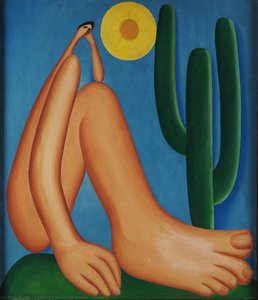
Perhaps no single work embodies Tarsila's artistic philosophy more powerfully than *Abaporu* (1928). This iconic painting, depicting a solitary figure with oversized feet seated amidst a surreal landscape, became the catalyst for one of Brazil’s most influential cultural movements: Antropofagia – or “cannibalism.” Inspired by Oswald de Andrade's manifesto of the same name, Antropofagia proposed that Brazilian artists should "devour" foreign influences and transform them into something uniquely their own. *Abaporu* visually captured this concept, representing a rejection of colonial imitation and an embrace of cultural hybridity. The painting’s imagery – the large feet rooted in the land, the enigmatic expression – resonated deeply with a nation grappling with its identity in the wake of independence. It wasn't merely a work of art; it was a declaration of artistic sovereignty. Beyond *Abaporu*, works like *A Negra* (1923) and *Morro da Favela* demonstrated her engagement with social themes, portraying marginalized communities and challenging prevailing societal norms.Legacy and Enduring Influence
Throughout her long and prolific career, Tarsila do Amaral continued to explore the complexities of Brazilian identity through a diverse body of work. Her paintings are characterized by their bold colors, simplified forms, and dreamlike atmosphere, often blending elements of realism with surrealism and abstraction. She didn’t shy away from experimentation, constantly evolving her style while remaining true to her core vision. Her influence extended beyond the realm of painting, inspiring generations of Brazilian artists and shaping the nation's cultural landscape. Today, Tarsila do Amaral’s works are held in prestigious collections worldwide, including the Museu de Valores do Banco Central do Brasil and the Museu de Arte do Rio Grande do Sul. Her art continues to captivate audiences with its vibrant energy, poetic imagery, and profound exploration of what it means to be Brazilian. She passed away on January 17, 1973, leaving behind a legacy as one of Latin America’s most important modernist artists – a visionary who dared to paint her nation's soul.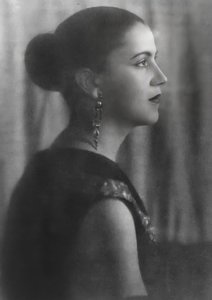
Tarsila do Amaral
1886 - 1973 , Brazil
Quick Facts
- Artistic Movement Or Style: Brazilian Modernism
- Artists Or Movements Influenced By This Artist: ['Antropofagia movement']
- Artists Who Influenced This Artist:
- Fernand Léger
- Albert Gleizes
- André Lhote
- Date Of Birth: September 1, 1886
- Date Of Death: January 17, 1973
- Full Name: Tarsila do Amaral
- Nationality: Brazilian
- Notable Artworks:
- Abaporu
- A Negra
- Morro da favela
- Urutu Snake
- Landscape VII
- Place Of Birth: São Paulo, Brazil
Related Articles

Beyond the Horizon: 10 Landscape Masterpieces for Your Home Decor
Journey through 10 breathtaking landscape paintings by Monet, Van Gogh & more! Explore iconic artworks, artistic techniques & find inspiration for your home decor. Museum-quality reproductions at ArtsDot.com. Discover all masterpieces on ArtsDot.com

Romantic Landscapes: 10 Masterpieces for Your Home | ArtsDot
Journey through 10 Romantic landscape masterpieces by Friedrich, Turner & Cole. Explore emotional art, sublime nature scenes & iconic 19th-century paintings. Find museum-quality reproductions for your home at ArtsDot.com – discover the full collection online!

Evocations of Place: A Historical Journey Through Landscape Art
Explore the rich history of landscape art with ArtsDot. Discover renowned artists, movements like Impressionism & Romanticism, and expert guidance for collecting timeless pieces. Find your perfect serene escape today!

John Constable's Masterpieces: Explore 25 Iconic Landscapes for Your Home
Journey through John Constable's 25 most celebrated landscapes. Explore Romanticism, Dedham Vale & his masterful use of light in iconic paintings like 'Hay Wain'. Find museum-quality art reproductions and elevate your home decor on ArtsDot.com.

The Subtleties of Pastel: A Comprehensive Exploration of Technique, History & Emotional Resonance
Explore the captivating world of pastel art! Discover its rich history, Impressionistic masters like Degas, emotional power & unique techniques. Find museum-quality reproductions at ArtsDot.