

 Preview
 Send
Send Share
Share
 Details

 Download
 Similars
 X-Ray
X-Ray Diaporama
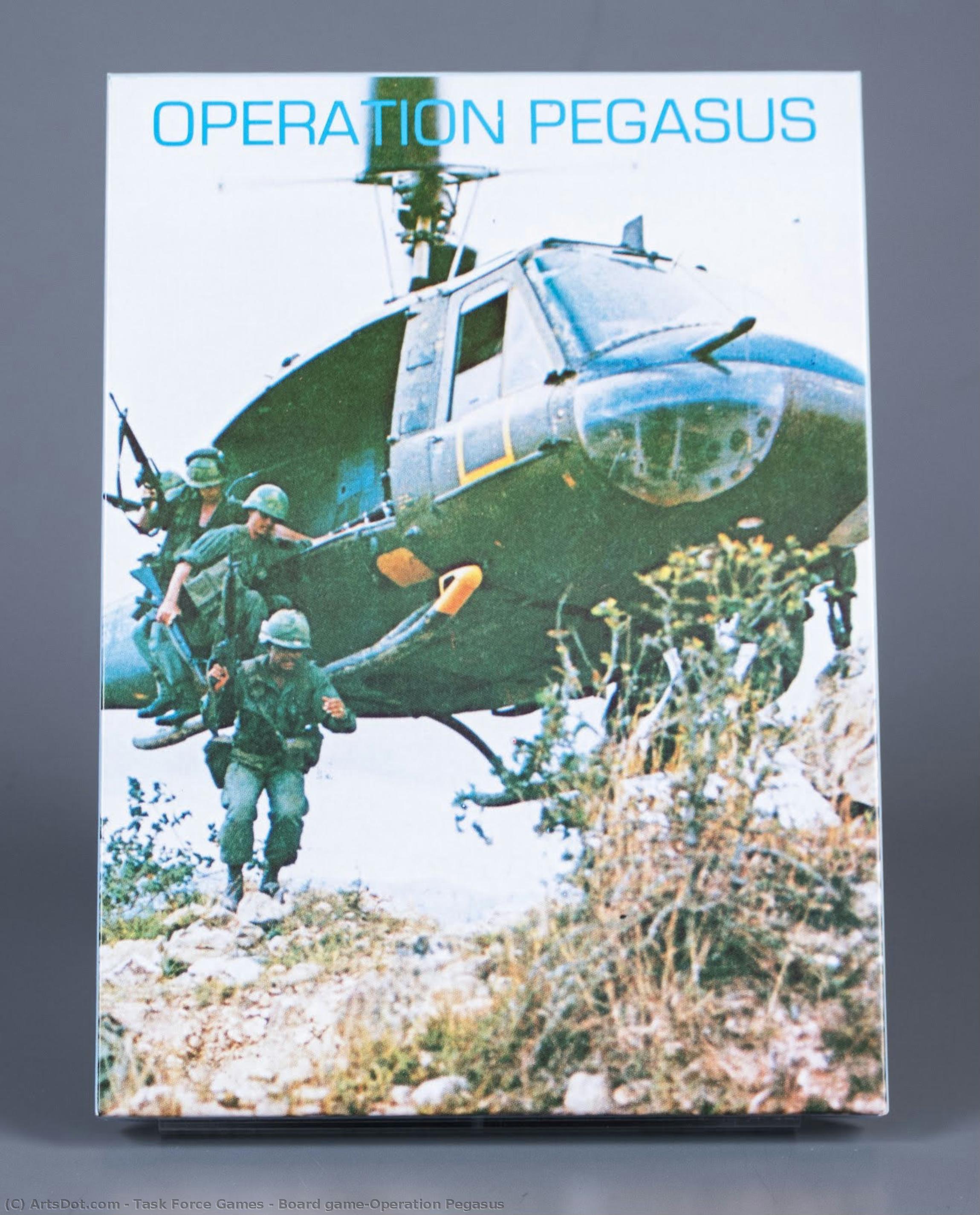
Board game:Operation Pegasus


 Read More
Hand Made Oil Reproduction
Hand-painted oil on canvas in your size and frame, made to order by our artists. ( Buy Print Buy Image)




































Pick from our preset sizes that match the artwork's original proportions.

You may enter your own dimensions to fit a specific frame or space. If your selected size does not match the original image's proportions, we will either crop the artwork or extend the painting with additional hand-painted elements. A digital mockup will be sent for your approval before production begins.
Please note that the on-screen preview does not reflect the actual cropping or extension. Only the mockup will accurately show the final composition.
While custom sizes are available, we recommend selecting a dimension from the predefined list to preserve the original proportions.
After order, ArtsDot.com team will email client for instructions and provide a mockup preview
Worldwide Delivery () in 3/4 weeks instead of standard 5 weeks. (7 September). No compromise on quality.

Free Worldwide Express Shipping

High-Quality Linen Canvas

Full Shipping Insurance

Customs Tax Refund Guarantee

True Color Matching Guarantee

100-Day Return Policy (Defects Only)

100% Money-Back Guarantee

Bulk Discount Offer
 Glass option is only available in size under 110 CM

Board game:Operation Pegasus
Reproduction Medium
Reproduction Size
-


Total Price
$ 263
Related Artworks









Artist Biography
The Architects of Strategy: The Legacy of Task Force Games
In the vibrant landscape of late twentieth-century hobbyist culture, few names resonate with as much nostalgic weight and structural influence as Task Force Games. Founded in 1979 by the visionary duo Allen Eldridge and Stephen V. and Cole, this entity was far more than a mere publisher of tabletop titles; it was a laboratory for the fusion of tactical rigor and narrative depth. Emerging from the burgeoning wargaming scene of New York, the company sought to transcend the cold, mathematical calculations that defined much of the era's military simulations. Instead, they pioneered a way to weave the threads of storytelling into the very fabric of strategic conflict, creating an immersive experience where every maneuver felt like a chapter in an unfolding epic.
The early years of the company were marked by a profound commitment to innovation and the expansion of genre boundaries. At the heart of their creative output was the groundbreaking Star Fleet Battles, a title that would become legendary for its complexity and cooperative potential. This work, alongside the celebrated Starfire series, demonstrated an uncanny ability to blend the granular detail of space combat with a sense of grand, interstellar drama. The influence of this era extended beyond the tabletop, as the universe created by Task Force Games eventually found new life through the literary prowess of David Weber, whose novels breathed even more life into the strategic frameworks established by Eldridge and Cole.
Innovation Through Integration and Expansion
As the company evolved, so too did its ambitions, moving beyond the confines of science fiction to explore the vast reaches of historical warfare. The catalog of Task Force Games became a tapestry of human conflict, ranging from the mechanical intricacies of Battlewagon to the sweeping chronicles found in History of the Second World War. One of their most daring achievements was the 1982 release of Supervillains, a title that dared to bridge the gap between traditional wargaming and the burgeoning role-playing game movement. This early attempt at hybridization anticipated the modern era of gaming, where character development and tactical mastery are inextricably linked.
The late 1980s brought a transformative period of corporate evolution when Eldridge sold the company to New World Computing. This merger integrated Task Force Games into the larger ecosystem of The 3DO Company, providing a platform for unprecedented experimentation. It was during this era that the company attempted one of the industry's first simultaneous releases of both a board game and a computer game, a bold move that foreshadowed the multi-platform strategies of today's gaming giants. Even as the company navigated changes in ownership and the shifting tides of the industry, its dedication to modularity and player agency remained a hallmark of its design philosophy.
A Lasting Impact on the Gaming Landscape
The historical significance of Task Force Games lies not just in the titles they produced, but in the fundamental way they changed how players interact with simulated worlds. Their "Pocket Games"—a series of microgames that offered deep complexity within a compact format—proved that profound strategic depth did not require overwhelming physical space. Furthermore, their emphasis on customization allowed players to act as architects of their own destruction or triumph; whether designing the specific components of a starship in the Starfire series or building modular robots in Robots!, the player was always an active participant in the creative process.
Though the era of the original company eventually drew to a close, its DNA persists in every modern game that seeks to balance the tension between rules and roleplay. The legacy of Task Force Games is found in the enduring popularity of its core systems and the continued passion of the communities that keep its universes alive. They taught a generation of gamers that war is not merely a matter of dice rolls and movement points, but a canvas upon which legends are written, and that the most memorable battles are those where strategy and story become one.
task force games
1979 - , United States of America
Quick Facts
- Artistic Movement Or Style: Wargaming
- Date Of Birth: New York City, United States of America (1979)
- Date Of Death: Living
- Full Name: task force games
- Nationality: American
- Notable Artworks:
- Star Fleet Battles
- History of the Second World War
- Place Of Birth: New York City