 Preview
 Send
Send Share
Share
 Details

 Download
 Similars
 X-Ray
X-Ray Diaporama
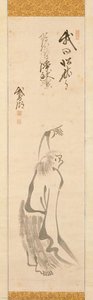
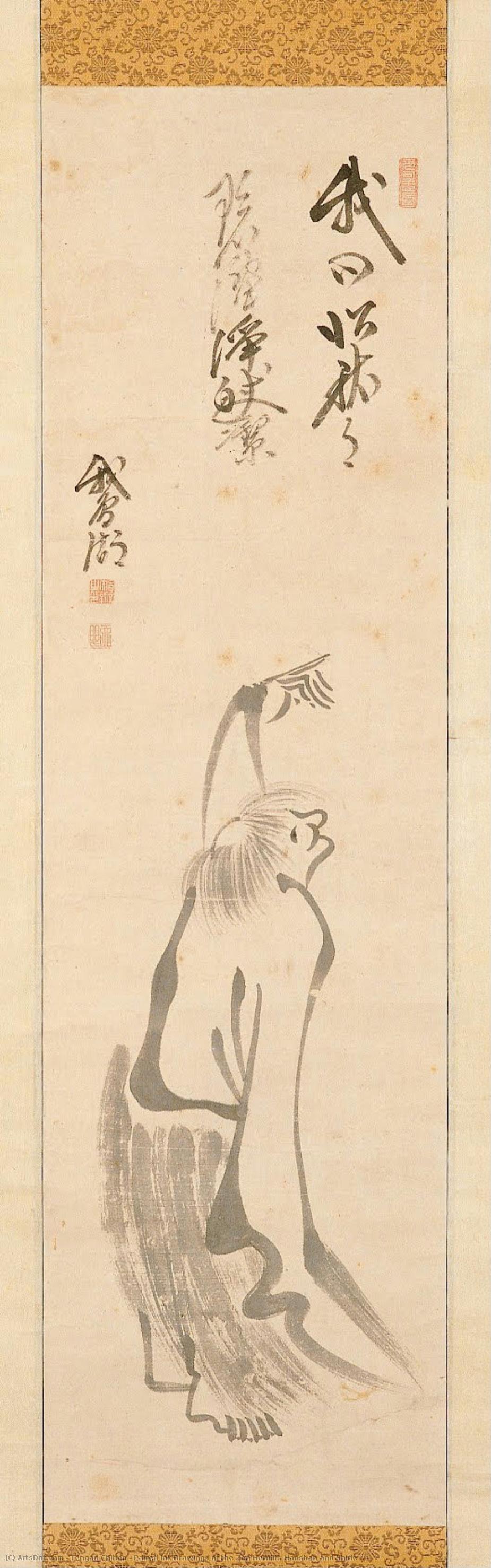
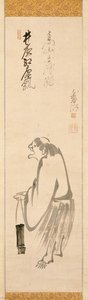
Paired Ink Drawings of the Zen Hermits Hanshan and Shide

 Read More
Hand Made Oil Reproduction
Hand-painted oil on canvas in your size and frame, made to order by our artists. ( Buy Print Buy Image)




































Pick from our preset sizes that match the artwork's original proportions.

You may enter your own dimensions to fit a specific frame or space. If your selected size does not match the original image's proportions, we will either crop the artwork or extend the painting with additional hand-painted elements. A digital mockup will be sent for your approval before production begins.
Please note that the on-screen preview does not reflect the actual cropping or extension. Only the mockup will accurately show the final composition.
While custom sizes are available, we recommend selecting a dimension from the predefined list to preserve the original proportions.
After order, ArtsDot.com team will email client for instructions and provide a mockup preview
Worldwide Delivery () in 3/4 weeks instead of standard 5 weeks. (2 September). No compromise on quality.

Free Worldwide Express Shipping

High-Quality Linen Canvas

Full Shipping Insurance

Customs Tax Refund Guarantee

True Color Matching Guarantee

60-Day Return Policy (Defects Only)

100% Money-Back Guarantee

Bulk Discount Offer
 Glass option is only available in size under 110 CM

Paired Ink Drawings of the Zen Hermits Hanshan and Shide
Reproduction Medium
Reproduction Size
-


Total Price
$ 263
Related Artworks




Artist Biography
The Spiritual Brush: The Life and Legacy of Tengan Chiben
In the quiet, mist-shrouded landscapes of the late Edo period, few artists captured the profound stillness of the soul as poignantly as Tengan Chiben, known to many by his monastic name, Gako. Born in the Shinano Province around 1737, Chiben was not merely a painter but a monk whose brush served as an extension of his spiritual devotion. His life was deeply anchored in the sacred grounds of Onsenji Temple, where he eventually rose to the position of abbot. This monastic existence was not one of mere isolation, but of active preservation; through his dedicated efforts to revive Kai temple, Chiben became a vital guardian of Buddhist heritage, ensuring that the spiritual and artistic traditions of his lineage would endure for future generations.
The foundations of Chiben’s aesthetic vision were laid during his formative years under the guidance of Daikyu Eho at Hofukuji Temple in Okayram Prefecture. It was within these hallowed halls that he absorbed the core tenets of Zen philosophy, most notably the concept of mu, or emptiness. This profound understanding of the void would become the heartbeat of his artistry. Rather than seeking to decorate a surface, Chiben sought to manifest the unseen, using the medium of ink to explore the space between existence and nothingness. His work serves as a visual dialogue with the Zen tradition, where every stroke is an act of meditation and every shadow a reflection of the infinite.
Mastery of Ink and the Essence of Nature
Chiben’s technical mastery resided in the delicate art of sumi-e, or ink wash painting. He possessed an extraordinary command over the subtle gradations of black and grey, allowing him to breathe life into landscapes that felt both tangible and ethereal. His approach was never one of mere imitation; he did not seek to replicate the physical world, but rather to capture its essential spirit. Through meticulous observation, he utilized tonal shifts to suggest the weight of mountain mist, the texture of ancient stone, and the fleeting movement of wind through bamboo.
This mastery is perhaps most breathtakingly realized in his celebrated series, “Paired Ink Drawings of the Zen Hermits Hanshan and Shide.” In these works, Chiben transcends simple portraiture to create profound meditations on solitude and enlightenment. By depicting these iconic figures, he invites the viewer into a realm of spiritual contemplation. The artist’s ability to render the heavy folds of drapery and the nuanced expressions of the hermits provides a startling realism that is simultaneously layered with symbolic depth. These figures stand as idealized embodiments of the Zen path, representing a state of being that is at once deeply human and transcendentally peaceful.
A Lasting Impression on Japanese Art
The historical significance of Tengan Chiben extends far beyond the walls of the temples he served. His contribution to the Rinzai sect and his role in Buddhist scholarship through the revival of Kai temple mark him as a figure of immense cultural importance. Yet, it is through his enduring artistic legacy that he remains most vibrantly alive. His paintings continue to resonate with anyone seeking a moment of stillness in a chaotic world.
To study Chiben’s work is to embark on a journey of inner discovery. His achievements can be summarized by the following pillars of his legacy:
- Spiritual Synthesis: The seamless integration of Zen philosophical concepts, such as mu, into the very fabric of his ink wash techniques.
- Artistic Preservation: His monumental role in the restoration and preservation of Buddhist temples and their associated artistic traditions.
- Iconographic Mastery: The creation of enduring imagery, particularly the depictions of Zen hermits, which serve as timeless symbols of spiritual pursuit.
- Technical Innovation: A sophisticated use of sumi-e that prioritized the emotional and spiritual essence of a subject over literal representation.
tengan chiben
1737 - 1805 , Japan
Quick Facts
- Artistic Movement Or Style: Zen ink painting
- Artists Or Movements Influenced By This Artist: Rinzai sect monk
- Artists Who Influenced This Artist: daikyu eho
- Date Of Birth: 1737
- Full Name: tengan chiben
- Nationality: Japanese
- Notable Artworks: ['Paired Ink Drawings of the Zen Hermits Hanshan and Shide']
- Place Of Birth: Nagano, Japan