 Preview
 Send
Send Share
Share
 Details

 Download
 Similars
 X-Ray
X-Ray Diaporama
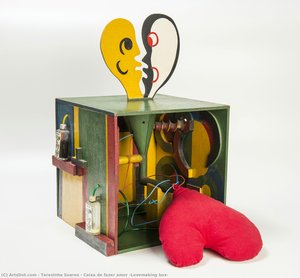
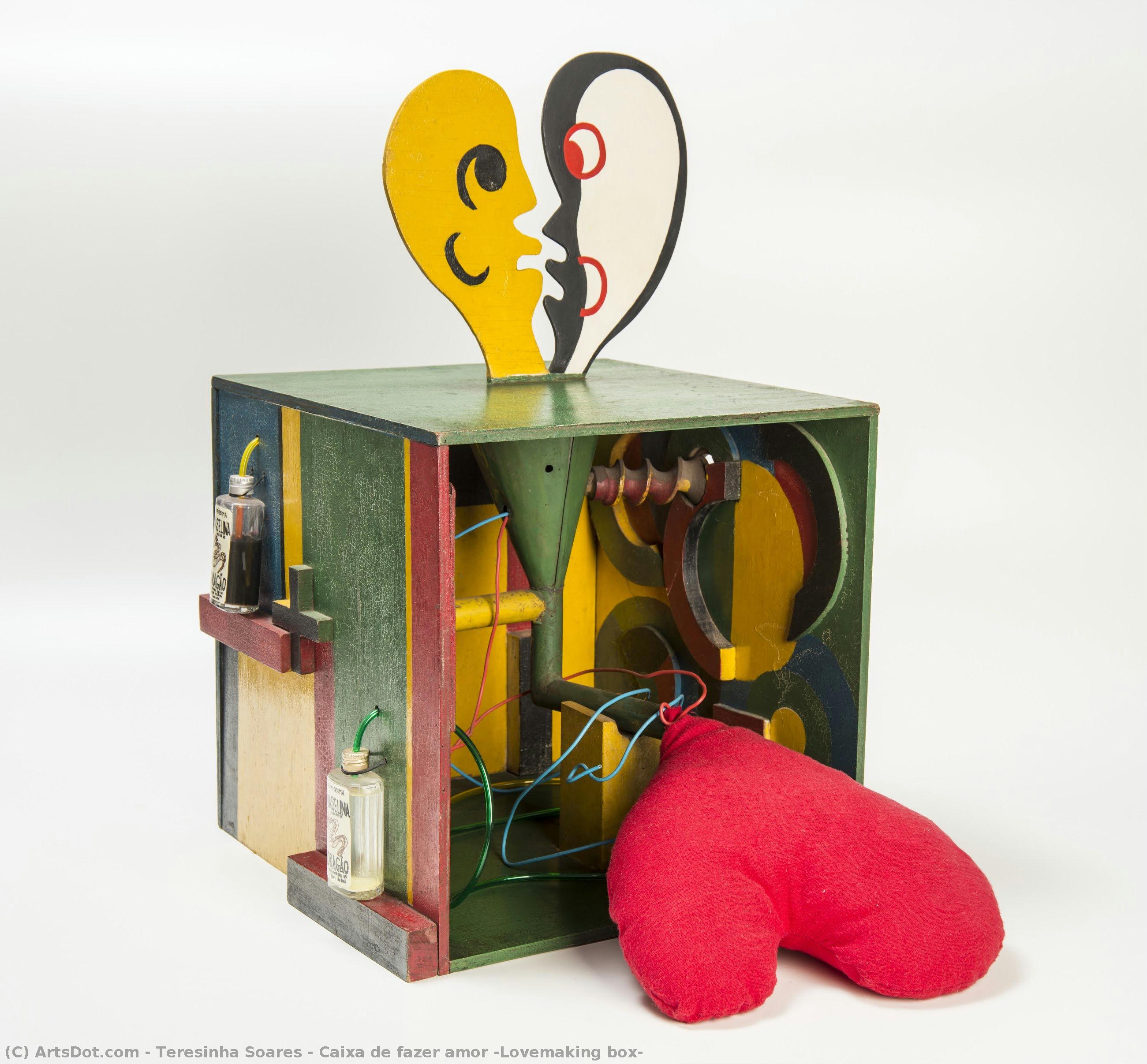
Caixa de fazer amor (Lovemaking box)
 Acrylic On Canvas
- WallArt
- Pop Art
 1967
1967- Contemporary
 60.0 x 55.0 cm
 Hammer Museum
 Read More
Hand Made Oil Reproduction
Hand-painted oil on canvas in your size and frame, made to order by our artists. ( Buy Print Buy Image)




P118B $10

P118H $10

P118W $10

P438Z $10

P508JH $12

P508YH $12

P805H $10

P805Z $10

P919BZ $10

P919G $10

P919XJ $10

P959ZH $10

P968JZ $12

W106C $8

W218G $10

W218JH $8

W218Y $10

W307PJ $10

W316G $10

W316PJ $8

W316Y $10

W398PJ $8

W4111J $10

W500HY $15

W500JH $15

W692G $12

W849H $8

W940BG $15

W953PJ $8




Pick from our preset sizes that match the artwork's original proportions.

You may enter your own dimensions to fit a specific frame or space. If your selected size does not match the original image's proportions, we will either crop the artwork or extend the painting with additional hand-painted elements. A digital mockup will be sent for your approval before production begins.
Please note that the on-screen preview does not reflect the actual cropping or extension. Only the mockup will accurately show the final composition.
While custom sizes are available, we recommend selecting a dimension from the predefined list to preserve the original proportions.
After order, ArtsDot.com team will email client for instructions and provide a mockup preview
Worldwide Delivery () in 3/4 weeks instead of standard 5 weeks. (20 August). No compromise on quality.

Free Worldwide Express Shipping

High-Quality Linen Canvas

Full Shipping Insurance

Customs Tax Refund Guarantee

True Color Matching Guarantee

60-Day Return Policy (Defects Only)

100% Money-Back Guarantee

Bulk Discount Offer
 Glass option is only available in size under 110 CM

Caixa de fazer amor (Lovemaking box)
Reproduction Medium
Reproduction Size
-


Total Price
$ 263
Artwork Description
Teresinha Soares’s *Caixa de fazer amor*: A Pop Art Declaration of Desire
Teresinha Soares's *Caixa de fazer amor* (Lovemaking Box), created in 1967, is more than just a playful assemblage; it’s a potent statement born from the turbulent backdrop of Brazil’s military dictatorship and the enduring struggle for female liberation. This vibrant pop art piece, measuring 60 x 55 cm, immediately draws the eye with its bold color palette – a joyous explosion of reds, yellows, and pinks that belies the underlying currents of social critique. Soares masterfully blends the seemingly frivolous with profound meaning, inviting viewers to contemplate themes of love, desire, and oppression through a uniquely Brazilian lens.
- The Assemblage’s Narrative: The box itself is constructed from plastic, a material emblematic of the burgeoning consumer culture of the era. Within its confines, a meticulously crafted red plush heart – initially intended to beat with the rhythm of passionate love when activated by a connected windmill – becomes a symbol of both vulnerability and exuberance.
- Symbolic Hearts: The presence of two hearts—one whole, one fractured yet capable of reunification—is particularly significant. This duality speaks directly to the complexities of relationships and the potential for healing and connection amidst societal divisions. The faces almost touching represent intimacy and shared experience.
- Pop Art’s Political Undertones: Soares's use of pop art techniques – bright colors, graphic forms, and a focus on everyday objects – was deliberately subversive. It allowed her to engage with the anxieties and contradictions of Brazilian society in a way that resonated with a younger generation grappling with political repression.
A Reflection of Brazil’s Turbulent Era
*Caixa de fazer amor* emerged during a period of intense social and political upheaval in Brazil. The 1964 military coup established a brutal dictatorship characterized by censorship, surveillance, and the systematic suppression of dissent. Soares's work can be interpreted as a defiant act of resistance – a celebration of human desire in the face of enforced silence and control. The box’s playful mechanics—the windmill and the moving heart—represent a yearning for freedom and agency, mirroring the collective desire for change that simmered beneath the surface of Brazilian society.
Furthermore, the piece engages with broader feminist concerns prevalent at the time. Soares's focus on female sexuality and pleasure directly challenged patriarchal norms and the restrictive social expectations imposed upon women in Brazil. The work’s vibrant colors and celebratory imagery can be seen as an assertion of female power and a rejection of societal constraints.
Technique and Artistic Vision
Soares’s technique is characterized by meticulous craftsmanship and a keen eye for detail. The box's construction demonstrates a sophisticated understanding of materials and form, resulting in a visually arresting piece that commands attention. The use of pop art color palettes—bold, saturated hues—is executed with precision, creating a dynamic visual impact. The incorporation of the clock adds another layer to the work’s narrative, suggesting the passage of time and the urgency of social change.
- Materials: Plastic construction, plush hearts, painted details.
- Technique: Assemblage, pop art color application, meticulous crafting.
Collecting a Legacy
*Caixa de fazer amor* is more than just a beautiful object; it’s a powerful historical artifact and a testament to Teresinha Soares's artistic vision. ArtsDot offers meticulously crafted hand-painted reproductions of this iconic work, allowing you to bring its vibrant energy and profound message into your home or office. Each reproduction captures the essence of the original, ensuring that this important piece of Brazilian art history remains accessible for generations to come.
Related Artworks



Artist Biography
Early Life and the Prairie Landscape
Alex Katz, born July 24, 1927, in Brooklyn, New York, wasn’t destined for a life immersed in the vibrant hues of the art world. His early years were rooted in the stark realities of the American Depression, shaped by his Ukrainian immigrant father, Odesa-born Dmytro Kurelek, and his mother, Ada Katz (née Del Moro). The family's journey from Eastern Europe to the vast, unforgiving landscapes of rural New York—specifically St. Albans, Queens—and later to Lincolnville, Maine, profoundly influenced his artistic vision. This relocation, driven by economic hardship and a desire for a simpler life, instilled in him a deep connection to nature and a keen awareness of human isolation – themes that would repeatedly surface in his work. Katz’s childhood was marked by a quiet intensity, a sensitivity often misunderstood by his pragmatic father who valued tangible skills and practical achievements. He found solace not in the expected pursuits of boyhood but in drawing—a solitary activity he pursued with an almost obsessive dedication, filling his bedroom walls with fantastical creatures, religious figures, and scenes gleaned from radio dramas and comic books. This early fascination with visual storytelling laid the groundwork for his later exploration of narrative within seemingly simple compositions. The starkness of the prairie landscape, where his family farmed in Manitoba before settling in Maine, became a recurring motif, representing both a nostalgic yearning for a lost past and a poignant commentary on the human condition.Skowhegan and the Awakening of Style
A pivotal moment in Katz’s artistic development arrived in 1949 when he enrolled at the Skowhegan School of Painting and Sculpture in Maine. This immersive experience, centered around *plein air* painting—working directly from life outdoors—proved transformative. Prior to Skowhegan, Katz's work had been largely confined to the studio, characterized by a hesitant, almost tentative approach. The rigorous demands of capturing the fleeting beauty of the natural world forced him to confront his artistic limitations and develop a more confident, direct style. He began to experiment with bold color palettes, simplified forms, and an emphasis on capturing the essence of a scene rather than meticulously rendering every detail. The experience instilled in him a lifelong commitment to painting outdoors, a practice he continued annually at his Lincolnville farmhouse, seeking inspiration from the changing seasons and the rhythms of rural life. This period marked a shift away from the more traditional academic training he had received earlier and toward a distinctly personal and expressive approach to artmaking.Pop Art Precursor: Simplicity and Boldness
While often associated with Pop Art, Alex Katz’s work predates many of the movement's key figures and offers a unique perspective on its core tenets. His paintings—often depicting ordinary subjects like people in everyday settings—are characterized by an arresting simplicity and a deliberate rejection of illusionistic depth. He flattened space, reduced forms to their essential outlines, and employed vibrant, saturated colors that seemed almost jarringly out of place within the traditional landscape. This stylistic choice wasn’t merely aesthetic; it reflected Katz's desire to strip away artifice and confront viewers with the raw reality of his subjects. His paintings of figures—often women—are particularly notable for their lack of emotional expression, creating a sense of detachment and anonymity. Critics have noted that he was anticipating the Pop Art movement's focus on mass culture and its celebration of the commonplace, though Katz maintained a fiercely independent stance, resisting any easy categorization. The influence of Edward Hopper’s stark realism is evident in his early work, but Katz ultimately forged his own distinctive voice—one defined by bold color, simplified forms, and an underlying sense of melancholy.Themes of Isolation and Observation
Throughout his career, Alex Katz consistently explored themes of isolation, observation, and the complexities of human relationships. His paintings rarely depict grand narratives or dramatic events; instead, they offer intimate glimpses into the lives of ordinary people—often strangers—engaged in seemingly mundane activities. He frequently portrays figures in domestic settings, such as living rooms, diners, or parks, capturing fleeting moments of connection and disconnection. The figures are often presented at a distance, creating a sense of voyeurism and inviting viewers to contemplate their own experiences of observation and detachment. Katz’s work is not about telling stories; it's about evoking moods and suggesting unspoken narratives. His paintings possess a quiet intensity, prompting reflection on the nature of human interaction and the often-unseen realities that shape our lives. The deliberate ambiguity of his compositions—the lack of clear focal points or emotional cues—further contributes to this sense of mystery and invites multiple interpretations.Legacy and Recognition
Alex Katz’s impact on contemporary art is undeniable, despite (or perhaps because of) his refusal to conform to conventional artistic expectations. His work has been the subject of over 200 solo exhibitions and nearly 500 group exhibitions worldwide, solidifying his position as one of America's most respected figurative painters. His paintings are held in major museum collections across the globe, including the Museum of Modern Art (MoMA) in New York, the Tate Gallery in London, and the National Gallery of Canada. Katz’s influence can be seen in the work of numerous contemporary artists who share his interest in simplicity, bold color, and the exploration of everyday life. While he remained largely outside the mainstream art world for much of his career, Katz's unique vision continues to resonate with audiences today, offering a poignant and enduring commentary on the human experience. He passed away in 2023 at the age of 96, leaving behind a body of work that is both deceptively simple and profoundly complex.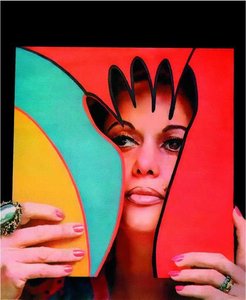
teresinha soares
1927 - , Brazil
Quick Facts
- Artistic Movement Or Style:
- Figurative painting
- Pop Art
- Artists Or Movements Influenced By This Artist:
- Pop Art
- Minimalism
- Artists Who Influenced This Artist:
- Edward Hopper
- Jacques Lipchitz
- Date Of Birth: July 24, 1927
- Date Of Death: Living
- Full Name: Alex Katz
- Nationality: American
- Notable Artworks:
- The Woman with White Dog
- Man in a Blue Suit
- Couple
- Place Of Birth: Brooklyn, New York
Related Articles

Demandes Commerciales
APS ofrece reproducciones de bellas artes y encargos personalizados desde 2004. Confían en nosotros corporaciones, hoteles y coleccionistas selectos para obras de arte de calidad museística, servicio discreto y soluciones artísticas completas. ¡Póngase en contacto con nosotros para obtener un presupuesto personalizado!

Goya's Masterpieces: Explore 25 Iconic Paintings & Art Prints | ArtsDot
Delve into the world of Francisco Goya with ArtsDot. Explore 25 iconic paintings – from 'The Third of May' to his haunting Black Paintings. Discover the stories, techniques & emotions behind these Spanish masterpieces. Find museum-quality art reproductions for your home at ArtsDot.com!

A riguardo di noi
Découvrez notre histoire ! Nous apportons l'art de classe mondiale dans votre vie grâce à une sélection experte, des créations personnalisées et des aperçus gratuits. Approuvé par les particuliers et les entreprises depuis 2000.
Alceu de Paula Penna: A Synthesis of Brazilian Modernism & Poetic Abstraction
Explore the captivating world of Alceu de Paula Penna, a pivotal figure in Brazilian Modernism. Discover his innovative concrete poetry & influence on Latin American art history. Expert insights for collectors.

Benedito Calixto: A Brazilian Modernist's Landscape of Memory & National Identity
Explore the captivating world of Benedito Calixto, a pivotal Brazilian Modernist painter. Discover his iconic landscapes, the story behind the famous Bandeirante portrait, and his lasting impact on Brazilian national identity. Learn more at ArtsDot.