Preview
 Send
Send Share
Share
 Details

 Download
 Similars
 X-Ray
X-Ray Diaporama
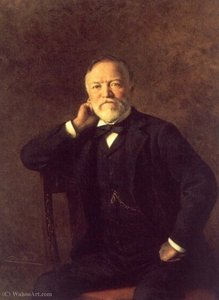
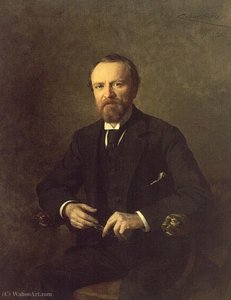
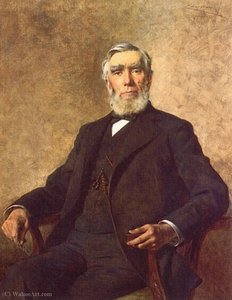
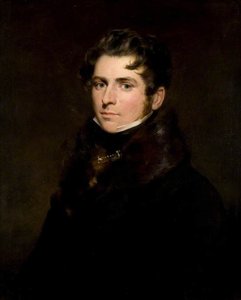
Portrait of Charles Lockhart

 Read More
Hand Made Oil Reproduction
Hand-painted oil on canvas in your size and frame, made to order by our artists. ( Buy Print Buy Image)




P118B $10

P118H $10

P118W $10

P438Z $10

P508JH $12

P508YH $12

P805H $10

P805Z $10

P919BZ $10

P919G $10

P919XJ $10

P959ZH $10

P968JZ $12

W106C $8

W218G $10

W218JH $8

W218Y $10

W307PJ $10

W316G $10

W316PJ $8

W316Y $10

W398PJ $8

W4111J $10

W500HY $15

W500JH $15

W692G $12

W849H $8

W940BG $15

W953PJ $8




Pick from our preset sizes that match the artwork's original proportions.

You may enter your own dimensions to fit a specific frame or space. If your selected size does not match the original image's proportions, we will either crop the artwork or extend the painting with additional hand-painted elements. A digital mockup will be sent for your approval before production begins.
Please note that the on-screen preview does not reflect the actual cropping or extension. Only the mockup will accurately show the final composition.
While custom sizes are available, we recommend selecting a dimension from the predefined list to preserve the original proportions.
After order, ArtsDot.com team will email client for instructions and provide a mockup preview
Worldwide Delivery () in 3/4 weeks instead of standard 5 weeks. (26 August). No compromise on quality.

Free Worldwide Express Shipping

High-Quality Linen Canvas

Full Shipping Insurance

Customs Tax Refund Guarantee

True Color Matching Guarantee

60-Day Return Policy (Defects Only)

100% Money-Back Guarantee

Bulk Discount Offer
 Glass option is only available in size under 110 CM

Portrait of Charles Lockhart
Reproduction Medium
Reproduction Size
-


Total Price
$ 263
Related Artworks
Artist Biography
The Quiet Master of the French Portrait
Théobald Chartran (1849–1907) remains a captivating figure in the tapestry of late 19th-century French art, an artist whose legacy is woven from the delicate threads of academic precision and the sharp wit of social caricature. Born in Besançon to a family with deep roots in the French legal and military aristocracy, Chartran’s path was not initially destined for the easel. While his parents envisioned a future in law or the military, the young artist felt an irresistible pull toward the visual arts. This early tension between duty and passion would later manifest in a style that balanced the rigorous discipline of the École des Beaux-Arts with a profound, empathetic understanding of the human spirit.
His formal education under the legendary Alexandre Cabanel provided him with a formidable foundation in the classical tradition. From this mentorship, Chartran inherited an unwavering commitment to anatomical accuracy and the subtle mastery of tonal gradation. His work was never about the loud or the flamboyant; instead, he sought the quiet truth found in a gaze or the soft fall of light across a subject's features. This dedication to the essence of his sitters earned him significant acclaim, most notably when his poignant portrait of the Archbishop Georges Darboy—painted amidst the somber atmosphere of the Paris Commune—won him the prestigious Grand Prix de Rome in 1877.
A Versatile Visionary: From Caricature to Classical Elegance
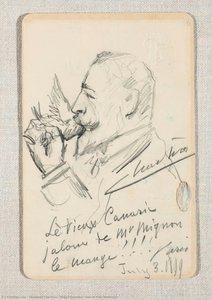
While his academic training anchored him in the realm of serious portraiture, Chartran possessed a versatile spirit that allowed him to thrive within the burgeoning media landscape of the Victorian era. Writing and illustrating under the pseudonym "T", he became a vital contributor to the iconic Vanity Fair magazine. Here, his talent took on a different dimension, blending astute political awareness with a playful, satirical edge. He navigated the complexities of European politics through his caricatures, capturing the likenesses of titans such as:
- Pope Leo XIII and Giuseppe Garibaldi, bridging the gap between religious authority and revolutionary fervor.
- Cultural giants like Charles Gounod, Giuseppe Verdi, and Victor Hugo, immortalizing the era's intellectual heartbeat.
- Political figures including Napoleon Bonaparte, Jules Grévy, and Marshal MacMahon.
This duality—the ability to move from the biting humor of a caricature to the dignified solemnity of an oil portrait—distinguished him from his contemporaries. Whether he was depicting the inventor of the stethoscope, René Laennec, or the operatic intensity of Emma Calvé as Carmen, Chartran’s brushwork remained consistent in its pursuit of character. He did not merely paint faces; he painted histories, using rich background gradients and a restrained palette to ensure that the subject's intellect and soul remained the focal point of the canvas.
Legacy and the Art of the Individual
The historical significance of Théobald Chartran lies in his role as a chronicler of a rapidly changing world. As the 19th century gave way to the 20th, his work served as a bridge between the rigid hierarchies of the past and the modern, media-driven era of celebrity and political satire. His portraits were more than mere likenesses; they were psychological studies that sought to understand humanity within the shifting cultural landscape of France and beyond.
Though some of his most famous encounters with power ended in colorful historical footnotes—such as his widely discussed, yet famously rejected, portrait of Theodore Roosevelt—his contribution to the art of portraiture remains indelible. Through his meticulous technique and his ability to capture both the humor and the gravity of his subjects, Chartran ensured that the faces of his era would not merely be remembered, but truly felt by future generations.
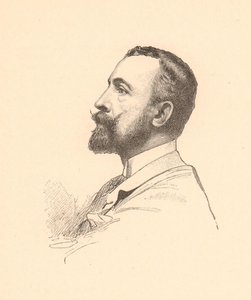
Théobald Chartran
1849 - 1907
Quick Facts
- Artistic Movement Or Style: Academic painting
- Artists Or Movements Influenced By This Artist: ['Vanity Fair']
- Artists Who Influenced This Artist:
- Alexandre Cabanel
- École des Beaux-Arts
- Date Of Death: 1907
- Full Name: Théobald Chartran
- Nationality: French
- Notable Artworks:
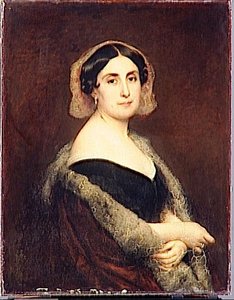
- Portrait of Mrs Charles Lockhart
- Portrait of Charles Lockhart
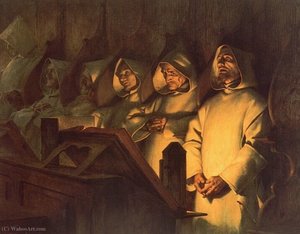
- Les Matines a la Grande Chartreuse
- Portrait of René Laennec
- Washington A. Roebling
- Madame Collas et sa fille
- Place Of Birth: Paris, France
Related Articles
Neo-Classicism's Greatest Hits: 10 Masterpieces for Your Home |
Journey through Neo-Classicism's finest! Explore 10 iconic masterpieces by David, Ingres & Canova. Discover art history, techniques & timeless beauty – perfect for inspiring your home decor. Find museum-quality reproductions at

19th Century Masterpieces: 10 Paintings That Defined an Era | ArtsDot
Journey through 19th century art with ArtsDot! Explore 10 iconic paintings – from Monet & Renoir to Courbet – and discover the stories behind Romanticism, Realism & Impressionism. Find museum-quality reproductions for your home decor. Explore the full collection online!
The Enduring Legacy of Classicism: Principles, Evolution & Influence in Western Art
Explore the enduring legacy of Classicism in Western art! Discover its historical context, key principles, iconic masterpieces & lasting influence. Learn about Renaissance and Neoclassical movements with ArtsDot.
Timeless Resonance: Exploring Classic Vibe in Art – A Historical & Aesthetic Analysis
Explore the rich history & enduring aesthetic of Classicism art! Discover key movements, iconic artists like Raphael & David, and its lasting influence on Western art. Deepen your appreciation today.
Academic Classicism: A Revival of Form & Narrative in 19th-Century Art
Explore the revival of Academic Classicism in 19th-century art. Discover key artists like David & Duplessis, the influence of the French Académie, and its lasting legacy. Expert insights for collectors & enthusiasts.