 Preview
 Send
Send Share
Share
 Details

 Download
 Similars
 X-Ray
X-Ray Diaporama
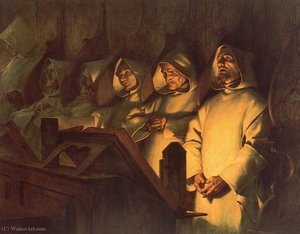
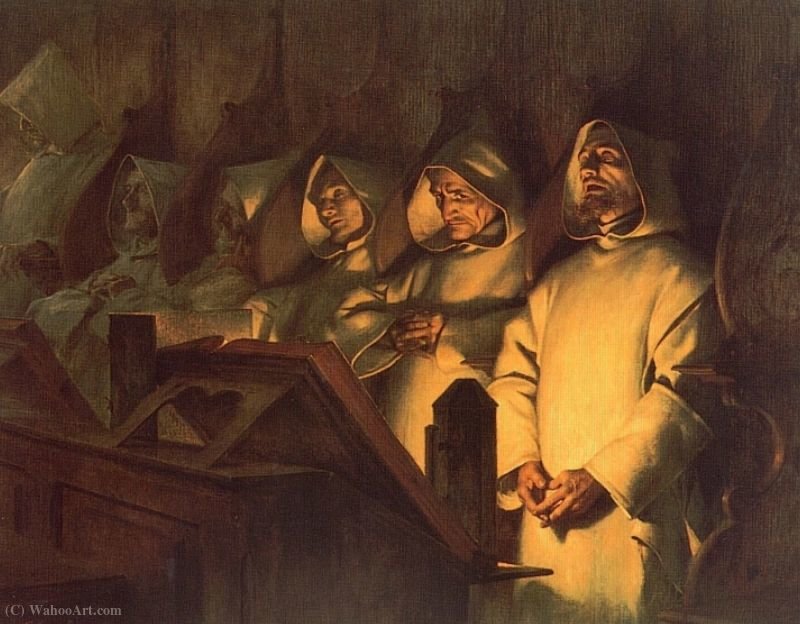
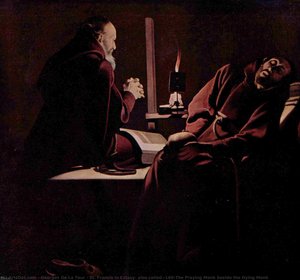
Les Matines a la Grande Chartreuse

 Read More
Hand Made Oil Reproduction
Hand-painted oil on canvas in your size and frame, made to order by our artists. ( Buy Print Buy Image)




































Pick from our preset sizes that match the artwork's original proportions.

You may enter your own dimensions to fit a specific frame or space. If your selected size does not match the original image's proportions, we will either crop the artwork or extend the painting with additional hand-painted elements. A digital mockup will be sent for your approval before production begins.
Please note that the on-screen preview does not reflect the actual cropping or extension. Only the mockup will accurately show the final composition.
While custom sizes are available, we recommend selecting a dimension from the predefined list to preserve the original proportions.
After order, ArtsDot.com team will email client for instructions and provide a mockup preview
Worldwide Delivery () in 3/4 weeks instead of standard 5 weeks. (17 August). No compromise on quality.

Free Worldwide Express Shipping

High-Quality Linen Canvas

Full Shipping Insurance

Customs Tax Refund Guarantee

True Color Matching Guarantee

60-Day Return Policy (Defects Only)

100% Money-Back Guarantee

Bulk Discount Offer
 Glass option is only available in size under 110 CM

Les Matines a la Grande Chartreuse
Reproduction Medium
Reproduction Size
-


Total Price
$ 363
Related Artworks
Artist Biography
Théobald Chartran: The Painter Behind the Rejected Roosevelt
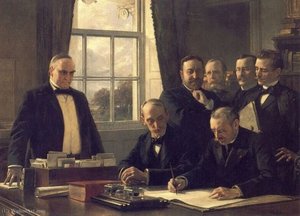
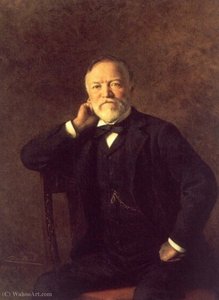
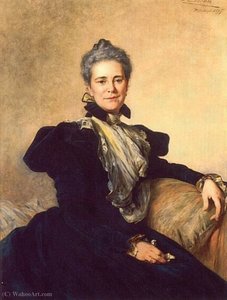
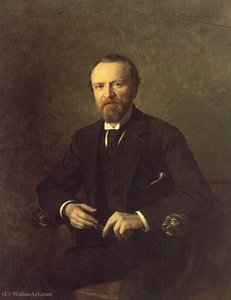
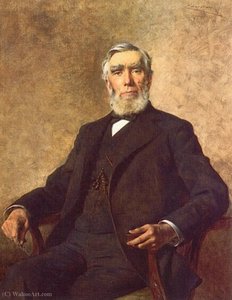
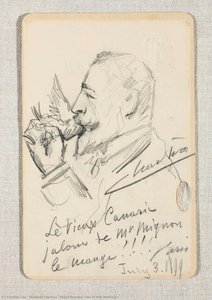
Théobald Chartran (1849-1907) stands as a quietly influential figure in late 19th-century French art, primarily recognized for his meticulous portraiture and occasional satirical contributions to Vanity Fair magazine. Unlike many of his contemporaries who achieved widespread fame through grand canvases or dramatic narratives, Chartran’s legacy resides in the subtle elegance and psychological depth he brought to capturing likenesses—a skill that cemented him as a respected academic painter and secured commissions from prominent patrons. Born in Paris, Chartran received formal training at the École des Beaux-Arts, absorbing the stylistic precepts of Alexandre Cabanel and embracing the prevailing classical tradition. This grounding in artistic principles would inform his entire oeuvre, prioritizing anatomical accuracy, tonal gradation, and an unwavering commitment to portraying subjects with dignity and nuance. His style eschewed flamboyant embellishment for a restrained palette and careful observation—a deliberate choice that speaks volumes about his aesthetic sensibilities. Chartran’s career blossomed during the Victorian era, coinciding with the rise of Vanity Fair magazine as a platform for social commentary and artistic experimentation. He collaborated on caricatures depicting figures like Pope Leo XIII and Giuseppe Garibaldi, demonstrating an ability to blend humor with astute political awareness. However, it was his work for Vanity Fair concerning luminaries such as William Henry Waddington, Charles Gounod, Verdi, Napoleon Bonaparte, Hugo, Marshal MacMahon, and Jules Grévy that truly established his reputation—a testament to his talent in capturing the essence of individuals within a rapidly changing cultural landscape. These portraits weren’t merely representations of appearance; they aimed to convey character and intellect, reflecting Chartran's belief in art as a tool for understanding humanity. Perhaps Chartran’s most enduring fame stems from his involvement with Theodore Roosevelt—a commission that ultimately ended in disaster. Initially envisioned as a heroic depiction of the president, Chartran’s final canvas was rejected by Roosevelt himself who deemed it “mewing cat,” highlighting its perceived lack of masculinity. This episode underscores not only Chartran's artistic ambition but also Roosevelt’s exacting standards and his profound dissatisfaction with the artwork. The subsequent decision to hire John Singer Sargent for a revised portrait exemplifies the importance Roosevelt placed on conveying an image of strength and conviction—a goal Sargent successfully achieved, securing Roosevelt’s approval and ensuring Chartran’s reputation would forever be intertwined with this infamous anecdote. Beyond Vanity Fair and Roosevelt, Chartran produced notable portraits of figures like René Laennec (the inventor of the stethoscope), Edith Roosevelt, and Madame Collas et sa fille. His meticulous attention to detail—evident in works such as “Washington a. Roebling” and “Portrait de Sadi Carnot”—demonstrates his dedication to capturing both physical likeness and psychological complexity. Furthermore, Chartran’s painting "Les Matines à la Grande Chartreuse" showcases his mastery of chiaroscuro, skillfully employing light and shadow to evoke the solemn atmosphere of monastic life. Théobald Chartran's contribution to French art lies not in grand gestures but in quiet precision—a legacy preserved through works like “Portrait of Mrs Charles Lockhart” and “Portrait of Charles Lockhart,” which continue to captivate viewers with their understated beauty and profound psychological insight. His enduring influence can be seen in the continuing appreciation for classical portraiture and his role as a pivotal artist shaping the visual culture of his time.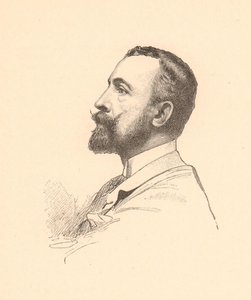
Théobald Chartran
1849 - 1907
Quick Facts
- Artistic Movement Or Style: Academic painting
- Artists Or Movements Influenced By This Artist: ['Vanity Fair']
- Artists Who Influenced This Artist:
- Alexandre Cabanel
- École des Beaux-Arts
- Date Of Death: 1907
- Full Name: Théobald Chartran
- Nationality: French
- Notable Artworks:
- Portrait of Mrs Charles Lockhart
- Portrait of Charles Lockhart
- Les Matines a la Grande Chartreuse
- Portrait of René Laennec
- Washington A. Roebling
- Madame Collas et sa fille
- Place Of Birth: Paris, France
Related Articles

The Enduring Legacy of Oil on Canvas: Technique, History & Aesthetic Impact
Explore the rich history & techniques of oil painting – from Renaissance masters to Impressionism. Discover pigments, layering methods, and why this timeless medium endures. Expert insights for artists & art enthusiasts.

Oil on Canvas: A Historical & Technical Exploration of a Timeless Artistic Medium
Explore the rich history & enduring techniques of oil painting on canvas. Discover the science behind its longevity, conservation practices, and contemporary relevance. Expert insights for art enthusiasts.

The Enduring Power of Painting: A Historical & Contemporary Exploration of Form and Emotion
Explore the rich history & enduring techniques of oil painting with ArtsDot. Discover masterpieces, learn about art collecting, and find authentic handmade reproductions crafted by skilled artists.

The Enduring Legacy of Oil on Canvas: Technique, History & Contemporary Practice
Explore the rich history & enduring techniques of oil painting on canvas. Discover the science behind its longevity, conservation practices, and contemporary relevance. Expert insights for art enthusiasts.
The Enduring Legacy of Oil Paint: Technique, History & Emotional Resonance in Western Art
Explore the rich history & techniques of oil painting! Discover Renaissance masters, scientific principles behind color, and emotional resonance in art. Learn about glazing, layering, and atmospheric perspective – a guide for enthusiasts & collectors.