 Preview
 Send
Send Share
Share
 Details

 Download
 Similars
 X-Ray
X-Ray Diaporama
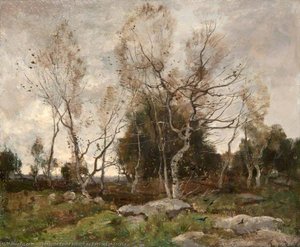
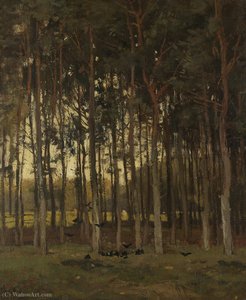
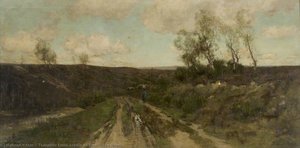
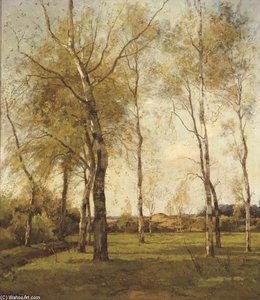
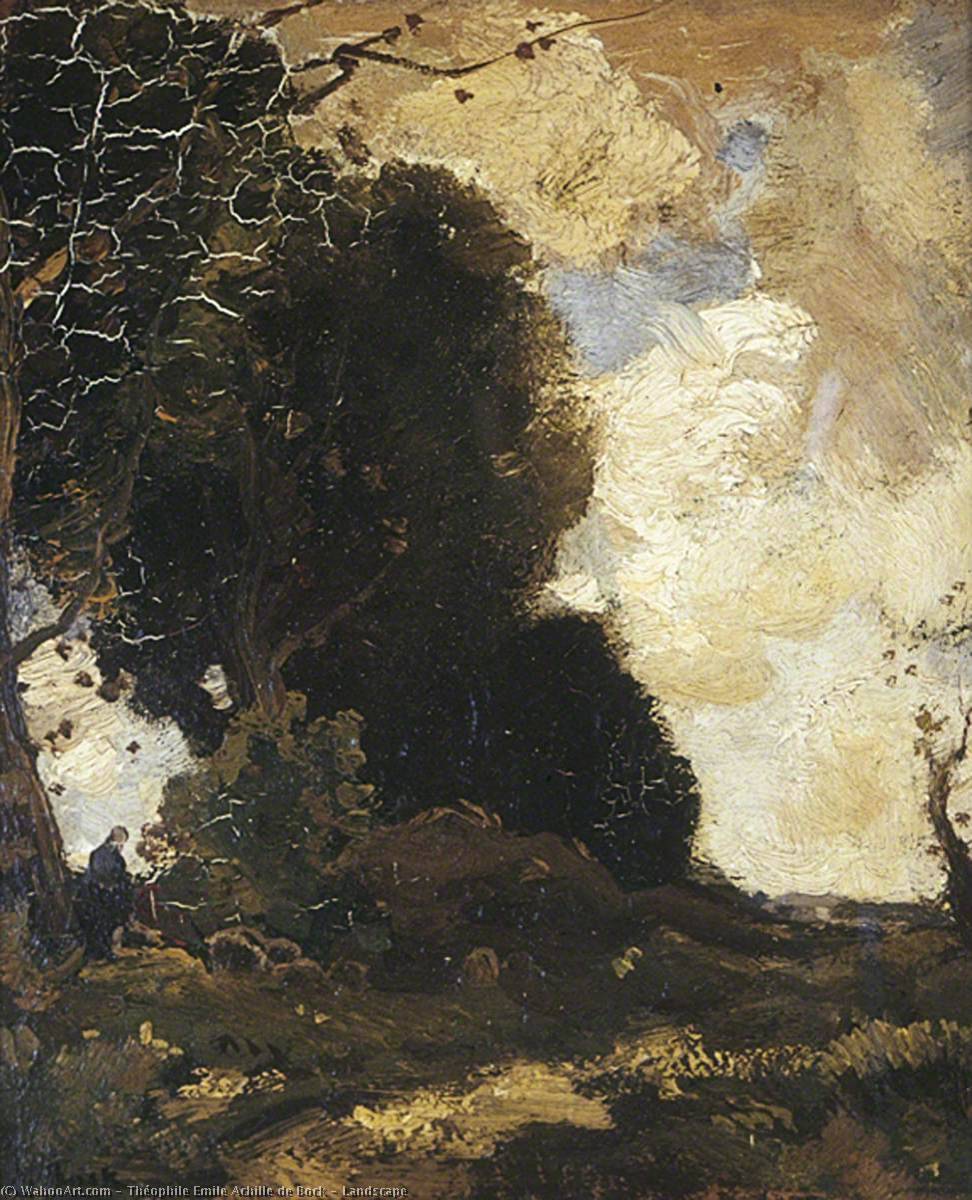
Landscape
 Hague School
 29.0 x 27.0 cm
 Leeds Art Gallery
 Read More
Hand Made Oil Reproduction
Hand-painted oil on canvas in your size and frame, made to order by our artists. ( Buy Print Buy Image)




































Pick from our preset sizes that match the artwork's original proportions.

You may enter your own dimensions to fit a specific frame or space. If your selected size does not match the original image's proportions, we will either crop the artwork or extend the painting with additional hand-painted elements. A digital mockup will be sent for your approval before production begins.
Please note that the on-screen preview does not reflect the actual cropping or extension. Only the mockup will accurately show the final composition.
While custom sizes are available, we recommend selecting a dimension from the predefined list to preserve the original proportions.
After order, ArtsDot.com team will email client for instructions and provide a mockup preview
Worldwide Delivery () in 3/4 weeks instead of standard 5 weeks. (18 August). No compromise on quality.

Free Worldwide Express Shipping

High-Quality Linen Canvas

Full Shipping Insurance

Customs Tax Refund Guarantee

True Color Matching Guarantee

60-Day Return Policy (Defects Only)

100% Money-Back Guarantee

Bulk Discount Offer
 Glass option is only available in size under 110 CM

Landscape
Reproduction Medium
Reproduction Size
-


Total Price
$ 263
Related Artworks
Artist Biography
The Quiet Master of the Dutch Countryside
Théophile Emile Achille de Bock (1851–1904) remains one of the most evocative, if understated, voices of the Hague School. Born in The Hague, Netherlands, De Bock’s early life was far removed from the bohemian studios of the art world; he initially pursued a pragmatic career as a clerk for the Dutch Railway Company. However, an innate passion for drawing and a profound sensitivity to the natural world eventually pulled him away from the ledger books and toward the easel. This transition marked the beginning of a lifelong devotion to capturing the atmospheric soul of the Dutch landscape, a pursuit that would define his legacy.
His artistic journey was shaped by rigorous training under some of the most significant figures of the era. By studying under masters such as J.W. van Borselen, J.H. Weissenbruch, and Jacob Maris, De Bock became deeply immersed in the principles of Tonalism. These mentors taught him to look beyond mere topographical accuracy, encouraging instead a focus on light, moisture, and the subtle gradations of color that define the Low Countries. His association with Willem Maris further enriched his palette, fostering a collaborative spirit that allowed him to refine his ability to translate the heavy, damp air of the Netherlands onto canvas.
A Vision of Atmospheric Tonalism
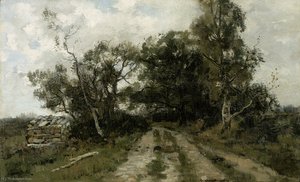
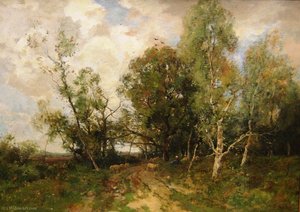
De Bock’s work is characterized by a distinctive, often somber temperament. While some contemporary critics occasionally dismissed his style as overly subdued or sketch-like, modern admirers recognize this as a deliberate and masterful choice. He possessed an unparalleled ability to evoke the quietude of the Dutch polders, often utilizing a dark, moody palette to create scenes of profound contemplation. His landscapes are rarely about dramatic action; rather, they are studies in stillness, where the interplay of shadow and soft light suggests the fleeting moments of dusk or the heavy presence of an approaching storm.
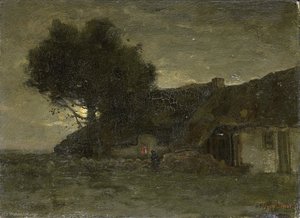
The influence of the French Barbizon School played a transformative role in his development. During his frequent travels to Paris and the forests of Barbizon in 1880, De Bock encountered the works of Gustave Courbet and Jean-François Millet. This exposure to French Realism deepened his commitment to depicting rural life and natural landscapes with an unvarnished, honest eye. He sought to capture the essence of the earth—the texture of the soil, the weight of the clouds, and the solitary beauty of a farmstead at twilight—blending the Dutch tonalist tradition with a newfound French-inspired realism.
Legacy and Historical Significance
The historical significance of De Bock lies in his unwavering commitment to his artistic vision. Even when faced with pressure to diversify his subject matter, he remained steadfastly dedicated to the pastoral scenes that resonated most deeply with his spirit. This dedication was noted even by Vincent van Gogh, who recognized De Bock’s inherent talent and temperament, though Van Gogh famously attempted to persuade him to explore more dynamic and varied themes. This interaction serves as a testament to the respect De Bock commanded among his peers.
Today, the works of Théophile de Bock are celebrated for their emotional depth and technical mastery of atmosphere. His paintings serve as windows into a vanished era of the Dutch landscape, offering a sense of peace and melancholy that continues to captivate collectors and historians alike. Through his meticulous observation and devotion to the subtle nuances of nature, De Bock secured his place as a vital contributor to the Hague School, leaving behind a body of work that remains as evocative and timeless as the landscapes he so lovingly depicted.
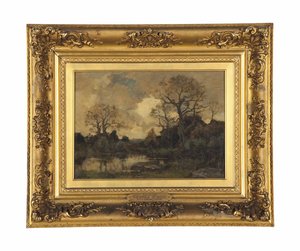
theophile emile achille de bock
1851 - 1904 , Netherlands
Quick Facts
- Artistic Movement Or Style: Hague School
- Artists Or Movements Influenced By This Artist: ['Vincent van Gogh']
- Artists Who Influenced This Artist:
- Jacob Maris
- Corot
- Johannes Hendrik Weissenbruch
- Date Of Birth: 1851
- Full Name: Théophile Emile Achille de Bock
- Nationality: Dutch
- Notable Artworks:
- Landscape
- Schaapskooi - October
- Place Of Birth: The Hague, Netherlands
Related Articles

Demandes Commerciales
APS ofrece reproducciones de bellas artes y encargos personalizados desde 2004. Confían en nosotros corporaciones, hoteles y coleccionistas selectos para obras de arte de calidad museística, servicio discreto y soluciones artísticas completas. ¡Póngase en contacto con nosotros para obtener un presupuesto personalizado!
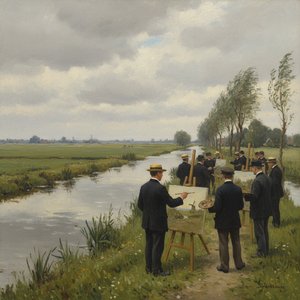
The Hague School: Realism, Atmosphere & the Dawn of Dutch Impressionism
Explore the Hague School's pivotal role in Dutch art history. Discover realism, atmospheric landscapes & its influence on Impressionism. Learn about key artists like Mauve & Maris with ArtsDot.
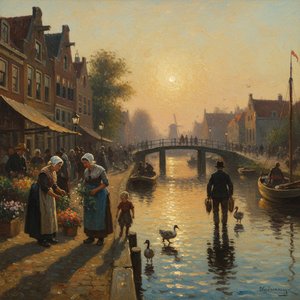
Wilhelmus de Zwart: Capturing Dutch Life Through the Lens of Realism & Impressionism
Explore the captivating world of Wilhelmus de Zwart, a Dutch master bridging Realism & Impressionism. Discover his landscapes, cityscapes, and unique technique – a compelling study for art enthusiasts and collectors.

Beyond the Horizon: 10 Landscape Masterpieces for Your Home Decor
Journey through 10 breathtaking landscape paintings by Monet, Van Gogh & more! Explore iconic artworks, artistic techniques & find inspiration for your home decor. Museum-quality reproductions at ArtsDot.com. Discover all masterpieces on ArtsDot.com

Goya's Masterpieces: Explore 25 Iconic Paintings & Art Prints | ArtsDot
Delve into the world of Francisco Goya with ArtsDot. Explore 25 iconic paintings – from 'The Third of May' to his haunting Black Paintings. Discover the stories, techniques & emotions behind these Spanish masterpieces. Find museum-quality art reproductions for your home at ArtsDot.com!