

 Preview
 Send
Send Share
Share
 Details

 Download
 Similars
 X-Ray
X-Ray Diaporama
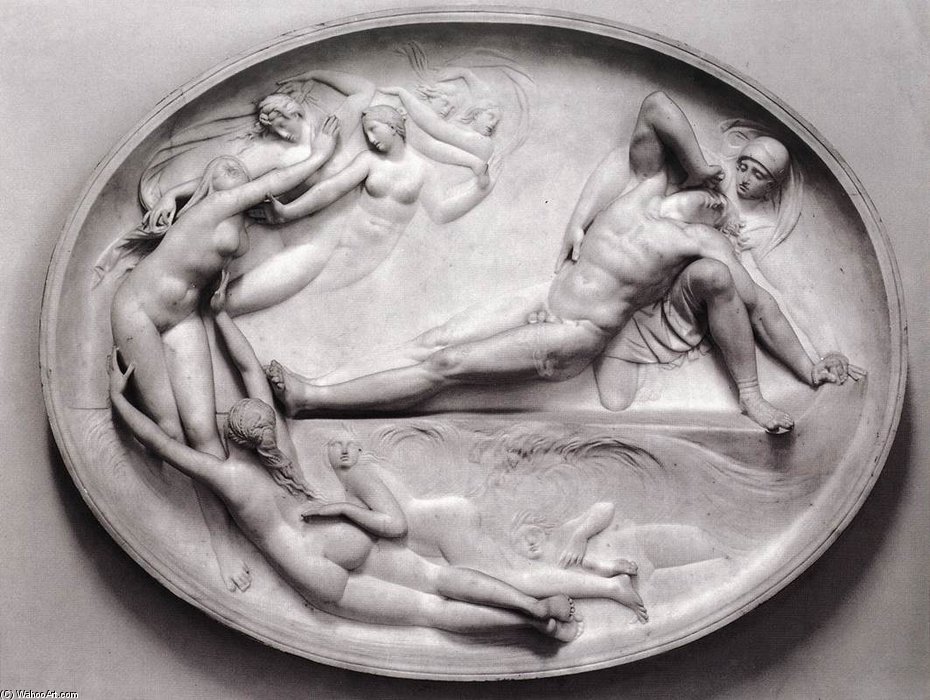
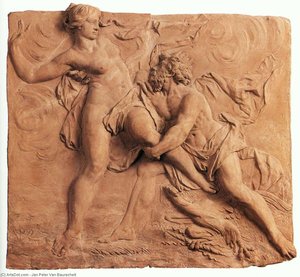
Thetis Rising From The Sea
 Read More
Purchase a high-resolution, enhanced digital image, far superior to the online preview.
Each file is meticulously prepared by our in-house specialists using advanced tools and expert manual retouching. We ensure every image has exceptional clarity, precise color accuracy, and fine detail.
The final file is delivered via email within 72 hours, optimized for immediate use in professional, editorial, and print environments. This is the same quality trusted by top-tier design studios, publishers, and galleries.
Digital Image
Download a high-resolution file for personal display, printing, and creative projects. ( Buy Print Buy Hand Made Painting)
Included in Every Digital Image Order
Expert Digital Delivery, Guaranteed
When you choose ArtsDot.com, you're not just getting an image - you're receiving a professionally enhanced digital artwork, crafted with precision and backed by a satisfaction guarantee. Here's everything that comes with your order, automatically:

Fast Email Delivery
Your high-resolution digital image file will be emailed to you within 72 hours of ordering - ready for immediate use.

AI-Enhanced Digital File
Your artwork is professionally optimized using advanced AI tools and manual editing, ensuring maximum detail, clarity, and color accuracy.

Free Lifetime Re-Delivery
Accidentally deleted or lost your file? No worries - we'll resend it to you anytime, free of charge.

No Import Fees - Ever
Enjoy your artwork instantly with zero customs, duties, or delivery fees - digital downloads are always tax-free.

Color Accuracy Guarantee
We ensure your digital image reflects the original colors as closely as possible using professional tools and color management.

60-Day Satisfaction Guarantee
If you're not satisfied with your digital image, we'll revise it or refund 100% within 60 days - no questions asked.

100% Money-Back Guarantee
Not satisfied? Get a full refund within 60 days of receiving your digital file - no questions asked.

Bulk Order Discounts
Buy 3 images, save 10% - Buy 5, save 15% - Buy 10+, save 20%. Great for creative projects, galleries, and agencies.
Related Artworks
Artist Biography
A Sculptor of Classical Grandeur: The Life and Legacy of Thomas Banks
In the pantheon of eighteenth-century English art, few names evoke the dignified strength of Neoclassicism quite like Thomas Banks. Born in London in 1737, Banks was a man whose artistic soul was deeply rooted in the precision of his lineage and the grandeur of antiquity. The son of William Banks, a surveyor for the Duke of Beaufort, he inherited an early appreciation for architectural rigor and meticulous detail. His formative years were shaped by a dual education: the disciplined drawing lessons provided by his father and a rigorous apprenticeship under the woodcarver William Barlow. Yet, it was in the quiet evenings spent within the studio of the Flemish master Peter Scheemakers that Banks truly found his calling. Under this mentorship, the young artist moved beyond the tactile limits of wood to embrace the sweeping, heroic narratives of marble and stone, developing a stylistic language that would eventually command the attention of emperors and academies alike.
The trajectory of Banks’s career was marked by a profound engagement with the classical world. In 1772, upon receiving a prestigious Travelling Studentship from the Royal Academy, he journeyed to Rome, an experience that served as the crucible for his mature style. Immersed in the remnants of Roman greatness, Banks absorbed the weight and grace of ancient monuments, learning to translate the silent language of stone into emotive, monumental forms. This period of intense study allowed him to bridge the gap between mere imitation and true artistic expression, infusing his work with a sense of movement and psychological depth that resonated with the burgeoning Neoclassical movement.
From Saint Petersburg to the Royal Academy
The late eighteenth century brought both challenges and triumphs to Banks’s journey. Following his return from Italy in 1779, he encountered a shifting cultural landscape in England where the fervent passion for classical poetry seemed to be waning. Seeking new horizons, he traveled to Saint Petersburg, where he served as a sculptor to the formidable Empress Catherine the Great. It was during this Russian sojourn that he produced one of his most charming works, Cupid Tormenting a Butterfly, a piece that masterfully balanced classical mythological themes with a delicate, almost Romantic sensibility. This period of imperial patronage not only solidified his international reputation but also refined his ability to capture the ephemeral beauty of nature within the permanence of sculpture.
Upon his return to England, Banks’s work took on a more muscular and dramatic tone, characterized by an unflinching exploration of human emotion and heroic struggle. His election as an Associate of the Royal Academy in 1784, followed by full membership the next year, signaled his ascent to the pinnacle of the British art establishment. He became a master of the monumental, capable of rendering the most harrowing scenes of myth with a technical virtuosity that left viewers breathless. His ability to utilize dramatic foreshortening and intricate musculature allowed him to breathe life into cold marble, making the descent of a titan or the grief of a hero feel palpably real.
A Lasting Impression on British Sculpture
The historical significance of Thomas Banks lies in his ability to synthesize the intellectual rigor of Neoclassicism with a uniquely English sense of narrative drama. His oeuvre is scattered across some of the most sacred spaces of British heritage, from the solemn halls of Westminster Abbey to the hallowed reaches of St Paul’s Cathedral. His contributions include:
- The Shakespeare Group: Perhaps his most celebrated achievement, the colossal Shakespeare Attended by Painting and Poetry stands as a breathtaking tribute to English literary genius, blending sculptural form with the spirit of the arts.
- Commemorative Monuments: His works in Westminster Abbey, honoring figures such as Sir Eyre Coote and William Woollett, demonstrate his mastery of the funerary monument, turning grief into enduring classical beauty.
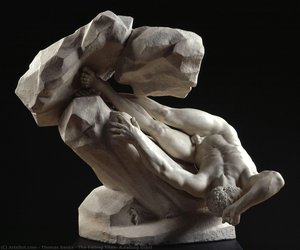
- Mythological Narratives: Works like The Falling Titan; A Falling Giant showcase his ability to capture the precise moment of catastrophic failure, utilizing technical prowess to evoke empathy for the divine struggle.
Though he passed away in London in 1805, the echoes of Banks’s chisel remain. He did not merely carve stone; he sculpted the very essence of an era, capturing the tension between the stability of classical ideals and the turbulent emotions of a changing world. Through his hands, the legends of antiquity were reborn in the heart of England, leaving behind a legacy of strength, grace, and eternal motion.
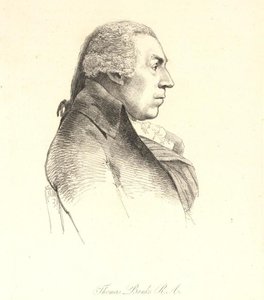
thomas banks
1737 - 1823 , United Kingdom
Quick Facts
- Artistic Movement Or Style: Neoclassical
- Artists Or Movements Influenced By This Artist: ['Classical Mythology']
- Artists Who Influenced This Artist:
- Peter Scheemakers
- William Kent
- Date Of Birth: London, United Kingdom (1737)
- Date Of Death: February 2, 1805
- Full Name: Thomas Banks RA
- Nationality: English
- Notable Artworks:
- Shakespeare Attended by Painting and Poetry
- Monument to Sir Eyre Coote
- Monument to General Loton
- Monument to Sir Clifton Wintringham
- Monument to William Woollett
- Portrait of Warren Hastings
- Place Of Birth: London

