 Preview
 Send
Send Share
Share
 Details

 Download
 Similars
 X-Ray
X-Ray Diaporama
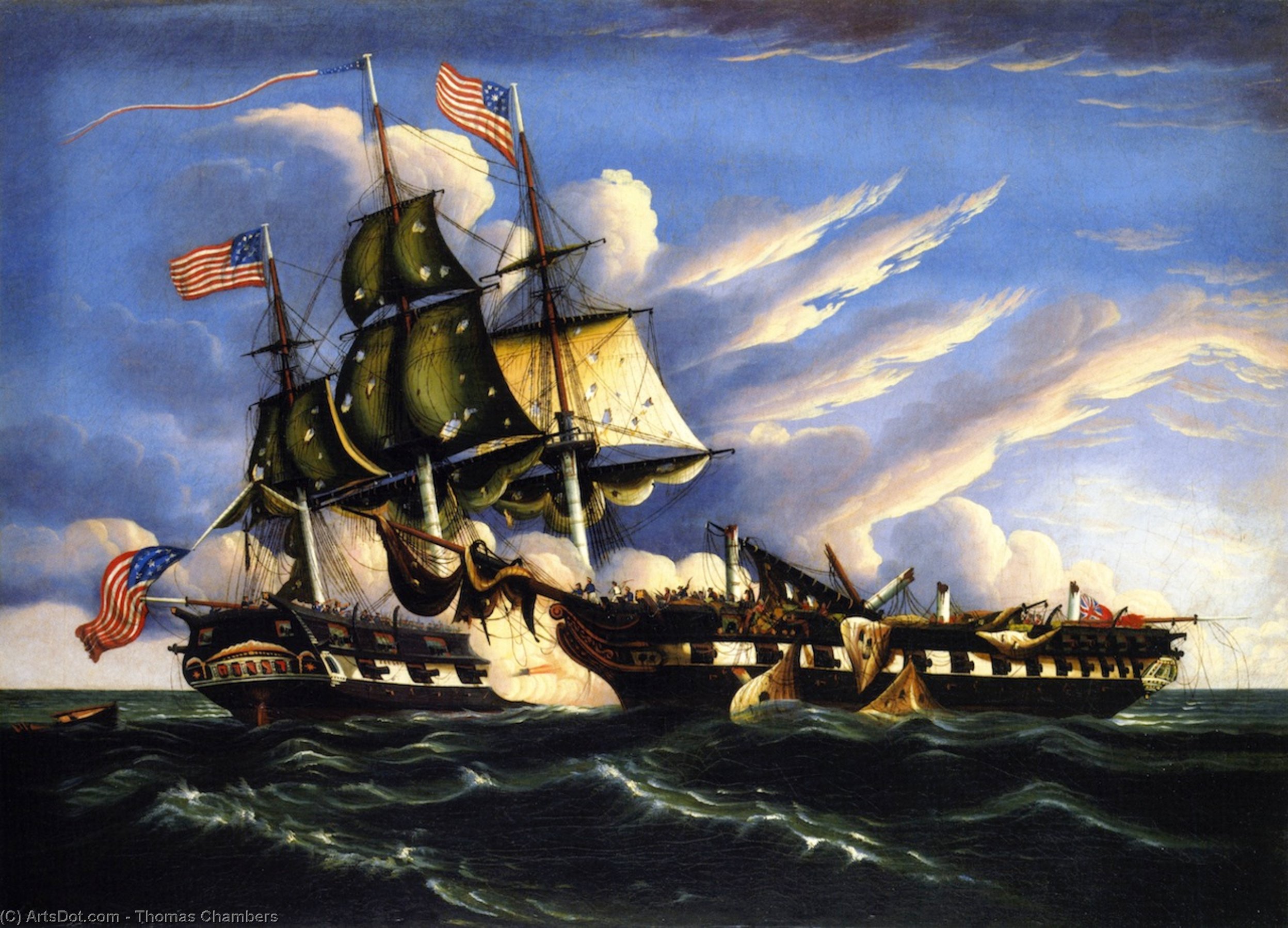
The Constitution and the Guirriere


 Read More
Hand Made Oil Reproduction
Hand-painted oil on canvas in your size and frame, made to order by our artists. ( Buy Print Buy Image)




P118B $10

P118H $10

P118W $10

P438Z $10

P508JH $12

P508YH $12

P805H $10

P805Z $10

P919BZ $10

P919G $10

P919XJ $10

P959ZH $10

P968JZ $12

W106C $8

W218G $10

W218JH $8

W218Y $10

W307PJ $10

W316G $10

W316PJ $8

W316Y $10

W398PJ $8

W4111J $10

W500HY $15

W500JH $15

W692G $12

W849H $8

W940BG $15

W953PJ $8




Pick from our preset sizes that match the artwork's original proportions.

You may enter your own dimensions to fit a specific frame or space. If your selected size does not match the original image's proportions, we will either crop the artwork or extend the painting with additional hand-painted elements. A digital mockup will be sent for your approval before production begins.
Please note that the on-screen preview does not reflect the actual cropping or extension. Only the mockup will accurately show the final composition.
While custom sizes are available, we recommend selecting a dimension from the predefined list to preserve the original proportions.
After order, ArtsDot.com team will email client for instructions and provide a mockup preview
Worldwide Delivery () in 3/4 weeks instead of standard 5 weeks. (16 August). No compromise on quality.

Free Worldwide Express Shipping

High-Quality Linen Canvas

Full Shipping Insurance

Customs Tax Refund Guarantee

True Color Matching Guarantee

60-Day Return Policy (Defects Only)

100% Money-Back Guarantee

Bulk Discount Offer
 Glass option is only available in size under 110 CM

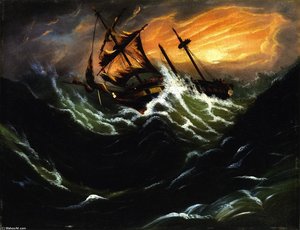
The Constitution and the Guirriere
Reproduction Medium
Reproduction Size
-


Total Price
$ 388
Artwork Description
A Tempestuous Chronicle on Canvas
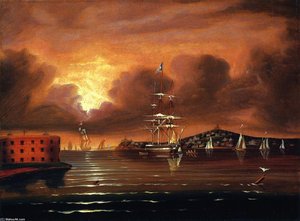
To stand before The Constitution and the Guirriere is to be swept away by the very brine and cannon smoke of history. Thomas Chambers, in this magnificent oil on canvas from 1840, has not merely painted a battle; he has captured the raw, visceral energy of conflict itself. The scene explodes across the horizontal plane, a chaotic yet breathtaking tableau of naval warfare during the tumultuous War of 1812. One can almost hear the splintering wood and the thunderous roar of artillery echoing from the canvas. Chambers masterfully composes this drama, pitting the American might of the USS Constitution against the formidable presence of HMS Guerriere. The sheer dynamism of the composition—the billowing sails catching unseen winds, the waves cresting in violent, foamy peaks—demands the viewer’s full attention, pulling them directly into the heart of the fray.
Mastery of Marine Realism and Folk Spirit
Chambers's technique here is a compelling marriage of high drama and accessible American folk art sensibility. While the subject matter demands the technical rigor of a professional marine painter—evident in the detailed rendering of rigging, hull structure, and the churning sea—the overall effect retains an undeniable, passionate immediacy characteristic of his style. The artist employs bold brushstrokes that lend texture to every element, from the weathered wood of the ships to the turbulent sky. Observe how the blues, grays, and deep greens dominate the palette; these are not merely colors, but emotional states rendered visible. The dramatic lighting, suggesting a momentary break in stormy heavens, serves to spotlight the action, lending an almost romantic grandeur to what was a brutal historical engagement.
Symbolism of National Resolve
Beyond the spectacle of combat lies a profound resonance of national spirit. This painting transcends its depiction of military history; it becomes an allegory for resilience and enduring resolve. The prominent display of American flags, fluttering defiantly against the backdrop of international conflict, serves as a powerful visual anchor for themes of patriotism and struggle. It speaks to a moment when identity was forged in fire and on the high seas. For the modern collector or designer, this symbolism offers an immediate connection to narratives of perseverance—a potent emotional current that elevates the piece from mere decoration to meaningful heirloom.
Bringing the Drama Home
For those who wish to incorporate such a monumental piece of American art into their own spaces, reproductions of Chambers's work offer an unparalleled opportunity. The visible texture and rich saturation achieved in his original oils translate beautifully into high-quality hand-painted reproductions. Imagine this scene anchoring a grand hall or lending dramatic depth to a study; the energy it radiates is palpable. It is a piece that does not whisper its history but proclaims it with vibrant, saturated color and undeniable action. Owning this artwork means curating more than just décor; it means acquiring a tangible piece of American artistic narrative.
Related Artworks

Artist Biography
A Rediscovered Visionary: The Life and Art of Thomas Chambers
The name Thomas Chambers remained largely obscured for over a century, his vibrant canvases attributed simply as “American Folk Art” or “unsigned marine paintings.” Only in 1942 did the art world begin to recognize the distinct hand – and remarkably modern sensibility – behind these captivating works. Born in Whitby, Yorkshire, England, in 1808, Chambers’s journey was one of transatlantic migration, quiet dedication, and ultimately, posthumous acclaim. His father, a merchant sailor, instilled a deep connection to the sea, while his mother worked as a laundress; this humble upbringing likely shaped his keen observation of everyday life and a pragmatic approach to artistic creation. While formal training remains undocumented, it’s believed he collaborated with his brother George, a successful marine artist, laying the foundation for his own burgeoning talent.
From New Orleans to the Hudson: A Developing Style
Chambers emigrated to the United States in 1832, shortly after his brother received royal patronage. He initially settled in New Orleans, declaring his intent to become a naturalized citizen, before relocating to New York City around 1834. For nearly a decade, he worked as both a painter and restorer, honing his skills while navigating the bustling art scene of the burgeoning metropolis. His style began to coalesce during this period – a unique blend of realism and expressive color that set him apart from contemporaries steeped in academic tradition. He then moved to Boston (1843-1851) followed by Albany before returning to New York around 1857, painting scenes primarily along the Hudson River Valley. However, unlike artists associated with the Hudson River School, Chambers’s work wasn't driven by a romanticized vision of nature but rather a direct and often strikingly bold depiction of it.
The “First American Modern”
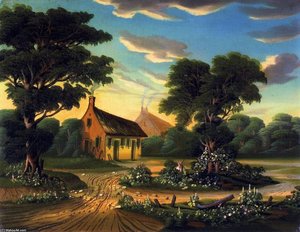
Chambers’s paintings are characterized by their dynamic compositions, vivid palettes, and an almost naive perspective that belies a sophisticated understanding of light and form. He rarely exhibited his work, preferring to sell directly through auctions – a practice that contributed to the anonymity surrounding his oeuvre for so long. His subjects ranged from dramatic naval battles, like “The Constitution & Guirriere”, capturing the energy and chaos of maritime conflict, to serene coastal scenes and idyllic landscapes such as “Cottages in a Landscape (also known as The Birthplace of Burns)”. What truly distinguishes his work is a sense of immediacy and an unconventional approach to perspective. He often worked *en plein air*, directly from nature, resulting in paintings that feel remarkably fresh and alive.
Unsigned Legacy & Rediscovery
The lack of signatures on nearly all of Chambers’s works proved a significant obstacle to his recognition during his lifetime. He faced hardship in his later years, eventually returning to England penniless and disabled around 1866, where he died in a Whitby workhouse in 1869. It wasn't until the groundbreaking exhibition at the Macbeth Gallery in New York City in 1942 that his paintings were definitively attributed to him. The discovery of a single signed work unlocked a wealth of previously unknown canvases, revealing a prolific and remarkably consistent body of work. Art historians like Kathleen A. Foster have championed his legacy, recognizing Chambers as a pivotal figure in American art history – a “First American Modern” whose bold style anticipated many of the developments of 20th-century painting.
Historical Significance & Enduring Appeal
Thomas Chambers occupies a unique position within the landscape of 19th-century American art. He stands apart from both the refined elegance of academic painting and the romantic idealism of the Hudson River School, forging his own path with an independent spirit and unwavering dedication to direct observation. His paintings offer a glimpse into a rapidly changing America – a nation grappling with industrialization, expansion, and evolving notions of identity. Today, Chambers’s work is celebrated for its raw energy, vibrant color, and enduring appeal. He represents a vital link between folk art traditions and the burgeoning modernism that would define the next century, reminding us that artistic innovation often flourishes outside the established boundaries of convention.
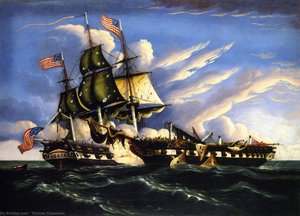
thomas chambers
1808 - 1869
Quick Facts
- Artistic Movement Or Style: Primitivist, Marine Landscape
- Artists Or Movements Influenced By This Artist: ['Hudson River School']
- Artists Who Influenced This Artist: ['George Chambers']
- Date Of Birth: 1808
- Date Of Death: 1869
- Full Name: Thomas Chambers
- Nationality: American
- Notable Artworks:
- Castles of the Mind
- Constitution & Guirriere
- Cottages in a Landscape
Related Articles
Grant Wood & American Regionalism: Identity, Myth & the Rural Landscape
Explore the world of Grant Wood & American Regionalism with ArtsDot. Discover the symbolism behind 'American Gothic', recurring themes, and the movement's lasting impact on art history. High-quality reproductions available.
American Realism's Defining Works: 10 Masterpieces for Your Home
Explore 10 defining American Realism masterpieces – Hopper, Homer & more. Discover the stories behind these iconic paintings and bring timeless art to your home with ArtsDot's museum-quality reproductions. Explore the full collection online.
American Regionalism: A Crucible of Identity – Exploring Themes of Place, Labor & Social Commentary
Explore American Regionalism's powerful depiction of the American heartland during the Great Depression. Discover Grant Wood, Thomas Hart Benton & more. Expert analysis & high-quality art reproductions at ArtsDot.
Echoes of Place: Regionalism & American Identity in Interwar Art
Explore the rise of American Regionalism in interwar art! Discover Grant Wood, Thomas Hart Benton & the movement's impact on American identity. Expert analysis & historical context.

Edward Hicks’ ‘Peaceable Kingdom’: American Folk Art & the Shaping of a National Identity
Explore the profound symbolism & historical context of Edward Hicks’ ‘Peaceable Kingdom.’ Discover how this iconic American folk art masterpiece reflects Quaker values and shaped a nation's identity. Learn more at ArtsDot.