 Preview
 Send
Send Share
Share
 Details

 Download
 Similars
 X-Ray
X-Ray Diaporama
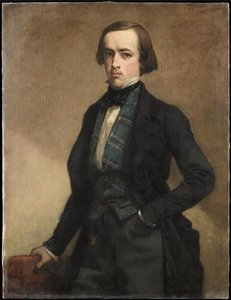
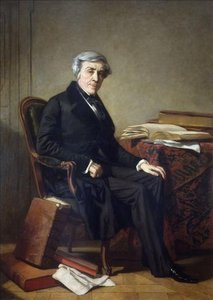
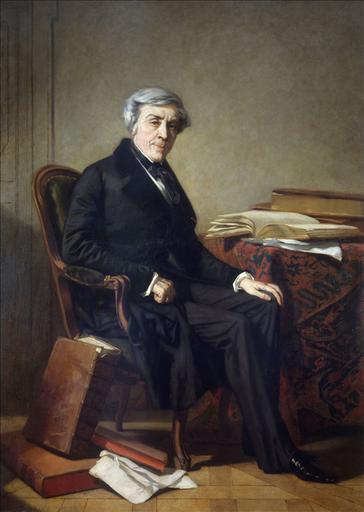
Jules Michelet (1798 1874), historien


 Read More
Hand Made Oil Reproduction
Hand-painted oil on canvas in your size and frame, made to order by our artists. ( Buy Print Buy Image)




P118B $10

P118H $10

P118W $10

P438Z $10

P508JH $12

P508YH $12

P805H $10

P805Z $10

P919BZ $10

P919G $10

P919XJ $10

P959ZH $10

P968JZ $12

W106C $8

W218G $10

W218JH $8

W218Y $10

W307PJ $10

W316G $10

W316PJ $8

W316Y $10

W398PJ $8

W4111J $10

W500HY $15

W500JH $15

W692G $12

W849H $8

W940BG $15

W953PJ $8




Pick from our preset sizes that match the artwork's original proportions.

You may enter your own dimensions to fit a specific frame or space. If your selected size does not match the original image's proportions, we will either crop the artwork or extend the painting with additional hand-painted elements. A digital mockup will be sent for your approval before production begins.
Please note that the on-screen preview does not reflect the actual cropping or extension. Only the mockup will accurately show the final composition.
While custom sizes are available, we recommend selecting a dimension from the predefined list to preserve the original proportions.
After order, ArtsDot.com team will email client for instructions and provide a mockup preview
Worldwide Delivery () in 3/4 weeks instead of standard 5 weeks. (17 August). No compromise on quality.

Free Worldwide Express Shipping

High-Quality Linen Canvas

Full Shipping Insurance

Customs Tax Refund Guarantee

True Color Matching Guarantee

60-Day Return Policy (Defects Only)

100% Money-Back Guarantee

Bulk Discount Offer
 Glass option is only available in size under 110 CM

Jules Michelet (1798 1874), historien
Reproduction Medium
Reproduction Size
-


Total Price
$ 263
Artwork Description
Portrait de Jules Michelet (1798-1874), historien – Une Œuvre Académique au Cœur du Romantisme
Thomas Couture, né à Senlis en 1815 et décédé à Paris en 1879, demeure une figure emblématique du XIXe siècle artistique. Son parcours atypique, marqué par des difficultés initiales dans les concours prestigieux comme le Prix de Rome, lui valut une liberté créatrice qui allait définir son œuvre et lui permettre d'établir un atelier indépendant, véritable foyer pour ceux qui aspiraient à une esthétique alternative aux conventions académiques dominantes. Cette indépendance fut essentielle pour donner naissance à une peinture profondément personnelle tout en maîtrisant les outils techniques de l’époque. Couture est reconnu comme ayant été un professeur influent et une voix critique importante au sein du mouvement artistique français.- La Composition Classique : Le portrait suit une esthétique traditionnelle trois quarts, offrant une vue privilégiée du visage et du haut du corps de Michelet. Cette pose permet une étude minutieuse des traits caractéristiques du sujet et contribue à une atmosphère de dignité intellectuelle.
- L’Environnement Intérieur : Couture choisit un cadre intérieur sombre et indistinct, mettant en valeur la figure centrale et créant une profondeur visuelle subtile. Une table encombrée de livres et de papiers souligne la profession scientifique du sujet et renforce le contexte historique du tableau.
- La Palette Chromatique Modérée : La couleur est dominée par des tons gris, brun foncé et noir, avec quelques touches rouges dans les couvertures de livres et les draperies. Cette palette sombre évoque une atmosphère de mélancolie et souligne la gravité intellectuelle du personnage représenté.
- Les Détails Techniques : Couture maîtrise parfaitement les techniques de peinture à l’huile sur toile, utilisant des couches successives pour obtenir des nuances subtiles et créer une surface lisse et brillante. Le mélange est utilisé avec soin pour adoucir les contours et donner au tableau une profondeur remarquable.
- La Lumière Diffuse : Une lumière douce provenant d'une source invisible à gauche éclaire le visage et le haut du corps de Michelet, créant des effets lumineux et des ombres qui définissent ses traits et ajoutent une dimension émotionnelle à la composition. Cette atmosphère lumineuse rappelle les œuvres majeures du romantisme et souligne l’importance de l’expression artistique.
- Les Textures Variées : Couture utilise différentes textures pour rendre les matériaux représentés avec précision, notamment la peau lisse et les couvertures rugueuses des livres et les tissus luxueux du siège. Cette attention aux détails témoigne d'une maîtrise technique exceptionnelle et contribue à une expérience esthétique immersive.
Related Artworks
Artist Biography
A Rebel in the Atelier: The Life and Legacy of Thomas Couture
Born in 1815 in Senlis, France, Thomas Couture emerged as a pivotal figure bridging Romanticism and Realism—a painter who dared to challenge academic convention while simultaneously mastering its techniques. His early life saw a relocation to Paris with his family, where he initially pursued studies at the École des Arts et Métiers before gravitating towards the prestigious École des Beaux-Arts. However, Couture’s path wasn't paved with immediate acceptance; he faced repeated rejection in the competition for the Prix de Rome, an honor that would have secured a coveted residency at the Académie de France in Rome. Rather than accepting defeat, these setbacks fueled his conviction that the established system itself was flawed, prompting him to forge his own artistic path and eventually establish an independent atelier—a haven for those seeking an alternative to traditional instruction.The Decadence of Empires and a New Artistic Vision
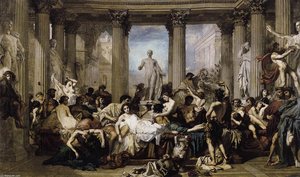
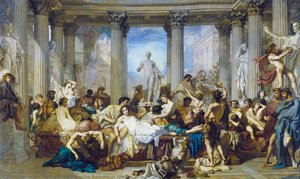
Couture’s breakthrough arrived with *Romans During the Decadence* (1847), a monumental work that ignited both praise and controversy at the Paris Salon. This painting wasn't merely a historical depiction; it was a scathing social commentary, inspired by the satirical writings of Juvenal, portraying the moral decay and opulent excess within Roman society. The scene pulsates with a sense of unrestrained indulgence, figures draped in luxurious fabrics amidst classical ruins—a deliberate juxtaposition meant to mirror the perceived decadence of contemporary French society under the Second Republic. Couture’s masterful use of tonal contrasts, employing rich dark hues punctuated by striking highlights, further intensified the dramatic impact and symbolic weight of the composition. The painting's success cemented his reputation as a leading artist and established him as a formidable force within the art world. It was more than just technical skill; it was a bold statement about the state of civilization itself.A Teacher of Titans: Shaping Future Generations
Beyond his own artistic achievements, Couture’s influence extended profoundly through his role as an educator. He opened his atelier to a diverse group of aspiring artists, rejecting the rigid constraints of the École des Beaux-Arts and fostering an environment of experimentation and critical thinking. Among his most celebrated pupils were names that would become synonymous with modern art: Édouard Manet, whose revolutionary approach to painting owed much to Couture’s emphasis on tonal values and expressive brushwork; Henri Fantin-Latour, renowned for his still lifes and portraits of fellow artists; Pierre Puvis de Chavannes, a pioneer of Symbolism; and John La Farge, an innovator in stained glass. Couture’s teaching methods were unconventional, encouraging students to develop their individual voices while grounding them in the fundamentals of draftsmanship and composition. He championed “quick painting,” anticipating techniques later embraced by the Impressionists, and stressed the importance of direct observation from life.Later Years and Enduring Influence
In 1860, disillusioned with the Parisian art scene, Couture retreated to his hometown of Senlis, where he continued to teach and paint. He codified his artistic philosophy in *Méthode et entretiens d'atelier* (Method and Workshop Interviews), published in 1867—a treatise that offered a radical critique of academic dogma and advocated for a more intuitive and expressive approach to art-making. This work, later translated into English as *Conversations on Art Methods*, provided invaluable insights into his pedagogical principles and artistic beliefs. Though he faced criticism throughout his career for challenging established norms, Couture’s impact on the development of modern art is undeniable. He fostered a generation of artists who dared to break free from convention, paving the way for the radical innovations that would define the late 19th and early 20th centuries. His legacy endures not only through his own compelling paintings but also through the enduring influence he exerted on some of the most important figures in art history.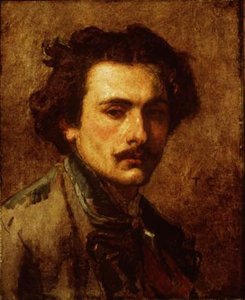
Thomas Couture
1815 - 1879 , France
Quick Facts
- Artistic Movement Or Style: Romanticism & Realism
- Artists Or Movements Influenced By This Artist:
- Édouard Manet
- Henri Fantin-Latour
- Pierre Puvis de Chavannes
- Artists Who Influenced This Artist:
- Antoine-Jean Gros
- Paul Delaroche
- Date Of Birth: Dec 21, 1815
- Date Of Death: March 30, 1879
- Full Name: Thomas Couture
- Nationality: French
- Notable Artworks:
- Romans During the Decadence
- The Duel After Masked Ball
- A Lawyer Going to Court
- Place Of Birth: Senlis, France
Related Articles
Romantic Realism's Finest: 10 Masterpieces for Your Home | ArtsDot
Explore 10 defining masterpieces of Romantic Realism! Discover Courbet, Millet & Daumier's powerful paintings—capturing emotion and social realities. Find museum-quality reproductions for your home at ArtsDot.com.
The Evocative Embrace of Reality: Exploring Romantic Realism in 19th-Century Painting
Explore the captivating world of Romantic Realism! Discover key artists like Courbet & Millet, masterpieces, and the social context behind this influential art movement. Expert insights for collectors at ArtsDot.
Émile Jean Horace Vernet: Romantic Realism & Depicting 19th-Century Life
Explore the life & art of Émile Jean Horace Vernet, a master of Romantic Realism. Discover his captivating battle scenes, portraits, and Orientalist works – a window into 19th-century France. Learn about his techniques & enduring legacy.
Thomas Edwin Mostyn: A Victorian Genre Painter's Journey from Realism to Romantic Enchantment
Discover the captivating world of Thomas Edwin Mostyn (1864-1930), a Victorian artist renowned for his romantic garden scenes and evocative portraits. Explore his artistic journey, legacy & find high-quality reproductions at ArtsDot.
Academic Realism's Finest: 10 Masterpieces for Art Lovers & Home Decor
Explore 10 defining Academic Realism masterpieces by Bouguereau, Gérôme & Cabanel. Discover the stories behind these iconic paintings and bring timeless art into your home with museum-quality reproductions from ArtsDot.com. Explore the full collection online!