 Preview
 Send
Send Share
Share
 Details

 Download
 Similars
 X-Ray
X-Ray Diaporama
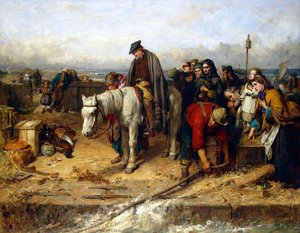
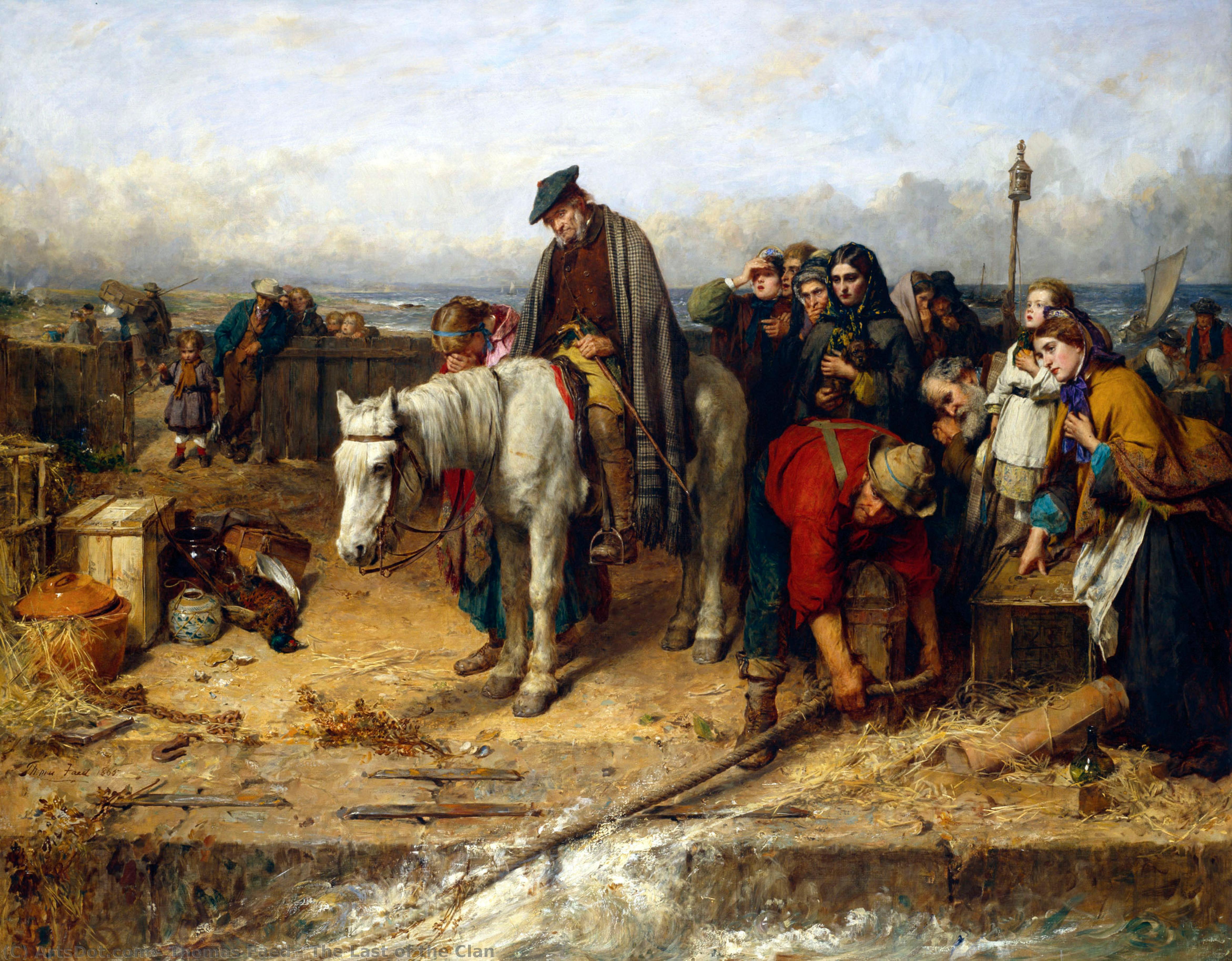
The Last of the Clan


 Read More
Hand Made Oil Reproduction
Hand-painted oil on canvas in your size and frame, made to order by our artists. ( Buy Print Buy Image)




P118B $10

P118H $10

P118W $10

P438Z $10

P508JH $12

P508YH $12

P805H $10

P805Z $10

P919BZ $10

P919G $10

P919XJ $10

P959ZH $10

P968JZ $12

W106C $8

W218G $10

W218JH $8

W218Y $10

W307PJ $10

W316G $10

W316PJ $8

W316Y $10

W398PJ $8

W4111J $10

W500HY $15

W500JH $15

W692G $12

W849H $8

W940BG $15

W953PJ $8




Pick from our preset sizes that match the artwork's original proportions.

You may enter your own dimensions to fit a specific frame or space. If your selected size does not match the original image's proportions, we will either crop the artwork or extend the painting with additional hand-painted elements. A digital mockup will be sent for your approval before production begins.
Please note that the on-screen preview does not reflect the actual cropping or extension. Only the mockup will accurately show the final composition.
While custom sizes are available, we recommend selecting a dimension from the predefined list to preserve the original proportions.
After order, ArtsDot.com team will email client for instructions and provide a mockup preview
Worldwide Delivery () in 3/4 weeks instead of standard 5 weeks. (21 August). No compromise on quality.

Free Worldwide Express Shipping

High-Quality Linen Canvas

Full Shipping Insurance

Customs Tax Refund Guarantee

True Color Matching Guarantee

60-Day Return Policy (Defects Only)

100% Money-Back Guarantee

Bulk Discount Offer
 Glass option is only available in size under 110 CM

The Last of the Clan
Reproduction Medium
Reproduction Size
-


Total Price
$ 263
Artwork Description
A Gathering of Souls: The Narrative Grandeur of Thomas Faed
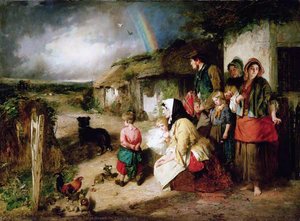
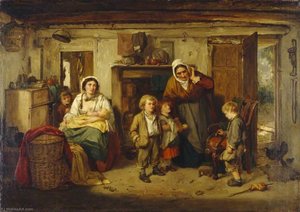
In the sweeping expanse of 19th-century oil painting, few works capture the communal spirit and the poignant weight of tradition quite like Thomas Faed’s "The Last of the Clan." Created in 1865, this masterful composition serves as more than just a depiction of a gathering; it is a window into a vanishing era. The canvas breathes with the energy of a significant event, where the rhythmic movement of horses and the quiet murmurs of a crowd converge. At the heart of this dramatic tableau sits a striking white horse, bearing a rider who commands the viewer's immediate attention. This central figure acts as an anchor amidst the swirling activity of the surrounding assembly, creating a focal point that is both majestic and deeply grounded in the earthiness of the scene.
The technique employed by Faed demonstrates a profound command over light and shadow, a hallmark of mid-19th-century realism. Through the careful application of oil on canvas, the artist achieves a remarkable sense of depth, pulling the observer into the lively atmosphere of the crowd. The interplay of luminosity across the white coat of the central horse contrasts beautifully with the more muted, atmospheric tones of the background riders and spectators. This deliberate use of chiaroscuro does not merely illuminate the subjects; it imbues the painting with a palpable sense of drama, making the air feel thick with the dust of the gathering and the shared anticipation of those present.
Symbolism and the Echo of History
Beyond its technical brilliance, "The Last of the Clan" carries a heavy symbolic resonance. The title itself suggests a sense of finality and the preservation of heritage. As the figures gather, there is an underlying tension between the celebration of the moment and the melancholy realization that such traditions may be nearing their end. The horses, symbols of strength, nobility, and the untamed spirit, serve as metaphors for the enduring legacy of the clan being depicted. Every interaction—the whispered conversations among the foreground figures and the distant silhouettes of riders—contributes to a larger story of identity, kinship, and the inevitable passage of time.
For the discerning collector or interior designer, this piece offers an unparalleled opportunity to introduce a sense of historical gravity and narrative depth into a space. The painting’s dynamic composition makes it a versatile centerpiece, capable of anchoring a room with its classical elegance while sparking endless conversation. Whether placed in a grand library, a sophisticated study, or a curated gallery wall, a high-quality reproduction of this work brings with it the prestige of the 1860s and the soulful artistry of Thomas Faed. It is an investment in emotion, a tribute to the enduring power of human connection, and a timeless addition to any collection dedicated to the beauty of historical storytelling.
Related Artworks

Artist Biography
Giovanni Costa (Nino Costa): A Pioneer of Italian Landscape Painting
Giovanni Costa, known affectionately as “Nino” during his lifetime and later celebrated as Giovanni Costa, was a pivotal figure in the development of Italian landscape painting during the 19th century. Born in Rome on October 15, 1826, into a family deeply rooted in commerce – his father, Gioacchino Costa, had established a successful wool-spinning factory – Costa’s artistic journey began unexpectedly, nurtured by an early encounter with Baron Vincenzo Camuccini, a prominent Neoclassical painter. This initial exposure sparked a lifelong dedication to capturing the essence of the Italian countryside, ultimately influencing a generation of artists known as the Macchiaioli. His life was marked by both artistic passion and fervent patriotism, culminating in his courageous participation in Italy’s unification efforts.Early Influences and Artistic Training
Costa's formal training began at a young age, initially with Vincenzo Camuccini, who instilled in him the importance of direct observation and working from nature. Following his father’s death, he enrolled in the prestigious Collegio Bandinelli, where he studied under Luigi Durantini, Francesco Coghetti, Francesco Podesti, and Filippo Agricola – all esteemed artists of the time. These formative years exposed him to the principles of Neoclassicism while simultaneously encouraging a burgeoning interest in capturing the nuances of the natural world. Crucially, his experiences at the Accademia di San Luca provided access to a vibrant artistic community, fostering experimentation and pushing beyond traditional academic styles. This period laid the groundwork for his distinctive approach – one characterized by loose brushwork, vibrant color, and an emphasis on atmospheric effects.The Macchiaioli and a Revolutionary Style
Costa’s artistic trajectory took a significant turn in the 1850s when he encountered the Macchialoi, a group of Florentine artists who championed a revolutionary approach to painting. Rejecting the meticulous detail favored by earlier generations, the Macchialoi utilized “macchia,” or brushstrokes of pure color applied directly to the canvas – a technique that created a sense of immediacy and spontaneity. Costa embraced this method wholeheartedly, employing it to depict scenes of rural life, shepherds tending their flocks, and the rugged beauty of the Italian landscape. His paintings weren’t intended as photographic representations but rather as evocative impressions, capturing the light, mood, and spirit of the moment. His work served as a major inspiration for many younger artists, establishing him as a key figure in the movement's development.Patriotism and Participation in Italian Unification
Beyond his artistic pursuits, Costa was deeply committed to the cause of Italian unification. He actively participated in several patriotic uprisings, most notably during the revolutions of 1848 and 1870. His dedication culminated in a pivotal moment during the assault on Rome in 1870, where he fearlessly led the charge over the Porta Pia, symbolizing the triumph of the newly unified nation. This act of bravery cemented his place as a national hero and further solidified his reputation as a passionate patriot.Legacy and Notable Works
Giovanni Costa’s legacy extends far beyond his individual paintings. He profoundly influenced a generation of Italian landscape artists, shaping the course of 19th-century painting in Italy. His innovative use of color, brushwork, and atmospheric effects established a new standard for depicting the beauty of the Italian countryside. Notable works include *Donne sulla spiaggia di Porto d’Anzio*, a captivating depiction of women on the beach, and his numerous scenes of rural life that capture the essence of the Italian peasantry. His paintings are characterized by their warmth, vitality, and an undeniable sense of national pride. Costa died in Rome on January 31, 1903, leaving behind a rich artistic legacy that continues to inspire admiration and appreciation today.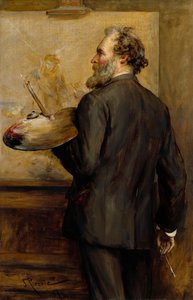
thomas faed
1826 - 1900 , United Kingdom
Quick Facts
- Artistic Movement Or Style: Landscape painting
- Artists Or Movements Influenced By This Artist: ['Macchiaioli']
- Artists Who Influenced This Artist:
- Vincenzo Camuccini
- Luigi Durantini
- Francesco Coghetti
- Francesco Podesti
- Filippo Agricola
- Date Of Birth: 15 Oct 1826
- Date Of Death: 31 Jan 1903
- Full Name: Giovanni Costa (Nino Costa)
- Nationality: Italian
- Notable Artworks: ["Donne sulla spiaggia di Porto d'Anzio"]
- Place Of Birth: Rome, Italy
Related Articles

White on Canvas: 10 Masterpieces & Timeless Elegance for Your Home Decor
Explore 10 iconic white paintings by Monet, Whistler & Rothko! Discover the stories behind these serene masterpieces and their impact on art history. Find museum-quality reproductions for your home decor at .
The Noble Steed on Canvas: A Historical & Artistic Exploration of Horse Painting Across Cultures
Explore the rich history of horse painting! Discover masterpieces from Stubbs to Munnings & learn about symbolism, techniques & artists. Find museum-quality reproductions at ArtsDot.

The Subtleties of White: Exploring Absence, Light & Symbolism in Art History
Explore the profound symbolism & history of white in art! From ancient purity to modern abstraction, discover how artists have used absence & light. Expert insights from ArtsDot.
The Equine Muse: A Historical & Artistic Exploration of Horses in Painting
Explore the captivating history of horses in painting! Discover Renaissance masterpieces, Baroque grandeur & expert insights for collecting equestrian art. Learn about symbolism, techniques & lasting value with ArtsDot.
The Noble Steed: A Historical and Artistic Exploration of Horses in Fine Art
Explore the rich history of horses in fine art! From ancient depictions to Renaissance masterpieces & beyond, discover iconic artworks and artists. Learn about symbolism, techniques, and find museum-quality reproductions at ArtsDot.