

 Preview
 Send
Send Share
Share
 Details

 Download
 Similars
 X-Ray
X-Ray Diaporama
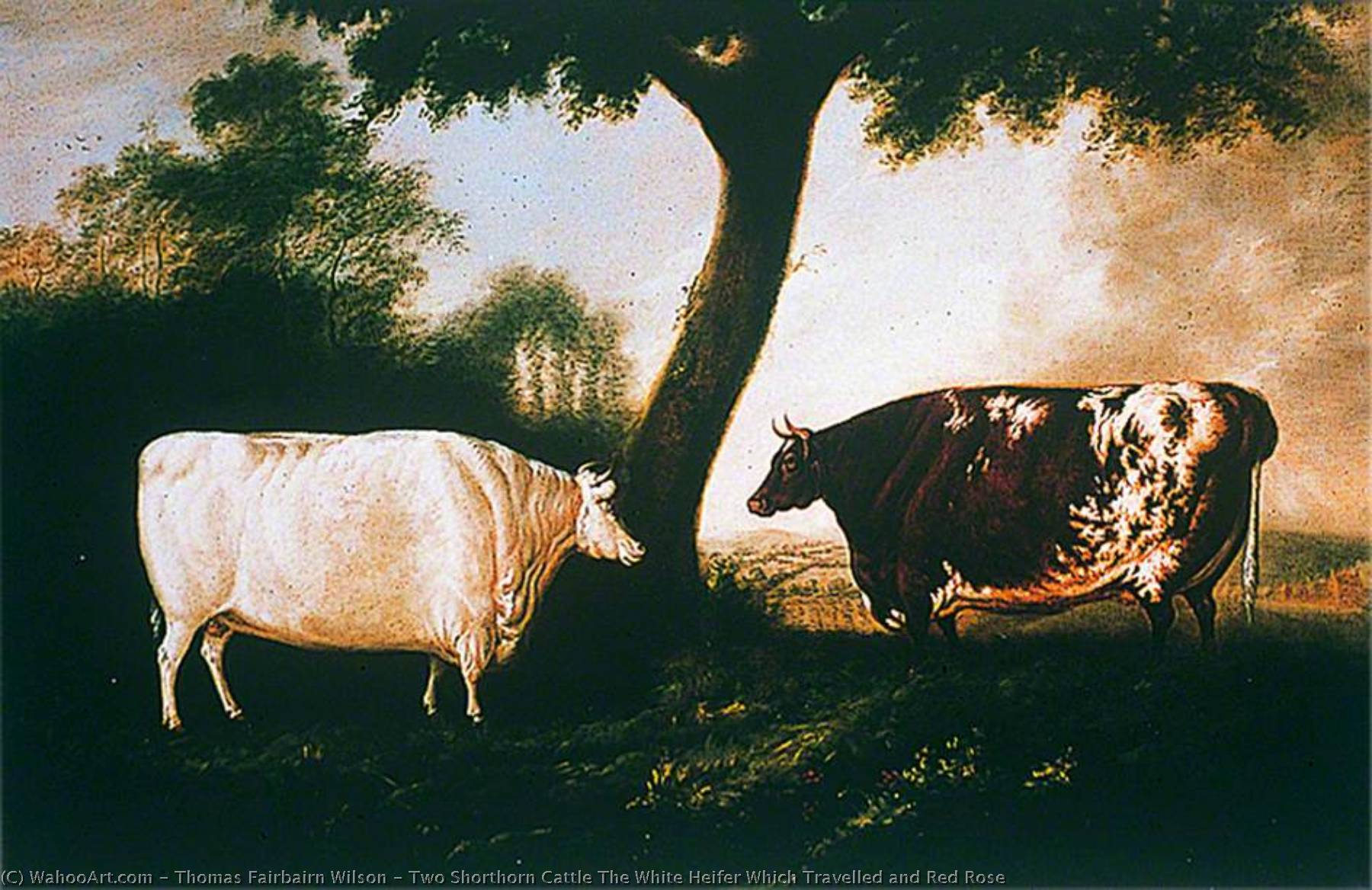
Two Shorthorn Cattle The White Heifer Which Travelled and Red Rose
 1806
1806 80.0 x 120.0 cm
 The Vestey Gallery of British Sporting Art
 Read More
Purchase a high-resolution, enhanced digital image, far superior to the online preview.
Each file is meticulously prepared by our in-house specialists using advanced tools and expert manual retouching. We ensure every image has exceptional clarity, precise color accuracy, and fine detail.
The final file is delivered via email within 72 hours, optimized for immediate use in professional, editorial, and print environments. This is the same quality trusted by top-tier design studios, publishers, and galleries.
Digital Image
Download a high-resolution file for personal display, printing, and creative projects. ( Buy Print Buy Hand Made Painting)
Included in Every Digital Image Order
Expert Digital Delivery, Guaranteed
When you choose ArtsDot.com, you're not just getting an image - you're receiving a professionally enhanced digital artwork, crafted with precision and backed by a satisfaction guarantee. Here's everything that comes with your order, automatically:

Fast Email Delivery
Your high-resolution digital image file will be emailed to you within 72 hours of ordering - ready for immediate use.

AI-Enhanced Digital File
Your artwork is professionally optimized using advanced AI tools and manual editing, ensuring maximum detail, clarity, and color accuracy.

Free Lifetime Re-Delivery
Accidentally deleted or lost your file? No worries - we'll resend it to you anytime, free of charge.

No Import Fees - Ever
Enjoy your artwork instantly with zero customs, duties, or delivery fees - digital downloads are always tax-free.

Color Accuracy Guarantee
We ensure your digital image reflects the original colors as closely as possible using professional tools and color management.

60-Day Satisfaction Guarantee
If you're not satisfied with your digital image, we'll revise it or refund 100% within 60 days - no questions asked.

100% Money-Back Guarantee
Not satisfied? Get a full refund within 60 days of receiving your digital file - no questions asked.

Bulk Order Discounts
Buy 3 images, save 10% - Buy 5, save 15% - Buy 10+, save 20%. Great for creative projects, galleries, and agencies.
Related Artworks







Artist Biography
A Life Dedicated to Pastoral Detail: The World of Thomas Fairbairn Wilson
Thomas Fairbairn Wilson, a name perhaps less celebrated than some of his contemporaries, nevertheless occupies a significant niche in the history of 19th-century British art. Born and passing away in 1847, details surrounding his life remain somewhat elusive; however, his artistic legacy speaks volumes. He was a painter deeply committed to capturing the essence of rural England, specializing in meticulously rendered animal portraits and evocative landscapes. While biographical specifics are scarce, the body of work he left behind reveals an artist profoundly attuned to the beauty of the countryside and the creatures that inhabited it – particularly cattle. His paintings weren’t merely representations; they were celebrations of a way of life intrinsically linked to the land, executed with a skill that garnered him recognition during his time.Early Influences and Artistic Development
The artistic climate of early 19th-century England was one of transition. The Romantic movement still held sway, emphasizing emotion and the sublime power of nature, while a growing interest in realism began to take hold. Wilson’s work demonstrates a fascinating blend of these influences. His landscapes, such as “Drypool Green & St Peter’s Church” (1825), possess a romanticized tranquility, bathed in soft light and showcasing idyllic pastoral scenes. However, this isn't the dramatic, untamed wilderness favored by some Romantics; instead, it is a carefully observed depiction of rural life, grounded in tangible detail. It’s likely Wilson benefited from exposure to artists like John Constable, whose dedication to plein air painting and accurate representation of the English countryside profoundly influenced a generation. The precision with which he rendered his subjects suggests a strong foundation in observational skills, possibly honed through early training in topographical drawing or animal studies. His focus on Shorthorn cattle – a breed undergoing significant improvement during this period – indicates an engagement with agricultural advancements and the economic importance of livestock.Mastering the Animal Portrait: A Focus on Cattle
Wilson’s most enduring contribution lies in his exceptional animal portraits, particularly those featuring Shorthorn cattle. These weren't simply commissions for landowners; they were works that elevated farm animals to a level of artistic significance previously reserved for more traditional subjects like horses or sporting dogs. Paintings like “Two Shorthorn Cattle: The White Heifer Which Travelled and Red Rose” exemplify his skill. He captured not just the physical likeness of these animals, but also their individual character and presence. His technique involved meticulous attention to anatomy, texture, and light, resulting in paintings that are remarkably lifelike. The artist’s ability to convey a sense of weight, muscle tone, and even personality within his subjects is truly remarkable. He often depicted cattle in natural settings, further enhancing the realism and charm of his work. The inclusion of detailed backgrounds – fields, barns, and rural landscapes – adds context and depth to the portraits, creating a complete visual narrative.Historical Significance and Lasting Legacy
Thomas Fairbairn Wilson’s art provides valuable insight into 19th-century British society and its relationship with the land. His paintings reflect the growing importance of agriculture and livestock breeding during this period, as well as a broader appreciation for rural life. He captured a moment in time – a way of life that was rapidly changing due to industrialization and urbanization. While not achieving widespread fame on par with some of his contemporaries, Wilson’s work found a dedicated audience among landowners and agricultural enthusiasts who valued his ability to immortalize their prized animals. Today, his paintings are appreciated for their technical skill, historical significance, and evocative depiction of the English countryside. His contribution lies in elevating animal portraiture to an art form, demonstrating that beauty and artistic merit can be found in even the most humble subjects. His work continues to resonate with those who appreciate a meticulous attention to detail and a genuine love for the natural world.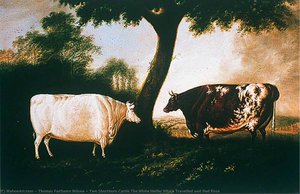
Quick Facts
- Artistic Movement Or Style: Animal painting, Landscape
- Date Of Death: 1847
- Full Name: Thomas Fairbairn Wilson
- Notable Artworks:
- Drypool Green & St Peter’s Church
- Collings Sheep
- Two Shorthorn Cattle

