 Preview
 Send
Send Share
Share
 Details

 Download
 Similars
 X-Ray
X-Ray Diaporama
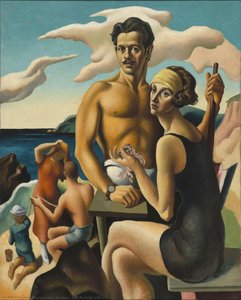
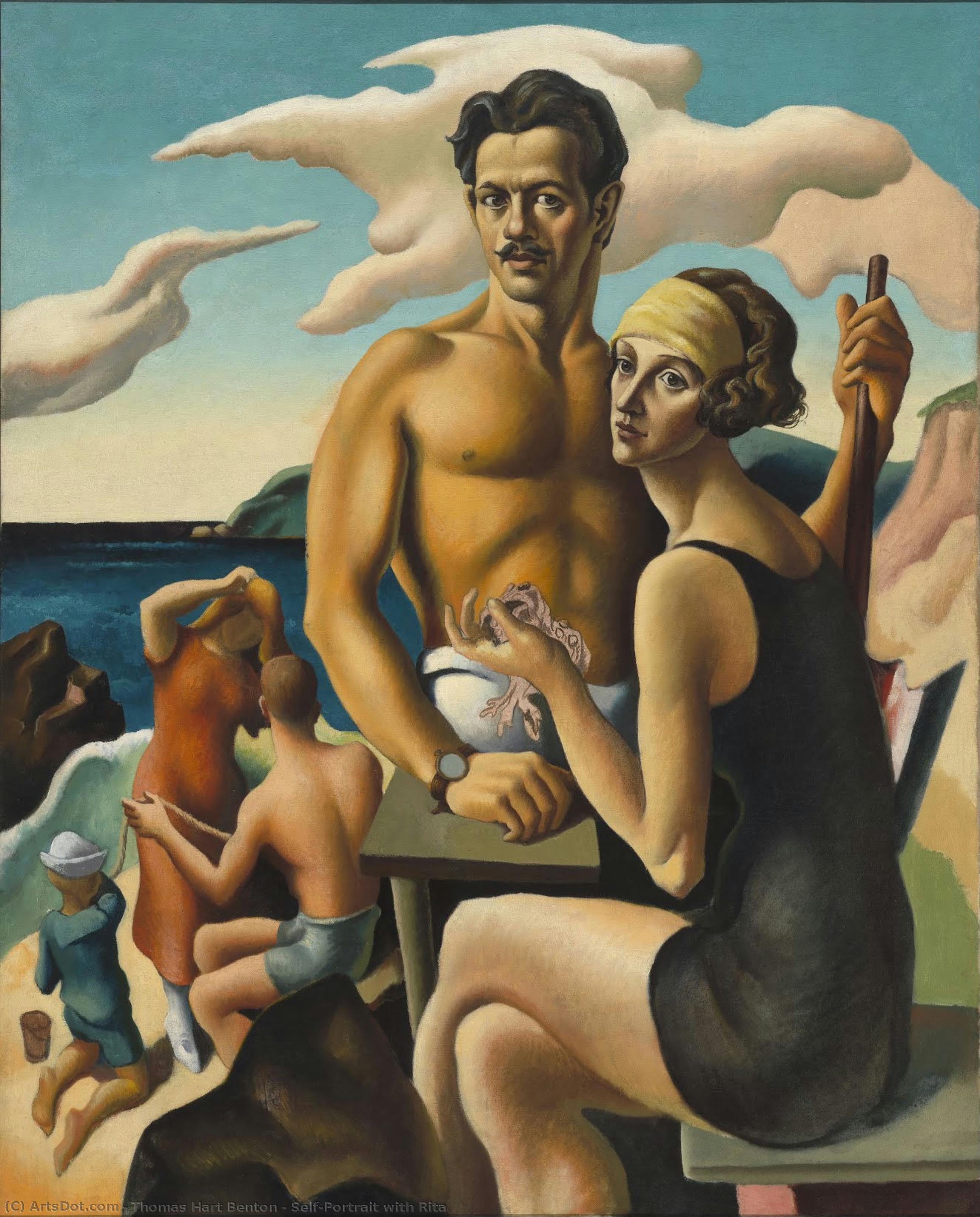
Self-Portrait with Rita
 Acrylic On Canvas
- WallArt
- Regionalist Painting
 1924
1924- 19th Century
 100.0 x 124.0 cm
 National Portrait Gallery
 Read More
Hand Made Oil Reproduction
Hand-painted oil on canvas in your size and frame, made to order by our artists. ( Buy Print Buy Image)




P118B $10

P118H $10

P118W $10

P438Z $10

P508JH $12

P508YH $12

P805H $10

P805Z $10

P919BZ $10

P919G $10

P919XJ $10

P959ZH $10

P968JZ $12

W106C $8

W218G $10

W218JH $8

W218Y $10

W307PJ $10

W316G $10

W316PJ $8

W316Y $10

W398PJ $8

W4111J $10

W500HY $15

W500JH $15

W692G $12

W849H $8

W940BG $15

W953PJ $8




Pick from our preset sizes that match the artwork's original proportions.

You may enter your own dimensions to fit a specific frame or space. If your selected size does not match the original image's proportions, we will either crop the artwork or extend the painting with additional hand-painted elements. A digital mockup will be sent for your approval before production begins.
Please note that the on-screen preview does not reflect the actual cropping or extension. Only the mockup will accurately show the final composition.
While custom sizes are available, we recommend selecting a dimension from the predefined list to preserve the original proportions.
After order, ArtsDot.com team will email client for instructions and provide a mockup preview
Worldwide Delivery () in 3/4 weeks instead of standard 5 weeks. (17 August). No compromise on quality.

Free Worldwide Express Shipping

High-Quality Linen Canvas

Full Shipping Insurance

Customs Tax Refund Guarantee

True Color Matching Guarantee

60-Day Return Policy (Defects Only)

100% Money-Back Guarantee

Bulk Discount Offer
 Glass option is only available in size under 110 CM

Self-Portrait with Rita
Reproduction Medium
Reproduction Size
-


Total Price
$ 263
Artwork Description
A Bold Embrace of American Identity: Examining Thomas Hart Benton’s “Self-Portrait with Rita”
Thomas Hart Benton stands as a cornerstone of American Regionalism, an artistic movement that fiercely defended the spirit and character of rural America during the turbulent 1920s. Unlike his contemporaries captivated by European avant-garde trends, Benton relentlessly pursued inspiration within the landscapes and lives of the Midwest—a decision that cemented his legacy as one of the most distinctive voices in American art history. This portrait, completed around 1924 alongside his wife Rita at Martha’s Vineyard, embodies this ethos perfectly. It's more than just a depiction of two individuals; it’s a manifesto of Benton’s artistic vision and a reflection of the era’s fascination with both physicality and cultural dynamism.- Subject Matter: The painting captures a candid moment between Benton and Rita—a couple enjoying the leisure activities emblematic of their time. Their relaxed posture, coupled with the presence of other beachgoers, speaks to the burgeoning optimism of the Jazz Age.
- Style & Technique: Benton’s masterful use of bold brushstrokes and flattened planes exemplifies the Regionalist style. He eschewed illusionistic realism, prioritizing expressive color and simplified forms to convey emotion and immediacy. The painting's surface is textured with thick impasto—a technique that lends it a palpable physicality and contributes significantly to its dramatic impact.
Historical Context: Hollywood Glamour and the Spirit of Renewal
The creation of “Self-Portrait with Rita” coincided with Benton’s burgeoning interest in Hollywood’s cinematic culture. The influence of Douglas Fairbanks Sr.’s appearance in “The Thief of Bagdad,” a blockbuster film released that year, is subtly present in Benton's depiction of his own shirtless physique—a deliberate nod to the idealized masculinity prevalent in popular entertainment during this period. This visual reference underscores the broader cultural preoccupation with heroism and adventure, mirroring the aspirations of a nation striving for progress amidst economic uncertainty.- Symbolism: Beyond its immediate subject matter, the painting carries symbolic weight. The surfboard represents both physical prowess and an engagement with the natural world—themes central to Benton’s artistic worldview. Furthermore, Rita's presence symbolizes domestic tranquility and stability amidst the anxieties of a rapidly changing society.
- Emotional Impact: “Self-Portrait with Rita” radiates confidence and vitality. Benton’s gaze is direct and unwavering, conveying an inner strength that transcends mere representation. The painting’s energetic composition and vibrant color palette evoke feelings of joy and freedom—capturing the spirit of a generation eager to embrace new possibilities.
Legacy & Reproduction Considerations
Thomas Hart Benton's “Self-Portrait with Rita” remains an enduring symbol of American Regionalism’s commitment to portraying authentic human experience. ArtsDot.com offers meticulously crafted reproductions that faithfully capture the painting’s textural richness and expressive power, allowing collectors and interior designers alike to appreciate its artistic merit and historical significance. Explore a high-quality print today—a testament to Benton's enduring vision of American identity.Related Artworks




Artist Biography
A Midwestern Voice: The Life and Art of Thomas Hart Benton
Born in Neosho, Missouri, in 1889, Thomas Hart Benton emerged as a pivotal figure in American art, a painter who dedicated his life to capturing the essence of the nation’s spirit—particularly that of its heartland. His story is one of rebellion against societal expectations and a passionate embrace of distinctly American themes. Unlike many artists of his generation drawn to European modernism, Benton resolutely turned inward, seeking inspiration in the landscapes, people, and stories of the United States. This commitment placed him at the forefront of the Regionalist movement, alongside Grant Wood and John Steuart Curry, shaping a uniquely American artistic identity during a period of profound social and economic change. His father, Maecenas Benton, was a lawyer and congressman, intending for his son to follow a path in politics; however, young Thomas possessed an irrepressible creative spirit that led him away from the halls of power and toward the world of art. This divergence began with work as a cartoonist for the *Joplin American* newspaper, a formative experience that honed his observational skills and instilled a love for visual storytelling.From Paris to Regionalism: The Development of a Style
Benton’s formal artistic education took him first to the Art Institute of Chicago and then to Paris in 1909, where he studied at the Académie Julian. While exposed to European artistic traditions, he found himself increasingly disillusioned with their detachment from American life. A period of experimentation followed his return to the United States, marked by a search for a visual language that could authentically express his connection to the land and its people. This quest led him through various styles—from impressionism to synchromism—before culminating in the distinctive Regionalist aesthetic he would become known for. His figures became fluid and sculpted, imbued with a sense of dynamism and vitality. He wasn’t merely depicting scenes; he was conveying the energy and rhythm of American life. This stylistic evolution wasn't simply an artistic choice but a deliberate rejection of European dominance and an assertion of American cultural independence. He embraced naturalistic representation, focusing on everyday subjects—farmers, laborers, families—and portraying them with honesty and empathy.Murals and Masterpieces: Benton’s Artistic Achievements
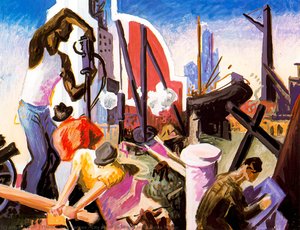
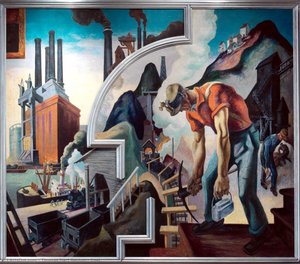
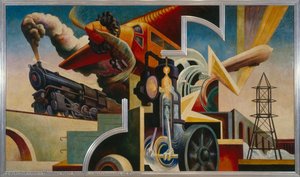
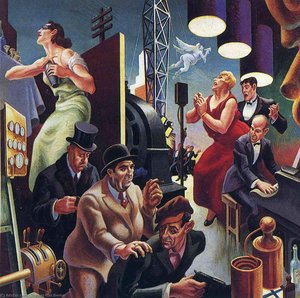
Benton's artistic output was prolific and diverse, encompassing paintings, murals, prints, and illustrations. He is perhaps best known for his large-scale mural projects, which brought art directly into public spaces and made it accessible to a wider audience. The *America Today* murals, commissioned for the New School for Social Research in New York City (1930-31), stand as a monumental achievement—a sweeping panorama of American life during the Great Depression. These panels, now housed at the Metropolitan Museum of Art, depict scenes from across the country, capturing both the hardships and resilience of the American people. Beyond murals, his easel paintings like *The Sheepherder* and *Prodigal Son* demonstrate a mastery of composition, color, and narrative. He possessed an exceptional ability to imbue biblical or historical stories with contemporary relevance, grounding them in the realities of American experience. His work *City Building (Study for America Today)* exemplifies his dynamic style and raw energy. He wasn’t afraid to tackle complex social issues through his art, using it as a platform for commentary and critique.A Legacy of American Identity
Thomas Hart Benton's influence on American art is undeniable. He helped define a distinctly American artistic voice, one that celebrated the nation’s unique character and challenged prevailing European aesthetic norms. His Regionalist approach paved the way for future generations of artists to explore their own regional identities and cultural heritage. He was also a dedicated educator, teaching at institutions like the Art Students League of New York and the Kansas City Art Institute, mentoring numerous aspiring artists—including Jackson Pollock. Benton’s commitment to social realism and his willingness to engage with contemporary issues continue to resonate today. He left behind a body of work that serves as a powerful testament to the enduring spirit of America, its people, and its landscapes. His legacy extends beyond the canvas, inspiring artists to find their own voices and tell their own stories—rooted in the places they call home. He died in 1975, leaving behind a rich artistic heritage that continues to captivate and inspire audiences worldwide.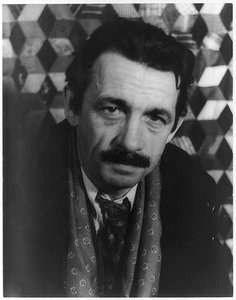
Thomas Hart Benton
1889 - 1975 , United States of America
Quick Facts
- Artistic Movement Or Style: Regionalism
- Date Of Birth: April 15, 1889
- Date Of Death: January 19, 1975
- Full Name: Thomas Hart Benton
- Nationality: American
- Notable Artworks:
- Prodigal Son I
- Flood
- City Building
- The Sheepherder
- Place Of Birth: Neosho, USA
Related Articles

Grant Wood & American Regionalism: Identity, Myth & the Rural Landscape
Explore the world of Grant Wood & American Regionalism with ArtsDot. Discover the symbolism behind 'American Gothic', recurring themes, and the movement's lasting impact on art history. High-quality reproductions available.
Echoes of Place: Regionalism & American Identity in Interwar Art
Explore the rise of American Regionalism in interwar art! Discover Grant Wood, Thomas Hart Benton & the movement's impact on American identity. Expert analysis & historical context.
American Regionalism: A Crucible of Identity – Exploring Themes of Place, Labor & Social Commentary
Explore American Regionalism's powerful depiction of the American heartland during the Great Depression. Discover Grant Wood, Thomas Hart Benton & more. Expert analysis & high-quality art reproductions at ArtsDot.

James Otto Lewis: Navigating American Modernism Through Regional Identity & Stylistic Innovation
Explore the captivating portraits of James Otto Lewis, a pivotal figure bridging 19th-century realism & American Modernism. Discover his groundbreaking work documenting Native American culture and regional identity.
American Realism's Defining Works: 10 Masterpieces for Your Home
Explore 10 defining American Realism masterpieces – Hopper, Homer & more. Discover the stories behind these iconic paintings and bring timeless art to your home with ArtsDot's museum-quality reproductions. Explore the full collection online.