 Preview
 Send
Send Share
Share
 Details

 Download
 Similars
 X-Ray
X-Ray Diaporama
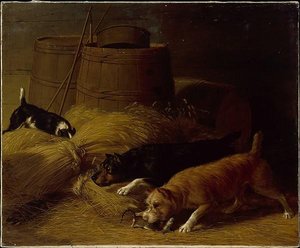
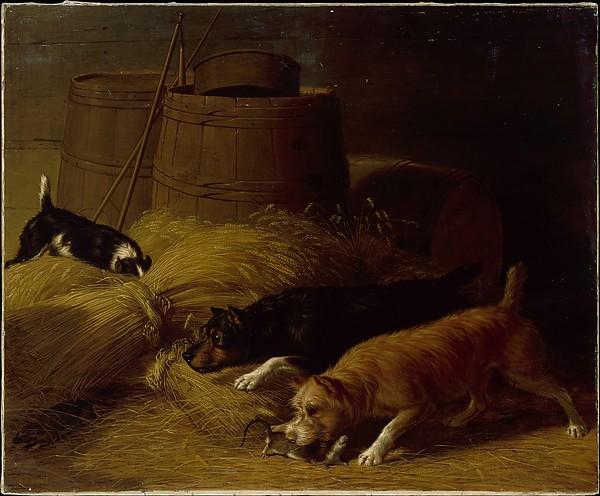
Rats amongst the Barley Sheaves
 Contemporary Realism
 1851
1851 85.0 x 102.0 cm
 Read More
Hand Made Oil Reproduction
Hand-painted oil on canvas in your size and frame, made to order by our artists. ( Buy Print Buy Image)




































Pick from our preset sizes that match the artwork's original proportions.

You may enter your own dimensions to fit a specific frame or space. If your selected size does not match the original image's proportions, we will either crop the artwork or extend the painting with additional hand-painted elements. A digital mockup will be sent for your approval before production begins.
Please note that the on-screen preview does not reflect the actual cropping or extension. Only the mockup will accurately show the final composition.
While custom sizes are available, we recommend selecting a dimension from the predefined list to preserve the original proportions.
After order, ArtsDot.com team will email client for instructions and provide a mockup preview
Worldwide Delivery () in 3/4 weeks instead of standard 5 weeks. (20 August). No compromise on quality.

Free Worldwide Express Shipping

High-Quality Linen Canvas

Full Shipping Insurance

Customs Tax Refund Guarantee

True Color Matching Guarantee

60-Day Return Policy (Defects Only)

100% Money-Back Guarantee

Bulk Discount Offer
 Glass option is only available in size under 110 CM

Rats amongst the Barley Sheaves
Reproduction Medium
Reproduction Size
-


Total Price
$ 263
Related Artworks
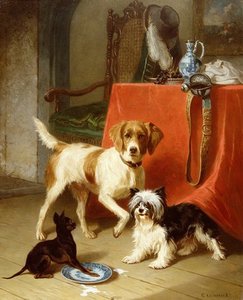
Artist Biography
Thomas Hewes Hinckley: A Pioneer of American Animal Painting
The world of 19th-century American art often focuses on grand landscapes and portraits, yet a quieter, more intimate tradition flourished – the depiction of domestic animals and rural life. Within this realm stands Thomas Hewes Hinckley (1813-1896), an artist whose meticulous observations and sensitive portrayals of cattle, deer, and other wildlife offer a remarkable window into a vanishing American past. Born in Milton, Massachusetts, Hinckley’s career unfolded against the backdrop of rapid industrialization and westward expansion, shaping his artistic vision and ultimately establishing him as one of the most accomplished animal painters of his era.
Hinckley's early life was marked by a significant loss – the death of his mother when he was just twelve years old. This event profoundly impacted him, fostering a deep appreciation for the natural world and a desire to capture its beauty with unwavering dedication. He received some formal artistic training in Philadelphia under William Mason, but it was through independent study and extensive travel that Hinckley truly honed his skills. A pivotal moment arrived in 1851 when he journeyed to Europe, immersing himself in the works of Dutch masters like Rembrandt and Frans Hals, as well as the detailed animal paintings of William Landseer. These influences profoundly shaped his approach – a commitment to realism, careful observation, and an ability to convey both the physical presence and emotional state of his subjects.
The Art of Cattle: A Defining Focus
While Hinckley’s oeuvre encompassed a range of subjects, he is perhaps most renowned for his paintings of cattle. His depictions are not merely representations of livestock; they are imbued with a sense of character and narrative. Works like “Cattle Seeking Shelter from an Approaching Storm” and “Disputed Game” demonstrate his remarkable ability to capture the vulnerability and resilience of these animals in challenging environments. Hinckley’s meticulous attention to detail – the texture of their coats, the glint of sunlight on their hides, the subtle expressions in their eyes – elevates these paintings beyond simple genre scenes. He was commissioned by Daniel Webster, a prominent statesman, to create drawings of his famous Ayrshire dairy herd in 1845, showcasing his skill and dedication to capturing the essence of his subjects.
A Retreat to Naushon Island: The Pursuit of Deer
As he matured as an artist, Hinckley sought refuge on the island of Naushon in Massachusetts Bay, a haven for artists and naturalists. This remote location provided him with unparalleled opportunities for observation and study. It was here that he dedicated himself to painting deer – a subject that would occupy much of his later career. His depictions of these majestic creatures are characterized by an extraordinary level of detail and sensitivity. Hinckley’s paintings of deer, often rendered in muted earth tones, capture their grace, power, and elusive beauty with remarkable accuracy. He spent years meticulously studying their movements, behaviors, and interactions within their natural habitat, resulting in a body of work that is both scientifically informed and profoundly evocative.
California Sketches: A New Landscape
In 1870, Hinckley traveled to California, where he continued his artistic pursuits. He found inspiration in the rugged coastal landscapes and the abundant wildlife – particularly deer and elk – of this new frontier. His California paintings reflect a shift in style, incorporating bolder colors and dramatic lighting effects. These works offer a glimpse into the challenges and opportunities presented by westward expansion, as well as Hinckley’s ability to adapt his artistic vision to new environments.
Legacy and Influence
Thomas Hewes Hinckley's legacy extends beyond his individual paintings. His meticulous observations and detailed illustrations laid the groundwork for future generations of wildlife artists and naturalists. Mary Hewes Hinckley, his wife, continued her work as a herpetologist, contributing significantly to the study of amphibians and reptiles. While much remains unknown about their personal lives, their combined contributions to art and science are undeniable. His paintings continue to be exhibited and admired for their realism, sensitivity, and ability to capture the essence of American wildlife in a bygone era.
Hinckley’s work stands as a testament to the power of observation, dedication, and artistic vision – a reminder that even within the seemingly mundane world of domestic animals and rural landscapes, profound beauty and enduring significance can be found.
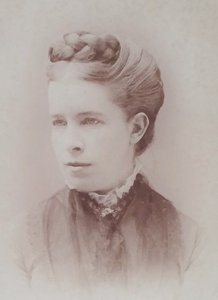
thomas hewes hinckley
1813 - 1896
Quick Facts
- Artistic Movement Or Style: Genre painting, Animal art
- Artists Or Movements Influenced By This Artist: ['Dutch landscape art']
- Artists Who Influenced This Artist:
- William Landseer
- Flemish masters
- Date Of Birth: 1813
- Date Of Death: 1896
- Full Name: Thomas Hewes Hinckley
- Nationality: American
- Notable Artworks:
- Cattle Seeking Shelter
- Disputed Game
- Place Of Birth: Milton, Massachusetts
Related Articles
Animalia: Exploring the Enduring Presence of Animals in Art & Interior Design
Explore the rich history of animal symbolism in art, from ancient mythology to modern masterpieces. Discover how animals have inspired artists for centuries and learn how to incorporate these powerful motifs into your home décor.
American Realism's Defining Works: 10 Masterpieces for Your Home
Explore 10 defining American Realism masterpieces – Hopper, Homer & more. Discover the stories behind these iconic paintings and bring timeless art to your home with ArtsDot's museum-quality reproductions. Explore the full collection online.

Grant Wood & American Regionalism: Identity, Myth & the Rural Landscape
Explore the world of Grant Wood & American Regionalism with ArtsDot. Discover the symbolism behind 'American Gothic', recurring themes, and the movement's lasting impact on art history. High-quality reproductions available.
Thomas Worthington Whittredge: Capturing the American Pastoral Ideal with Luminist Light
Explore the luminous landscapes of Thomas Worthington Whittredge, a key figure in the Hudson River School and master of Luminism. Discover his captivating paintings & legacy with ArtsDot.
Thomas Wilmer Dewing: Atmospheric Landscapes & the American Tonalist Vision
Explore the captivating world of Thomas Wilmer Dewing, a leading figure in American Tonalism. Discover his evocative paintings, artistic influences, and legacy with ArtsDot.