 Preview
 Send
Send Share
Share
 Details

 Download
 Similars
 X-Ray
X-Ray Diaporama
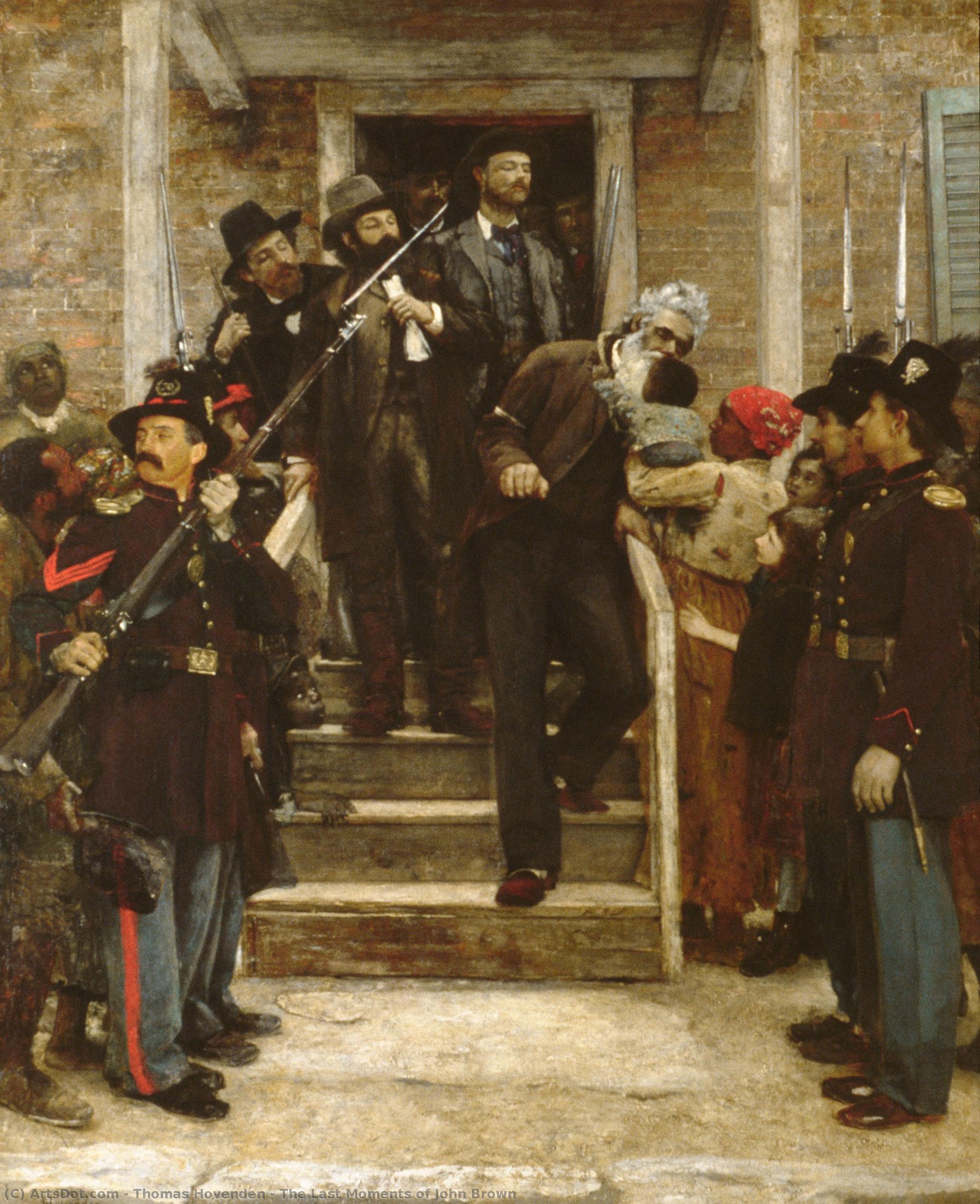
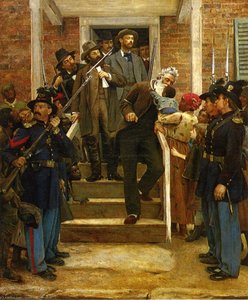
The Last Moments of John Brown
 Acrylic On Canvas
- WallArt
- Contemporary Realism
 1882
1882 197.0 x 168.0 cm
 Metropolitan Museum of Art
 Read More
Hand Made Oil Reproduction
Hand-painted oil on canvas in your size and frame, made to order by our artists. ( Buy Print Buy Image)




































Pick from our preset sizes that match the artwork's original proportions.

You may enter your own dimensions to fit a specific frame or space. If your selected size does not match the original image's proportions, we will either crop the artwork or extend the painting with additional hand-painted elements. A digital mockup will be sent for your approval before production begins.
Please note that the on-screen preview does not reflect the actual cropping or extension. Only the mockup will accurately show the final composition.
While custom sizes are available, we recommend selecting a dimension from the predefined list to preserve the original proportions.
After order, ArtsDot.com team will email client for instructions and provide a mockup preview
Worldwide Delivery () in 3/4 weeks instead of standard 5 weeks. (16 August). No compromise on quality.

Free Worldwide Express Shipping

High-Quality Linen Canvas

Full Shipping Insurance

Customs Tax Refund Guarantee

True Color Matching Guarantee

60-Day Return Policy (Defects Only)

100% Money-Back Guarantee

Bulk Discount Offer
 Glass option is only available in size under 110 CM

The Last Moments of John Brown
Reproduction Medium
Reproduction Size
-


Total Price
$ 263
Artwork Description
A Portrait of Resilience: Thomas Hovenden’s “The Last Moments of John Brown”
The painting "The Last Moments of John Brown," completed in 1882 by Irish artist Thomas Hovenden, transcends mere historical depiction; it embodies a profound meditation on compassion and the enduring legacy of abolitionist ideals. Executed in oil on canvas measuring 197 x 168 cm, this monumental work captures a poignant tableau – John Brown, facing his imminent execution, pausing to embrace his infant son. More than just a chronicle of an event, Hovenden’s masterpiece speaks volumes about the moral complexities inherent in pursuing justice and the enduring power of human connection amidst adversity.Historical Context: The Shadow of Harper's Ferry
The scene unfolds against the backdrop of the tumultuous American Civil War era. John Brown’s raid on Harpers Ferry Armory, Virginia (now West Virginia), represented a daring attempt to ignite an armed rebellion against slavery – a cause championed by Hovenden himself and countless others within the burgeoning abolitionist movement. The raid failed militarily, resulting in Brown's capture and trial, yet it galvanized public opinion and solidified Brown’s position as a martyr for liberty. Hovenden skillfully portrays this pivotal moment, reflecting the fervent debates surrounding emancipation and the moral imperative to confront injustice head-on. Newspaper accounts of the trial vividly documented Brown’s final moments, emphasizing his tenderness towards his son – a detail that resonated deeply with audiences grappling with the ethical dilemmas of violent resistance.Stylistic Considerations: Realism Infused with Sentiment
Hovenden's artistic approach leans heavily into realism, prioritizing meticulous observation and accurate representation of anatomical detail. However, he doesn’t merely aim for photographic accuracy; rather, he employs a nuanced technique to convey emotion. The artist utilizes subtle tonal gradations—particularly in the depiction of Brown’s face—to express vulnerability and quiet contemplation. Notice how Hovenden captures the palpable tension of the scene while simultaneously conveying an overwhelming sense of compassion. He skillfully blends realism with expressive brushstrokes, creating a visual experience that is both intellectually stimulating and emotionally resonant. The artist's deliberate choice to portray Brown in this intimate gesture – embracing his son – underscores the painting’s central theme: the preservation of humanity amidst conflict.Symbolism: Embracing Innocence Amidst Desolation
The inclusion of the infant son serves as a powerful symbol of innocence and hope within the grim context of impending death. It represents the future generations who would inherit the struggle for freedom, reminding viewers that even in moments of profound despair, compassion and familial love endure. The two guns positioned strategically around Brown’s figure are not merely props; they symbolize the violence inherent in the pursuit of justice – a stark contrast to the tenderness displayed by Brown himself. Hovenden subtly juxtaposes these elements, prompting contemplation on the cost of moral conviction and the importance of safeguarding vulnerable individuals amidst societal upheaval.Emotional Impact: A Testament to Human Dignity
“The Last Moments of John Brown” lingers in the viewer’s mind long after encountering it. Hovenden's masterful execution evokes a profound sense of empathy, prompting reflection on themes of courage, sacrifice, and the enduring human spirit. The painting’s subdued palette—dominated by earthy tones—contributes to its solemn atmosphere, mirroring the gravity of Brown’s predicament. Yet, amidst this melancholy tone resides an undeniable warmth – embodied in Brown's embrace of his son – which elevates the artwork beyond a simple historical record into a timeless meditation on compassion and the unwavering belief in human dignity. It remains a poignant reminder that even facing death, one can find solace in connection with loved ones and reaffirmation of moral principles.Related Artworks
Artist Biography
A Life Forged in Tragedy, Illuminated by Realism
Thomas Hovenden’s story is one of resilience and artistic dedication born from profound hardship. Born on December 28, 1840, in the small Irish town of Dunmanway, County Cork, his early years were irrevocably marked by the devastation of the Great Famine. The loss of both parents at a tender age – just six years old – thrust him into the care of an orphanage, a circumstance that undoubtedly shaped his empathetic worldview and informed the quiet dignity he would later imbue in his art. This initial period wasn’t solely defined by sorrow; even as a young boy, Hovenden demonstrated an aptitude for visual artistry, beginning his training not with oils or watercolors, but as an apprentice to a carver and gilder. This foundational experience instilled within him a meticulous attention to detail and a deep understanding of form – qualities that would become hallmarks of his mature style. He further honed his skills at the Cork School of Design before making the momentous decision to immigrate to the United States in 1863, seeking new opportunities and a fresh start amidst the promise of a burgeoning nation.From Paris to Pont-Aven: The Shaping of an Artistic Vision
America offered Hovenden access to further artistic education, initially at the National Academy of Design in New York City. However, it was his sojourn to Paris between 1874 and 1880 that proved truly transformative. Studying under Jean-Léon Cabanel at the prestigious École des Beaux Arts provided him with a rigorous academic foundation, but it was his immersion within the American art colony at Pont-Aven, Brittany, led by Robert Wylie, that ignited his distinctive artistic voice. This enclave of artists fostered an environment of experimentation and shared inspiration, drawing Hovenden away from purely academic pursuits and towards a more naturalistic representation of life. The rugged beauty of the Breton landscape and the simplicity of rural existence profoundly impacted him, leading to a focus on depicting everyday scenes and the lives of ordinary people – particularly peasants – with sensitivity and respect. He began to cultivate a style characterized by realism, eschewing grand narratives for quiet moments of human connection and emotional resonance. This period was crucial in solidifying his commitment to portraying the dignity inherent in even the most humble existence.Themes of American Life: Farm, Family, and Freedom
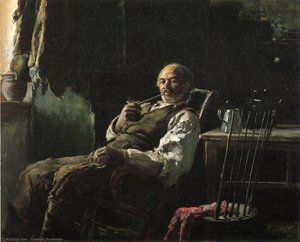
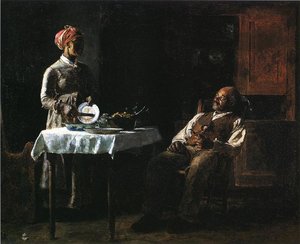
Upon returning to America in 1880, Hovenden quickly established himself as a painter deeply engaged with the realities of American life. His canvases became windows into the world of rural communities, offering poignant glimpses into farm life, family dynamics, and the lingering echoes of historical struggles. While he tackled various subjects, certain themes consistently emerged in his work. He was drawn to scenes illustrating the challenges and rewards of agricultural labor, capturing the quiet strength and resilience of those who tilled the land. Equally compelling were his portraits, particularly those of African Americans, which stand out for their attempt – though sometimes viewed through a paternalistic lens by modern critics – to depict subjects with dignity and humanity. “The Last Moments of John Brown” (1884), a powerful depiction of the abolitionist leader facing his execution, remains one of his most iconic works, embodying his commitment to social justice and historical narrative. “Breaking Home Ties” (1890), which achieved widespread recognition through engraving, beautifully illustrates a scene of American rural life, capturing a moment of poignant farewell. Other notable paintings like “Chloe and Sam” (1882) and "Taking His Ease"(1885) further demonstrate his ability to find beauty and meaning in the everyday lives of ordinary people.A Legacy of Teaching and Tragic Loss
In 1886, Hovenden’s artistic achievements were recognized with an appointment as Professor of Painting and Drawing at the Pennsylvania Academy of the Fine Arts (PAFA). This position came about under controversial circumstances, following the dismissal of Thomas Eakins, but Hovenden nonetheless embraced his role as an educator. He proved to be a highly influential teacher, mentoring a generation of artists who would go on to shape the course of American art. Among his most notable students were sculptor Alexander Stirling Calder and Robert Henri, a leading figure in the Ashcan School – movements that challenged traditional artistic conventions and sought to depict urban life with unflinching honesty. Tragically, Hovenden’s own life was cut short on August 14, 1895, at the age of 54. He died heroically alongside a ten-year-old girl in a railroad accident near his home in Plymouth Meeting, Pennsylvania, reportedly attempting to save her from an oncoming train. His untimely death cast a shadow over the art world and underscored the profound loss of a gifted artist and dedicated educator. His former home, Hovenden House, Barn and Abolition Hall, was added to the National Register of Historic Places in 1971, acknowledging its significance as a stop on the Underground Railroad and preserving a tangible link to his legacy. Today, Hovenden’s paintings continue to be exhibited and studied, offering valuable insights into American life in the late 19th century and reminding us of the power of art to illuminate both beauty and hardship.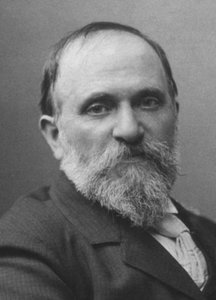
Thomas Hovenden
1840 - 1895 , Ireland
Quick Facts
- Artistic Movement Or Style: Realism
- Artists Or Movements Influenced By This Artist:
- Alexander Stirling Calder
- Robert Henri
- Artists Who Influenced This Artist:
- Cabanel
- Robert Wylie
- Date Of Birth: December 28, 1840
- Date Of Death: August 14, 1895
- Full Name: Thomas Hovenden
- Nationality: Irish-American
- Notable Artworks:
- The Last Moments of John Brown
- Breaking Home Ties
- Chloe and Sam
- Taking His Ease
- Place Of Birth: Dunmanway, Ireland
Related Articles

John Singer Sargent's 25 Masterpieces: Portraits & Beyond | ArtsDot
Explore 25 iconic John Singer Sargent paintings – from dazzling portraits to Impressionist landscapes. Discover the stories behind Madame X, El Jaleo & more! Find museum-quality art reproductions and elevate your home decor with ArtsDot.com.
John George Brown: Capturing American Life & Sentiment in 19th-Century Genre Painting
Explore the captivating genre paintings of John George Brown, celebrated for his realistic depictions of 19th-century American life. Discover his legacy & find museum-quality reproductions at ArtsDot.

John Constable's Masterpieces: Explore 25 Iconic Landscapes for Your Home
Journey through John Constable's 25 most celebrated landscapes. Explore Romanticism, Dedham Vale & his masterful use of light in iconic paintings like 'Hay Wain'. Find museum-quality art reproductions and elevate your home decor on ArtsDot.com.
Grant Wood & American Regionalism: Identity, Myth & the Rural Landscape
Explore the world of Grant Wood & American Regionalism with ArtsDot. Discover the symbolism behind 'American Gothic', recurring themes, and the movement's lasting impact on art history. High-quality reproductions available.
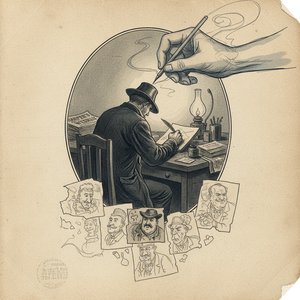
Harper's Weekly & the Anonymous Hand: Artistic Identity in 19th-Century America
Explore the fascinating world of Harper's Weekly & its often-anonymous artists! Discover Winslow Homer, Thomas Nast, and the impact of 19th-century illustration on American visual culture. A deep dive for art history enthusiasts.