 Preview
 Send
Send Share
Share
 Details

 Download
 Similars
 X-Ray
X-Ray Diaporama
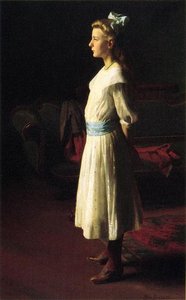
Portrait of Margaret Perot


 Read More
Hand Made Oil Reproduction
Hand-painted oil on canvas in your size and frame, made to order by our artists. ( Buy Print Buy Image)




P118B $10

P118H $10

P118W $10

P438Z $10

P508JH $12

P508YH $12

P805H $10

P805Z $10

P919BZ $10

P919G $10

P919XJ $10

P959ZH $10

P968JZ $12

W106C $8

W218G $10

W218JH $8

W218Y $10

W307PJ $10

W316G $10

W316PJ $8

W316Y $10

W398PJ $8

W4111J $10

W500HY $15

W500JH $15

W692G $12

W849H $8

W940BG $15

W953PJ $8




Pick from our preset sizes that match the artwork's original proportions.

You may enter your own dimensions to fit a specific frame or space. If your selected size does not match the original image's proportions, we will either crop the artwork or extend the painting with additional hand-painted elements. A digital mockup will be sent for your approval before production begins.
Please note that the on-screen preview does not reflect the actual cropping or extension. Only the mockup will accurately show the final composition.
While custom sizes are available, we recommend selecting a dimension from the predefined list to preserve the original proportions.
After order, ArtsDot.com team will email client for instructions and provide a mockup preview
Worldwide Delivery () in 3/4 weeks instead of standard 5 weeks. (16 August). No compromise on quality.

Free Worldwide Express Shipping

High-Quality Linen Canvas

Full Shipping Insurance

Customs Tax Refund Guarantee

True Color Matching Guarantee

60-Day Return Policy (Defects Only)

100% Money-Back Guarantee

Bulk Discount Offer
 Glass option is only available in size under 110 CM

Portrait of Margaret Perot
Reproduction Medium
Reproduction Size
-


Total Price
$ 263
Artwork Description
A Moment Frozen in Time: The Portrait of Margaret Perot
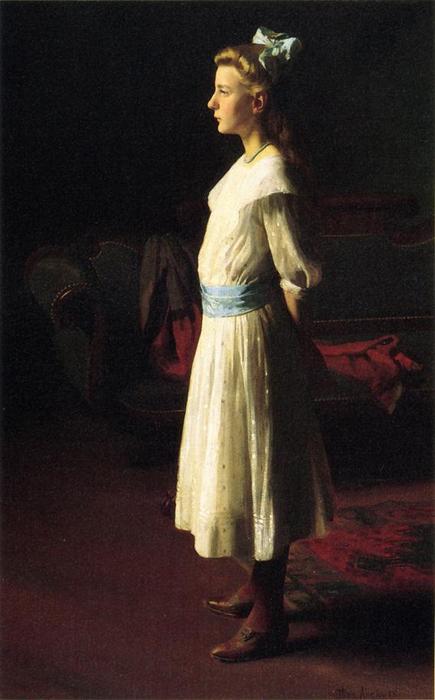
Thomas Pollock Anshutz’s “Portrait of Margaret Perot,” painted in 1908, isn't merely a likeness; it’s a carefully constructed tableau of understated elegance and quiet contemplation. More than a century after its creation, the painting retains an arresting immediacy, inviting us into a private moment within a bygone era. It’s a work that speaks volumes through restraint – a testament to Anshutz’s mastery of capturing not just appearance, but also the subtle nuances of human character.
The subject, Margaret Perot, is presented in a three-quarter profile view, her gaze directed subtly towards the viewer's right. She stands within what appears to be a modestly furnished interior, perhaps a parlor or drawing room, draped with fabrics that hint at wealth and refinement. The composition immediately establishes a sense of formality, yet it’s tempered by an undeniable warmth – a feeling derived from Perot’s direct, yet not overly assertive, eye contact. The dark background serves as a powerful counterpoint to her figure, isolating her and drawing our attention entirely to her presence.
Realism Rooted in Observation: Anshutz's Technique
Anshutz was deeply influenced by Thomas Eakins, his mentor at the Pennsylvania Academy of Fine Arts, and this influence is evident in the meticulous detail and naturalistic approach of “Portrait of Margaret Perot.” The artist’s technique is characterized by a deliberate layering of oil paints, creating a rich surface texture that captures the subtle variations in light and shadow. Notice how he skillfully renders the folds of her dress, not with sharp outlines but with soft gradations of tone – an indication of his careful observation of form and fabric. The brushstrokes are generally smooth and blended, contributing to a sense of realism without sacrificing visual appeal.
The color palette is remarkably restrained, dominated by muted earth tones—creams, browns, and blues—that evoke a sense of timelessness. The ribbon adorning her hair adds a touch of delicate color, while the subtle blue in her dress hints at a connection to the outside world. Anshutz’s use of light is particularly effective; it's diffused and soft, illuminating Perot’s face and upper body without creating harsh contrasts. This creates an atmosphere of intimacy and invites us to linger on her expression.
Symbolism and Emotional Resonance
Beyond its technical merits, “Portrait of Margaret Perot” is imbued with a quiet sense of symbolism. The dark background could be interpreted as representing mystery or solitude, while the subject’s contemplative gaze suggests introspection and perhaps even a touch of reserved dignity. The pose itself—formal yet relaxed—conveys an air of self-possession and inner strength. It's not a portrait designed to dazzle with extravagance; rather, it aims to capture something deeper – the essence of a woman navigating her place in society.
Considering the historical context—1908, a period of significant social change and industrialization—the painting offers a poignant glimpse into the lives of the upper class. It’s a reminder that even within seemingly stable environments, there existed layers of complexity and unspoken emotions. The portrait speaks to the enduring power of art to capture not just appearances, but also the spirit of an age.
A Legacy of Realism: Anshutz's Place in Art History
Thomas Pollock Anshutz remains a significant figure in American art history, celebrated for his unflinching realism and his ability to portray everyday life with remarkable honesty. His work, exemplified by “Portrait of Margaret Perot,” reflects a shift away from idealized representations towards a more direct engagement with the world around him. Reproductions of this captivating portrait offer an accessible way to appreciate Anshutz’s artistic vision and experience the enduring appeal of his masterful technique.
Related Artworks
Artist Biography
A Life Dedicated to Realism: The World of Thomas Pollock Anshutz
Born in Newport News, Virginia, in 1851, Thomas Pollock Anshutz emerged as a pivotal figure in the development of American realism. His artistic journey began with formal instruction at the National Academy of Design in the early 1870s under Lemuel Wilmarth, laying a foundational groundwork for his future explorations. However, it was his move to Philadelphia in 1875 and subsequent studies with Thomas Eakins at the Philadelphia Sketch Club that truly ignited his artistic spirit. This mentorship proved transformative, instilling in Anshutz a commitment to unflinching observation and an honest depiction of everyday life – principles that would define his career. The influence of Eakins wasn’t merely stylistic; it was a philosophical alignment with a new way of seeing and representing the world, one stripped of idealization and focused on the tangible realities surrounding them. Anshutz's early exposure to both academic training and Eakins’ radical approach forged within him a unique artistic sensibility, poised to challenge conventional norms.The Shaping of a Style: Influences and Artistic Development
Anshutz’s artistic development was a fascinating interplay of influences. Thomas Eakins undoubtedly remained his most significant mentor, shaping not only his technique but also his worldview. The realist movement itself provided fertile ground for Anshutz’s burgeoning talent, rejecting the romanticized and often artificial depictions prevalent in academic art. He embraced a commitment to portraying subjects as they truly appeared, with all their imperfections and complexities. Interestingly, photography played an increasingly important role during this period, thanks to Eakins' incorporation of photographic studies into his teaching practice. Anshutz readily adopted this method, utilizing photographs as valuable tools for capturing accurate details and compositions. A honeymoon trip to Paris in 1892 exposed him to European art trends at the Académie Julian, yet it ultimately reinforced his dedication to realism rather than leading him down a different path. He absorbed what he could from the European masters but remained steadfast in his commitment to portraying American life with authenticity. This period saw Anshutz refining his skills in portraiture and landscape painting, while simultaneously grappling with the social realities of industrializing America – themes that would become central to his most impactful works.Landscapes of Labor and Leisure: Major Works
While Anshutz achieved recognition across various genres, he is perhaps best known for Ironworkers' Noontime (1880). This powerful painting, now residing in the collection of the Fine Arts Museums of San Francisco, offers a stark and compelling portrayal of industrial laborers during their break. It’s not a romanticized vision of labor; instead, it presents a raw, unvarnished glimpse into the lives of these workers, highlighting both their physical strength and their weary exhaustion. Beyond this iconic work, Anshutz participated in Eakins's controversial photographic studies of nude models – a testament to his willingness to push boundaries and explore unconventional artistic practices. He also found solace and inspiration in the landscapes of Holly Beach, New Jersey, where he experimented with watercolors and a brighter palette, hinting at an emerging Impressionistic sensibility. His skill as a portraitist was equally notable, earning him numerous awards for his realistic depictions of individuals, capturing not just their likeness but also something of their inner character. Mrs. Anshutz and Her Son Edward, for example, demonstrates this intimate approach to portraiture, revealing the tender bond between mother and child with remarkable sensitivity. St. Cloud near Paris showcases his watercolor skills and a lighter touch, demonstrating his versatility as an artist.A Legacy in Education: The Darby School and Beyond
Anshutz’s influence extended far beyond his own artistic creations; he became a highly respected educator. He held various teaching positions at the Pennsylvania Academy of Fine Arts, eventually succeeding Eakins as chief demonstrator – a position that allowed him to shape the next generation of American artists. However, it was the co-founding of The Darby School in 1898, alongside Hugh Breckenridge, that cemented his legacy as an educator. This summer art school emphasized plein air painting and fostered artistic experimentation, attracting a remarkable cohort of students who would go on to become leading figures in American modernism. Among them were George Luks, Charles Demuth, John Sloan, Charles Sheeler, Everett Shinn, John Marin, William Glackens, and Robert Henri – a veritable who’s who of early 20th-century American art. Anshutz was known for his approachable yet subtly sarcastic teaching style, encouraging students to observe closely, develop their own artistic voices, and embrace the challenges of representing the world around them with honesty and integrity. He believed in fostering individual expression while grounding it in rigorous technical skill – a philosophy that profoundly impacted his students’ artistic trajectories.A Pioneer Remembered: Historical Significance
Thomas Pollock Anshutz stands as a true pioneer of American realism. He played a crucial role in establishing and promoting this movement, challenging conventional artistic norms and paving the way for a more authentic and socially conscious art landscape. His influence on subsequent artists through his teaching at both the Pennsylvania Academy and The Darby School was profound, shaping the development of modern American art for decades to come. His work wasn’t simply about depicting what he saw; it was often imbued with social commentary, addressing issues such as industrialization and labor conditions, prompting viewers to confront the realities of their time. Anshutz's dedication to truthfulness, his mastery of technique, and his commitment to education have secured his place as a significant figure in American art history – an artist whose legacy continues to inspire and resonate today. He remains a vital link between the traditions of 19th-century realism and the innovations of early 20th-century modernism, a testament to his enduring artistic vision.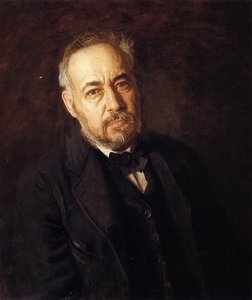
Thomas Pollock Anshutz
1851 - 1912 , United States of America
Quick Facts
- Artistic Movement Or Style: Realism
- Artists Or Movements Influenced By This Artist: ['Early American Modernism']
- Artists Who Influenced This Artist: ['Thomas Eakins']
- Date Of Birth: 1851
- Date Of Death: 1912
- Full Name: Thomas Pollock Anshutz
- Nationality: American
- Notable Artworks:
- Ironworkers' Noontime
- Boy Reading
- St. Cloud near Paris
- Place Of Birth: Newport News, USA
Related Articles
Romantic Realism's Finest: 10 Masterpieces for Your Home | ArtsDot
Explore 10 defining masterpieces of Romantic Realism! Discover Courbet, Millet & Daumier's powerful paintings—capturing emotion and social realities. Find museum-quality reproductions for your home at ArtsDot.com.
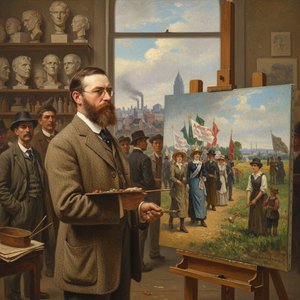
Thomas Pollock Anshutz: Capturing American Life with Realism & Reform
Explore the life & work of Thomas Pollock Anshutz, a key figure in American Realism. Discover his powerful paintings, influence on art education, and commitment to portraying everyday life with honesty and social awareness.
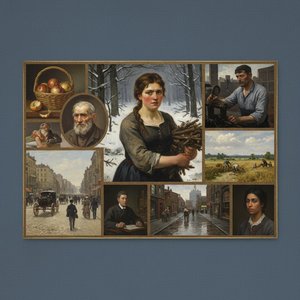
Realism's Masters: 10 Artworks That Capture Life's Essence | ArtsDot
Explore 10 iconic realism artworks by Courbet, Millet & more! Discover the stories behind these masterpieces of 19th-century painting. Find museum-quality art reproductions and elevate your home decor with ArtsDot.com.

Contemporary Realism: 10 Masterpieces & Artists That Redefined Art |
Explore 10 defining masterpieces of Contemporary Realism! Discover Lucian Freud, Chuck Close & more. Uncover stories behind iconic paintings and find museum-quality art reproductions to elevate your home decor on .
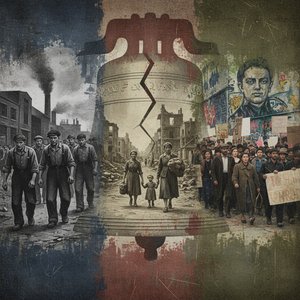
Echoes of Society: Exploring Social Realism's Enduring Legacy in Art
Explore the powerful world of Social Realism art! Discover key artists, masterpieces & its profound social commentary. Expert insights into this influential movement's history and enduring legacy.