 Preview
 Send
Send Share
Share
 Details

 Download
 Similars
 X-Ray
X-Ray Diaporama
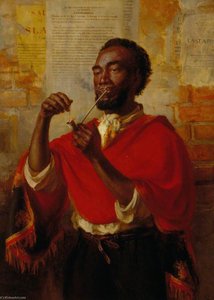
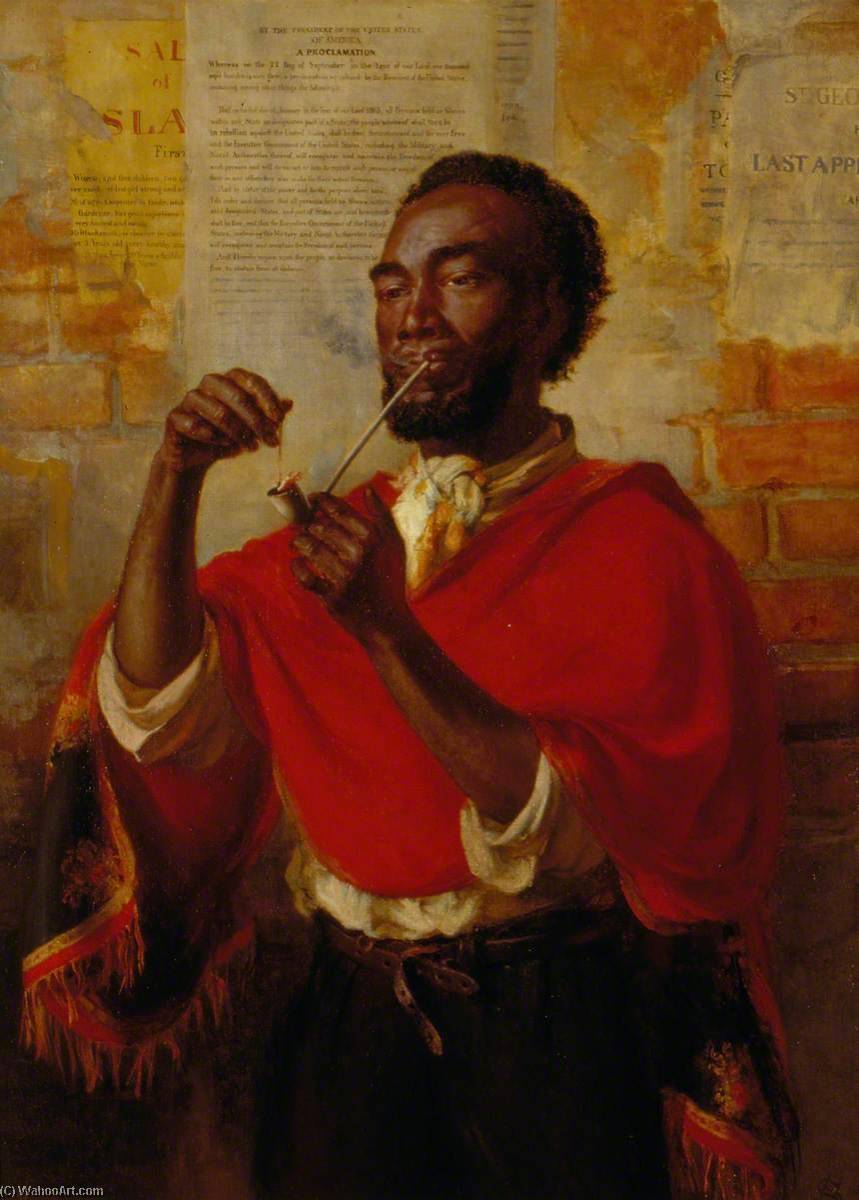
The Pipe of Freedom
 Romanticism
 1869
1869- 19th Century
 107.0 x 79.0 cm
 The Stirling Smith Art Gallery - Museum
 Read More
Hand Made Oil Reproduction
Hand-painted oil on canvas in your size and frame, made to order by our artists. ( Buy Print Buy Image)




P118B $10

P118H $10

P118W $10

P438Z $10

P508JH $12

P508YH $12

P805H $10

P805Z $10

P919BZ $10

P919G $10

P919XJ $10

P959ZH $10

P968JZ $12

W106C $8

W218G $10

W218JH $8

W218Y $10

W307PJ $10

W316G $10

W316PJ $8

W316Y $10

W398PJ $8

W4111J $10

W500HY $15

W500JH $15

W692G $12

W849H $8

W940BG $15

W953PJ $8




Pick from our preset sizes that match the artwork's original proportions.

You may enter your own dimensions to fit a specific frame or space. If your selected size does not match the original image's proportions, we will either crop the artwork or extend the painting with additional hand-painted elements. A digital mockup will be sent for your approval before production begins.
Please note that the on-screen preview does not reflect the actual cropping or extension. Only the mockup will accurately show the final composition.
While custom sizes are available, we recommend selecting a dimension from the predefined list to preserve the original proportions.
After order, ArtsDot.com team will email client for instructions and provide a mockup preview
Worldwide Delivery () in 3/4 weeks instead of standard 5 weeks. (17 August). No compromise on quality.

Free Worldwide Express Shipping

High-Quality Linen Canvas

Full Shipping Insurance

Customs Tax Refund Guarantee

True Color Matching Guarantee

60-Day Return Policy (Defects Only)

100% Money-Back Guarantee

Bulk Discount Offer
 Glass option is only available in size under 110 CM

The Pipe of Freedom
Reproduction Medium
Reproduction Size
-


Total Price
$ 263
Artwork Description
A Moment of Whimsical Serenity
In the evocative portrait known as The Pipe of Freedom, Thomas Stuart Smith captures a fleeting, intimate moment that transcends the boundaries of time. The painting presents us with a man lost in a private ritual of pleasure, his face alight with a mischievous, perhaps even jubilant, expression. As he holds his pipe, the smoke and the spirit of the moment seem to drift toward the viewer, inviting us into his personal sanctuary. Clad in a striking red robe that commands immediate attention, the subject provides a vibrant focal point against the more muted, textured backdrop of a brick wall. This splash of crimson does more than just provide visual contrast; it serves as a pulse of life within the composition, suggesting warmth, passion, and the unbridled joy found in simple, earthly comforts.
The setting, which hints at a workspace or a quiet study, is meticulously layered with details that ground the subject in a tangible reality. Scattered papers and the presence of books—one tucked near the upper corner and another resting toward the bottom—suggest an intellectual life interrupted by a well-deserved respite. These elements create a narrative of balance between labor and leisure, between the rigors of the mind and the relaxation of the soul. The interplay of light and shadow across the brickwork and the parchment adds a profound sense of depth, making the scene feel less like a static image and more like a window into a living, breathing room.
Mastery of Texture and Victorian Spirit
Technically, Smith demonstrates his remarkable ability to bridge the gap between Romantic Idealism and the meticulous observation of everyday life. The brushwork, while purposeful in defining the heavy folds of the red garment, possesses a softness that captures the ephemeral nature of the man's smile. There is a tactile quality to the painting; one can almost feel the roughness of the brick and the smoothness of the paper. This mastery of texture is essential for any collector or interior designer looking to introduce a piece with significant character and "weight" into a room. The composition uses these varied surfaces to guide the eye in a circular motion, ensuring that the viewer lingers on both the man's expressive features and the subtle environmental clues.
Historically, this work serves as a poignant reflection of the mid-19th century, an era where the tension between industrial progress and the desire for individual peace was palpable. The title itself, The Pipe of Freedom, imbues the act of smoking with a deeper symbolic meaning—it is not merely a habit, but a ritualistic escape from the constraints of societal expectations. For those seeking to adorn a sophisticated interior, this reproduction offers more than just aesthetic beauty; it provides a conversation piece that speaks to the enduring human need for autonomy and the quiet celebration of the present moment.
Related Artworks
Artist Biography
The Quiet Grandeur of Thomas Stuart Smith
Thomas Stuart Smith (1815–1869) remains a singular and evocative figure in the tapestry of Scottish art history, a painter who possessed the rare ability to bridge the sweeping emotional heights of Romanticism with the tender, grounded intimacy of everyday observation. Born into a life shaped by unconventional circumstances—as the illegitimate nephew of Alexander Smith, whose estate at Glassing all near Dunblane provided a backdrop of intellectual and landed prestige—Smith’s early years were marked by a cosmopolitan breadth. His formative travels through France and his subsequent return to England allowed him to absorb the shifting currents of European aesthetics, fostering a perspective that was as much about scientific inquiry as it was about artistic passion.
His life and work were deeply embedded in the transformative atmosphere of the Victorian era. While many of his contemporaries sought to capture the monumental shifts of industrialization through heroic narratives, Smith turned his gaze inward and toward the hearth. He found profound meaning in the subtle nuances of domesticity, capturing Welsh interiors bathed in a soft, diffused light and kitchens brimming with the vibrant textures of fresh produce. His canvases served as windows into the human experience, where the psychological depth of a portrait was just as significant as the atmospheric weight of a landscape.
A Synthesis of Realism and Romanticism
The brilliance of Smith’s technique lies in his masterful synthesis of seemingly opposing movements. He was deeply moved by the Pre-Raphaelite Brotherhood, drawing inspiration from the meticulous botanical accuracy and atmospheric precision championed by masters such as John Everett Millais and William Holman Hunt. This influence is visible in his commitment to truthful observation; he approached the natural world with a keen eye for detail that honored the integrity of every leaf, shadow, and fabric fold.
Yet, beneath this layer of meticulous realism lay a heart steeped in Romanticism. Smith did not merely document reality; he sought to evoke mood. Through innovative experimentation with light and perspective, he infused his scenes with a sense of longing and sublime emotion. His work often oscillates between the following elements:
- The Intimate: A focus on the quiet, unobserved moments of daily life and social commentary.
- The Atmospheric: The use of light to create a sense of temporal depth and emotional resonance.
- The Observational: A rigorous dedication to the textures and botanical truths of the natural world.
Legacy and Philanthropic Spirit
Beyond his contributions to the canvas, Thomas Stuart Smith left an indelible mark on the cultural landscape of Scotland through his commitment to education and the preservation of art. His legacy is perhaps most tangibly felt through his role as the founder of the Stirling Smith Art Gallery and Museum. This act of philanthropy ensured that the beauty he sought to capture would remain accessible to future generations, cementing his name not just as a creator of images, but as a guardian of heritage.
In the history of nineteenth-century art, Smith stands as a bridge between eras. He navigated the transition from the grand, idealized visions of the early century to the more grounded, socially conscious realism that would define much of the later Victorian period. His ability to find the extraordinary within the ordinary continues to resonate, reminding us that the most profound truths are often found in the quietest corners of our existence.
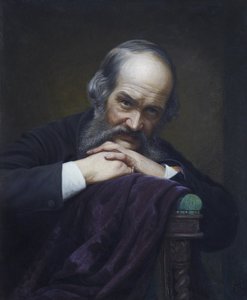
Thomas Stuart Smith
1815 - 1869
Quick Facts
- Artistic Movement Or Style: Romanticism
- Date Of Birth: 1815
- Date Of Death: 1869
- Full Name: Thomas Stuart Smith
- Nationality: Scottish
- Notable Artworks:
- Sun through the Mist
- Work in the Kitchen
- Place Of Birth: Scotland
Related Articles

Crimson Threads of Narrative: Exploring Symbolism & Representation in Artworks Featuring the Red Dress
Explore the rich symbolism of the red dress in art history! From ancient power displays to iconic portraits like Cézanne’s 'Madame Cezanne', discover the cultural and artistic significance behind this captivating color. Expert analysis & insights.
Dante Gabriel Rossetti's 25 Masterpieces: A Journey Through Victorian Art & Symbolism | ArtsDot
Explore 25 iconic artworks by Dante Gabriel Rossetti, a leading Pre-Raphaelite artist. Discover the stories behind masterpieces like 'Proserpine' & 'Beata Beatrix'. Find museum-quality art reproductions and elevate your home decor with ArtsDot.com.

The Refined Aesthetic of Victorian Illustration: A Study in Narrative & Technique
Explore the captivating world of Victorian illustration! Discover Pre-Raphaelite influences, key artists like Rossetti & Stephens, and the era's rich narrative detail. A deep dive for art enthusiasts.

Mark Rothko's Masterpieces: 25 Paintings That Define Abstract Expressionism | ArtsDot
Explore 25 iconic Mark Rothko paintings that define Abstract Expressionism. Discover the stories, colors & emotions behind these masterpieces. Find museum-quality art reproductions and curated decor ideas at ArtsDot.com.
William Powell Frith: Narratives of Victorian Society & the Rise of Realist Painting
Explore the life & works of William Powell Frith, the 'greatest British painter of social scenes.' Discover his iconic Victorian genre paintings and learn about his lasting impact on realist art. Hand-painted reproductions available.