 Preview
 Send
Send Share
Share
 Details

 Download
 Similars
 X-Ray
X-Ray Diaporama
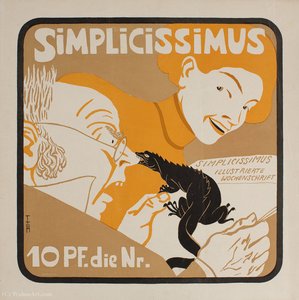
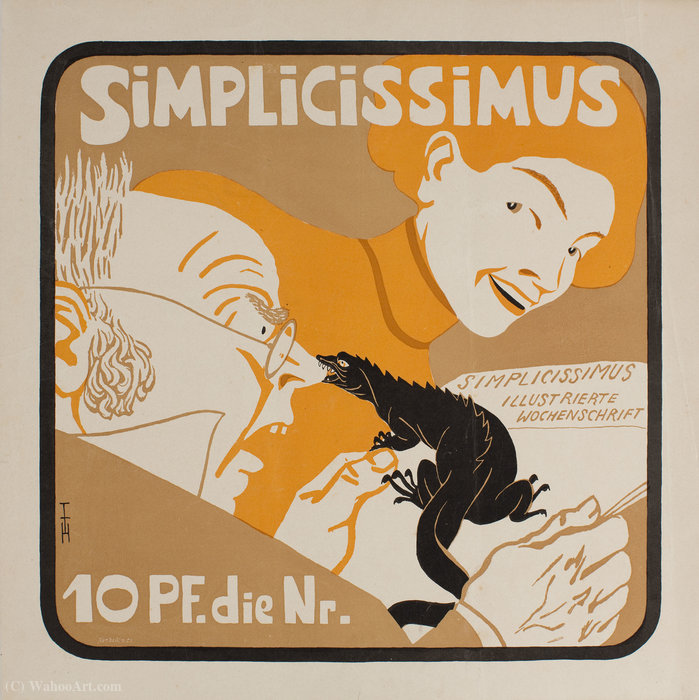
'Simplicissimus', (35 x 35 CM) (1901)
 Read More
Giclée / Art Print
Museum-quality giclée or canvas print with fast production and flexible finish options. ( Buy Hand Made Painting Buy Image)




































Pick from our preset sizes that match the artwork's original proportions.

You may enter your own dimensions to fit a specific frame or space. If your selected size does not match the original image's proportions, we will either crop the artwork or extend the image with a mirrored or solid-fill edge. A digital mockup will be sent for your approval before production begins.
Please note that the on-screen preview does not reflect the actual cropping or extension. Only the mockup will accurately show the final composition.
While custom sizes are available, we recommend selecting a dimension from the predefined list to preserve the original proportions.
Worldwide Delivery () in 2 weeks instead of standard 4/5 weeks. (23 August)

Free Worldwide Express Shipping

High-Quality Linen Canvas

Full Shipping Insurance

Customs Tax Refund Guarantee

True Color Matching Guarantee

60-Day Return Policy (Defects Only)

100% Money-Back Guarantee

Bulk Discount Offer
 Glass option is only available in size under 110 CM

'Simplicissimus', (35 x 35 CM) (1901)
Giclée / Art Print
Reproduction Size
-


Total Price
$ 63
Related Artworks

Artist Biography
The Sharp Pen of a Disillusioned Era
Thomas Theodor Heine, born David Theodor Heine in 1867, was far more than a mere illustrator; he was the visual conscience of a turbulent German era. Born in Leipzig, his journey from a young talent to a legendary satirist is a narrative of intellectual courage and artistic defiance. His early training at the Kunstakademie Düsseldorf and the Academy of Fine Arts in Munich placed him at the heart of Europe's most vibrant artistic currents. Immersed in the teachings of masters like Wilhelm Trübschenitsch, Heine absorbed the delicate nuances of Impressionism and the haunting depths of Symbolism. This foundational period was not merely about technical mastery but about developing a visual vocabulary capable of expressing the profound anxieties of a society on the brink of modernity.
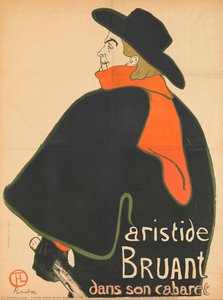
The true metamorphosis of his style occurred through his encounter with the Jugendstil movement and the influential graphic traditions of artists such as Henri de Toulouse-Lautrec, Aubrey Beardsley, and the stark elegance of Japanese woodcuts. Heine possessed a rare ability to marry the flowing, organic ornamentation of the Art Nouveau era with a biting, razor-sharp political edge. His work did not merely decorate; it interrogated. By adopting these sophisticated aesthetic idioms, he was able to cloak his most subversive critiques in a beauty that demanded attention, making his social commentary both irresistible and impossible to ignore.
The Simplicissimus Revolution
In 1896, Heine’s destiny became inextricably linked with the founding of the satirical magazine Simplicissimus. As its chief illustrator, he transformed the publication into a powerhouse of political dissent. His drawings were characterized by a masterful use of line and a profound understanding of caricature, capable of stripping away the pretenses of the monarchy and the rigid social hierarchies of the time. Heine’s art was a weapon of wit, used to puncture the pomposity of the ruling classes and expose the contradictions of German imperial identity. This commitment to truth came at a personal cost; his illustrated critiques were so potent that they led to a period of imprisonment in 1898, a testament to the real-world impact of his satirical prowess.
Beyond the political sphere, Heine’s work captured the psychological landscape of the early twentieth century. His illustrations often touched upon themes of alienation, decadence, and the shifting moral ground of a world moving toward total war. Through his pen, the chaos of the German revolution and the subsequent rise of National Socialism were documented not just through text, but through evocative imagery that resonated with the collective subconscious of the era. He had an uncanny ability to translate complex political shifts into singular, iconic images that remained etched in the public memory.
Exile and the Legacy of a Visionary
The shadows of history eventually forced Heine into a life of displacement. With the rise of the Nazi regime in 1933, his status as a Jewish artist and a critic of authoritarianism made him a target for persecution. His subsequent flight—moving from Germany to Prague, then to Oslo, and finally settling in Stockholm—marked the final chapter of a life defined by movement and resilience. Even in exile, his spirit remained unbroken. In 1942, he published his highly cynical autobiography, Ich warte auf Wunder (I Wait for Miracles), a work that serves as both a personal reflection and a searing critique of the era's political catastrophes.
The historical significance of Thomas Theodor Heine lies in his role as a bridge between fine art and mass communication. He elevated the medium of the cartoon to a level of high artistry, proving that the graphic arts could carry the weight of profound philosophical and political discourse. His legacy is found in every artist who uses satire to challenge power and every illustrator who seeks to find beauty within the struggle for truth. He remains a towering figure of German modernism, a poet of disillusionment whose work continues to remind us of the enduring necessity of the critical eye.
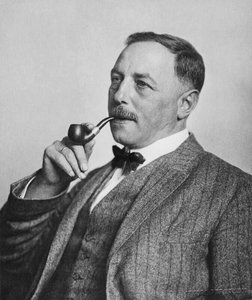
thomas theodor heine
1867 - 1948
Quick Facts
- Artistic Movement Or Style: Jugendstil
- Artists Or Movements Influenced By This Artist: ['German Expressionism']
- Artists Who Influenced This Artist:
- Henri de Toulouse-Lautrec
- Aubrey Beardsley
- Japanese woodcuts
- Date Of Birth: February 28, 1867
- Date Of Death: January 26, 1948
- Full Name: Thomas Theodor Heine
- Nationality: German
- Notable Artworks: ['Simplicissimus']
- Place Of Birth: Leipzig, Germany