 Preview
 Send
Send Share
Share
 Details

 Download
 Similars
 X-Ray
X-Ray Diaporama
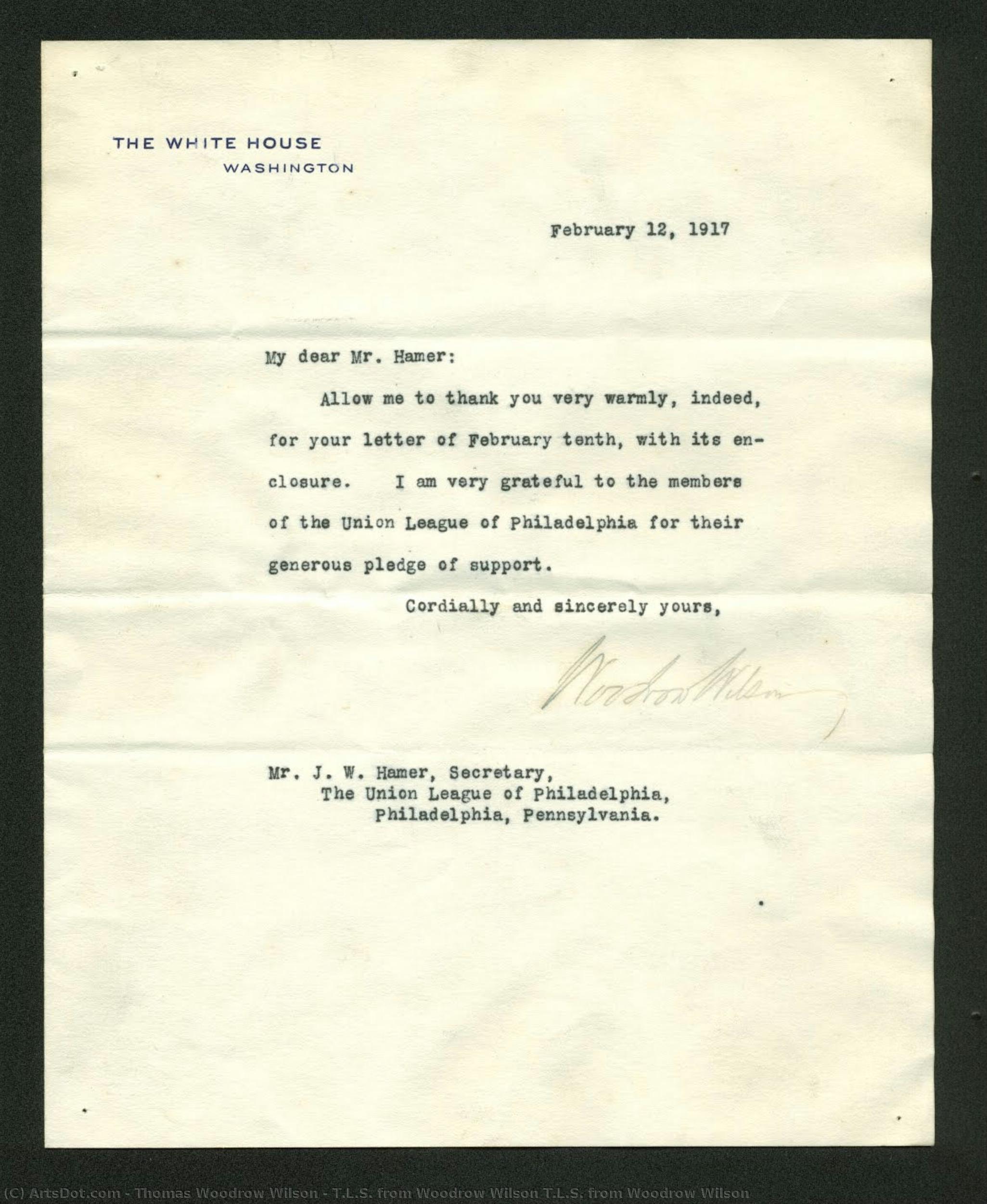
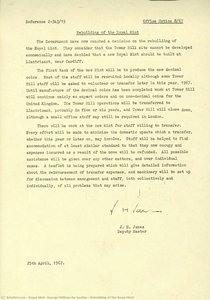
T.L.S. from Woodrow Wilson T.L.S. from Woodrow Wilson


 Read More
Giclée / Art Print
Museum-quality giclée or canvas print with fast production and flexible finish options. ( Buy Hand Made Painting Buy Image)




































Pick from our preset sizes that match the artwork's original proportions.

You may enter your own dimensions to fit a specific frame or space. If your selected size does not match the original image's proportions, we will either crop the artwork or extend the image with a mirrored or solid-fill edge. A digital mockup will be sent for your approval before production begins.
Please note that the on-screen preview does not reflect the actual cropping or extension. Only the mockup will accurately show the final composition.
While custom sizes are available, we recommend selecting a dimension from the predefined list to preserve the original proportions.
Worldwide Delivery () in 2 weeks instead of standard 4/5 weeks. (31 August)

Free Worldwide Express Shipping

High-Quality Linen Canvas

Full Shipping Insurance

Customs Tax Refund Guarantee

True Color Matching Guarantee

60-Day Return Policy (Defects Only)

100% Money-Back Guarantee

Bulk Discount Offer
 Glass option is only available in size under 110 CM

T.L.S. from Woodrow Wilson T.L.S. from Woodrow Wilson
Giclée / Art Print
Reproduction Size
-


Total Price
$ 63
Related Artworks






Artist Biography
A Life Forged in Transition: The Story of Thomas Woodrow Wilson
Thomas Woodrow Wilson, the 28th President of the United States, remains a figure of compelling complexity—a man whose vision reshaped America’s role on the world stage while simultaneously embodying the deep-seated prejudices of his era. Born December 28, 1856, in Staunton, Virginia, at the cusp of national fracture, Wilson's life mirrored the tumultuous transformations sweeping across the nation during his lifetime. His early years were steeped in the atmosphere of a divided South, witnessing firsthand the devastation of the Civil War and the fraught realities of Reconstruction. This formative period, shaped by his father—a Presbyterian minister imbued with strong moral convictions and a belief in providential destiny—instilled within young Wilson a profound sense of duty and an unwavering commitment to intellectual rigor. The family’s subsequent moves to Georgia and South Carolina further cemented his connection to the Southern identity, a heritage he would often reflect upon throughout his career. Despite early struggles with academics, particularly reading, Wilson persevered, fueled by a relentless pursuit of knowledge that ultimately led him to Davidson College, Princeton University, and finally, Johns Hopkins University where he earned a doctorate in political science.From Academic Halls to the Political Arena
Wilson’s path wasn't immediately directed toward politics; it was one initially carved within the hallowed halls of academia. He excelled as a professor, first at Bryn Mawr and then Princeton, eventually ascending to the presidency of the university in 1902. This period proved crucial in honing his analytical skills and fostering a systematic approach to problem-solving—qualities that would later define his leadership style. However, Wilson felt increasingly constrained by the limitations of academic life, sensing a call to address the pressing social and political issues facing the nation. In 1910, he boldly entered the political arena, successfully running for Governor of New Jersey. His tenure as governor was marked by progressive reforms—challenging entrenched party bosses and advocating for policies that championed the common citizen. This demonstrated his commitment to breaking with established norms and enacting meaningful change, quickly propelling him into the national spotlight and setting the stage for his presidential bid in 1912. He campaigned on a platform of “New Freedom,” promising to dismantle monopolies, lower tariffs, and restore economic opportunity to all Americans.The Wilsonian Presidency: Reform and Global Conflict
Wilson’s presidency (1913-1921) unfolded in two distinct phases. The initial years were dedicated to domestic policy, a period of significant progressive reform. Landmark legislation such as the Federal Reserve Act—establishing a central banking system—the Clayton Antitrust Act—strengthening anti-monopoly laws—and the Underwood-Simmons Tariff—lowering protective tariffs—were enacted under his leadership. These measures aimed to level the playing field for small businesses, protect workers’ rights, and promote economic competition. However, the outbreak of World War I in 1914 dramatically altered the course of his presidency. Initially committed to neutrality, Wilson skillfully navigated the treacherous waters of international diplomacy, attempting to mediate a peaceful resolution to the conflict. As the war escalated, however, and German submarine warfare threatened American lives and interests, he reluctantly led the United States into war in April 1917, framing it as a moral imperative—a fight “to make the world safe for democracy.”A Vision of Peace and a Troubled Legacy
Wilson’s wartime leadership was characterized by his articulation of the "Fourteen Points"—a blueprint for a just and lasting peace based on principles of self-determination, open diplomacy, freedom of the seas, and the establishment of a League of Nations. This ambitious vision sought to fundamentally reshape international relations, moving away from secret alliances and imperialistic ambitions toward a system of collective security and peaceful cooperation. He played a central role in the Paris Peace Conference following the war, tirelessly advocating for the inclusion of his Fourteen Points in the Treaty of Versailles. Despite achieving some success, Wilson faced fierce opposition at home, particularly from Republicans in the Senate who feared entanglement in European affairs. Tragically, his dream of a League of Nations was dashed when the U.S. Senate refused to ratify the treaty, effectively isolating America from the postwar international order. Despite his significant achievements—the progressive reforms, the wartime leadership, and the idealistic vision for a peaceful world—Wilson’s legacy remains deeply contested. His administration oversaw the re-segregation of federal workplaces, reversing decades of progress made by African Americans, and he largely ignored the pleas of Black leaders regarding racial discrimination. This glaring contradiction between his lofty rhetoric about democracy and his discriminatory policies casts a long shadow over his presidency. Nevertheless, the term “Wilsonianism” endures—representing a foreign policy approach emphasizing moral leadership, international cooperation through institutions like the League of Nations (and later the United Nations), and the promotion of democratic values abroad. Thomas Woodrow Wilson died on February 3, 1924, leaving behind a complex and enduring legacy that continues to be debated and re-evaluated by historians and policymakers alike—a testament to the profound impact he had on both American history and the course of global affairs.Influences and Enduring Impact
Wilson’s intellectual foundations were deeply rooted in classical political thought, drawing inspiration from thinkers like John Locke and Montesquieu. He was also profoundly influenced by progressive reformers such as Herbert Croly and Walter Lippmann, whose ideas shaped his vision for a more just and equitable society.- Key Achievements: New Freedom Legislation (Federal Reserve Act, Clayton Antitrust Act, Underwood-Simmons Tariff), Leadership during World War I, Advocacy for the League of Nations.
- Influences: Progressive thinkers like Herbert Croly and Walter Lippmann, classical political theorists such as John Locke and Montesquieu, his father’s strong moral convictions and Presbyterian faith.
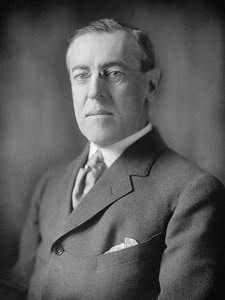
Thomas Woodrow Wilson
1856 - 1924 , United States of America
Quick Facts
- Artistic Movement Or Style: Political Leader
- Artists Or Movements Influenced By This Artist: Wilsonianism
- Artists Who Influenced This Artist:
- Herbert Croly
- Walter Lippmann
- John Locke
- Montesquieu
- Date Of Birth: December 28, 1856
- Date Of Death: February 3, 1924
- Full Name: Thomas Woodrow Wilson
- Nationality: American
- Notable Artworks: ['T.L.S. from Woodrow Wilson']
- Place Of Birth (City And Country): Staunton, USA