 Preview
 Send
Send Share
Share
 Details

 Download
 Similars
 X-Ray
X-Ray Diaporama
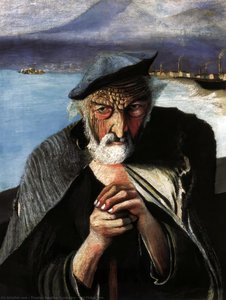
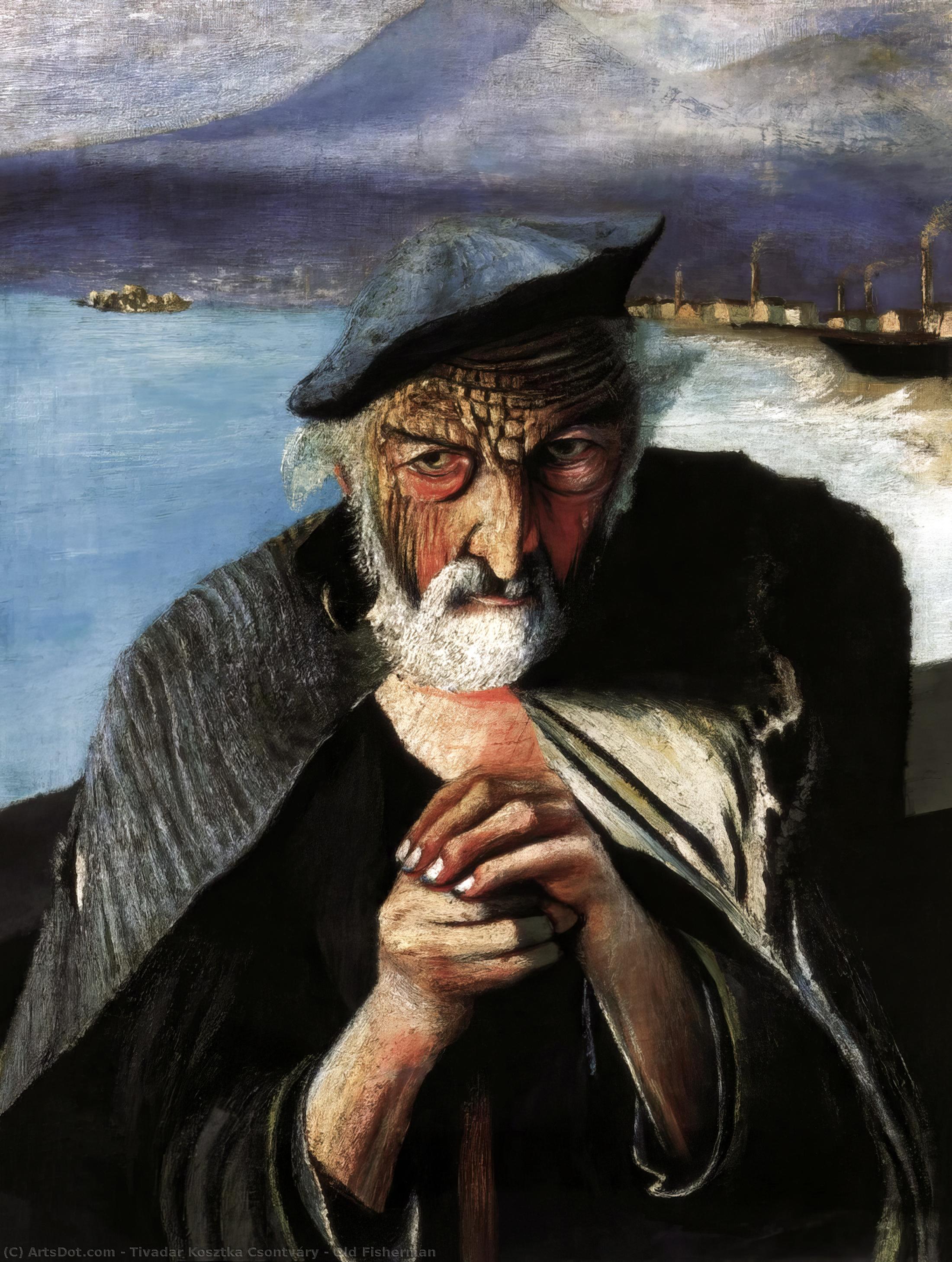
Old Fisherman
 Oil On Canvas
- WallArt
- Late 19th Century Realism
 1900
1900- 19th Century
 60.0 x 45.0 cm
 Herman Ottó Museum
 Read More
Hand Made Oil Reproduction
Hand-painted oil on canvas in your size and frame, made to order by our artists. ( Buy Print Buy Image)




P118B $10

P118H $10

P118W $10

P438Z $10

P508JH $12

P508YH $12

P805H $10

P805Z $10

P919BZ $10

P919G $10

P919XJ $10

P959ZH $10

P968JZ $12

W106C $8

W218G $10

W218JH $8

W218Y $10

W307PJ $10

W316G $10

W316PJ $8

W316Y $10

W398PJ $8

W4111J $10

W500HY $15

W500JH $15

W692G $12

W849H $8

W940BG $15

W953PJ $8




Pick from our preset sizes that match the artwork's original proportions.

You may enter your own dimensions to fit a specific frame or space. If your selected size does not match the original image's proportions, we will either crop the artwork or extend the painting with additional hand-painted elements. A digital mockup will be sent for your approval before production begins.
Please note that the on-screen preview does not reflect the actual cropping or extension. Only the mockup will accurately show the final composition.
While custom sizes are available, we recommend selecting a dimension from the predefined list to preserve the original proportions.
After order, ArtsDot.com team will email client for instructions and provide a mockup preview
Worldwide Delivery () in 3/4 weeks instead of standard 5 weeks. (25 August). No compromise on quality.

Free Worldwide Express Shipping

High-Quality Linen Canvas

Full Shipping Insurance

Customs Tax Refund Guarantee

True Color Matching Guarantee

60-Day Return Policy (Defects Only)

100% Money-Back Guarantee

Bulk Discount Offer
 Glass option is only available in size under 110 CM

Old Fisherman
Reproduction Medium
Reproduction Size
-


Total Price
$ 263
Artwork Description
A Portrait of Solitude: Tivadar Csontváry’s ‘Old Fisherman’
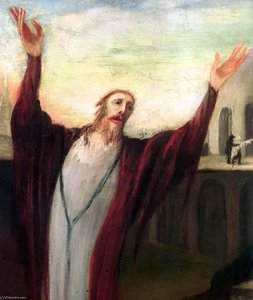
Tivadar Csontváry Kosztka's “Old Fisherman,” painted in 1900, is more than a simple depiction of a weathered man and the sea; it’s a profound meditation on time, resilience, and the enduring connection between humanity and nature. Measuring 60 x 45 cm, this oil-on-canvas work embodies the late 19th-century realist style with subtle yet significant impressionistic touches, hallmarks of Csontváry's distinctive approach to capturing atmosphere and emotion. The painting’s power lies not just in its subject matter – a solitary fisherman contemplating his life against a dramatic coastal backdrop – but in the masterful execution of technique and the deeply layered symbolism embedded within.
A Masterclass in Texture and Light
Csontváry's technical skill is immediately apparent. The application of oil paint is deliberately rough, employing thick impasto strokes, particularly evident in the fisherman’s beard and the folds of his worn clothing. This technique isn’t merely decorative; it actively contributes to the painting’s emotional impact. The visible brushstrokes create a palpable sense of texture – the coarse grain of the fisherman's face, the weathered surface of the boats, the turbulent yet softened appearance of the water. The diffused lighting, suggestive of an overcast day, further enhances this tactile quality, inviting the viewer to almost feel the chill of the sea air. The artist’s deliberate rejection of smooth blending in favor of expressive brushwork aligns with the burgeoning interest in capturing fleeting moments and subjective experience that characterized the transition from academic realism to modern art.
Symbolism Woven into the Landscape
The composition itself is rich in symbolic meaning. The fisherman, positioned centrally and facing directly at the viewer, establishes an immediate connection – a silent dialogue across time and space. His contemplative gaze suggests introspection, wisdom gleaned from years spent battling the elements, and perhaps a quiet melancholy. The distant mountains, rendered with atmospheric perspective—a technique where objects appear fainter and bluer as they recede into the distance—symbolize both the vastness of nature and the limitations of human endeavor. The boats, small and vulnerable against the immense backdrop, represent the precariousness of life and livelihood dependent on the sea’s capricious moods. The muted color palette – blues, grays, browns, and whites – reinforces this sense of solemnity and timelessness.
Historical Context and Artistic Influence
Painted in 1900, “Old Fisherman” reflects the broader artistic currents of the late 19th century. Csontváry was a key figure in the Hungarian realist movement, influenced by artists like Gustave Courbet and Jean-François Millet, who sought to depict everyday life with unflinching honesty. However, unlike some of his contemporaries, Csontváry wasn’t solely focused on social realism; he possessed a deep sensitivity to landscape and atmosphere, often incorporating elements of Romanticism into his work. His exploration of the Hungarian countryside and its people—particularly those engaged in manual labor—earned him both critical acclaim and public affection. His ability to capture not just the physical appearance but also the spirit of his subjects cemented his place as one of Hungary’s most beloved artists.
A Timeless Reflection
“Old Fisherman” transcends its historical context, offering a timeless reflection on themes of solitude, resilience, and the human relationship with nature. It's a painting that invites contemplation, prompting viewers to consider their own place in the world and the enduring power of simple, honest lives. A hand-painted reproduction of this evocative artwork would be a stunning addition to any collection, bringing a touch of Hungarian artistic heritage and profound emotional resonance into your home or office.
Related Artworks


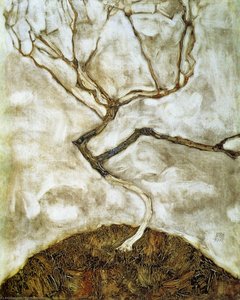
Artist Biography
A Life Illuminated: The Journey of Tivadar Csontváry Kosztka
Tivadar Csontváry Kosztka remains a captivating enigma in the landscape of Hungarian art—a painter whose life was as dramatic and unconventional as the canvases he produced. Born Mihály Tivadar Kosztka on July 5th, 1853, in Kisszeben (modern-day Sabinov, Slovakia), his origins were steeped in a fascinating confluence of cultures. His father, a physician and pharmacist, traced his lineage to Polish ancestry settled within Hungary, while young Tivadar navigated a childhood echoing with Slovak and German alongside the eventual fervent embrace of his Hungarian identity. This early immersion in diverse linguistic and cultural currents arguably contributed to the unique perspective that would later define his artistic vision—a vision both intensely personal and universally resonant. For many years, he dutifully followed in his father’s footsteps, practicing pharmacy—a profession pursued with diligence until a life-altering experience at the age of twenty-seven irrevocably altered his course. On October 13th, 1880, while immersed in his work, Csontváry claimed to receive a divine calling: a voice declared him destined to become “the greatest painter of the world, greater than Raphael.” This moment became the cornerstone of his artistic ambition, propelling him onto an extraordinary and often solitary path.From Apothecary to Artistic Pilgrim
The mystical vision irrevocably altered Csontváry’s trajectory. He embarked upon a period of intense preparation, fueled by unwavering self-belief and a relentless pursuit of artistic mastery. Initially rebuffed by traditional art schools, he persevered, traveling extensively throughout Europe—Rome, Paris, Munich—studying the masters and honing his skills. However, it wasn't merely technical proficiency that drove him; Csontváry sought something deeper, a unique visual language to express his inner world. He financed these journeys by continuing to work as an apothecary, sacrificing personal comfort for the sake of his artistic calling. From 1890 onwards, his travels expanded beyond Europe, taking him to North Africa and the Middle East—to Dalmatia, Italy, Greece, Lebanon, Palestine, Egypt, and Syria. These lands became a profound source of inspiration, imbuing his canvases with exotic landscapes, dramatic light, and a sense of spiritual yearning. He wasn’t simply documenting what he saw; he was interpreting it through the lens of his own intensely personal vision—a vision often tinged with melancholy and a deep reverence for nature's power. The sheer scale of his ambition is reflected in the monumental size of many of his works, demanding attention and enveloping the viewer in their immersive landscapes.The ‘Sunway’ and a Unique Artistic Voice
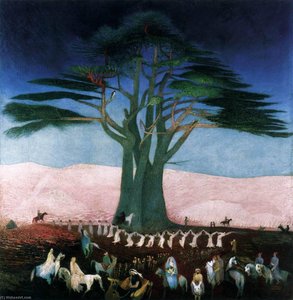
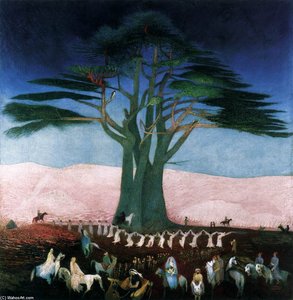
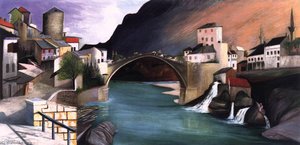
Csontváry’s artistic style defies easy categorization. While often associated with Post-Impressionism and Expressionism, he remained largely self-taught, forging his own path. His paintings are characterized by their monumental scale—many stretch several meters in width and height—and a bold use of color and composition. He developed what he termed the “sunway” (*napút*), an approach that emphasized the transformative power of light and its ability to reveal hidden truths. This wasn’t merely about depicting sunlight; it was about capturing the very essence of illumination, both physical and spiritual. His landscapes are often imbued with a sense of awe-inspiring grandeur, while his depictions of Middle Eastern scenes possess a haunting beauty and an undercurrent of melancholy. Works like The Lonely Cedar (1907) and Pilgrimage to the Cedars in Lebanon (1907) exemplify this approach—towering trees silhouetted against dramatic skies, evoking feelings of solitude, reverence, and the sublime. Other notable paintings include Springtime in Mostar (1903), capturing a romantic vision of the historic town, and The Wailing Wall in Jerusalem (1904), a poignant depiction of faith and remembrance. He sought to capture not just the appearance of things, but their underlying spiritual essence—a quality that sets his work apart from many of his contemporaries.Recognition Delayed, Legacy Enduring
Despite his artistic innovations, Csontváry faced considerable challenges during his lifetime. His unconventional lifestyle—he was a vegetarian, teetotaler, and pacifist—and his often-prophetic writings led many to dismiss him as an eccentric crank. He struggled to gain recognition in Hungary, finding greater appreciation among critics in Western Europe, particularly in Paris where he exhibited in 1907. However, even there, full acceptance proved elusive. His paintings were rarely sold during his life, and financial hardship plagued his later years. Csontváry died in Budapest on June 20th, 1919, largely unappreciated by the Hungarian art establishment. It was only after his death that his genius began to be fully recognized. Today, Tivadar Csontváry Kosztka is celebrated as one of Hungary’s greatest painters—a visionary artist whose work continues to captivate and inspire. His paintings are held in prestigious collections such as the Hungarian National Gallery in Budapest and the Csontváry Museum in Pécs, ensuring that his legacy will endure for generations to come. In 2006, Rendez-vous (1902), also known as “Meeting of the Lovers,” sold at auction for over one million euros—a testament to the enduring power and value of his artistic vision—a fitting tribute to the man who dared to believe he could surpass even Raphael.A Lasting Influence
- Pioneering Spirit: Csontváry’s unwavering commitment to his artistic vision, despite facing rejection and hardship, serves as an inspiration to artists today.
- Unique Style: His “sunway” technique and monumental scale continue to influence landscape painters seeking to capture the spiritual essence of nature.
- Cultural Icon: Csontváry’s work has become a symbol of Hungarian national identity, celebrated for its unique blend of Eastern and Western influences.
- Spiritual Depth: His paintings offer viewers a profound meditation on themes of solitude, faith, and the sublime, resonating with audiences across cultures and generations.
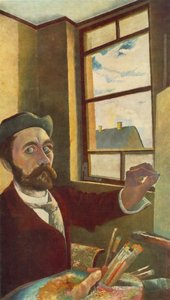
Tivadar Csontváry Kosztka
1853 - 1919 , Slovakia
Quick Facts
- Artistic Movement Or Style: Post-Impressionism, Expressionism
- Date Of Birth: July 5, 1853
- Date Of Death: June 20, 1919
- Full Name: Tivadar Csontváry Kosztka
- Nationality: Hungarian
- Notable Artworks:
- The Lonely Cedar
- Springtime in Mostar
- Pilgrimage to the Cedars
- Wailing Wall in Jerusalem
- Place Of Birth: Sabinov, Slovakia
Related Articles
The Enduring Legacy of Hand-Painted Oil Paintings: Aesthetic Value, Longevity & Emotional Resonance
Explore the enduring legacy of hand-painted oil paintings. Discover the aesthetic value, material longevity & emotional resonance that sets original art—and expertly crafted reproductions—apart. Invest in timeless beauty.
Reproducing Artistry: A Guide to Oil, Canvas & Paper Reproduction Mediums
Explore the world of art reproduction! Learn about oil, canvas & paper options with our expert guide. Discover museum-quality reproductions for your home or collection.

From Initial Sketch to Enduring Legacy: A Comprehensive Exploration of the Oil Painting Reproduction Process
Discover the art of museum-quality oil painting reproduction. Explore our expert process, skilled artists & authentic replicas. Elevate your home with timeless beauty – handcrafted and customized to your vision.
19th Century Masterpieces: 10 Paintings That Defined an Era | ArtsDot
Journey through 19th century art with ArtsDot! Explore 10 iconic paintings – from Monet & Renoir to Courbet – and discover the stories behind Romanticism, Realism & Impressionism. Find museum-quality reproductions for your home decor. Explore the full collection online!
Turn Your Digital Art Into Hand‑Painted Oil Masterpieces—Earn Big on Every Sale and Build an Enduring Legacy
Transform your NFT collection into hand‑painted oil masterpieces with ArtsDot’s expert artisans. Enjoy museum‑grade quality, free worldwide shipping, and a 100% satisfaction guarantee—turn digital art into a lasting legacy that earns you real value.